


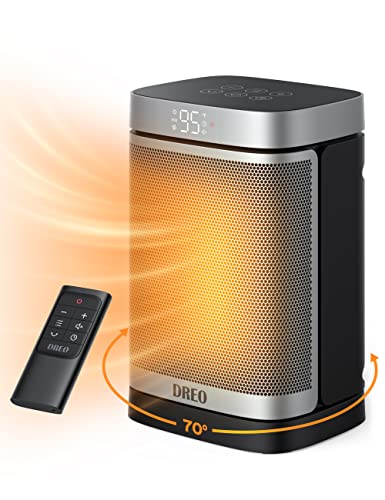


Ceramic heaters excel at warming small, enclosed spaces quickly and efficiently. Their ceramic heating elements reach high temperatures fast, making them ideal for confined areas where you want heat on demand without waiting.
Many believe all ceramic heaters perform the same in small rooms, but only some models combine fast heat-up, quiet operation, and reliable safety features tailored for tight spaces. Choosing the right one saves energy and avoids noise or safety issues.
Ceramic Heater Comparison for Small, Enclosed Spaces
| Model | Best for | Heat Output (Watts) | Safety Features | Noise Level (dB) | Room Size (sq ft) | Price |
|---|---|---|---|---|---|---|
| Amazon Basics Ceramic Space Heater Silver | Best Overall | 1500 | Tip-over and overheat protection | 43 | — | View on Amazon |
| DREO Space Heater with Thermostat | Quietest Option | 1500 | Tip-over and overheat protection, UL94 V-0 flame-retardant materials | 37.5 | — | View on Amazon |
| DREO Space Heater with Advanced PTC System | Best Heat Spread | 1500 | Tilt-detection sensor, overheat protection, flame-retardant materials | 34 | — | View on Amazon |
| GiveBest Portable Ceramic Space Heater | Best Value | 1500 / 750 | Automatic shut-off for overheat and tip-over | — | — | View on Amazon |
| Amazon Basics Ceramic Space Heater Black | Best in Black | 1500 | Tip-over and overheat protection | 43 | — | View on Amazon |
Best Ceramic Heaters for Small, Enclosed Spaces
Amazon Basics Ceramic Space Heater Silver
DREO Space Heater with Thermostat
DREO Space Heater with Advanced PTC System
GiveBest Portable Ceramic Space Heater
Amazon Basics Ceramic Space Heater Black
How Ceramic Heaters Work and Why They Suit Small Spaces
Ceramic heaters use a ceramic heating element that warms up quickly and transfers heat efficiently to the surrounding air.
The core of a ceramic heater is a ceramic plate or block with embedded electric coils. When powered, these coils heat the ceramic, which then radiates warmth.
Unlike traditional metal coil heaters, ceramic elements hold heat briefly after the power cycles off, maintaining a steady temperature and reducing energy waste.
Most ceramic heaters combine convection with fan-forced heat. The ceramic element heats the air, and a small fan pushes the warm air out, creating faster and more even heat distribution.
This quick warm-up is ideal for small, enclosed spaces where you want fast comfort without waiting for the entire room to heat up.
Energy efficiency in ceramic heaters depends on wattage and thermostat controls. A thermostat cycles the heater on and off to keep temperature steady, avoiding unnecessary electricity use.
For example, a 1,500-watt ceramic heater running for 8 hours uses 12 kWh. At 17 cents per kWh, that’s about $2.04 a night. Thermostat control can cut this by cycling heat only when needed.
Ceramic heaters suit small rooms because their controlled, focused heat and rapid response prevent energy waste common in larger or less insulated spaces.
Key Features to Choose the Best Ceramic Heater for Small Rooms
The best ceramic heater for a small room typically uses between 750 and 1,500 watts, balancing heat output with energy efficiency.
Using less than 750 W usually means slower or insufficient heating, while more than 1,500 W risks overheating a small space and wasting electricity.
Tip-over protection is mandatory for safety. This feature cuts power within seconds if the heater falls, preventing fire hazards.
Overheat protection is equally critical. It shuts the heater off automatically if internal temperatures soar, avoiding damage or burns.
A thermostat control keeps the room temperature consistent and saves energy by cycling the heater on and off rather than running continuously.
Noise level is important in confined spaces. Fans in ceramic heaters can be quiet or distracting; models with low decibel ratings improve comfort without sacrificing heat.
Oscillation spreads heat more evenly by gently rotating the heater’s output, preventing hot spots and reducing cold corners in tight rooms.
Look for a compact ceramic heater with 750 to 1,500 watts, safety features, a reliable thermostat, low noise, and oscillation to fit small rooms.
The Amazon Basics Ceramic Space Heater fits this profile, offering fast heating, tip-over and overheat protection, quiet operation, and oscillation, making it a top pick for small rooms.
Choosing a heater without these features risks uneven heating, wasted energy, or safety hazards in confined spaces.
To compare more models optimized for small areas, see our detailed guide on cozy comfort ceramic heaters that balance these features well.
Sizing and Running Costs for Ceramic Heaters in Confined Spaces
Ceramic heaters are energy efficient when sized correctly for the room, producing about 3,400 BTU per 1,000 watts of power. To find the right wattage, multiply your room’s square footage by about 10 watts per square foot. For example, a 150 sq ft room needs roughly 1,500 watts to heat effectively without wasting energy.
Running costs depend on the heater’s wattage, how long you run it, and your electricity rate. Say your heater draws 1,500 watts and you run it 8 hours a day at 17 cents per kWh. Calculate cost as 1,500 ÷ 1,000 × 8 × 0.17 = $2.04 per day. Smaller heaters save energy but heat slower, so balance comfort with budget.
Using the thermostat or ECO modes reduces power use by cycling the heater on and off to maintain temperature instead of running constantly. This cuts bills and prevents overheating. Ceramic heaters respond quickly to these controls because the ceramic element heats up fast and cools down quickly, making them cheaper to run than older coil-style heaters.
For very small, enclosed spaces, smaller ceramic heaters around 750 watts can work well if you don’t mind a slightly slower warm-up. Larger 1,500-watt models heat faster but use more electricity. Choosing the right size keeps running costs low and avoids overheating small rooms.
Safety and Certification Standards for Ceramic Heaters in Small Rooms
Ceramic heaters are safe for small rooms when they meet certification standards like UL, ETL, or CSA, which ensure they pass rigorous safety tests. These tests check for electrical safety, fire resistance, and proper shutdown features.
A tip-over switch is crucial. It shuts off the heater within seconds if it falls or is knocked over, avoiding fire hazards. This feature is mandatory under most safety standards for portable heaters used indoors.
Overheat protection automatically cuts power if the heater’s internal temperature rises too high, preventing damage or fire even if vents get blocked or the heater runs too long. Models must pass overheat tests where fabric is draped over the heater without causing scorching or fire within two minutes.
Cool-touch housing reduces burn risk by keeping the exterior surface safe to touch during operation, which is especially important in small rooms where space is tight and accidental contact is more likely.
Place your ceramic heater on a firm, level surface away from combustibles like curtains, papers, or furniture—at least 3 feet clearance on all sides is recommended. Avoid high-traffic spots where it can be bumped or tipped. Never use extension cords or power strips; plug the heater directly into a wall outlet.
Placement, Noise, and Maintenance for Ceramic Heaters
Put your ceramic heater on a firm, level surface clear of walls or furniture by at least 3 feet. This prevents heat buildup and allows air to circulate freely, which keeps the heater running safely and efficiently.
Keep air intake and outlet vents clear. Blocking them lowers heat output and can cause the heater to overheat and shut off for safety.
Noise can be a concern in small, enclosed spaces. Quieter models use brushless motors or aerodynamic fans to reduce sound. If you’re sensitive to noise at close range, look specifically for heaters marketed as low-noise or whisper quiet.
Cleaning your ceramic heater regularly keeps it working well and safe. Dust the vents and fan blades monthly using a soft brush or vacuum with a brush attachment. Avoid water or sprays inside the unit to prevent electrical damage.
Avoid using ceramic heaters in humid rooms like bathrooms. Moisture can damage electrical parts and create a shock hazard. Instead, choose a heater rated for damp locations if you need warmth in such spaces.
Placing the heater near your seating area spreads warmth most effectively, but maintain that 3-foot clearance to prevent fire risk. For very small rooms, positioning it on a sturdy desk or shelf at ankle or knee height often works best.
Ceramic heaters produce some fan noise because they rely on a fan to push heat into the room. This is normal. However, the noise level varies considerably between models, so checking user reviews or specs helps you find a model that won’t disrupt quiet activities.
Questions People Ask
Are ceramic heaters safe to use indoors in small spaces?
How long does a ceramic heater take to warm a small room?
Can ceramic heaters overheat or cause fires?
What is the typical energy consumption of a ceramic heater?
Are ceramic heaters noisy when placed close by?
How do ceramic heaters compare to infrared heaters for small rooms?
What maintenance does a ceramic heater need to keep it efficient?

I am a mechanical engineer and love doing research on different home and outdoor heating options. When I am not working, I love spending time with my family and friends. I also enjoy blogging about my findings and helping others to find the best heating options for their needs.
Related guides

Best Heat Pads for Hip Pain Relief – Highly Recommend!
Say goodbye to hip pain! Find the best heat pads designed to soothe discomfort and improve your mobility.…
Rechargeable Thermal Socks That Heat Up in Seconds
Heated Socks for Men, APP Control Heated Socks Women, Electric Rechargeable Thermal Socks, Washab... ✅ Prime Shipping Available…
Best Way to Heat a Pole Building Efficiently in 2026
The best way to heat a pole building is by using a combination of insulation, radiant heaters, and…