

Say your bedroom heater runs 8 hours at 1,500 W, then sits idle for the next 16. Turning it off stops the heat; unplugging it also removes the live connection that can fail if the cord, plug, or switch is damaged.
The simple rule is boring because it works. Space heaters are high-wattage appliances on ordinary household circuits, and the safest habit is to cut power at the plug when you’re done.
Unplug Space Heaters When Not in Use
Yes, unplug your space heater when you’re done with it unless the manual says the model is built for unattended operation and it’s plugged straight into a wall outlet with tip-over and overheat shutoffs. A switched-off heater won’t run, but the plug keeps live power at the cord and receptacle, ready to arc or spark if something goes wrong with the switch, the wiring, or the outlet.

When you flip the switch to off, the heating element stops drawing current. The plug stays energized, though. If the switch fails—or if a pet knocks the unit, a child bumps the dial, or the cord gets pinched—current can flow again without you knowing. Cord insulation cracks over time, especially near the plug where it flexes most. A damaged cord that’s still plugged in can short against itself or against metal nearby.
Unplugging also stops any standby draw. Not every heater has it, but models with digital displays, remote receivers, or electronic thermostats can pull a watt or two around the clock. A 1,500 W heater running 8 hours uses 12 kWh; at 17 cents per kWh that’s about $2.04 for the session. Standby waste won’t match that, but over a winter it adds up to a few dollars you didn’t need to spend.
Modern heaters include tip-over switches that cut power if the unit falls, and overheat sensors that trip before the cabinet or the coil reaches a dangerous temperature. Those features shrink the risk; they don’t eliminate it. A tip-over switch won’t help if the heater is upright when the cord shorts. An overheat sensor won’t catch a spark at the plug.
When The Answer Changes
Unplug every time if you’re sleeping, leaving home, or running the heater in a bedroom, near curtains or bedding, or anywhere children or pets can reach it. The stakes are higher in those situations, and the manual’s fine print about unattended use almost never covers them.
| Situation | Unplug? | Why |
|---|---|---|
| Sleeping | Yes | You won’t notice smoke or a burning smell until it’s late. |
| Leaving home | Yes | No one is there to shut it down if something goes wrong. |
| Near curtains or bedding | Yes | Fabric can shift into the heat zone while you’re in another room. |
| Children or pets present | Yes | A bump, a pull, or a toy against the grille can start a problem fast. |
| After any spark or pop | Yes, immediately | The fault will get worse, not better, the next time you plug it in. |
Some heaters are labeled for unattended use. That means the manufacturer tested the unit to run with no one watching, usually for a set number of hours or until the thermostat cycles it off. Check the manual for those exact words. If the manual says nothing about unattended operation, assume the heater needs you in the room and unplugged when you leave.
Oil-filled radiators confuse people because the metal stays warm for an hour after shutoff. The element itself is off, though, and the same unplugging rule applies. A warm cabinet can’t start a fire on its own, but a live plug can still arc or energize a damaged cord.
Heaters in workshops or garages deserve extra caution. Sawdust, paint fumes, and stacked cardboard raise the stakes if something sparks. Unplug after every session, and keep three feet of clearance around the unit while it runs.

What To Do Instead Of Leaving It Plugged In
Build a simple routine and the safety part happens on its own. Turn the heater off, let it cool for a minute, then unplug it and move it away from anything flammable. Plug it straight into a wall outlet the next time you need it—never an extension cord or power strip—and set it on a hard, level floor with three feet of clearance in every direction.
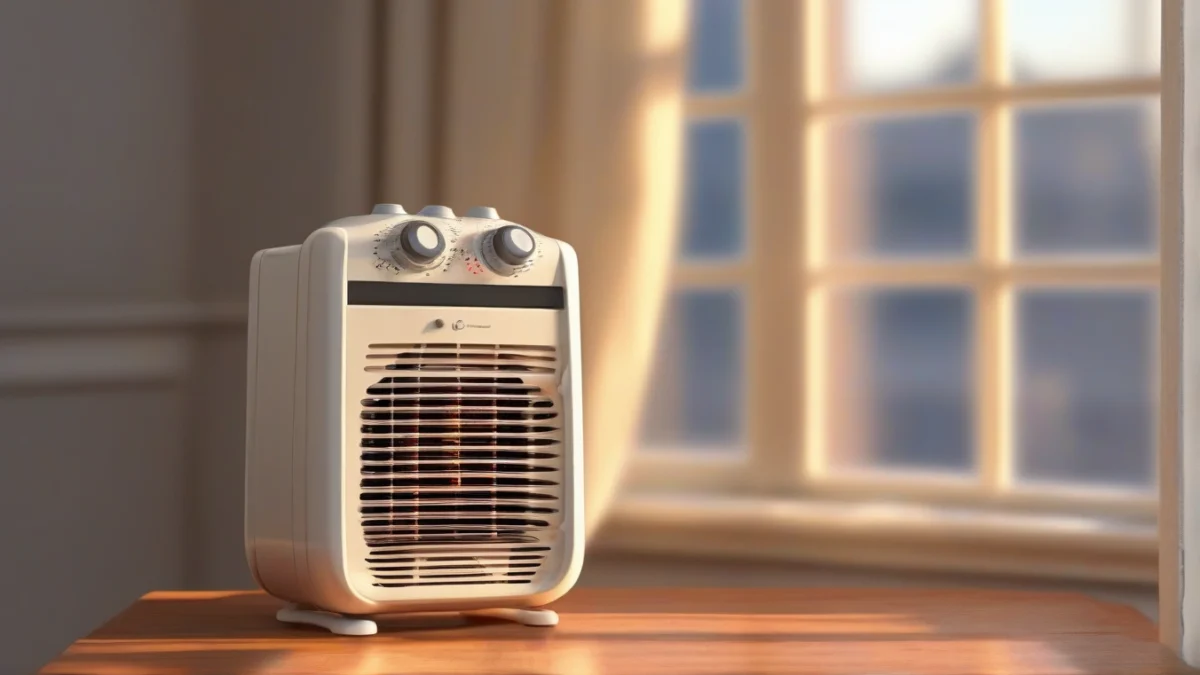
Extension cords don’t belong anywhere near a plug-in space heater. A standard 1,500 W heater draws about 12.5 A on a 120 V circuit, which already pushes close to the 15 A limit of most household circuits. Cheap extension cords and power strips can’t handle that sustained load; they overheat, and the risk isn’t theoretical.
If the outlet sits too far from where you need warmth, move the heater closer to a different outlet or pick a different heat source for that room. Running an extension cord to solve a placement problem creates a bigger one.
Household circuit breakers protect the wiring, not the heater cord or the extension cord in between. The heater’s plug has a fuse only in some models, and even when it does, that fuse protects internal components from a short circuit—it won’t trip just because the cord is overheating. Your job is to keep the load on a path rated for it.
Clean dust from the vents and grilles before the heating season starts and every few weeks if you’re running the heater daily. Dust blocks airflow, forces the heating element to work harder, and eventually triggers the overheat shutoff or worse.
A Safe Heater To Leave Ready
Built-in safety features help, but they don’t eliminate the need to unplug when you’re done. Tip-over shutoff and overheat protection catch the problems you didn’t see coming; unplugging the heater keeps those problems from starting in the first place.
Product 1 includes the safety features that matter—a tip-over switch that cuts power the moment the heater tips past vertical, and overheat protection that shuts the element down before temperatures climb into the danger zone. Ceramic PTC elements heat quickly and the oscillation spreads warmth across a small room without leaving cold pockets near the door.
The remote lets you adjust temperature, fan speed and the timer without getting up, which means fewer trips across the room and less temptation to leave it running when you step out. ETL certification confirms the heater meets North American safety standards, and the manual states plainly to plug it straight into a wall outlet and never use an extension cord.
Safety features buy you time when something goes wrong; they don’t give you permission to leave a heater running unattended unless the manual explicitly says otherwise. Plug it in when you need heat, turn it off when you leave the room, and unplug it before you go to bed or head out the door. No extension cord, no power strip, no exceptions.
Portable heaters work best when the routine around them is just as reliable as the shutoff switches inside. Pick a model with the protections you need, but treat every plug-in heater as something that earns its spot in the room only while you’re there to keep an eye on it.
Questions People Ask
Should you unplug a space heater before going to bed?
Do you need to unplug a portable heater when you leave the room?
What should you do if a space heater popped or sparked?
What kind of extension cord should you use on a space heater?
How often should you clean an electric heater?
What should you consider when using portable heaters?

HeaterGuides covers home heating, water heating and HVAC: how the equipment works, what it costs to run, and how to use it safely.
