Patio Space Heaters Compared: Outdoor Comfort Without Flames
On this page 9 sections
Choosing the right patio heater means weighing heat output, running cost, safety, noise, installation, and lifespan. Tower infrared heaters deliver quick, direct warmth but cost more to run and require stable placement. Portable ceramic heaters warm more gently, run quieter, and offer flexible settings but take longer to heat up.
Many buyers mistake higher wattage for better heat without considering how the heat is delivered or the space being heated, which leads to wasted energy and cold spots. Understanding these trade-offs saves money and improves comfort. This comparison guides you through the key factors to pick the best heater for your patio or covered outdoor area.
Infrared Tower Heater vs Portable Ceramic Heater at a Glance
| Factor | Infrared Tower Heater | Portable Ceramic Heater |
|---|---|---|
| Heat Output and Coverage | Instant radiant heat warms people directly in seconds | Heats air quietly, covering up to 200 sq.ft with convection |
| Running Cost and Energy Efficiency | Three heat levels up to 1,500W for adjustable use | 1500W max with eco mode saving about 20% energy |
| Safety Features and Certifications | UL-certified, tip-over and overheat protection, IPX5 waterproof | ETL-certified, tip-over, overheat, child lock, indoor use |
| Noise Levels During Operation | Silent operation with no fan noise | Quiet fan at about 35dB, some background sound |
| Installation and Portability | 34-inch tall tower with handle, easy to move but heavier | Compact and lightweight with handle, highly portable |
| Durability and Lifespan | Aluminum alloy frame with weatherproof IPX5 rating | Plastic flame-retardant case for indoor use only |
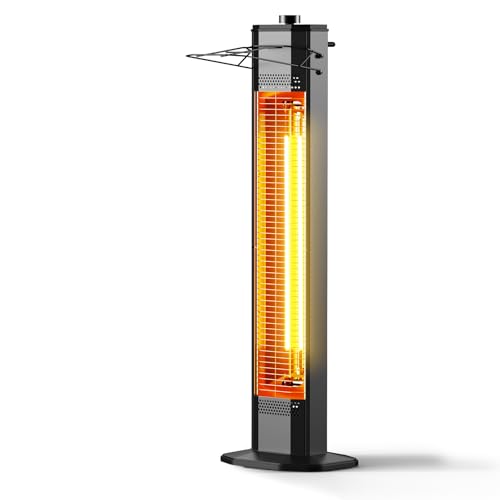
Nfccra 34-inch 1500W Infrared Tower Heater

R.W.FLAME Mini 1500W Ceramic Heater
Heat Output and Coverage
Electric patio heaters warm mainly by infrared radiation and convection, but the mix varies by type. Infrared heaters send heat directly to objects and people, making them feel warm quickly. Ceramic heaters combine infrared with a fan to spread heat faster across a space.
Ceramic heaters work differently by warming the air itself. They take a few minutes to raise the temperature but then provide a more even, gentle heat that suits smaller or semi-enclosed spaces better. Both types typically run around 1,500 watts, but the radiant heat from infrared towers feels warmer more quickly because it doesn’t rely on air circulation.
Radiant heat hits your skin directly, so even on chilly days outdoors, you’ll notice the warmth sooner. Convective heat from ceramic models spreads through the air, so its effect depends on how enclosed your patio is and ambient wind. That makes ceramic heaters less effective in open-air setups but quieter and more comfortable on covered patios or indoors.
If you’re considering a gas patio heater instead, the running cost often varies widely depending on fuel prices and efficiency, but electric heaters like these avoid combustion and the ventilation concerns that come with gas models. Still, if you want to cover a large outdoor area with quick heat, an electric infrared tower is usually the better choice.
Running Cost and Energy Efficiency

Electric patio heaters usually run on 1,500 watts, costing roughly 17 cents per kilowatt-hour. Running one for 4 hours uses 6 kWh, about $1.02 at that rate. Gas patio heaters burn fuel with a BTU rating; for example, a 40,000 BTU propane heater uses roughly 1.17 gallons of propane per hour. At $3.50 per gallon, that’s about $4.10 an hour, making electric models cheaper to run for short periods.
How you use the heater makes a big difference. Running a ceramic heater on low for longer periods usually costs less than blasting an infrared tower at high for short bursts. Both types, however, will draw about the same wattage at their highest settings.
Comparing electric heaters to gas patio heaters is tricky since gas prices fluctuate and combustion efficiency varies. Still, electric units have the advantage of zero emissions and simpler installation. For perspective, a heated electric blanket typically uses around 100 watts, so running one 8 hours a night costs about 13¢ daily—much less than a space heater but also providing localized, low-level warmth.
Oil-filled radiators, another electric option, usually run at similar wattages but heat more slowly and retain warmth after switching off, unlike ceramic or tower heaters. That means they can be more efficient where lingering heat is useful but less suited for instant outdoor warmth.
Choosing between an infrared tower and a ceramic heater comes down to how quickly you want warmth, how much noise you can handle, and how long each heating session will last.
 Winter Heating Bill CutterSee what every heater in your home really costs, heat the rooms you use, and cut the waste in 30 days.Cost-per-hour tables for every heaterThermostat schedule and draft-proofing planRunning-cost and bill calculator (Excel)
Safety Features and Certifications
Electric heaters designed for outdoor patios must have weatherproof ratings and robust safety features to protect users and property.
Infrared tower heaters typically come with an IPX5 rating, meaning they’re built to resist water jets and light rain, so you can safely use them in open outdoor areas. Ceramic portable heaters, on the other hand, are usually rated for indoor use only. Using a ceramic heater outdoors risks moisture damage and electrical faults, which can lead to fire or shock hazards.
Both heater types include tip-over switches and overheat protection to shut off power if they fall or get too hot. These are critical safeguards that prevent fires in case the heater is knocked over or blocked.
Indoor-rated ceramic heaters often have extra safety features like a child lock and flame-retardant housings. These reduce the chance of accidental burns or tampering, which is especially helpful if you have kids or pets around a covered patio or inside the home.
When choosing the best indoor outdoor electric space heaters, check for UL or ETL certifications on the label. These confirm the product meets rigorous safety standards tested by independent labs. Don’t overlook these marks, especially if you plan to use the heater in a semi-exposed environment or around family.
Noise Levels During Operation
Noise level is a key factor when picking a patio heater, especially if you want quiet heat for conversations or relaxation.
Infrared tower heaters run silently. They generate warmth through infrared elements without fans or moving parts, so there’s no mechanical noise to distract you. This makes them ideal for outdoor areas where quiet is valued, like patios, decks, or outdoor dining spaces.
Ceramic heaters use a small fan to spread heat evenly. This fan produces about 35 decibels of sound — quieter than a normal conversation but audible, similar to the rustle of a page turning. It’s noticeable but generally not intrusive unless you’re using the heater near bedrooms or study areas.
If you plan to use electric heater outdoor area models for an outdoor gym space heater, consider how much background noise you can tolerate. A silent infrared tower might help you focus better, while a ceramic unit’s gentle hum could be acceptable if you don’t mind a bit of sound.
Noise sensitivity varies by setting and person, so weigh your priorities. Quiet operation matters most if the heater stays on for hours around company or sleep zones.
Installation and Portability
For outdoor use, the choice between an infrared tower like the rxp199in and a portable ceramic heater such as the npe240a2 depends on how you plan to set up and move the unit.
Infrared tower heaters usually demand a stable, weatherproof spot and access to a fixed outdoor power outlet or a heavy-duty outdoor-rated extension cord. Their power needs mean you can’t just plug them into any indoor outlet and run the cord outside safely.
Ceramic heaters are lighter and more flexible. Models like the npe240a2 plug directly into standard indoor or covered patio outlets. Their built-in handles make moving from room to room or patio to patio simple, letting you carry warmth where it’s needed most.
Cord length is a practical detail often overlooked. Tower heaters often come with shorter cords because they’re intended for permanent or semi-permanent spots near dedicated outlets. Ceramic heaters usually have longer cords, but when using any extension cord outside, make sure it’s rated for outdoor use to avoid electrical hazards.
If your patio lacks convenient outdoor power, a ceramic heater’s portability and plug-and-play nature fit better. For a specific outdoor area, infrared towers deliver focused warmth but require a well-planned installation. Choose based on your patio’s layout, outlet locations, and your willingness to handle cords safely.
Durability and Lifespan
Infrared patio heaters designed for outdoor use often feature aluminum frames and an IPX5 rating, meaning they resist rain and humidity without issue. This makes them suitable for year-round outdoor operation, even in damp climates.
Ceramic heaters, by contrast, are more fragile. Their heating elements and plastic housings don’t handle moisture well. They perform best indoors or under covered patios where exposure to weather is minimal.
Typical lifespan for a well-maintained infrared heater can reach 5 to 10 years, especially if kept clean and shielded from extreme conditions beyond their weatherproof rating. Ceramic heaters usually last 3 to 5 years, with lifespan shortened by exposure to moisture or impacts.
Maintenance for both types is straightforward: keep vents clear of dust and debris, check for cord damage, and store ceramic units indoors when not in use. If you’re wondering about an outdoor pellet heater for patio use, they require more complex venting and maintenance, making electric options like top rated outdoor electric heaters a simpler choice for most.
Pre-Buy Checklist for Your Patio Heater
Before buying a patio heater, check your available power source, the size of the area you want to heat, and whether you need portability. Confirm local rules about outdoor heaters and make sure the model has safety features like tip-over and overheat protection. Also, think about noise levels if you’ll use it near neighbors or during quiet evenings.
Check the distance from your power outlets to the planned heater spot. Electric patio heaters plug into standard 120 V outlets and draw around 12.5 A at 1,500 W, so avoid extension cords and confirm your circuit can handle the load safely.
Confirm local codes and weather conditions before picking an outdoor-rated heater. Look for IP ratings like IPX4 or IPX5 for water resistance, and double-check any city restrictions on outdoor electric heaters to avoid surprises after installation.
Verify the heater’s safety certifications such as UL, ETL, or CSA, plus warranty terms. These show the product meets electrical and fire safety standards, and a solid warranty can save you money if the heater fails during the season.
Assess how much noise you can tolerate. Ceramic heaters run quietly, while infrared tower models emit a low hum when the fan or infrared element is active. If you want silence, ceramic units often suit better.
Consider mobility if you plan to move the heater between spots or store it indoors off-season. Portable ceramic heaters tend to weigh less and have handles, unlike heavier mounted tower heaters.
If you also use indoor portable heaters, note that electric oil-filled radiators run quietly and maintain heat after switching off, but they’re slow to warm outdoor air. They differ from patio heaters mainly designed for quick, focused outdoor warmth.
For hot water needs near your patio, a tankless water heater saves space and heats on demand but isn’t related to space heating. Don’t confuse these with space heaters, which directly warm air or objects around you.
This checklist helps you avoid common mistakes like buying a heater too big or small, lacking weatherproofing, or facing circuitry overload. Taking a few measurements and checking local rules first prevents cold regrets later.
