Overriding the temperature on a tankless hot water heater involves adjusting the unit’s control panel or thermostat settings, usually taking under 30 minutes. It’s a manageable DIY task if you follow safety precautions and have the right tools.
A tankless water heater’s temperature override lets you temporarily or permanently change the hot water temperature beyond the default or programmed settings. This can be useful if you need hotter water for cleaning or cooler water to avoid scalding.
Not all tankless models allow a simple override, so knowing your unit’s controls and safety limits is crucial before attempting adjustments. This guide walks you through the process step by step, including what tools you need and when to call a pro.
Key takeaways
Most tankless water heaters let you override temperature via a control panel or remote thermostat.
Always check your unit’s manual to confirm override options and maximum safe temperature.
Use insulated gloves and turn off power or gas before starting any adjustments.
Common mistakes include forcing controls beyond safety limits and skipping the safety warnings, which can cause damage or leaks.
Permits or licensed professional help may be required if you modify wiring, gas lines, or venting.
How to override the temperature on a tankless hot water heater
To override the temperature on a tankless hot water heater, open its control panel or thermostat interface, raise the setpoint or select the temperature override mode, then save the change. Test the water at a nearby tap with a thermometer, and cancel the override or restore the normal setpoint when you’re finished.
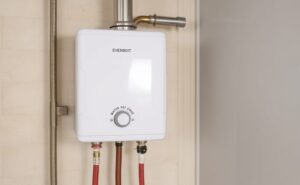
This control panel is where you adjust the temperature settings.
1
Access the controls
Turn on the display or remote, then open the user-accessible control cover if your model has one. Read the label before touching anything: a temperature override switch may be a physical switch, a button combination, a dial, or a setting in a remote interface. Don’t remove a service panel or touch wiring while the heater is energized.
2
Change the temperature
Select the temperature setting and use the arrow buttons, dial, or override control to choose the new value. Some units call this Boost, Override, Priority, or Max; the manufacturer’s instructions decide which label applies. For general household use, 120°F is a common starting point, while a higher setting can increase scald risk and may require careful mixing at the tap. See this tankless water heater temperature chart before choosing a setting.
3
Save the setting
Press Set, Enter, Save, or the equivalent control, then wait for the display to stop flashing. A setting that disappears after a few seconds probably wasn’t stored. Wireless remotes may take a moment to send the change to the heater.
4
Test the water
Run the hot tap at the fixture you’ll use, let the temperature settle, and measure it with a thermometer. Check the actual water rather than trusting the number on the display; incoming water temperature, flow rate, and the plumbing run can change what reaches the tap.
5
Exit override mode
Press Cancel or Override again, lower the setpoint to its normal value, or allow the timed mode to expire—whichever your manual specifies. Confirm that the display shows the ordinary operating setting before leaving the heater unattended.
Useful for checking stable output
WINTEMP 18kW Electric Tankless Water Heater 240V ETL Certified WiFi
Product 1 uses self-modulating power to respond to incoming water temperature and flow, so it’s useful when you’re checking whether a replacement holds the selected temperature instead of swinging hot and cold.
The hot tap has run long enough for the temperature to settle
A thermometer confirms the water temperature
The override mode is canceled or its timer is understood
Children and anyone at risk of scalding won’t use a higher setting unsupervised
Power and scald safety
Never open an energized electrical service compartment to reach a hidden control. Shut off the correct breaker and follow the manual before any internal work; gas connections, venting, and 240 V wiring belong to a licensed professional in most places. Water above 120°F can cause a scald quickly, so increase the setting only for a clear reason and test it at the tap.
Display versus delivered temperature
The heater’s setpoint is the target at the unit, not a promise that every faucet will deliver that exact temperature. Low flow, a long pipe run, or a clogged inlet filter can make the tap temperature differ from the displayed value.
Tools and Parts Needed to Override Temperature
Gather these before starting your override procedure.
Full-unit replacement
WINTEMP 18kW Electric Tankless Heater
Use this only if the existing heater needs replacement rather than a simple temperature adjustment. Its self-modulating control responds to water flow and the set temperature, but the electrical requirements are substantial, so confirm your service and wiring before buying.
Tools and Parts Needed to Override the Temperature
A sensor, stat or thermostat temperature override usually needs only the heater’s controls, a thermometer, and a few basic hand tools; “override temperatura” may simply be the wording on a bilingual display or manual. Gather a screwdriver, insulated gloves, and the correct manufacturer instructions before opening any cover.
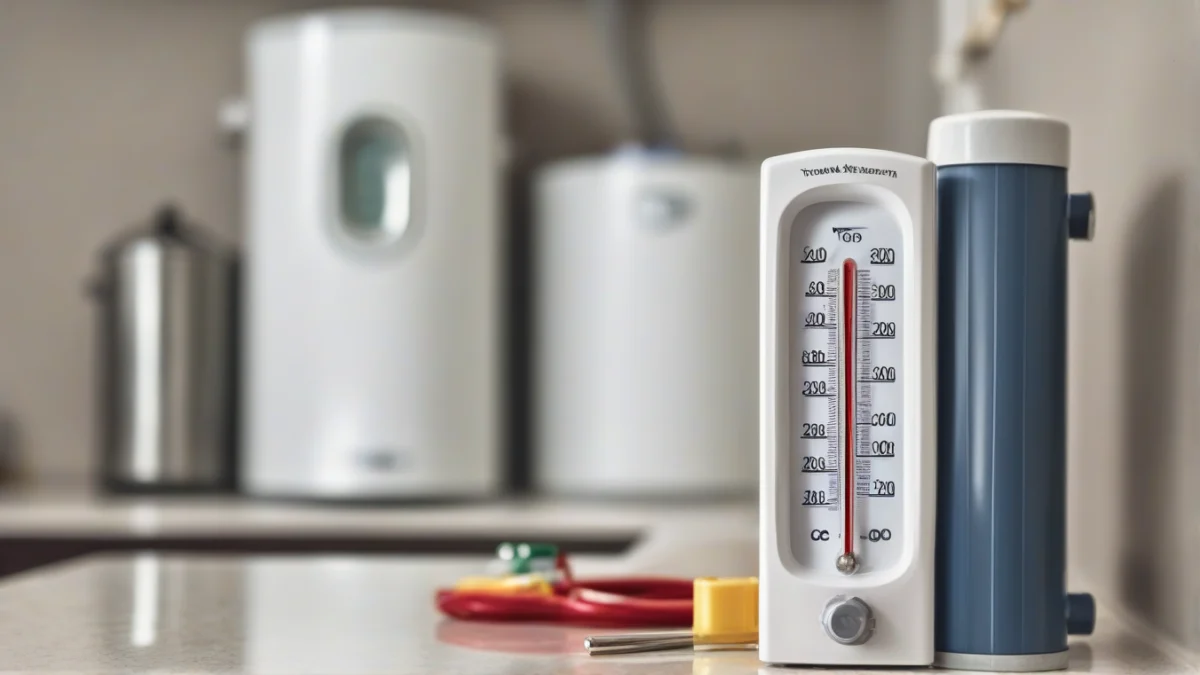
Use a thermometer to accurately check the water temperature.
Bring these first
Flat-head or Phillips screwdriver that fits the control-cover screws
Insulated gloves for handling covers and tools; they don’t make live electrical work safe
A digital thermometer for checking water at the tap
The model number and manufacturer’s manual
A flashlight for reading labels inside a dark utility area
Tool or part
What it does
Multimeter
Checks for voltage only when the manual calls for electrical troubleshooting and you know how to use it safely.
Replacement thermostat or control panel
Restores normal temperature control when the original sensor, thermostat, display, or panel is faulty; match the exact model and revision.
Manufacturer-specific override switch or remote
Provides the approved way to select Boost, Priority, or another override mode when the heater supports one.
Replacement screws or cover hardware
Replaces damaged fasteners so the control cover can be secured as designed.
Buy parts by the heater’s exact model number, not by appearance.
Check before buying
Photograph the model label and the existing control connections before ordering a thermostat or panel. A multimeter can help identify a dead circuit, but shut off the breaker first and follow the service procedure; guessing at 240 V wiring is an expensive way to learn what a breaker does.
Common Mistakes That Cause Damage or Leaks When Overriding Temperature
The safest temperature override changes the setpoint in the heater’s normal controls and leaves every safety limit, wire, gas connection and water fitting alone. If “override temperatue” is the search you typed, you’re looking for that control setting, not a way to defeat the high-limit switch.
Stay Below the Rated Limit
Never raise the temperature beyond the maximum shown in the owner’s manual or on the control interface. A higher setpoint can create scalding water, trigger the high-limit protection, increase mineral buildup and strain the heat exchanger. Water above 120°F at the tap raises scald risk, so use a thermometer at the fixture after changing the setting.
Forcing a dial, button, service setting or valve can break the control or leave the heater unable to regulate temperature. If a control won’t move with normal finger pressure, stop and check the manual for the correct button sequence; don’t use pliers or bypass a lockout.
Shut Off Before Opening Anything
Changing a temperature setting from the outside control panel usually doesn’t require opening the cabinet. If the manual tells you to remove a cover, switch off the electrical disconnect or breaker first, and close the gas shutoff for a gas model before working near its controls. A display that is dark doesn’t prove every internal part is safe to touch.
Skipping that shutdown can expose you to live voltage, hot water or an unexpected burner start. After the adjustment, restore power and gas only as the manual directs, then check for fault codes and unusual burner behavior.
Loose fittings and poorly seated panels cause many post-adjustment leaks and faults. Don’t disturb water unions, gas piping or vent parts just to reach a temperature control; if one must be disconnected, use the manufacturer’s sealing method and leak-check a gas connection with an approved leak-detection solution, never with a flame.
In short
Use the heater’s documented temperature setting, stop at its rated maximum and never defeat a high-limit or other safety control. Shut off power and gas before opening the cabinet, then verify the panels, fittings and fault status before using hot water.
From HeaterGuides · our own guideTankless? Page 8 is the descaling routine, page 15 checks the size.Water Heater Owner's ToolkitFix the common faults yourself, keep it running for years, and know when a repair is money wasted.No-hot-water flowcharts, gas and electricFlush, anode, relief valve and descaling stepsRepair-or-replace calculator (Excel)$14.99$9.99Get it for $9.99See what's inside and watch the 2-minute video →18-page printable PDF + Excel calculator · instant download · 30-day refund
Permits and Licensed Professionals Required for Temperature Override
To override the temperature on a tankless hot water heater, you can usually adjust the listed control-panel setting yourself; changing wiring, gas piping, venting or other safety-related parts is where a licensed professional and possibly a permit enter the picture.
Check Local Code First
Permit rules vary by city, county and state, and some jurisdictions require a permit or inspection for any water-heater alteration. Ask the local building department before changing the heater’s circuit, disconnect, gas supply, vent system or control wiring. Keep the installation manual and model number available so the official can identify the listed requirements.
Leave These Jobs to Pros
A licensed electrician should handle new wiring, breaker changes and 240-volt work on an electric tankless unit. A licensed plumber or qualified gas professional should handle gas-supply adjustments, combustion controls, venting and leak repairs on a gas model. Incorrect gas pressure or venting can cause fire, exhaust-gas and carbon-monoxide hazards.
An inspection may be needed after work that changes the heater’s electrical, fuel or venting installation. Don’t remove the rating label, bypass a high-limit device or install a control that isn’t approved for the model; those changes can void the listing and leave the heater outside its safety certification.
Call a professional if the temperature cannot be changed through the documented controls, the unit shows a repeated fault, water leaks from the cabinet or a gas smell appears. Close the gas shutoff, leave the area and contact the gas utility or emergency service for a gas smell; don’t operate switches near the leak.
Frequently Asked Questions
Can I override the temperature on any tankless water heater?
No. The available temperature range and override method depend on the model, fuel type, control panel and any installer lockout. Use the manufacturer’s listed controls only; never bypass a hard temperature limit or safety sensor.
How do I know if my heater has a temperature override switch?
Look for a set-temperature button, dial, menu option or lock symbol on the control panel. Many tankless units have no separate override switch, so the model manual or the label behind the front cover is the reliable answer.
Is it safe to override the temperature myself?
Adjusting the normal setpoint is usually a reasonable DIY task if you can follow the controls and verify the outlet temperature. Turn off power before opening an access panel, keep the gas and water connections untouched, and stop if the temperature surges or the unit shows an error.
What is the maximum safe temperature to set on a tankless water heater?
There is no single safe maximum for every home, but 120°F at the tap reduces scald risk and is a common setting. Higher settings can cause burns quickly, especially for children and older adults, so use the manufacturer’s limit and an approved mixing or anti-scald valve where your installation requires one.
Can overriding the temperature void my warranty?
A normal adjustment within the owner’s manual usually doesn’t void a warranty by itself. Bypassing a lockout, changing wiring, defeating a safety control or operating outside the listed range can create a warranty problem and a safety problem.
What tools do I need to check the temperature settings?
You need the heater’s control panel, its manual or model number, and a reliable thermometer for the outlet water. A screwdriver may be needed for an access cover, but shut off electrical power first and don’t remove covers that expose gas or live electrical components.
When should I call a professional to adjust my water heater?
Call a licensed plumber or electrician if the adjustment involves gas piping, venting, 240-volt wiring, a mixing valve or a control-board repair. Get help sooner if water temperature is unstable, the heater leaks, the breaker trips, the flame or exhaust looks abnormal, or an error returns after a reset.
Before you go · a welcome giftGet the Water Heater Owner's Toolkit for $4.99Fix the common faults yourself, keep it running for years, and know when a repair is money wasted. Normally $14.99; your welcome price saves $10.00. We'll email your link right now.or skip the email and buy it now for $4.99 →One email with your link now. We never share your address.


 Water Heater Owner's ToolkitFix the common faults yourself, keep it running for years, and know when a repair is money wasted.No-hot-water flowcharts, gas and electricFlush, anode, relief valve and descaling stepsRepair-or-replace calculator (Excel)