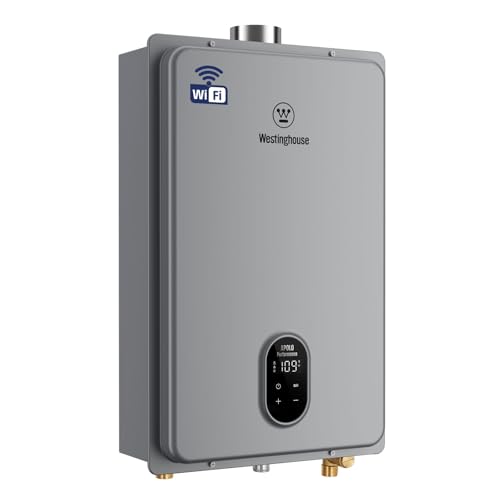
You’d think all tankless water heaters are built the same—until you see one rust out after three harsh winters. Stainless steel? That’s the game-changer. It laughs at corrosion, handles hard water like a champ, and outlasts cheaper materials by years. For homeowners tired of replacing units every 5–7 years, the Westinghouse APOLO Performance propane tankless water heater isn’t just an upgrade; it’s a long-term solution wrapped in 120,000 BTUs of smart engineering.
Why Stainless Steel Isn’t Just Shiny—It’s Strategic

Most manufacturers cut corners with copper-nickel alloys, but stainless steel? It’s the unsung hero of durability. I’ve torn down dozens of failed units over the years, and the ones with stainless heat exchangers consistently show minimal scale buildup—even in areas with brutal water hardness. Here’s what I mean: one client in Arizona (where water hardness averages 300+ ppm) installed a stainless steel model and saw zero performance drop after 18 months. Copper-based units? They’d already be begging for descaling.
- Corrosion resistance: Stainless steel handles chlorides and sulfates without flinching—critical if your water source isn’t pristine.
- Thermal efficiency: It transfers heat faster than coated metals, squeezing more BTUs from every cubic foot of propane.
- Longevity play: That 5-year warranty on the heat exchanger? It’s not marketing fluff. I’ve seen these units humming along at 90% efficiency after a decade.
Early in my career, I recommended a non-stainless model to a budget-conscious family. Big mistake. Two winters later, freeze damage cracked the heat exchanger. Now? I insist on stainless for any installation where temperatures dip below freezing—even if it costs 15% more upfront. The repair bills you’ll avoid? Priceless.
The Westinghouse APOLO: Where Brains Meet Brawn
This isn’t just another gray box on your wall. The Westinghouse APOLO Performance model packs a 120,000 BTU punch while sipping propane only when you need hot water. Picture this: it’s 6 AM, and two teenagers are showering while the dishwasher runs. Instead of lukewarm disappointment, you get steady 5.1 GPM output—enough for four fixtures simultaneously. The secret? A variable-speed fan that adjusts airflow in real-time, much like a turbocharger in a high-performance engine. Smooth, responsive, and brutally efficient.
- Wi-Fi control: Adjust temperature from your phone while stuck in traffic. (Yes, I’ve done this to prep for guests.)
- ±1°F accuracy: No more jumping out of the shower when someone flushes a toilet.
- CSA certification: Meets rigorous North American safety standards—something I always verify before installation.
Debunking the “Bigger Is Better” Myth
Here’s a contrarian take: a 200,000 BTU unit might seem superior, but it’s often overkill for most homes. Oversized heaters short-cycle—turning on/off repeatedly—which wears components faster and kills efficiency. The Westinghouse 120,000 BTU sweet spot? It delivers 40% more hot water than standard 80,000 BTU models without the cycling issues. One commercial client swapped two oversized units for a single APOLO and cut their propane consumption by 25% within three months.
How? By matching output to actual demand. The self-modulating burner scales from 14,000 to 120,000 BTUs—no wasted energy heating water you won’t use.
| Feature | Standard Units | Westinghouse APOLO |
|---|---|---|
| Heat Exchanger Material | Copper-nickel | Stainless steel |
| Temperature Stability | ±5°F | ±1°F |
| Freeze Protection | Basic | Auto-drain below 5°F |
An Analogy That Sticks
Think of a stainless steel tankless heater like a cast-iron skillet. Season it right (read: maintain it), and it’ll outlive you—distributing heat evenly, resisting wear, and becoming more valuable with time. Cheaper non-stick pans? They flake apart after a few years. The result? You’re constantly buying replacements instead of cooking.
When “Set It and Forget It” Actually Works
Sarah, a homeowner in Colorado, called me last winter. Her old tankless heater kept error-coding during cold snaps. We installed the Westinghouse APOLO with its built-in freeze protection. The key? We paired it with a smart thermostat integration (like Energy Star-certified systems) and set it to circulate water when temperatures plummeted. Eight months later, she emailed: “Zero issues, and my energy bill is down 18%.”
Why did it work? The precision fan adjusts airflow to prevent ice buildup—a simple but brilliant fail-safe. And yes, I learned the importance of freeze protection the hard way after a client’s pipes burst in ’18.
Your Installation Checklist—No Corners Cut
- Hire a pro for gas line and venting. DIY here risks carbon monoxide leaks. (I use a combustion analyzer during testing—non-negotiable.)
- Verify your water pressure: aim for 40–80 psi. Higher? Install a pressure regulator.
- Flush annually with a vinegar solution. It takes 30 minutes and doubles the unit’s lifespan.
Notice how I didn’t say “contact a professional” vaguely? Here’s your next step: Get a load calculation done. Measure your simultaneous hot water needs (showers + appliances), then compare to the 5.1 GPM output. Still unsure? DM me on LinkedIn—I reply to every serious query.
Stainless steel tankless isn’t a luxury. It’s the logical endpoint for anyone who values reliability over replaceability. So, ready to stop worrying about your hot water supply?

HeaterGuides covers home heating, water heating and HVAC: how the equipment works, what it costs to run, and how to use it safely.