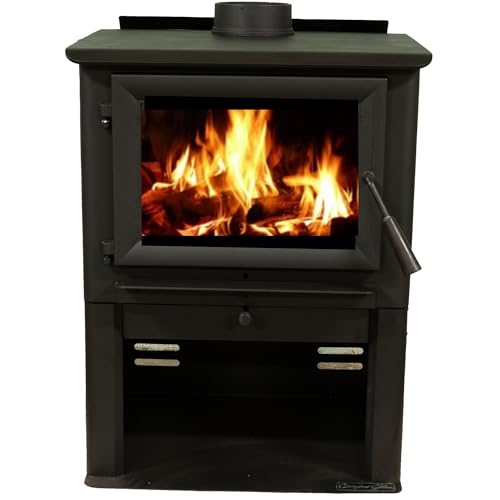
The Comfort Glow CGWS2500 is the best large wood burning stove for most readers because it heats up to 2,500 sq ft, accepts 21-inch logs, and uses secondary combustion for cleaner burns and longer loads. A 21-inch firebox matters more than a flashy BTU claim when you want fewer reloads on a cold night.
A big wood stove is only useful if it matches your floor plan, chimney, and the size of the logs you actually want to split. A 2,500 sq ft rating means more than a 900 sq ft stove, but it still won’t fix a drafty house with poor insulation.
For this search, the real choices are a larger indoor stove for whole-house heat, a smaller stove for zone heating, or a pellet model if you want automation and accept electricity dependence.
Best Large Wood Burning Stoves
#1Best Overall
Comfort Glow Wood Stove CGWS2500
Best for Large indoor rooms up to 2,500 sq ft
The CGWS2500 is the strongest match for a large-room search, with a firebox that accepts 21-inch logs and heats up to 2,500 sq ft. Secondary combustion reduces emissions while the plate-steel body and cast-iron door are built for regular indoor use.
Room size Up to 2,500 sq ftLog length Up to 21 inchesConstruction Heavy-duty plate steel with cast iron doorBurn technology Secondary combustionViewing area Clear view window
Why it made the cut
Heats up to 2,500 sq ft
Accepts logs up to 21 inches
Secondary combustion reduces emissions
Good to know
No cooking surface is listed
No BTU output is provided
Skip it if Skip it if your room is small or you need a listed cooking surface.
Best for Rooms up to 1,200 sq ft and backup heat during outages
This Ashley stove suits a smaller large-room application, producing up to 68,000 BTUs for spaces up to 1,200 sq ft. Its secondary combustion system, removable ash pan, and no-electricity operation make it practical for outage backup and off-grid use.
Heat output Up to 68,000 BTUsRoom size Up to 1,200 sq ftFirebox 1.3 cubic feetLog length Up to 18 inchesAsh handling Integrated removable ash pan
Why it made the cut
Produces up to 68,000 BTUs
Works without electricity
Includes adjustable legs and a pedestal base
Good to know
Accepts logs up to 18 inches
Freight delivery is curbside or driveway only
Skip it if Skip it if you need to heat more than 1,200 sq ft or want a 21-inch firebox.
Best for Small rooms, cabins, and cottages that need a cooktop
The compact cast-iron design fits small or medium spaces up to 900 sq ft and retains heat after the fire settles. Its 22-inch log capacity and integrated cooking surface are useful in cabins and cottages where one appliance may need to provide heat and meal preparation.
Room size Up to 900 sq ftLog length Up to 22 inchesConstruction Heavy-duty cast ironFlue collar 6 inchesCooking Integrated cooking surface
Why it made the cut
Accepts logs up to 22 inches
Includes an integrated cooking surface
Compact cast-iron construction
Good to know
Heats only up to 900 sq ft
No heat output in BTUs is provided
Skip it if Skip it if your room exceeds 900 sq ft or you want the highest listed heating capacity.
Best for Outdoor cooking at campsites, hunting destinations, and RV camps
This portable stove is built for outdoor use, with a 24 by 17 by 15-inch firebox, galvanized steel construction, and a cast-iron hinged door. The included chimney pipe supports outdoor cooking and ventilation when the setup is used as directed.
Use Outdoor use onlyFirebox dimensions 24 in. L × 17 in. W × 15 in. HConstruction Galvanized steel with cast iron hinged doorIncluded part Chimney pipeCooking Outdoor cooking
Why it made the cut
Large 24 by 17 by 15-inch firebox
Portable design with chimney pipe
Built for outdoor cooking
Good to know
Outdoor use only
Not an indoor heating stove
Skip it if Skip it for a house, tent, or vehicle cabin; choose an indoor-rated stove for those spaces.
Best for Larger tents and group camping in cold weather
The H&ZT is designed for larger tents and group camping, with an upgraded firebox and expanded cooking area. Its 430 stainless steel body, high-temperature coating, and nine chimney pipes support portable outdoor use and smoke ventilation in taller tents.
Use Hot tents and outdoor campingConstruction 430 stainless steel with high-temperature coatingChimney pipes 9 includedIncluded chimney parts 6 straight pipes, 1 spark arrestor, 1 elbow, and 1 damper piCooking Expanded cooking area
Why it made the cut
Larger firebox for stronger heat
Expanded cooking area
Includes 9 extended chimney pipes
Good to know
Designed for outdoor camping use
No house heating capacity is provided
Skip it if Skip it for indoor rooms or any space that lacks the ventilation required for outdoor tent-stove use.
Choose a large wood stove by room size and layout first, then compare the firebox, log length and construction. A wood stove with a large firebox can reduce reloads, but an extra large wood burning stove isn’t automatically better for every house.
Spec
What to check
Why it matters
Heating area
Rated square footage and your room layout
Heat may struggle to reach closed rooms, high ceilings or an open loft.
Firebox
Interior size and maximum log length
A larger firebox and longer logs usually mean fewer reloads.
Construction
Cast iron or plate steel
The materials change how quickly the stove heats and cools.
Combustion
Secondary-combustion design and listed efficiency
More of the wood gases burn in the stove instead of leaving as smoke.
Compare like-for-like specifications; BTU claims alone don’t tell you how the stove will behave in your house.
A stove rated for 2,500 square feet can still be too small for a leaky house, poor insulation or a tall open loft. The same rating can be excessive in a tight, compact home, where the stove may run too hot while distant rooms stay uneven. The Comfort Glow CGWS2500’s 21-inch log capacity is useful because log length affects loading more directly than a headline BTU number.
21 in
A useful large-stove log length
Longer logs can mean fewer pieces to split and fewer reloads, provided the firebox actually accepts them.
Cast iron takes longer to heat but holds and releases heat after the fire settles; plate steel responds faster and usually cools faster once the fire fades. Neither material wins every room. Pick based on how quickly you want heat, how steady you want the stove to feel, and the manufacturer’s listed performance.
Myth
The largest wood burning stove or highest BTU wood burning stove is the safest choice for a big room.
Fact
A stove that’s oversized can make the room uncomfortably hot and encourage low, smoky burns. Match the appliance to the house and burn dry firewood according to its manual instead of chasing the biggest number.
Keep Pellet Stoves Separate
Pellet stoves belong in a different decision bucket: they need electricity to run the controls and feed system, plus a dependable supply of pellets. A cordwood stove is the better fit if you want to burn split logs and keep heating during a power outage.
Size The Stove To Your House
Match wood burning stoves to the house’s heat loss and layout, not square footage alone: the best wood burning stoves, best wood burning stoves 2026 picks, top rated wood burning stoves and best rated wood burning stoves still need the right room and installation. For these models, the 1,200 sq ft Ashley suits a smaller zone; the 2,500 sq ft Comfort Glow is a better fit for a larger space.
Treat the stove’s coverage rating as a starting point, not a promise. Insulation, drafts, ceiling height and room layout all affect how much heat reaches you. A tall room has more air to warm, while an open plan lets heat travel farther than a layout divided by closed doors.
1
Start with the rated area
Compare the manufacturer’s stated coverage with the space you actually expect the stove to heat. Don’t size it for rooms that heat can’t reach.
2
Adjust for the house
A well-insulated, open layout is an easier match for a stove’s rated area. Drafty walls, leaky windows or unusually high ceilings can leave a stove working hard without warming the whole house.
3
Check where it will sit
A central location generally spreads heat better than a corner because warmth has fewer rooms and walls to work around. A corner install may leave distant rooms cold even if the total square footage looks right.
Two 2,000 Sq Ft Houses
Say both houses have 2,000 sq ft. In the open-plan house, a stove rated for up to 2,500 sq ft is a plausible match, subject to insulation and ceiling height. In the drafty house, the same rating may not deliver even warmth; first address drafts and check whether the stove can serve the rooms you need heated. The 1,200 sq ft Ashley is better suited to a smaller zone than either whole-house job.
Open plan2,000 sq ft; fewer walls between rooms
Drafty house2,000 sq ft; greater heat loss
Larger-space optionComfort Glow, rated up to 2,500 sq ft
Myth
The biggest stove is always the safest choice for a big house.
Fact
Oversizing can make a room uncomfortably hot before distant rooms warm up. Compare coverage with the space and layout you need to heat; the largest wood burning stoves available, including extra large wood burning stoves, aren’t automatically right for every large home.
The portable Guide Gear and H&ZT hot-tent models are outdoor-use stoves, not substitutes for an indoor-rated home stove. If you’re comparing more options, see our top rated wood burning stoves buying guide.
In short
Use the coverage rating as a first screen, then account for insulation, ceilings and room connections. A central placement can help heat spread; it can’t make a drafty house behave like an open, well-insulated one.
Check Clearances And Chimney Needs
Clearances for the largest non-catalytic wood stove, a large cast iron wood stove, or a large front-load woodstove with an 8-inch flue come from the stove’s manufacturer listing and local code—not from the stove’s marketing label. A large wood burning furnace design follows its own installation instructions and ducting requirements, so don’t treat it like a freestanding room heater.
Check the flue collar before you buy: its diameter must match the listed chimney system, connector pipe and appliance requirements. A licensed wood-stove installer should verify the vent route, chimney height, draft and clearances before the stove arrives. An 8-inch collar doesn’t make an existing chimney suitable by itself.
Confirm Before Ordering
Manufacturer clearance distances to walls, furniture and ceiling
Noncombustible floor protection sized to the listing and local code
Chimney system listed for the stove’s flue diameter and fuel
A licensed installer’s plan for the connector pipe and chimney
Annual chimney inspection and sweeping before the heating season
Burn Clean Fuel
Burn only properly seasoned firewood. Wet wood cools the flue and encourages creosote; trash, painted wood and pressure-treated lumber add harmful fumes and can damage the stove or chimney. Never improvise fuel because a large firebox makes a bad load larger.
Tax Credit Check
A qualifying wood stove may be eligible for a tax credit only if the model meets the current EPA efficiency rules and the installation meets the program requirements in effect when you buy. Verify the current rules and keep the required certification and purchase records; don’t count the credit before confirming eligibility.
What Most Buyers Miss Before They Order
The largest wood stove on the market, or the largest wood burning stoves you can buy, may arrive by freight and be unloaded curbside. Plan for the stove’s listed weight, a pallet jack or appliance dolly, several strong helpers and a clear route from the driveway to the hearth.
Wood stoves with the longest burn time earn it from a suitably large firebox, a controlled air supply and dry fuel—not from the rating label alone. A large wood burning stove can heat during an outage because it needs no electricity; pellet stoves generally lose that advantage when their feeder and controls have no power.
Good Fit
A large house or open layout with a real heat load
Dry firewood and space to store it under cover
A chimney route that a licensed installer can approve
Poor Fit
Small, lightly insulated rooms where the stove must be throttled down
Homes without room for firewood, hearth protection or a chimney
Buyers expecting thermostat-like control or automatic fuel feeding
Use case
What to check
4,600 cubic feet
Use heat loss, insulation and layout to size the stove; cubic feet alone can’t select a model.
Big stove in a small place
Oversizing encourages low, smoky fires and creosote when you idle the stove.
Outdoor heating or camping
The Guide Gear and H&ZT stoves are outdoor-only categories; don’t substitute them for the indoor Comfort Glow models.
The Comfort Glow Cast Iron Wood Stove and Comfort Glow Wood Burning Stove, Fits 21-inch Logs, are indoor-stove choices; Guide Gear and H&ZT serve a different job.
Plan The Fuel First
A long overnight load is useful only if the firebox accepts your split length and you have dry wood ready. Measure the storage space and delivery path before ordering; the stove isn’t the only large object in this heating plan.
Run The Pre-Buy Checklist
The best large size wood stove for a big house is the one that fits your heat load, chimney plan, floor protection and delivery route—not simply the largest firebox. Large capacity wood stoves need dry fuel and a safe installation ready before the truck arrives.
Before You Order
Measure the heated room and note open doorways, stairwells and closed-off rooms.
Confirm the stove’s listed heating area, firebox size and maximum log length; a 21-inch log model still needs room around the loading door.
Measure the existing chimney or have a chimney professional identify its diameter, height and condition. Match the stove’s required flue size—don’t adapt it by guesswork.
Plan the noncombustible floor protection required by the stove manual, including the area in front of the loading door.
Check the route from the driveway to the installation spot. Measure gates, doors, turns and thresholds, and confirm who unloads a heavy freight shipment.
Verify local wood-stove code, permit rules and inspection requirements before buying. Your building department may require approval before the first fire.
Make sure you have covered storage space for enough seasoned firewood. A bigger stove can consume more wood when run hard.
Arrange a qualified installer for the chimney connection, clearances and final inspection; never burn a new stove before those pieces are complete.
Fuel Check
Freshly cut wood can burn poorly, smoke more and leave heavier deposits. Buy or stack properly seasoned firewood early enough to dry, and burn only clean, untreated wood.
In short
The best large wood burning stoves still fail as a purchase if the flue, floor, fuel storage or delivery path doesn’t work. Check those four constraints before you place the order.
Frequently Asked Questions
Which large wood burning stove is best for most homes?
The Comfort Glow CGWS2500 is the best fit for most larger homes because it heats up to 2,500 square feet, accepts 21-inch logs, and uses secondary combustion. Choose a smaller stove if your home is well insulated or divided into rooms that won’t share heat.
How big of a wood stove do I need for 2,000 square feet?
A stove rated around 2,000 to 2,500 square feet is a reasonable starting point, but insulation, ceiling height, climate and room layout can change the answer. A heat-loss calculation is more reliable than matching the stove’s advertised square footage to your floor area.
What is the largest wood burning stove you can buy?
There isn’t one universal largest model because manufacturers publish different firebox sizes, output ratings and heating-area claims. For a practical comparison, check the firebox volume, maximum log length, listed output and required clearances rather than chasing the biggest BTU number.
Is a non-catalytic wood stove better for a large house?
Non-catalytic stoves are often the simpler choice because secondary combustion works without a catalyst that needs inspection and eventual replacement. A catalytic stove can suit you better if you need long, low burns, so compare the operating instructions and maintenance requirements before deciding.
How long should logs be for a large wood stove?
Use the length stated in the stove manual, and keep logs shorter than the maximum so they load without force. A stove that accepts 21-inch logs still needs properly split, dry firewood; oversized or wet pieces make loading and clean burning harder.
Can I use a large wood stove in a small room?
A large stove in a small room can overheat the space and tempt you to run a smoky, low-temperature fire. Size the appliance to the home’s heat loss, verify the listed clearances and floor protection, and don’t install it solely because the firebox holds more wood.
Do I need a permit or inspection to install a large wood stove?
Most jurisdictions require a permit or inspection for a new wood-stove installation, but the exact rule comes from your local building or fire department. Ask before ordering, because the inspector may require a listed chimney system, specific hearth protection, and documented clearances.