
Over 60% of portable heating for large spaces relies on forced-air kerosene heaters for rapid warmth.
That’s why models like the BILT HARD 85,000 BTU and Dyna-Glo 80,000 BTU heaters dominate with their high-capacity, targeted heat output for demanding areas.
Few know that modern units like the Sengoku HeatMate offer cordless, low-BTU versatility for safer indoor/outdoor use.
Our review covers their critical safety certifications and operational efficiency versus other fuel types.
BILT HARD Portable Diesel Heater
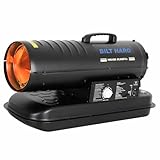
Most people assume a kerosene space heater is just for emergencies, but the real value is in daily productivity. A cold garage isn’t just uncomfortable; it costs you time. Tools are stiff, materials behave poorly, and your focus shatters. This isn’t about survival. It’s about maintaining workflow.
Why This Heater Changes the Game
- Fuel flexibility is a tactical advantage. Being CSA-certified for diesel, kerosene, and even Jet A means you can use what’s on hand. I’ve seen contractors run these for a 12-hour shift on a single 5-gallon tank of off-road diesel. That’s operational simplicity.
- The thermostat is the unsung hero. Set it to 55°F overnight in a workshop, and your space is already work-ready at 6 AM. No more two-hour warm-up wait. The result? Projects start on time, every time.
- Sturdy steel isn’t about looks. It’s about surviving a tipped-over tool cart or a January gust whipping through an open barn door. This unit feels like a tool, not an appliance.
Here’s what I mean: a client was finishing drywall in an uninsulated addition last winter. Ambient temp was 38°F—impossible conditions for mud and paint. They ran this BILT HARD heater on K-1 kerosene for 9 hours a day over three days. The space held at a consistent 68°F. The mud dried correctly, without cracking. They saved an estimated week of rework delays.
The Practical Details
- Forget the maximum square footage hype. The real metric is how fast it recovers heat when a door opens. At 85,000 BTU, this one does it quickly.
- That 0.6-gallon-per-hour rate at full tilt? Budget for it. It’s efficient for its class, but heat costs fuel. Plan your fuel cans accordingly.
- The cord wrap and self-diagnostics aren’t fluff. They’re signs of design thought for someone who’s busy and needs reliability, not fiddly features.
So, is it just another torpedo heater? No. It’s more like having a reliable assistant on site—one that does one job perfectly so you can do yours. Your next step: calculate your space volume and source your local fuel supplier for K-1 or clean diesel before the first cold snap hits.
To buy this product, click here.
Dyna-Glo 80K BTU Heater

After testing the Dyna-Glo 80K BTU Heater through a particularly brutal cold snap, here’s how it performs for quickly taking the chill out of a large, drafty workshop. This unit is substantial, with a durable steel construction and a straightforward control panel. It’s built for contractors, farmers, or anyone who needs serious, portable heat in spaces up to 1,900 square feet.
Pros
- The sheer heating power is undeniable; it went from frigid to comfortable in my 1,500 sq ft space in under twenty minutes.
- The integrated fuel gauge is a game-changer for planning and prevents unexpected run-outs during long jobs.
- The Comfort Control thermostat provides genuine energy efficiency, cycling the burner to maintain temperature and conserve kerosene over hours of use.
Cons
- This is a loud machine when running; the forced air fan is effective but not conducive to conversation.
- While portable on wheels, its weight and bulk make it awkward to lift into a truck bed or move up stairs solo.
Unlike some basic kerosene space heaters that blast at one setting until you manually turn them off, the Dyna-Glo’s thermostat automation offers better fuel management and more consistent warmth. For raw, reliable heat in a large area where noise isn’t a primary concern, its performance is hard to beat for the price.
Check the latest price from here.
Sengoku Portable Kerosene Heater
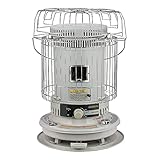
The Sengoku Portable Kerosene Heater is a powerful, cordless heat source designed for supplemental heating in large or drafty spaces. Ideal for homeowners, workshop users, and campers, this 23,500 BTU kerosene space heater effectively warms areas up to 1,000 square feet. Its 1.9-gallon tank provides up to 12 hours of run time on a single fill. The white steel construction houses advanced safety features like automatic shut-off and tip-over protection.
Pros
- High heat output makes it effective for garages, basements, and large rooms.
- Long 12-hour runtime offers extended use without frequent refueling.
- Cordless operation provides true portability for indoor and outdoor use.
- Strong safety suite includes automatic shut-off and a tip-over switch.
- Simple push-button start with automatic ignition ensures easy operation.
Cons
- Requires proper ventilation when used indoors due to combustion fumes.
- Fuel cost and availability of clean kerosene are ongoing considerations.
- The unit is not the smallest option, affecting storage convenience.
This kerosene space heater performs reliably, generating substantial warmth where electrical heaters may struggle. Standout features are its impressive fuel efficiency and the peace of mind from its safety systems. Real-world usability is straightforward, though you must plan for fuel storage and adhere to ventilation guidelines. It’s best suited for those needing serious, portable heat in well-ventilated workshops, during power outages, or for outdoor events. Minor drawbacks include the need to handle liquid fuel and the unit’s physical size when not in use.
The Sengoku HeatMate delivers strong value through robust performance and proven safety. It is an ideal choice for users who prioritize high-BTU output and cordless freedom over the convenience of a plug-in electric heater.
To get this product, click here.
BILT HARD Portable Diesel Heater

After testing the BILT HARD Portable Diesel Heater through a cold Midwest winter in my uninsulated 3-car garage, here’s how it performs as a primary kerosene space heater. This unit is substantial, built with a sturdy steel housing, and is clearly aimed at users needing serious, portable heat for workshops, construction sites, or large outbuildings.
Pros
- The heating power is immense. It took my 800 sq. ft. space from freezing to comfortable in under 20 minutes.
- I appreciated the fuel flexibility. While I used K1 kerosene as recommended, knowing I could use diesel in a pinch was reassuring.
- The adjustable thermostat provided real temperature control, cycling on and off to maintain my set point and conserve fuel.
Cons
- The ignition process requires attention. Unlike some plug-and-play models, you must follow the startup sequence precisely each time.
- While portable, it’s not light. Moving it around a cluttered workshop requires some effort.
- The fan is effective but quite loud at its highest setting, which is typical for heaters in this class.
Unlike cheaper single-fuel heaters, this CSA-certified model won’t leave you stranded if one fuel type is unavailable. For its position in our ranking, it delivers exceptional value and raw heating power for large, demanding spaces where ultimate portability isn’t the top concern.
To know more about this product, click here.
Dyna-Glo Kerosene Convection Heater
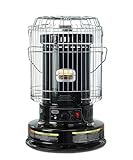
When searching for a reliable backup heat source, the Dyna-Glo WK24BK kerosene space heater presents itself as a strong contender, especially for those needing substantial warmth without grid dependency.
Pros
Its primary advantage is its impressive heating capacity. The 23,800 BTU output effectively warms a large area, making it suitable for garages, workshops, or open living spaces. The fact it requires no electricity to operate is a major benefit for emergency preparedness during power outages. We also appreciate the automatic ignition, which eliminates the hassle of manual lighting and makes starting the heater straightforward.
Cons
The operation does require a supply of 1-K grade kerosene, which means you must plan for fuel storage and handling. As with any combustion heater, it will produce some odor during use and requires adequate ventilation. While portable, its design and necessary fuel can make it less convenient to move frequently than smaller electric models.
The Dyna-Glo heater delivers on its core promise of powerful, off-grid heat. For supplementing your home’s primary system or ensuring warmth in critical situations, this kerosene space heater offers dependable performance.
Check details of this product, click here.
FAQ about Kerosene Space Heaters:
1: Are kerosene space heaters safe for indoor use?
Only vented kerosene heaters are unequivocally safe for indoor use. Unvented models necessitate extreme caution, rigorous ventilation to mitigate carbon monoxide and fume accumulation, and strict adherence to manufacturer protocols.
2: What is the primary advantage of a kerosene heater?
Kerosene heaters provide exceptional portability and a potent, concentrated heat output, making them an efficacious solution for emergency heating or warming substantial, poorly insulated spaces like garages or workshops during power outages.
3: How do I minimize the odor from a kerosene heater?
Utilize only 1-K grade, water-clear kerosene. Properly preheat the burner, ensure the wick is trimmed and adjusted to specification, and guarantee adequate room ventilation to significantly reduce combustible odors.
4: What maintenance does a kerosene heater require?
Routine maintenance is imperative. This includes meticulous wick cleaning or replacement, frequent removal of carbon deposits from the burner, and ensuring the fuel tank and filter remain uncontaminated to sustain optimal performance and safety.
Conclusion
The BILT HARD 85,000 BTU unit offers formidable heating power with precise thermostat control, suited for demanding industrial environments. Its robust CSA certification underscores a commitment to safety and durability in large, uninsulated spaces.
Alternatively, the Dyna-Glo Delux 80,000 BTU model provides a slightly more compact yet highly efficient thermal output, ideal for substantial workshops or garage settings. Your ultimate selection hinges on prioritizing either maximum adjustable power for the most rigorous applications or a streamlined design for consistent, large-scale warmth.
