Skip to content

Expert home heating guides, reviews & repairs

Heater GuidesHeaterGuides
Troubleshooting

Is the Potable Water Line the Main Line to Electric Water Heater?

You just installed a new 40-gallon electric water heater, and the shower pressure is pathetic. Or maybe you’re repiping a bathroom and you’re staring at the 1/2-inch PEX stub that feeds the tank, wondering if it’s enough. These are the moments where plumbing theory meets reality, and the answer isn’t always obvious.

This guide clears up the confusion. You’ll learn exactly what the main line to an electric water heater is, why pipe size matters for flow and pressure, how to calculate the right diameter for your home, and when you need to call a plumber to upgrade. No fluff, just the math and code you need.

is the potable water line the main line to electric water heater

What Exactly Is the “Main Line” to an Electric Water Heater?

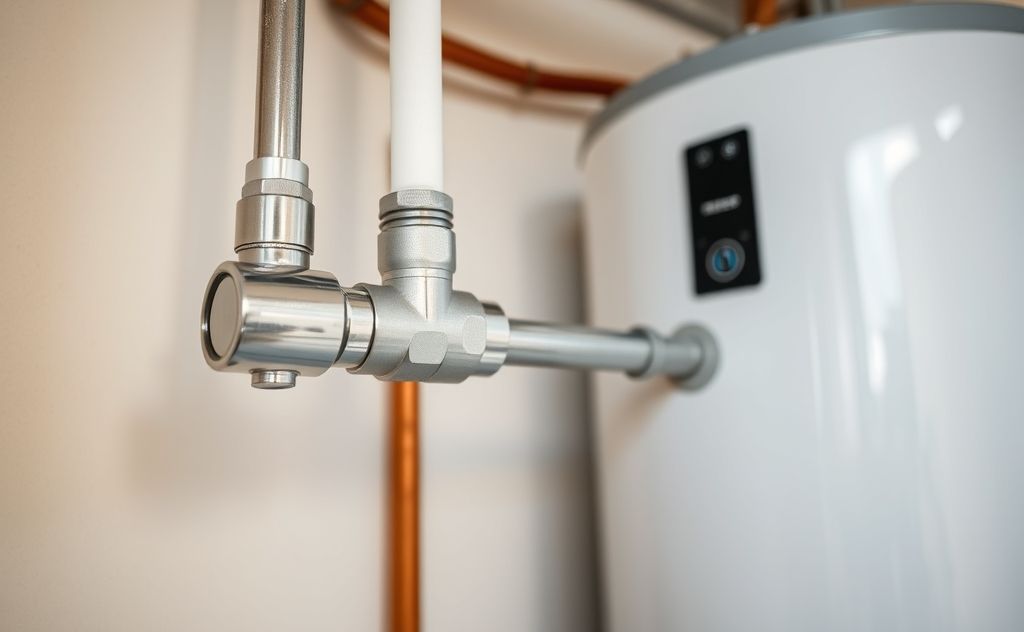
The potable water line that feeds your electric water heater is the cold water inlet — the pipe that brings fresh, drinkable water from your home’s main supply line to the tank’s dip tube. That’s the main line. It’s distinct from the hot water outlet branch, which carries heated water to your fixtures.

Most people confuse the two. They think the “main” is the biggest pipe near the heater, which is often the hot side. But the cold water inlet is the one that matters for performance. It’s the line that determines how fast the tank refills and how much pressure your showers see.

In a typical home, the main water line splits at a tee. One branch goes to the cold side of the heater, the other feeds the rest of the house. That cold branch is the potable water line we’re talking about. It needs a shut-off valve, a dielectric union, and — depending on your local code — an expansion tank.

Why the Supply Line Size Matters (Flow Rate vs. Pressure)

Here’s where people get tripped up. A smaller pipe doesn’t necessarily mean lower pressure at the faucet — it means lower flow rate. Pressure is static; it’s the same everywhere when nothing is running. Flow is dynamic, and that’s where pipe diameter bites you.

Think of it like a straw. A narrow straw delivers less soda per second than a wide one, even if the glass is full. Same with plumbing. A 1/2-inch line can deliver maybe 6-8 gallons per minute (GPM) under ideal conditions. A 3/4-inch line pushes 12-15 GPM. That difference shows up the moment two fixtures run at once.

The 1/2″ vs. 3/4″ Debate – What the Math Says

Let’s run the numbers. A standard shower head uses 2.5 GPM at 80 psi. A bathroom faucet uses 1.5 GPM. Fill a 40-gallon tank and you’re pulling 40 gallons through that line in a few minutes. If the line is 1/2-inch copper, the friction loss is about 0.12 psi per foot at 5 GPM. Run 30 feet of it and you lose nearly 4 psi — not terrible, but add fittings and elbows and that number climbs.

Now add a second bathroom. Someone flushes a toilet (3 GPM) while you shower (2.5 GPM). Total draw is 5.5 GPM. A 1/2-inch line at that flow has a pressure drop of 0.2 psi per foot. Over 40 feet, that’s 8 psi gone. Your shower drops from 50 psi to 42 psi. You’ll feel it.

With 3/4-inch pipe, the same scenario loses less than 2 psi. That’s the difference between a decent shower and a dribble. For most homes with two or more bathrooms, 3/4-inch is the right call.

How to Determine the Right Size for Your Home

You don’t need a hydraulic engineer to figure this out. A simple fixture count does the job. Count every fixture that draws hot water: showers, tubs, sinks, dishwashers, washing machines. Assign each a demand value — shower 2.5 GPM, faucet 1.5, dishwasher 1.5, washer 2.0. Add them up.

If your total demand is under 8 GPM, 1/2-inch might work. If it’s over 8 GPM, you need 3/4-inch. Most homes with three or more bathrooms will exceed 8 GPM just from the showers alone. That’s not a guess; that’s the math the IPC uses.

Fixture Count Method

Here’s a practical example. A 3-bedroom house with two full baths: two showers (5 GPM), two bathroom sinks (3 GPM), one kitchen sink (1.5 GPM), one washer (2 GPM). Total is 11.5 GPM. That’s 44% above the 8 GPM threshold. A 1/2-inch line will choke that system. A 3/4-inch line handles it with room to spare.

For a small apartment with one bath and a kitchen sink, total demand is around 5.5 GPM. 1/2-inch is fine there. But here’s the catch: building codes in most jurisdictions require a minimum of 3/4-inch for the main supply line to the house, and the branch to the water heater often needs to match. Check your local code before you buy pipe.

Pipe Material Factor (Copper vs. PEX)

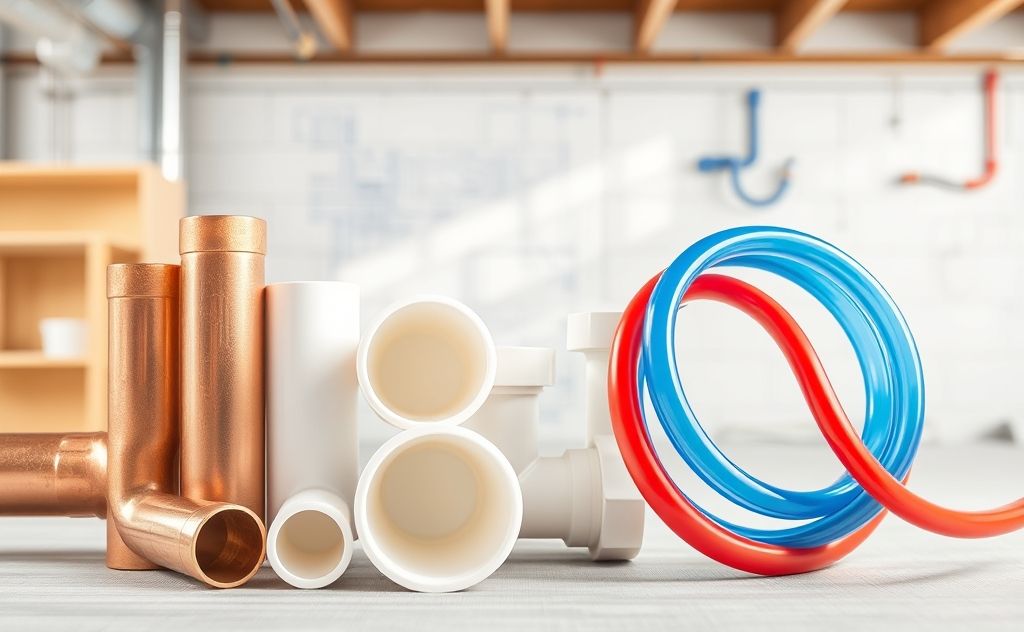
Pipe material changes the equation. PEX has a smaller internal diameter than copper of the same nominal size. A 1/2-inch PEX has an inside diameter of about 0.485 inches, while 1/2-inch copper is 0.545 inches. That’s a 12% difference in cross-sectional area. Fittings make it worse — PEX crimp rings and insert fittings create turbulence that copper elbows don’t.

What this means: if you’re using PEX, step up one size. A 3/4-inch PEX line performs roughly like a 5/8-inch copper line. For the same flow, you’ll need 3/4-inch PEX where 1/2-inch copper would have sufficed. This is a common mistake in new construction, where builders run 1/2-inch PEX to save money and then get complaints about weak showers.

Copper is more forgiving, but it’s also more expensive and harder to work with. If you’re doing a DIY repipe, PEX with a manifold system is easier. Just remember the size penalty.

Local Plumbing Code Requirements You Can’t Ignore

The International Plumbing Code (IPC) and International Residential Code (IRC) set the baseline. Section 604.3 of the IPC states that the minimum water supply pipe size shall be 3/4-inch for the main supply, with branch lines sized based on fixture demand. Most states adopt these codes with local amendments.

The code also requires a shut-off valve on the cold water inlet to the water heater. That’s not optional. You need to be able to isolate the tank for maintenance without killing water to the whole house. The valve goes between the main supply and the heater, usually within 5 feet of the tank.

Some jurisdictions require an expansion tank on the cold line if you have a closed system — that’s when a check valve or backflow preventer is installed on the main. The expansion tank absorbs thermal expansion as the water heats. Without it, pressure can spike and damage the tank’s lining or the relief valve. Check with your local inspector; this is one of those things that varies by region.

Signs Your Current Line Is Too Small

You don’t need a pressure gauge to know you have a problem. The symptoms are obvious:

  • Shower pressure drops noticeably when someone flushes a toilet or starts a load of laundry
  • It takes forever to fill a bathtub — more than 5 minutes for a standard tub
  • The water heater makes a loud rushing noise when it refills, and you can hear the flow through the walls
  • Your tankless electric heater cycles on and off because the flow rate is below its activation threshold

If you’re seeing any of these, measure the actual flow at the cold inlet. Open the valve fully and time how long it takes to fill a 5-gallon bucket. If it takes more than 40 seconds, you’re getting less than 7.5 GPM — not enough for a 3-bathroom house.

How to Upgrade the Line (Without a Full Repipe)

You don’t have to tear out every wall to fix this. The upgrade happens at the connection point. Most homes have a 1/2-inch stub coming off a 3/4-inch main. You can transition at the tee.

Here’s the step-by-step:

  1. Shut off the main water supply and drain the pressure by opening a faucet.
  2. Cut the existing 1/2-inch line back to the nearest accessible tee or junction.
  3. Remove the old tee and replace it with a 3/4-inch tee. If the main is copper, use a 3/4-inch copper tee and sweat it in. If it’s PEX, use a 3/4-inch PEX tee with crimp rings.
  4. Run new 3/4-inch pipe from the tee to the water heater. Keep the run as short as possible — every 90-degree elbow adds friction.
  5. Install a 3/4-inch shut-off valve on the cold inlet, then a dielectric union to connect to the tank’s fittings. The dielectric union prevents galvanic corrosion between dissimilar metals.
  6. If your code requires it, install an expansion tank on the cold side between the valve and the heater.
  7. Turn the water back on slowly, bleed the air out of the line, and check for leaks.

This takes a few hours and maybe $50 in parts. Compare that to repiping the whole house, which runs thousands. The upgrade is worth it if you have the symptoms above.

Frequently Asked Questions

Can I use a 3/4-inch line on a 40-gallon heater?

Absolutely. A 3/4-inch line doesn’t hurt a 40-gallon tank — it only helps. The tank’s inlet is usually 3/4-inch male NPT anyway, so you’re matching the fitting. The only downside is a slightly higher cost for the pipe and fittings. No performance penalty exists.

Does a tankless electric heater need a bigger line?

Yes, and this is critical. Tankless electric units need a minimum flow rate to activate the heating elements — often 0.5 to 1.0 GPM just to turn on, and 3-5 GPM to deliver hot water at full capacity. A 1/2-inch line may not deliver enough flow for a whole-house unit. Most manufacturers specify 3/4-inch minimum for the cold inlet. Check your unit’s manual; undersizing is the #1 cause of “lukewarm” tankless complaints.

What’s the difference between a potable water line and a hydronic line?

A potable water line carries water you can drink — it’s treated, tested, and safe. A hydronic line carries heating water in a closed loop, often with additives like antifreeze or corrosion inhibitors. You never mix the two. The water heater’s cold inlet is always a potable line.

Do I need a dielectric union on the cold inlet?

Yes, if the tank has a steel nipple and the supply pipe is copper or galvanized. Without a dielectric union, the dissimilar metals corrode at the connection point. Over a few years, that corrosion can restrict flow or cause a leak. It’s a $10 part that saves you a headache later.

Can I run 3/4-inch PEX for the whole run?

You can, but remember the size penalty. 3/4-inch PEX has a smaller inside diameter than 3/4-inch copper. If you’re replacing a 3/4-inch copper line with PEX, you might need to step up to 1-inch PEX to match the flow. For most homes, 3/4-inch PEX is acceptable for the water heater feed, but verify with your local code.

What to Do With This Information

  • Measure your actual flow rate with a bucket and a stopwatch before you buy anything — guessing leads to wasted money.
  • Count your fixtures and total their GPM demand. Over 8 GPM means you need 3/4-inch or larger.
  • If you’re using PEX, go one size bigger than you would with copper.
  • Always install a shut-off valve and dielectric union on the cold inlet — code requires both in most areas.
  • Check your local code for expansion tank requirements before you connect anything.
  • Upgrading the line at the heater connection is a DIY job if you’re comfortable with basic plumbing; if you’re not, a plumber can do it in under two hours.
  • If you have a tankless electric unit, don’t guess — read the manual’s minimum flow requirement and pipe accordingly.

The potable water line to your electric water heater is more than just a pipe. It’s the lifeline of your hot water system. Get the size right, and you’ll never think about it again. Get it wrong, and you’ll curse every shower until you fix it.

Share
Written by Joye

I am a mechanical engineer and love doing research on different home and outdoor heating options. When I am not working, I love spending time with my family and friends. I also enjoy blogging about my findings and helping others to find the best heating options for their needs.

Keep reading

Related guides

Free newsletter

Heater deals and guides, worth opening

Price drops, new guides and safety recalls. One email, only when it matters.

No spam. Unsubscribe in one click. Privacy policy.