Inline Water Heater Explained: How It Works and Saves Energy
On this page 7 sections
- Inline Water Heaters and How They Work
- Comparing Condensing and Non-Condensing Inline Water Heaters
- How to Size an Inline Water Heater for Your Home
- Installation Considerations for Inline Water Heaters
- Maintenance Requirements for Inline Water Heaters
- When To Switch From a Tank Water Heater to Inline
- Questions People Ask
Inline water heaters deliver hot water instantly by heating only the water you use, eliminating standby heat loss from storage tanks. This makes them a popular choice for homeowners seeking efficiency and compact design.
These heaters come in various types, including condensing and non-condensing gas models and electric units, each with different installation needs and performance characteristics.
Inline Water Heaters and How They Work
An inline water heater is a tankless system that heats water directly as it flows through the unit, without storing any. It provides hot water on demand, either with electric coils or a gas burner heating a heat exchanger inside the device.
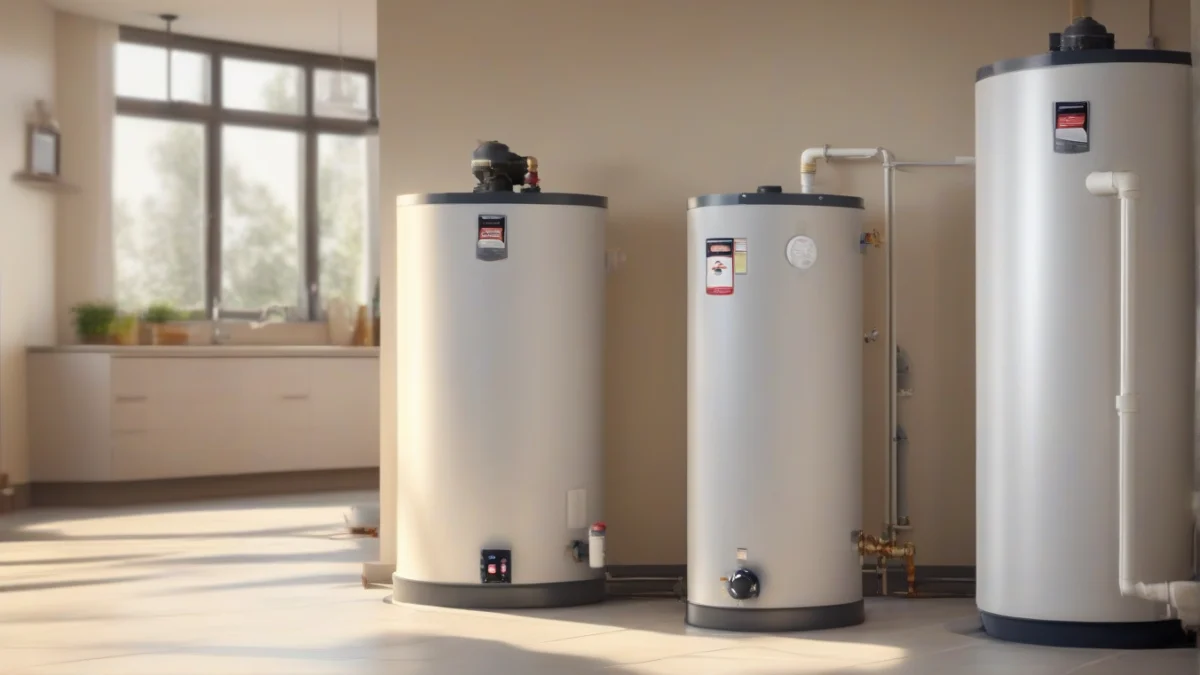
Unlike traditional tank water heaters that keep a reservoir of hot water ready, inline water heaters activate only when you open a tap. This means you don’t waste energy keeping water hot all day, and you get a continuous supply limited only by the unit’s flow rate capacity.
Water heater inline models come in electric and gas varieties. Electric inline hot water heaters use resistive heating elements that warm water instantly. Gas-powered models burn propane or natural gas to heat a metal heat exchanger, which transfers heat to the water passing by.
The heat exchanger is the heart of any inline water heater. It must transfer enough heat quickly to raise cold water to the set temperature while maintaining flow. If the water flows too fast, it won’t reach the desired temperature. If it flows too slowly, the unit risks overheating or shutting down.
| Flow Rate (gallons per minute) | Temperature Rise (°F) |
|---|---|
| 0.3 GPM | 82°F rise |
| 0.5 GPM | 131°F rise |
| 2.5 GPM | 40-50°F rise (typical for whole-house units) |
Comparing Condensing and Non-Condensing Inline Water Heaters

The main differences between condensing and non-condensing tankless water heaters lie in efficiency, installation requirements, and cost. Condensing units capture extra heat from exhaust gases, making them more efficient but more complex to install.
Non-condensing tankless water heaters vent exhaust gases directly and operate at lower upfront cost. They typically have a stainless steel heat exchanger and burner designed for durability. However, they lose more heat through the vent and run at lower efficiency.
| Aspect | Condensing Tankless Water Heater | Non-Condensing Tankless Water Heater |
|---|---|---|
| Efficiency | High (up to 96% UEF) | Moderate (usually around 80-85% UEF) |
| Venting | Requires sealed combustion and condensate drain | Standard venting, no condensate drain |
| Initial Cost | Higher due to advanced design | Lower upfront investment |
| Operating Cost | Lower energy bills due to better efficiency | Higher energy use over time |
| Maintenance | Condensate drainage and periodic cleaning | Simpler maintenance, typically less frequent |

How to Size an Inline Water Heater for Your Home
Sizing an inline water heater depends mainly on your peak hot water demand measured in gallons per minute (GPM). You need a unit that can supply hot water at the flow rate your household uses at its busiest moments, like mornings or evenings.
Start by estimating the peak GPM. A typical shower uses about 2.5 GPM, a kitchen faucet about 1.5 GPM, and a dishwasher roughly 1.5 GPM. Add up the fixtures you expect to run simultaneously. For example, two showers plus a faucet might total 6.5 GPM.
Next, match the heater’s capacity to that flow rate. Tankless water heaters are rated by their maximum GPM output at a certain temperature rise — the difference between your cold inlet water and desired hot water temperature.
Inlet water temperature matters: the colder your source water, the harder the heater must work. For instance, if your inlet water is 50°F and you want 120°F, that’s a 70°F temperature rise. A heater rated for 6 GPM at a 70°F rise is sufficient for a 6 GPM peak flow. But if your inlet water drops to 40°F, you’ll need a higher capacity unit because the temperature rise increases to 80°F.
Whole house inline water heaters often range between 6 and 10 GPM to cover typical family needs. Smaller units suit point-of-use or single fixtures. Oversizing wastes energy and money; undersizing means lukewarm water and flow restrictions.
If you’re unsure, manufacturers’ sizing charts relate flow rate, temperature rise, and model numbers. Some models include recirculation pumps or buffer tanks to improve performance under fluctuating demand.
 Water Heater Owner's ToolkitFix the common faults yourself, keep it running for years, and know when a repair is money wasted.No-hot-water flowcharts, gas and electricFlush, anode, relief valve and descaling stepsRepair-or-replace calculator (Excel)
Installation Considerations for Inline Water Heaters
Installing an inline water heater requires attention to location, ventilation, power, and plumbing connections to ensure safe and efficient operation.
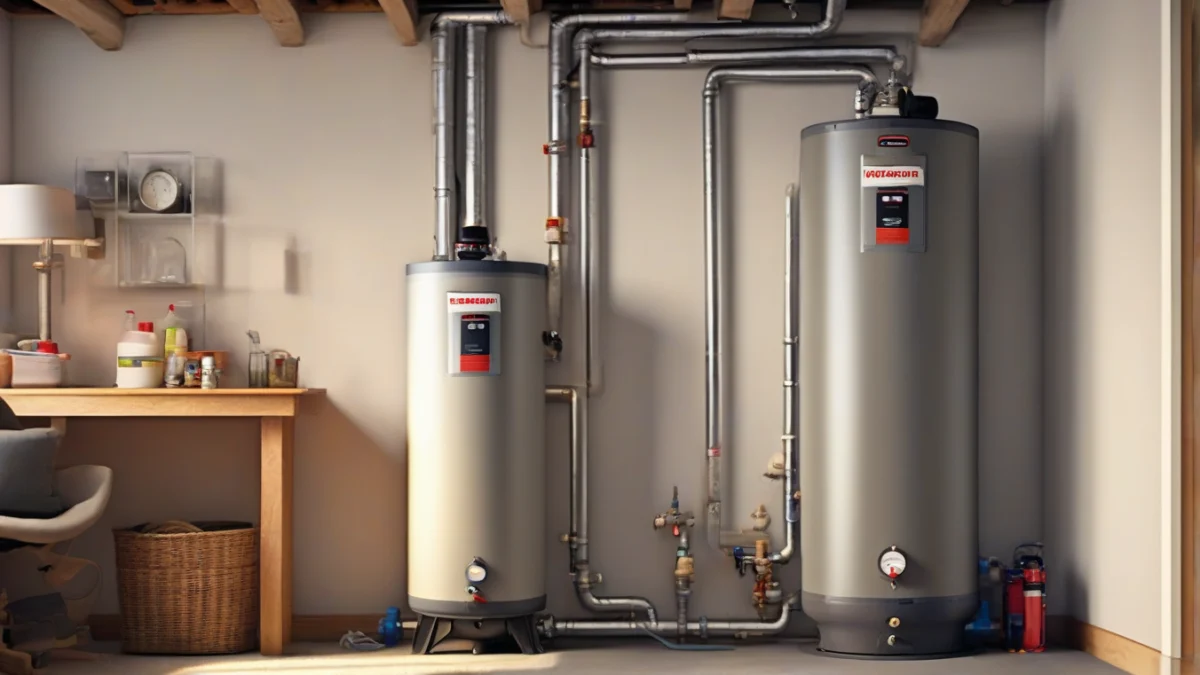
You can install tankless water heaters indoors or outdoors, but gas models often need proper venting. Condensing gas units require both a vent for exhaust and a drain for condensate. Non-condensing models vent hotter gases and need insulated, code-compliant exhaust pipes.
Electric inline heaters are simpler to install indoors, often near the point of use or alongside a combi boiler system. They need a dedicated 240 V circuit sized for the unit’s amperage and proper grounding. Plumbing connections should be by copper, CPVC, or PEX piping rated for your water temperature.
Installation costs vary widely depending on model, fuel, venting complexity, and local labor rates. Outdoor models can reduce venting costs but may face weather exposure concerns. Electric models usually cost less to install but have higher operating costs in most areas.
If you’re adding an electric inline water heater to a combi boiler system, ensure compatibility and confirm the electrical load with your installer. These setups require coordination between heating and hot water supply to avoid conflicts or overloads.
Following installation requirements closely prevents issues like water leaks, carbon monoxide risks, and electrical hazards. It also optimizes heater lifespan and energy efficiency.
For detailed guidance on installation steps and safety, see the CPSC’s space heater safety guidance and local codes.
Maintenance Requirements for Inline Water Heaters
You should descale a tankless water heater at least once every 1 to 3 years, depending on your water quality. Hard water with high mineral content causes scale buildup inside the heat exchanger, reducing efficiency and shortening the unit’s lifespan.
Water quality is the biggest factor in how long your inline heater lasts. Minerals and sediment clog the narrow passages in the heat exchanger, forcing the unit to work harder and risking damage. Using a water softener or a pre-filter can extend the heater’s service life significantly.
Regular maintenance goes beyond descaling. You’ll want to check and clean any inlet water filters, inspect the venting system for blockages if it’s a gas model, and test safety features like the temperature and pressure relief valve if present.
Look for signs that your heater needs maintenance or replacement. Reduced hot water flow, fluctuating water temperatures, unusual noises, or a sudden spike in energy bills can all signal scaling or mechanical wear.
When To Switch From a Tank Water Heater to Inline
Switching from a tank water heater to an inline model is worth it if you want energy savings, space efficiency, and continuous hot water. Tankless units heat water only when you need it, cutting standby losses common with tanks.
Energy savings vary but expect around 20% to 30% less water heating cost with a tankless unit, depending on your usage and local electricity or gas rates. For example, a 1,500 W electric tankless heater running 3 hours daily uses 4.5 kWh; at 17 cents per kWh, that’s 77 cents a day, versus a tank running constantly to maintain temperature.
Space is another big factor. Inline heaters are compact and can be wall-mounted near the point of use, freeing up floor space compared to bulky tanks.
Comfort with hot water improves too. Tankless models provide an endless flow at a steady temperature, while tanks can run out during heavy use or require reheating time.
Look for ENERGY STAR certified models to qualify for rebates and tax credits, which can offset the higher initial purchase and installation cost.
| Heater | Watts | Per hour | Per day (8 h) | Per month (30 days) |
|---|---|---|---|---|
| 1,500 W electric tankless heater, 3 hours daily | 1,500 W | 26¢ | $2.04 | $61.20 |
| 50-gallon electric tank heater maintaining temp 24 | 4,500 W | 77¢ | $6.12 | $183.60 |
If your current tank is old or inefficient, or if space and hot water availability are top priorities, switching to an inline water heater is a smart move. Otherwise, weigh the higher upfront cost against your long-term savings and comfort needs.
For more on choosing the right model, see Inline Electric Heaters for On-Demand Hot Water.