

Improving indoor air quality through HVAC ventilation involves regular maintenance, proper filtration, and ensuring adequate airflow to reduce pollutants and enhance comfort.
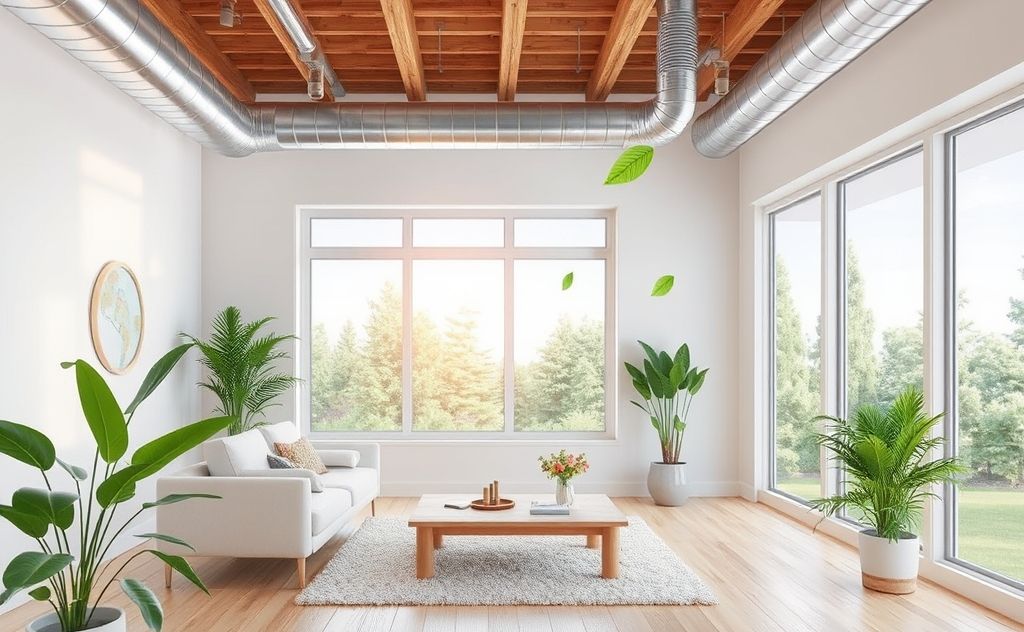
Indoor air quality impacts health, comfort, and productivity. Your HVAC system plays a crucial role in maintaining clean air through proper ventilation. Here’s how to optimize it.

HG Power
HG Power 6 Inch Exhaust Fan, 308CFM…
- Efficient Ventilation: HG Power 6 inch exhaust fan quickly removes exhaust gas. Perfect for workshops, basements, warehouses, apar…
- Superior Motor: Upgraded motor ensures high efficiency, fast operation, and top-quality performance. Reduces friction, saves elect…
- High Air Flow: 150 mm/6" diameter HG Power exhaust fan delivers impressive 308 CFM airflow. Powered by a 38 W motor (110 VAC, 60 H…
1. Upgrade Your HVAC Air Filters
Standard 1-inch filters capture only large particles. For better air quality:
- Use MERV 11-13 filters for residential systems
- Consider HEPA filters for allergy sufferers
- Change filters every 1-3 months
Higher MERV ratings trap smaller particles like pollen, mold spores, and pet dander. For built-in heating systems, ensure your filter upgrade won’t restrict airflow.
Filter Maintenance Tips
| Filter Type | Recommended Change Frequency |
|---|---|
| Fiberglass | 30 days |
| Pleated | 90 days |
| HEPA | 6-12 months |

2. Optimize Ventilation Rates
The EPA recommends 0.35 air changes per hour as a minimum. Modern HVAC systems can achieve this through:
- Energy recovery ventilators (ERVs)
- Heat recovery ventilators (HRVs)
- Dedicated outdoor air systems (DOAS)
For homes with supplemental heating systems, ensure proper ventilation to prevent combustion byproducts from accumulating.
Calculating Your Ventilation Needs
Use this formula: (House volume in cubic feet × 0.35) ÷ 60 = Required CFM
3. Control Humidity Levels
Ideal indoor humidity ranges from 30-50%. HVAC systems can maintain this through:
- Properly sized air conditioners
- Whole-house dehumidifiers
- Humidifiers in dry climates
According to EPA research, controlling humidity reduces mold growth and dust mites.
4. Implement Smart Ventilation Strategies
Demand-Controlled Ventilation
Uses CO2 sensors to adjust fresh air intake based on occupancy. Can reduce energy use by 20-30% while maintaining air quality.
Zoned Systems
Allows different ventilation rates for various areas. Particularly useful for:
- Kitchens (higher ventilation)
- Bedrooms (moderate ventilation)
- Storage areas (minimum ventilation)
5. Regular HVAC Maintenance
Key maintenance tasks for better air quality:
- Clean evaporator and condenser coils annually
- Inspect and clean ductwork every 3-5 years
- Check refrigerant levels
- Test system airflow
The King County Health Department recommends professional HVAC inspections before each heating and cooling season.
DIY Maintenance Checklist
- Monthly: Check filter condition
- Quarterly: Clean supply vents
- Biannually: Inspect drain pans
- Annually: Professional tune-up
Related pick: Check today's price on Amazon

I am a mechanical engineer and love doing research on different home and outdoor heating options. When I am not working, I love spending time with my family and friends. I also enjoy blogging about my findings and helping others to find the best heating options for their needs.
Related guides

Natural Ventilation in HVAC: Boost Efficiency & Indoor Air Quality
Natural ventilation in HVAC systems enhances indoor air quality and energy efficiency by utilizing outdoor air flow, reducing…
Ventilation System Design: Key Principles for Optimal Airflow
Effective ventilation system design principles include optimizing airflow, ensuring proper air exchange, selecting appropriate equipment, and adhering to…
Top 10 HVAC Ventilation Problems & How to Fix Them
Common issues in HVAC ventilation include poor airflow, duct leaks, improper sizing, inadequate filtration, and system noise, affecting…
