

You notice it in your own backyard first. The bamboo that was a neat screen three years ago now pushes new shoots ten feet from the original clump. The Japanese knotweed along the creek has doubled its territory. And something new—a vine you can’t identify—is climbing the fence line. None of this feels like a crisis. But each of these plants is a data point in a larger pattern: warming temperatures are quietly rewriting the rules of survival for every species on the continent.
This article explains exactly how rising temperatures fuel invasive species spread. You’ll learn the four biological mechanisms that turn a warmer climate into an invasion amplifier, the real dollar costs we’re already paying, and a concrete prevention checklist you can use this weekend. This is a strategic brief, not a textbook chapter. Read it once, and you’ll see landscapes differently—and you’ll know what to do about it.
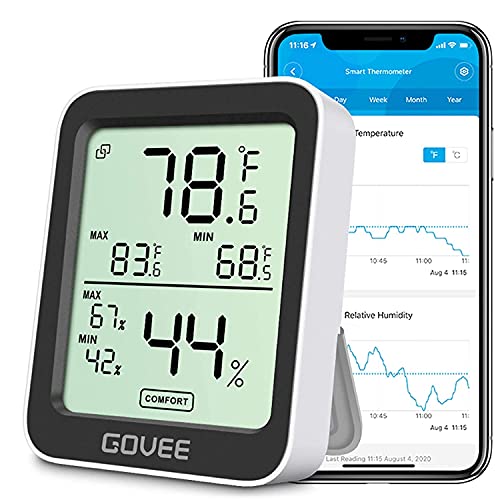
Govee
Govee Indoor Hygrometer Thermometer H5075 with Bluetooth…
- Smart Features: The Govee Wireless Thermometer Hygrometer supports all basic functions as well as smart functions such as remote m…
- High Accuracy and Fast Refresh Time: With the Swiss-made smart hygrometer sensor, the temperature is accurate up to ±0.54°F while…
- Upgraded Display: This room humidity gauge is easy to read due with a 3-inch bright LCD screen with large numbers. The max/min tem…
Before we get into the biology, one practical note. Tracking temperature and humidity trends in your own micro-environment—your greenhouse, basement, or even a section of your garden—helps you spot the early conditions that stress native plants and favor invaders. A simple Govee indoor thermometer hygrometer gives you continuous data on your phone, so you can correlate a warm, damp week with a sudden surge of weed seedlings or mold. It’s not a scientific instrument, but it’s good enough to alert you to change early, which is exactly when intervention works best.

The Invisible Invader: How Warming Rewrites the Rules of Survival
Think of a species’ range as a map of tolerable conditions. Every plant, insect, and pathogen has a temperature band where it can grow, reproduce, and outcompete its neighbors. For decades, that band was stable. A southern weed couldn’t survive northern winters. A tropical beetle couldn’t complete its life cycle in a temperate forest.
Warming shifts those bands. The map is being redrawn in real time, and the species that benefit most are the ones already adapted to disturbance—the weeds, the generalists, the fast reproducers. Native species, which evolved in place over millennia, often lack the genetic flexibility to keep pace. This asymmetry is the core of the problem: climate change doesn’t create new invaders so much as it removes the natural barriers that kept existing ones in check.
The result is a phenomenon ecologists call range expansion. Species move northward and upward in elevation as the cold limits that once contained them recede. The USDA plant hardiness zones, which gardeners have used for decades, have already shifted significantly northward since 1990. What was a Zone 6 garden in the 1980s is now Zone 7. That’s not a trivial change—it means a whole class of plants and pests that previously froze out each winter now survives and thrives.
The 4 Mechanisms of Climate-Driven Invasion
Warming isn’t a single force. It operates through four distinct pathways, each of which independently increases invasion risk. Understanding these mechanisms is the difference between seeing the problem and being able to predict it.
Range Expansion: Moving North and Up
The most direct mechanism is simple geography. Cold temperatures act as a fence. When the fence moves, species follow. The classic example is the southern pine beetle, historically a pest of the southeastern United States. Warmer winter minimums have allowed it to survive as far north as New Jersey and New York, where it now attacks pitch pines in areas that were once too cold for it.
Elevation matters just as much as latitude. Mountain ecosystems are particularly vulnerable because species can only move so far up before they run out of mountain. A plant that shifts its range upward by 100 meters loses habitat area, since mountains get narrower at higher elevations. This ‘escalator to extinction’ effect squeezes native alpine species between advancing invaders from below and inhospitable conditions at the summit.
Species distribution models are getting better at predicting these shifts, but they still struggle with one variable: dispersal speed. Some invasive plants produce thousands of wind-borne seeds per plant. Others, like the emerald ash borer, are limited by how fast the beetles can fly. Warming doesn’t just open the door—it also speeds up the journey through longer growing seasons and faster development times.
Stress Tolerance: Weakening Native Defenses
Healthy ecosystems resist invasion the way a healthy immune system resists infection. That resistance depends on native plants being vigorous enough to capture light, water, and nutrients before newcomers can establish. Heat and drought stress erode that vigor.
When a native tree experiences repeated heat waves, it allocates energy to survival rather than growth or defense. It produces fewer chemical compounds that deter herbivores. Its roots grow more slowly. It drops leaves prematurely. An invader that is already adapted to warmer, drier conditions—like cheatgrass in the western United States—faces none of these costs. It simply grows faster while the native struggles.
This stress tolerance advantage compounds over time. Each stressed native plant produces fewer seeds. Each healthy invader produces more. Within a few years, the seed bank in the soil shifts from native-dominant to invader-dominant. Even if the original stressor (a heat wave, a drought) passes, the invasion is already self-sustaining.
Phenological Mismatch: When Timing is Everything
Phenology is the study of seasonal life cycle events—when buds break, when flowers bloom, when insects emerge. Every species has a schedule, and those schedules are tightly coupled. A native caterpillar emerges when its host tree’s leaves are most nutritious. A migratory bird arrives when that caterpillar is most abundant.
Warming disrupts these schedules, but not uniformly. Some species respond to temperature directly and shift their timing quickly. Others respond to day length, which doesn’t change. This creates mismatches. The invasive gypsy moth—now called spongy moth—hatches earlier in response to warm springs. Its native predators, which time their activity to day length, hatch later. The result is a window of predator-free feeding for the invader.
Mismatches also work against native species in competition with invaders. A native wildflower that blooms at its usual time may find that the invasive plant next to it has already captured the pollinators, because the invader’s flowering is triggered by temperature and advanced by several weeks. The native sets fewer seeds. The invader sets more. Over generations, the invader wins the genetic lottery.
Disturbance Events: Storms and Fires as Invasion Gateways
Invasive species are rarely the first ones into a landscape. They are usually the second. Something has to open the door—a fire, a flood, a windstorm, a construction project. Warming increases both the frequency and intensity of these disturbance events.
Consider the western United States. Warmer, drier conditions have extended the fire season by several months. Each large fire creates thousands of acres of bare, nutrient-rich soil. The native species that historically recolonized burned areas are adapted to a particular fire regime—a certain frequency and intensity. When fires come hotter and more often, those natives can’t recover. Cheatgrass, which is fire-adapted and fast-growing, moves in. And here’s the feedback loop: cheatgrass is highly flammable, so its presence increases fire frequency, which favors more cheatgrass. The system flips from native shrubland to invasive grassland, and it doesn’t flip back.
Hurricanes and severe storms create similar gateways along the coast and in forests. Saltwater intrusion from storm surges weakens native trees. Downed timber creates open canopy. Each of these disturbances is a temporary window of opportunity for any invader whose seeds are waiting in the soil or blowing in on the wind. Warming makes the windows bigger and more frequent.
The Hidden Economic and Health Costs of a Warmer, Weedier World
The academic literature often frames invasive species as an ecological problem. That framing undersells it. The costs are measured in dollars, crop losses, and human health.
Globally, invasive species cost the world economy over $423 billion per year, according to a 2026 estimate from the Intergovernmental Platform on Biodiversity and Ecosystem Services. That figure includes crop damage, control costs, infrastructure damage, and lost timber. In the United States alone, the annual cost is estimated at $120 billion. And these figures are almost certainly underestimates, because they don’t fully account for ecosystem service losses or the compounding effects of climate change.
Agriculture is the most visible cost center. The spotted lanternfly, an invasive planthopper first detected in Pennsylvania in 2026, feeds on grapevines, fruit trees, and maples. It has no effective native predators. Warmer winters have allowed it to spread to at least 14 states. In vineyards, it can reduce yields by up to 90% in heavily infested blocks. The control costs—insecticide applications, biological control research, quarantine enforcement—run into the tens of millions annually.
Forestry faces similar pressures. The emerald ash borer, now established in 35 states, has killed hundreds of millions of ash trees. Municipalities spend billions removing dead trees from streets and parks before they fall. The spongy moth defoliates millions of acres of hardwood forest each outbreak, reducing timber value and increasing fire risk. Warmer, drier conditions stress the trees further, making them less able to refoliate after defoliation.
Human health is the least discussed cost. Invasive mosquitoes, particularly Aedes albopictus (the Asian tiger mosquito), are expanding their range northward as winters warm. This species is a vector for dengue, chikungunya, and Zika viruses. The southern house mosquito, which transmits West Nile virus, is also expanding. Each degree of warming extends the transmission season by roughly two weeks in temperate regions. That means more human cases of diseases that were once confined to the tropics.
There is also a less direct health cost: the mental and physical toll on communities losing their local landscapes. When a chestnut blight or a hemlock woolly adelgid kills the trees that shaded a town, property values drop, heat islands expand, and residents lose access to the outdoors. These are real, measurable public health consequences, even if they don’t show up in an emergency room.
Case Study: The Spongy Moth’s Northern March
The spongy moth (Lymantria dispar) is the best-documented example of climate-driven range expansion in North America. Introduced to Massachusetts in 1869 by a scientist hoping to breed a silk-producing caterpillar, it escaped cultivation and has been defoliating forests ever since.
For over a century, its southern range was limited by heat and its northern range by cold. The cold limit was the more important one. Spongy moth eggs require a period of cold dormancy, but they also die if temperatures drop too low. The historical northern boundary was set by minimum winter temperatures around -20°F. Eggs that experienced colder temperatures died.
Since 1990, winter minimum temperatures across the northeastern United States and eastern Canada have risen by 3-5°F. That might not sound like much, but it has moved the survivable boundary north by roughly 100-150 miles. The moth has followed. It is now established in Ontario, Quebec, and the Maritime provinces, areas where it was previously unable to persist.
The ecological consequences are severe. Spongy moth outbreaks defoliate millions of acres. Oak trees, a preferred host, can die after two or three consecutive years of defoliation, especially if they are also stressed by drought. The loss of oaks cascades through the ecosystem: acorns are a primary food source for deer, turkey, and small mammals, and those species in turn support predators.
Here’s the critical detail: the moth’s northward march is not steady. It advances in pulses, driven by warm years. A warm winter allows a large population to survive. The following summer, that population explodes and defoliates a new area. Then a cold winter knocks it back locally, but not before it has laid eggs in the new territory. The range edge ratchets forward, one warm year at a time.
Control efforts—primarily aerial spraying of Bacillus thuringiensis (Bt), a naturally occurring bacterium—have slowed the spread in some areas. But these programs are expensive, politically contentious, and only effective when applied early. In Canada, where the moth is still in its early invasion phase, a coordinated suppression program has kept it out of some of the most valuable timber forests. That success is a proof of concept: early detection and rapid response work, but they require sustained funding and public cooperation.
The ‘Lag Phase’ – Why We Haven’t Seen the Worst Yet
Here’s the uncomfortable truth about biological invasions: they don’t move in a straight line. Most follow a pattern of lag, then exponential growth, then saturation. The lag phase is the period when an invader is present but not yet abundant. It can last decades.
Warming creates new lag phases even as it accelerates existing ones. Consider a plant species whose seeds are dispersed by birds. A warming climate allows a few seeds to survive in a new, northern location. But it takes time for the population to build to a size where birds are eating enough of its fruit to spread it widely. During that lag, the plant is nearly invisible—a few individuals here and there, easy to dismiss.
This lag is dangerous for two reasons. First, it creates a false sense of security. Land managers see no outbreak, so they allocate resources elsewhere. Second, the lag phase is the only time when eradication is still possible. Once an invader reaches exponential growth, control costs skyrocket and eradication becomes nearly impossible.
The implication is sobering: the warming we’ve already experienced has likely created lag-phase invasions that won’t become visible for another decade or more. The seeds are already in the soil. The insect eggs are already under the bark. We are, in effect, fighting yesterday’s battles while today’s new invasions are still invisible.
This is why the window for action is now, not later. Every year of warming that passes locks in another cohort of lag-phase invaders that will eventually explode. Waiting to see the problem is waiting too long.
What You Can Do: A Practical Prevention Checklist
Individual actions feel small against a force like climate change. But invasive species spread through local vectors—your boots, your car tires, your garden center purchases. Interrupting those vectors is something you can do this weekend.
- Clean your gear before and after hiking. Scrub mud off boots, wading shoes, and bike tires. Seeds and insect eggs travel in mud. A stiff brush and a rinse takes two minutes.
- Buy native plants, and inspect everything you bring home. Check the soil for worms, the leaves for egg masses, the roots for unusual growths. Quarantine new plants for a week before planting them near natives.
- Learn to identify the top five invaders in your county. Your local extension service has a list. Photograph them on your phone so you know what to look for.
- Don’t dump aquarium water or compost unknown plants. Invasive aquatic plants and their seeds survive in tank water. Compost piles that don’t get hot enough won’t kill seeds.
- Use certified firewood. Buy it where you burn it. Moving firewood is the primary way emerald ash borer and other wood-boring pests travel long distances.
- Report sightings to your state’s invasive species hotline or a citizen science app. A single report of a new infestation can trigger a rapid response that saves millions.
- Monitor your own microclimate. Keeping a simple temperature and humidity log helps you notice the warm, damp patterns that favor fungal pathogens and fast-growing weeds. The Govee hygrometer mentioned earlier is one option, but any reliable sensor works.
None of these actions require expertise. They require consistency. The people who stop invasions are not scientists in labs—they’re the homeowners who noticed the odd vine and reported it before it set seed.
The Role of Citizen Science in Early Detection
Professional monitoring networks are underfunded and understaffed. In the United States, state departments of agriculture employ a handful of plant inspectors per state, responsible for millions of acres. They cannot see everything. This is where citizen science fills a gap that no other institution can.
Apps like iNaturalist and EDDMapS (Early Detection and Distribution Mapping System) turn every hiker, gardener, and birdwatcher into a sensor. You photograph a suspicious plant, the app uses image recognition to suggest an ID, and your observation becomes part of a national database. When a known invader appears in a new county, the system flags it and alerts local authorities.
The data quality is surprisingly good. A 2026 study in the journal Biological Invasions found that iNaturalist observations were as accurate as professional surveys for detecting new invasive plant populations, with the advantage of far greater geographic coverage. The main limitation is bias—people photograph what they notice, which skews toward showy plants and large insects—but for early detection, that bias is acceptable.
Citizen science also builds political will. When a community has personally documented an invasion, they are more likely to support control funding. The spongy moth suppression program in the Pacific Northwest, for example, has been sustained partly by the thousands of citizen reports that documented the moth’s spread. Those reports turned an abstract problem into a local one.
If you want to contribute, start with the climate change and invasive plants explainer from Columbia Climate School to understand what to look for, then download iNaturalist and commit to logging one observation per walk. That’s enough. The system works because of volume, not expertise.
Adaptation is Not Enough – We Need a New Playbook
The standard response to invasive species has been control: spray, cut, burn, release biological control agents. These tools remain essential, but they are reactive. They treat the symptom after the invasion has begun. Climate change has made this approach insufficient.
What we need instead is a shift toward resilience. That means managing landscapes to be more resistant to invasion in the first place. It means maintaining diverse native plant communities, because diverse communities are harder to invade. It means restoring natural disturbance regimes—prescribed fire, controlled flooding—so that native species are adapted to the disturbance when it comes, rather than being caught off guard.
It also means a hard look at our own behavior. The same warming that moves species around is partly driven by our consumption patterns. Reducing emissions is the ultimate mitigation strategy, and it operates on a time scale that matters for invasion biology. Every fraction of a degree we avoid is a fraction of a degree of range expansion we prevent.
Finally, it means accepting that some changes are irreversible. The hemlock woolly adelgid is not going away. The emerald ash borer is not going away. Our goal for these established invaders shifts from eradication to containment and ecosystem adaptation—planting alternative tree species, breeding resistant varieties, and accepting a different forest.
This is not a defeatist position. It is a strategic one. Resources are finite. Spending them on futile eradication attempts for established invaders means having nothing left for the lag-phase invasions that are still stoppable. The smart play is triage: give up on the hopeless cases, fight hard for the early ones, and invest in making the landscape more resilient so it can absorb the losses.
The warming is already here. The question is whether we respond with the same old playbook, or whether we write a new one while we still have time.
| Invader | Primary Mechanism | Current Cost (Annual, US) | Control Strategy |
|---|---|---|---|
| Spongy moth | Range expansion northward with warmer winters | $500M+ in defoliation and control | Aerial Bt spraying, egg mass removal, biological control |
| Emerald ash borer | Range expansion via firewood movement | $1B+ in tree removal and replacement | Quarantine, insecticide injections, parasitoid wasps |
| Cheatgrass | Stress tolerance and fire feedback loop | $200M+ in rangeland losses and fire suppression | Prescribed fire, grazing management, pre-emergent herbicides |
| Spotted lanternfly | Phenological mismatch and no native predators | $50M+ in vineyard losses and control | Sticky bands, insecticide, egg scraping |
| Asian tiger mosquito | Range expansion with warmer minimums | $100M+ in public health costs | Source reduction, larvicide, public education |
How does climate change affect the challenge of invasive species?
Climate change makes every stage of invasion easier. It removes the cold-temperature barriers that historically kept many invaders from establishing, it stresses native species so they compete less effectively, and it increases the frequency of disturbance events like fires and storms that create open ground for invaders to colonize. The USGS summarizes it as a double whammy: conditions become more favorable for the invader and less favorable for the native at the same time.
Why is there a delay between warming and visible invasion?
Invasive species typically go through a lag phase before exponential growth. During this phase, the population is present but small and hard to detect. It takes time for the population to build enough density to spread efficiently—through seed dispersal, insect flight, or human transport. Warming can shorten this lag, but doesn’t eliminate it. This is why early detection is so critical: the lag phase is the only window when eradication is still feasible.
Can I really make a difference as an individual?
Yes, but not in the way you might think. Your individual impact isn’t in stopping a large invasion—that’s beyond any one person. Your impact is in preventing the start of one. Cleaning your boots, buying local firewood, and reporting a suspicious sighting are all actions that interrupt the vector pathways. A single unreported infestation can become a regional problem within a decade. A single reported one can be eradicated in a year.
What’s the difference between a native species and an invasive species?
A native species is one that evolved in a particular region and has co-existed with the local ecosystem for thousands of years. An invasive species is one that has been introduced—intentionally or accidentally—to a region where it didn’t evolve. Invasive species often succeed because they lack the natural predators, diseases, and competitors that kept them in check in their home range. Climate change can amplify this advantage.
Are all non-native species invasive?
No. Most non-native species fail to establish, and many that do establish never become invasive. The term ‘invasive’ is reserved for non-native species that cause ecological or economic harm. Tomatoes, potatoes, and wheat are all non-native to North America, but they are not invasive because they don’t spread on their own and outcompete native species. The distinction matters because it prevents us from reflexively treating all newcomers as threats.
What This Means for Your Next Season
- Warming is not a future threat; it is a current driver of invasion, and the mechanisms are measurable and active.
- Range expansion, stress tolerance, phenological mismatch, and disturbance events are the four pathways you should understand.
- The economic costs are in the hundreds of billions annually, and they will rise as lag-phase invasions become visible.
- The lag phase is your only window for effective action—once exponential growth begins, control costs multiply.
- Your personal prevention checklist matters: clean gear, buy local firewood, inspect plants, report sightings.
- Citizen science apps like iNaturalist are genuinely effective for early detection; your phone is a sensor.
- Adaptation alone is not enough. A resilience-based approach—diverse native communities, restored disturbance regimes, and triage—is the only playbook that has a chance of working.

I am a mechanical engineer and love doing research on different home and outdoor heating options. When I am not working, I love spending time with my family and friends. I also enjoy blogging about my findings and helping others to find the best heating options for their needs.
Related guides

How Temperature Changes Reshape Wetland Ecosystems: A Systems Breakdown
Walk into any wetland in midsummer and the first thing you notice is the buzz—insects, frogs, birds all…

How Temperature Changes Reshape Seasonal Patterns
The influence of temperature on seasonal patterns affects plant growth, animal behavior, and ecosystem dynamics, altering migration, blooming,…
How Rising Temperatures Intensify Drought Conditions
Temperature variation influences droughts by affecting evaporation rates, soil moisture levels, and precipitation patterns, exacerbating water scarcity in…
