How to Choose an Energy Efficient Space Heater
On this page 5 sections
Choosing an energy efficient space heater is a smart move. It can slash your heating bill and keep you comfortable without waste. But with so many types and features, the selection process can feel overwhelming. Let’s break it down.
For a great blend of modern features and efficiency, many users are turning to models like the Check price on Amazon. It packs a ceramic heating element, precise thermostat control, and a smart eco mode into a sleek, safe package. It’s a solid example of what to look for.

Heater Types and How They Affect Efficiency
Not all heaters work the same way. The core technology determines how quickly it warms you up and how much energy it uses to do so. The main battle is often between radiant and convection heating.
Ceramic vs Oil Filled Heater: A Core Comparison

This is a classic efficiency debate. Ceramic heaters use an electric element to heat a ceramic plate, which then warms the air via a fan (convection). They heat up almost instantly, making them great for quick, targeted warmth in a small to medium area.
Oil-filled radiators, on the other hand, heat a sealed reservoir of diathermic oil. The oil retains heat exceptionally well, allowing the heater to cycle on and off less frequently. They provide a gentler, whole-room warmth that lingers even after the unit shuts off.
So, are infrared space heaters more efficient than ceramic? Infrared is a radiant technology; it heats objects and people directly, not the air. For spot heating where you want immediate warmth (like at a desk), it can be very efficient. For heating an entire room evenly, a convection-based ceramic or oil-filled model might be better.
Key Features That Maximize Energy Savings
Technology turns a simple heater into a smart one. The right features prevent the unit from running needlessly, which is where real savings happen.
- Thermostat Control: This is non-negotiable. A built-in thermostat lets you set a desired temperature. The heater cycles on only to maintain it, avoiding constant, wasteful operation.
- Programmable Timer: Pair a timer with the thermostat, and you’ve got a powerful combo. Set it to warm the room before you wake up or get home, then shut off automatically.
- Eco or Energy-Saving Mode: This feature, found on many modern units, automatically adjusts heat output and fan speed to maintain comfort with minimal energy use.
- Smart Thermostat Space Heater: The pinnacle of control. These Wi-Fi enabled heaters let you manage them from your phone, create schedules, and even integrate with home assistants. Perfect for ensuring they’re never left on in an empty room.
Looking for the best energy saving space heater with timer and thermostat? You’ll want to prioritize models that combine these features seamlessly. Checking for an Energy Star Certified label is also a quick way to identify top performers in heater efficiency ratings.
How to Correctly Size a Heater for Your Room
Bigger isn’t better. An oversized heater will short-cycle (turn on and off rapidly), wasting energy and failing to dehumidify the air properly. An undersized unit will run constantly, struggling to heat the space.
The key metric here is BTU (British Thermal Unit) output, or its electric equivalent, Wattage. A simple rule of thumb: you need about 10 watts of heating power for each square foot of floor space.
So, what size energy efficient space heater for a 300 sq ft room? You’d look for a model with roughly 3,000 watts (or 10,000 BTU). But this is a starting point. Use a portable heater BTU guide for more precision, factoring in ceiling height, insulation, and window quality.
For quick estimates, a space heater wattage calculator online can be invaluable. Simply input your room dimensions and insulation level for a tailored recommendation.
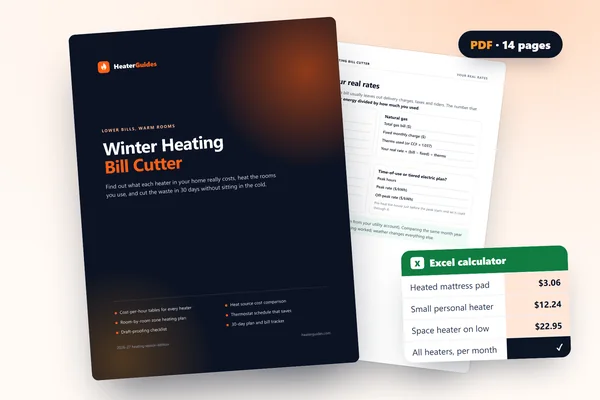 Winter Heating Bill CutterSee what every heater in your home really costs, heat the rooms you use, and cut the waste in 30 days.Cost-per-hour tables for every heaterThermostat schedule and draft-proofing planRunning-cost and bill calculator (Excel)
Safety Considerations & Calculating Operating Costs
Efficiency means nothing without safety. Modern heaters have excellent safety features, but user awareness is critical.
Essential Space Heater Safety Tips
- Always place the heater on a hard, level surface away from foot traffic.
- Maintain a 3-foot “kid-and-pet-free” zone around it. Never leave it unattended.
- Plug it directly into a wall outlet. Avoid power strips or extension cords, which can overheat.
- Look for automatic tip-over and overheat protection. These are standard on quality models.
For specialized needs, like a garage or workshop without easy outlet access, you might explore the best battery operated options.
How Much Does a Space Heater Cost to Run?
This is the million-dollar question (or hopefully, the twenty-dollar one). The cost depends on your heater’s wattage, your local electricity rate, and how many hours you use it.
Here’s a simple formula to calculate the running cost of an electric space heater:
- Find the heater’s wattage (e.g., 1500W).
- Convert to kilowatts (kW): 1500W / 1000 = 1.5 kW.
- Multiply by your electricity cost per kWh (e.g., $0.15): 1.5 kW $0.15 = $0.225 per hour.
- Multiply by hours used. Running it 8 hours a day costs about $1.80.
See? Not so scary. A low wattage heater (like 750W) paired with a good thermostat will cost even less. For the most authoritative advice on safe and efficient use, the Department of Energy’s official source on portable heaters is an excellent read.
Final Checklist for Comparing Models
Before you click “buy,” run through this list. It consolidates everything we’ve covered.
| Feature to Compare | What to Look For | Why It Matters |
|---|---|---|
| Heating Technology | Match the type (ceramic, oil, infrared) to your need (quick spot heat vs. whole-room warmth). | Directly impacts comfort and effective efficiency. |
| Wattage & BTU | Correctly sized for your room’s square footage and insulation. | Prevents energy waste from over/under-sizing. |
| Energy-Saving Features | Programmable thermostat, timer, eco mode, smart controls. | These features do the energy-saving work for you. |
| Safety Certifications | ETL or UL listing, tip-over and overheat protection. | Non-negotiable for peace of mind and safe operation. |
| Noise Level | Check reviews for fan noise, especially for bedrooms or offices. | A quiet heater is one you’ll use properly and enjoy. |
| Portability & Design | Weight, handle, cord length, and overall footprint. | Affects how easily you can move and place it for optimal use. |
Finding the best energy efficient space heater is about balance. You’re balancing immediate warmth with long-term savings, upfront cost with operating cost, and powerful heating with robust safety. Start by nailing down the right size and type for your space. Then, let features like a precise thermostat and timer lock in the efficiency. Your comfortand your utility billwill thank you.