You threw in a crumpled newspaper, a few dry twigs, and a log. Then you lit the paper, watched it flare, and waited. Fifteen minutes later the room smells like a campfire gone wrong, the glass is black, and you still can’t get a steady flame. I’ve been there too. Most wood stove problems start right at the match — either you light it wrong or you don’t know how to put it out safely when things go sideways.
This article walks you through how to safely light and extinguish a wood stove from scratch. You’ll learn the prep work that makes lighting easy, the stacking and ignition method that works every time, and the shutdown procedure that keeps your home and stove in good shape. No guesswork, no wasted time.
Shwuevei
Shwuevei 65 pcs Fire Starter - Natural…
- [All-Natural]: Fire starter sticks is made of Hand-woven from premium natural wood. Natural, odorless, no chemical additives, grea…
- [Long Burn Time]: Fire starter cubes burn up to 10 minutes, which is great for firing up charcoal and big firewood pieces. just on…
- [Every Occasion]: The organic charcoal starter is an excellent choice to keep at home, a cabin, or when car camping. Great for cam…
One tool that makes the lighting step nearly foolproof is a pack of natural fire starters. I keep Shwuevei 65 pcs Fire Starters on hand — they’re hand-woven from natural wood, burn for up to 10 minutes each, and don’t use any chemical additives. One piece under your kindling gets a fire going even with damp wood or a gusty draft. That long burn time buys you the chance to get your stove up to temperature before adding larger logs.
Prepare the Stove and Fuel Before Striking a Match
The biggest mistake I see is people lighting a fire in a cold stove that hasn’t been checked. Cold stoves have cold flues, and cold flues don’t pull smoke up. Here is what you need to do before lighting anything.
First, open the primary air control all the way. Most stoves have a lever or slider that controls how much air enters the firebox. Open it fully. Then open the damper if your stove has one — on some models it’s a separate flap in the flue pipe. These two steps guarantee the chimney draft is wide open before you strike a match.
Next, check your fuel. You need dry, seasoned wood with a moisture content below 20%. Wet wood sizzles, creates creosote, and barely burns. Split a piece and look at the end grain — cracks radiating from the center mean it’s dry. If you want a more accurate check, buy a cheap moisture meter. Don’t use construction lumber, painted wood, or anything treated — those release toxic chemicals.
Stacking method matters too. I use the top-down method: place two larger logs parallel on the bottom, then a row of medium splits perpendicular on top, then kindling, then two or three fire starters on the very top. Light the starters, close the door halfway, and let the fire burn downward. This method produces less smoke and fewer deposits on the glass than the old bottom-up newspaper trick. For a deeper look into getting more heat from each load, read this guide on improve wood stove efficiency.
Light the Fire the Right Way
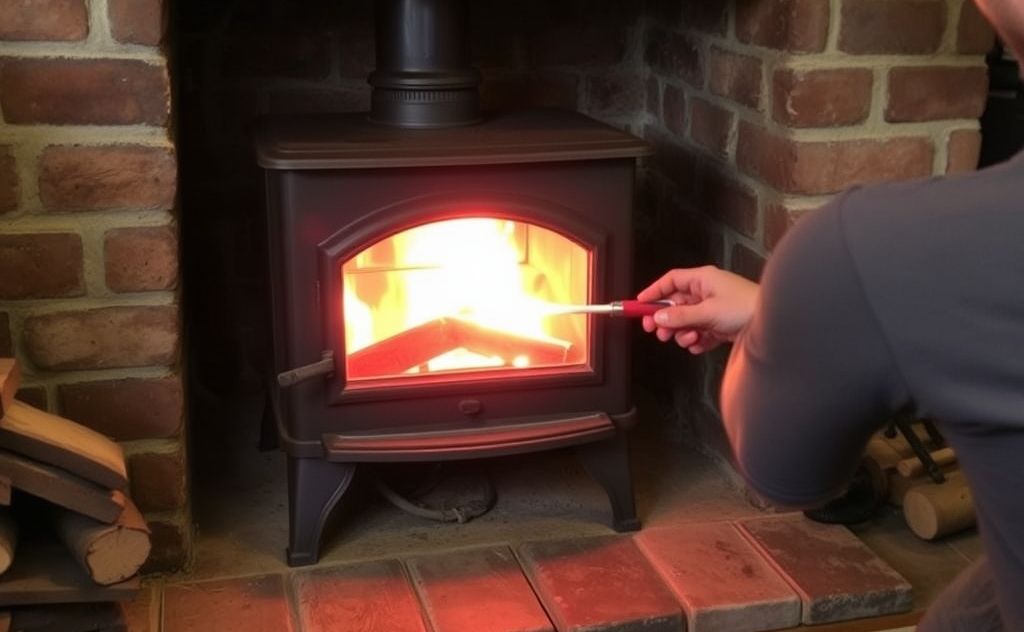
You have the stove ready and your fuel stacked. Now light it. Use a long match or a butane lighter — never hold your hand directly over the fire starters. Light the top of the stack in two or three spots. Then close the door but leave it cracked an inch for the first 5 minutes. That extra air helps the fire establish without smoldering.
After 5 minutes, close the door fully. Watch the flames. If they roll steadily and the glass stays mostly clean, you are in good shape. If the fire struggles and smokes, open the door a crack again for another few minutes or check that the air control is still wide open. Sometimes a cold chimney needs a bit of preheating — you can hold a lit piece of rolled-up newspaper briefly near the flue opening inside the stove to warm the air column and get the draft moving.
Once the fire is going strong and the stove top reaches about 300°F (150°C), you can start to reduce the air control. Do it gradually — a common error is closing the air down too fast, which starves the fire and causes smoldering that builds creosote. Let the stove run wide open for at least 20 minutes before you touch the air control.
The Shwuevei fire starters really shine here. Each cube burns for up to 10 minutes, which is long enough to ignite even thick kindling and small splits without needing to babysit the fire. I usually use two starters stacked on top of each other — it’s plenty. They don’t spit or flare up the way some liquid starters do, and they’re safe for cooking if you happen to use the stove for heating food.
Never use gasoline, kerosene, or charcoal lighter fluid in a wood stove. Those fuels can cause explosive flashbacks. Stick to natural fire starters or untreated newspaper and kindling.
Extinguish a Wood Stove Without Hurting the Stove or Yourself
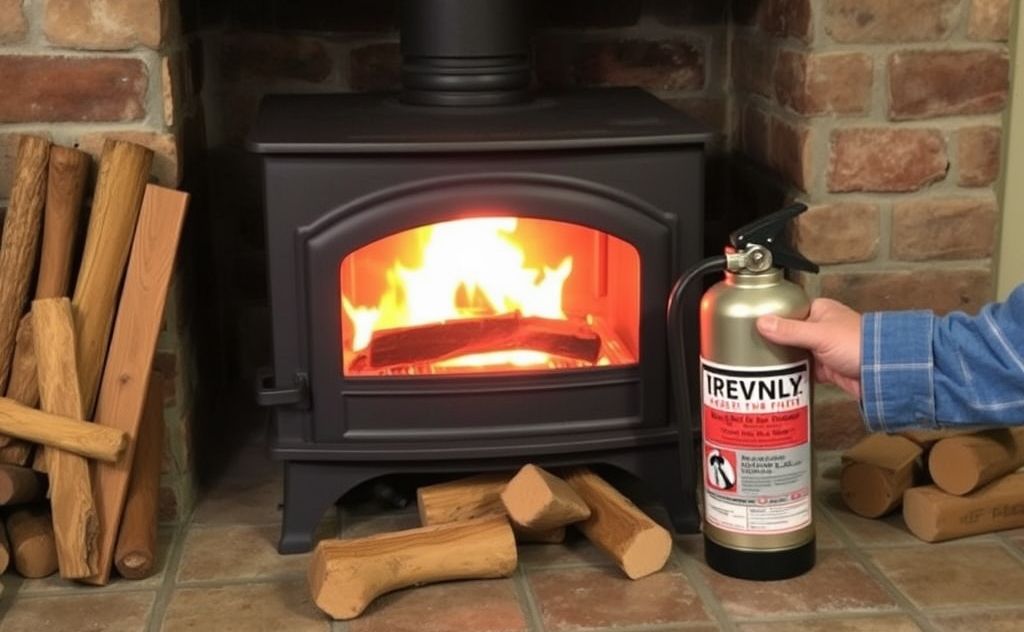
Sooner or later you need to put the fire out. Maybe you are going to bed, or leaving the house, or simply done for the day. The safest way to extinguish a wood stove is to let the fire burn itself out naturally. Do not pour water on a hot stove. Water hitting hot cast iron or steel can crack the stove instantly. Even worse, water turns to steam which can force burning ash and embers out of the stove and start a house fire.
To let the fire die out, close the primary air control fully. This chokes off the oxygen supply, and the fire will gradually fade. The process usually takes 1 to 2 hours depending on how much fuel is left. Keep the stove door closed during this time — opening it will feed oxygen and reignite the fire.
If you need a faster but still safe cooldown, you can rake the coals and embers flat in the firebox with a metal stove tool. Then close the air control. A flat bed of coals loses heat faster than a piled-up one. But never try to remove hot coals from the stove to speed things up — that is how people burn themselves or spill embers onto the floor.
After the stove is completely cold — wait at least 12 hours — you can remove the ash. Use a metal ash shovel and a metal bucket with a tight-fitting lid. Ash can stay hot enough to start a fire for days. Store the bucket outside, away from the house and any combustible materials. For more details on preventing dangerous overheating, read this article on avoid overheating.
Lighting Methods Compared: What Works Best?
Not all fire-starting methods are equal. Here is a quick comparison of three common approaches based on my experience testing them over several winters.
| Method | Time to Established Fire | Safety | Ease of Use | Best For |
|---|---|---|---|---|
| Natural fire starters (Shwuevei) | 8–12 minutes | Very safe, no accelerants | Easy, light one or two cubes | Daily use, damp wood, beginners |
| Newspaper and kindling (bottom-up) | 15–20 minutes | Moderate, risk of smoke spillage | Moderate, requires skill to stack | Seasoned users, small stoves |
| Electric fire starters (hot air gun) | 5–8 minutes | Very safe, no flame | Easy but requires power outlet | Quick lighting, no smell |
Natural fire starters hit the sweet spot for most people. They are portable, work in damp conditions, and you don’t need to learn a special stacking technique. The electric hot air gun is fastest but requires electricity and a clear path to the stove — not helpful during a power outage. Newspaper and kindling is cheapest but produces more smoke during the first few minutes and takes practice to get the stack right.
Can I use lighter fluid to start a wood stove?
No. Lighter fluid, gasoline, and kerosene are extremely dangerous inside a wood stove. They can ignite explosively, send a fireball out the door, and leave chemical residue that damages the stove’s interior. Stick to natural fire starters, untreated paper, and dry kindling.
Why does my stove smoke into the room when I light it?
Usually the chimney is cold. A cold chimney has air inside that is heavier than the hot smoke, so the smoke stalls and spills back into the room. Open the air control and damper fully, preheat the flue with a rolled-up burning newspaper held near the flue opening, and light the fire higher in the stack (top-down method). If that doesn’t fix it, you may have a blockage or insufficient chimney height.
How long should I wait before adding more wood?
Wait until the first charge has burned down to a bed of glowing coals with no tall flames. That usually takes 45 minutes to an hour. Adding wood too early smothers the fire and creates a lot of smoke. Adding wood too late lets the fire die out completely. Learn the rhythm of your stove — it changes with wood species and outside temperature.
Is it safe to leave a wood stove burning overnight?
It can be safe if you use a stove that is certified for overnight operation and follow the manufacturer’s guidelines. Load the stove with larger logs just before bed, set the air control to a low but stable setting (not fully closed), and make sure the door is sealed tight. But never leave a stove unattended if you haven’t used it long enough to know how it behaves. A safer option is to let the fire burn out and rely on the home’s temperature dropping gradually. For more on choosing the right stove size for your space, see how to choose the right size of wood stove.
How do I safely dispose of wood stove ash?
Wait at least 12 hours after the last flame is gone. Scoop ash into a metal bucket with a tight lid. Do not use plastic buckets or paper bags — embers can survive for days. Take the bucket outside immediately and keep it at least 10 feet from the house, deck, or garage. Never mix ash with other household trash. You can use cold ash in the garden as a soil amendment if the ash comes from untreated wood.
Seven Actions You Can Take Right Now
- Check your wood’s moisture content with a meter — anything above 20% will cause problems.
- Open the air control and damper fully before lighting every single fire.
- Stack firewood using the top-down method and light from the top with natural fire starters.
- Keep the door cracked for the first 5 minutes, then close it fully before adjusting air.
- Never pour water on a hot wood stove — let it burn out naturally with the air closed.
- Store ash in a metal bucket outside for at least 72 hours before disposal.
- Have your chimney inspected and cleaned at least once per heating season.
Related guides
Wood Heating: 5 Powerful Environmental Benefits You Should Know
Wood heating reduces carbon emissions, utilizes renewable resources, promotes sustainable forest management, and enhances air quality by minimizing…
How To Choose The Best Firewood For Maximum Heat
To choose the right firewood, select seasoned hardwoods like oak or maple for longer, hotter burns, and avoid…
7 Major Disadvantages of Wood Heating You Should Know
The crackle of a wood fire sounds romantic. The smell of smoke on a cold evening feels primal.…