

You walk into a room expecting warmth. The radiator is barely warm at the top, ice cold at the bottom. Or maybe a steady drip has stained the floor. Hydronic radiator systems are reliable, but when they act up you need answers fast. Most problems are simple to diagnose and fix yourself — if you know what to look for.
This article walks you through the most common hydronic radiator issues: cold spots, odd noises, leaks, and uneven heat across rooms. I will explain why each problem happens, give you the specific fix steps, and tell you when to buy a replacement part rather than struggle with a temporary patch. By the time you finish reading you will know exactly how to prioritise repairs and which tools actually matter.
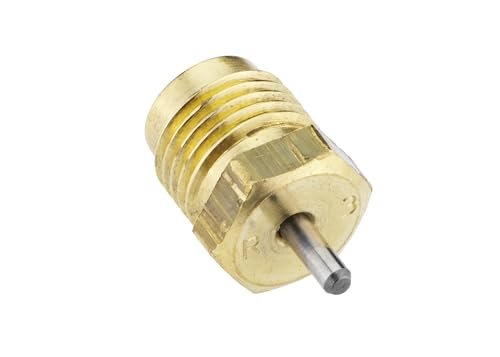
Danfoss
Danfoss 013G0290 RA 2000 Gland Seal/Packing Gland…
- EAN: 5702420013626
- Code: 013G0290
- Gland Seal kit for RA2000 Radiator Valves
The advice here comes from years of working with residential and light commercial hydronic systems. I have seen the same mistakes repeated — overtightening bleed valves, ignoring slight leaks, mixing incompatible metals. You will not get generic tips. You will get numbers, conditions, and real-world trade-offs.
One part that often gets overlooked is the gland seal inside the thermostatic radiator valve. If you notice a slow weep around the valve spindle where it enters the body, the packing gland has probably dried out or cracked. A replacement kit like the Danfoss 013G0290 RA 2026 Gland Seal solves this without replacing the whole valve. It takes about fifteen minutes and a basic set of hex keys. I will cover that in detail later.
Why Your Radiator Feels Cold When the System Is Hot
Cold spots on a radiator almost always mean air or sludge. Air collects at the top because it is lighter than water. Sludge (magnetite and debris) settles at the bottom. The fix differs depending on which end is cold.
Cold at the top — trapped air
Grab a radiator bleed key. Turn the bleed valve slowly counter-clockwise. You should hear a hiss as air escapes. Keep the key on the valve. Once a steady stream of water comes out (no sputtering), close it. That is one radiator done.
Do this for all radiators in the system, starting from the lowest floor and working up. Air tends to collect at the highest points. If you bleed the top floor first, you push air down and waste time. Always go bottom to top.
One thing people get wrong: they open the bleed valve too wide and water shoots everywhere. Half a turn is enough. Also, check your system pressure after bleeding. Most residential hydronic systems need between 12 and 15 psi when cold. If it drops below 10 psi, add water through the boiler fill valve until it hits the proper range.
Cold at the bottom — sludge buildup
Sludge is common in older iron radiators and systems with steel pipe. The black magnetic sludge blocks flow in the bottom section. Bleeding will not fix it. You need to flush the radiator or chemically clean the whole system.
A quick test: feel the bottom of the radiator after the system has run for thirty minutes. If it is cold while the top is hot, you have sludge. Try backflushing that single radiator. Close both radiator valves. Disconnect the tail of one valve, attach a hose, and run water from a mains supply backwards through the radiator. You will be amazed at the black water that comes out. Do this until it runs clear.
If multiple radiators have sludge, consider a system power flush or adding a corrosion inhibitor. Plain water breeds sludge. A good inhibitor like Fernox F1 or Sentinel X100 stops it from forming. But those are whole-system fixes; for one stuck radiator, individual backflushing is faster.
How to Diagnose and Fix a Leaking Radiator Valve
Leaks happen at three places: the nut connecting the valve to the pipe, the union nut between valve and radiator, or the gland seal where the valve spindle exits the body. Each has a different fix.
| Leak Location | Symptom | Fix Method | Time Estimate |
|---|---|---|---|
| Pipe-to-valve nut | Drip at the threaded connection, often after someone turned off the valve | Remove nut, wrap threads with PTFE tape, re-tighten | 15 minutes |
| Valve-to-radiator union | Water pooled under the tail of the valve, often after installing a new radiator | Replace rubber O-ring inside the union nut, or use Fiberite washer | 20 minutes |
| Valve spindle gland seal | Slow weep at the chrome stem, drips increase when you turn the knob | Replace packing gland (see below) | 15 minutes |
For the spindle gland leak, the Danfoss 013G0290 gland seal is a perfect match for RA2000 valves. You do not need to drain the system. Turn off the lock shield valve to isolate that radiator. Loosen the chrome retaining nut on the valve body with a spanner — 12mm or 13mm depends on your valve. Wipe away any water. Pull out the old packing with needle-nose pliers. Slide the new gland ring over the spindle, push it into the recess, and tighten the retaining nut by hand. Then give it a quarter turn with a spanner. Re-open the lock shield valve and check for drips. That is it.
If the valve body itself is cracked or the leak persists after a new gland, you need a new valve. But nine times out of ten a new gland seal does the job. Keep a spare in your toolkit. They cost less than a service call.
For a deeper look at leak repairs on radiators, read this guide on central heating radiator leaks.
Balancing Your System So Every Room Gets Heat
Some radiators get piping hot while others barely warm up. That is a balancing problem. The water follows the path of least resistance. Radiators close to the boiler get too much flow; distant rooms starve.
The solution is to adjust the lock shield valves (the small plastic cap or metal knob on the return side of the radiator). These do not control temperature — they control flow rate. Balancing means restricting the flow on the easiest paths to push water to the harder ones.
Here is the method that works for most homes:
- Close all radiator valves fully (both wheelhead and lockshield).
- Open the lockshield on the radiator farthest from the boiler by two full turns.
- Turn on the heating and let the system run for 20 minutes.
- Feel the pipes on both sides of that far radiator. If the flow pipe is hot and the return is warm, it is balanced enough. If the return is cold, open the lockshield another half turn and wait.
- Move to the next farthest radiator. Open its lockshield one full turn. Check the temperature difference between flow and return. Adjust up or down until the return gets warm.
- Work your way back to the nearest radiator. That last radiator should need only a quarter turn or less.
Temperature difference (delta T) between flow and return should ideally be 10-15°C (18-27°F) across the whole system. If you see a 20°C delta on a near radiator, it is too restricted. Open it a bit. If the far radiator has only a 5°C delta, it is getting too much flow. Close it down slightly.
Balancing takes patience. Do not try to finish in one evening if the house is large. Work room by room over two days. And write down the final position of each lockshield — next time you bleed a radiator you will thank yourself.
When to Call a Pro (and When Not to)
Most hydronic radiator issues are DIY-friendly. But some problems require a qualified heating engineer or plumber. Here is my honest breakdown.
Call a pro if:
- Your boiler keeps losing pressure after you repressurise it (possible internal leak or expansion vessel issue)
- You hear gurgling inside the boiler itself, not just the radiators
- Water is dripping from the ceiling below a radiator (pipe leak in the floor or wall)
- You open a bleed valve and nothing comes out — no air, no water — meaning the valve is completely blocked or airlocked in a way simple bleeding cannot fix
- You have tried balancing three times and the same two radiators stay cold
Do not call a pro for:
- A single radiator that needs bleeding
- A slow drip at a valve spindle (gland seal replacement)
- Sludge in one radiator (backflushing)
- No heat in one room after a new radiator installation (likely an airlock or closed valve)
- Losing pressure once after bleeding (just repressurise and monitor)
The cost of a service call in most areas runs $150-$300 just to show up. A Danfoss gland seal is under $20. Do the math. For broader troubleshooting help, see the guide on common central heating radiator problems.
Frequently Asked Questions
Why does my radiator make a banging noise when the heat comes on?
That is usually pipework expanding and contracting against a loose clip or joist. It can also be caused by trapped air banging against water — but that sounds more like a gurgle. For banging, check pipe clips along the length of the radiator pipework. Tighten any that are loose. If the noise persists, it might be a heat exchanger issue inside the boiler. That one needs a pro.
Can I mix different brands of radiator valves on the same system?
Yes, mechanically. But keep this in mind: flow characteristics vary between brands. A Danfoss valve might have slightly different resistance than a Drayton or Honeywell. Mixed valves can make balancing harder. I prefer to stick with one brand on each radiator pair (wheelhead and lockshield). If you replace a valve, match it to the existing brand if possible. The gland seal I mentioned earlier is specifically for Danfoss RA2000 valves — using a different brand seal will not fit properly.
How often should I bleed my radiators?
Once a year, before the heating season starts. If you have a system with automatic air vents on the boiler, you might not need to bleed radiators as often. But I have never seen a home that did not need at least one radiator bled after the summer shutdown. Do it in October, before the first really cold day.
Does closing a thermostatic valve on one room save energy?
It depends. If you close valves in unused rooms, the boiler sees less demand and may short-cycle (turn on and off every few minutes). Short-cycling wastes energy. A better approach: set unused rooms to a low temperature (12-15°C) via the TRV rather than fully off. That way the system still circulates water evenly and the boiler runs in longer, more efficient cycles.
Why does my hydronic system lose water even though I cannot see a leak?
Small leaks often evaporate before they drip. Check the boiler pressure gauge. If it drops from 15 psi to 10 psi over a week, you have a leak. The most common invisible leaks are at the expansion tank connection, at the boiler’s internal relief valve (which may drip into a drain), or at a compression fitting inside a wall cavity. Use a piece of cardboard under suspected joints — it catches drips that evaporate on concrete.
What You Can Do Right Now
- Bleed every radiator starting from the lowest floor, and repressurise the system to 12-15 psi when cold.
- Feel each radiator bottom vs top. If cold at bottom, backflush it with a garden hose.
- If you see a slow drip around the valve spindle, order a Danfoss 013G0290 gland seal and swap it yourself. No need to drain the system.
- Balance your radiators this weekend using the two-turn-from-farthest method. Write down the lockshield positions.
- Keep a bleed key, a spanner set, and one spare gland seal in a drawer near the boiler.
- Add corrosion inhibitor if you have multiple sludge-prone radiators. It stops the problem before it starts.
- Book a professional only if the boiler loses pressure repeatedly or you suspect a pipe leak behind a wall. For everything else, you have got this.

I am a mechanical engineer and love doing research on different home and outdoor heating options. When I am not working, I love spending time with my family and friends. I also enjoy blogging about my findings and helping others to find the best heating options for their needs.
Related guides
How Hydronic Heating Works in Home Radiators
Imagine a heating system that wraps your home in a consistent, gentle warmth. No blasts of dry air,…

Top Alternatives to Traditional Hydronic Radiators
That moment your boiler wheezes and dies on the coldest day of the year — you know the…
Hydronic Radiator Costs: Installation & Material Breakdown
You've decided hydronic heating makes sense for your home. Maybe you're tired of forced air blowing dust around,…
