How to Choose a Water Heater: Fuel, Size, and Installation
On this page 6 sections
A water heater must match your household’s hot water needs, fuel availability, and budget. This guide covers types, sizing, installation complexity, maintenance, and when to call a professional.
You’ll learn how to avoid costly mistakes and balance upfront costs with long-term savings and efficiency.
How to Choose a Water Heater

Choosing a water heater comes down to matching the right fuel type, storage capacity, and technology to your household’s hot water needs while weighing installation complexity and maintenance. You want a balance that fits your budget, usage patterns, and long-term efficiency goals.
Fuel type is the first big decision. Gas models run on natural gas or propane and often cost less to operate but need proper ventilation and a gas hookup. Electric heaters install easier and have lower upfront costs but typically run higher in monthly power bills. Hybrid heat pump water heaters use electricity more efficiently by moving heat rather than creating it, cutting energy use by up to five times that of standard electric units. Solar water heaters harness the sun but require the right roof exposure and a backup system for cloudy days.
Next, decide on the heating method and storage. Storage tank water heaters keep a reservoir of hot water ready, usually between 20 and 80 gallons, which suits households with consistent or high simultaneous demand. Tankless water heaters heat water on demand, eliminating standby losses. They’re space-saving and efficient but have a maximum flow rate—typically up to 7.5 gallons per minute—so simultaneous multiple uses can exceed capacity. Heat pump water heaters combine storage with high efficiency, though they are larger and cost more upfront. Solar systems often pair with storage tanks and need space for collectors.
Sizing should match your household’s peak hot water flow rate and total daily usage. For example, a family of four commonly needs a 40-50 gallon storage tank or a tankless unit capable of delivering around 6 to 8 gallons per minute. Oversizing wastes energy and space; undersizing causes cold water interruptions.
Installation complexity varies widely. Gas water heaters require venting and possibly gas line upgrades, while electric models may need a dedicated 240-volt circuit. Heat pump units need room with warm, ventilated air to work effectively. Solar water heaters involve plumbing and roof mounting, increasing installation time and cost.
Maintenance needs and lifespan are critical too. Storage tanks require periodic flushing to prevent sediment buildup and prolong life, typically 10-15 years. Tankless units need less frequent but regular descaling if you have hard water. Heat pump heaters benefit from filter cleaning and annual checks. Solar systems demand upkeep on collectors and pumps. Consider the warranty terms too, as they vary widely.
When choosing a tankless water heater, look for reputable brands with strong warranties and support since these units have more complex electronics and components. Electric tankless models are simpler to install and maintain but watch the flow rate limits closely for your household needs.

Sizing Your Water Heater for Household Needs
The key to choosing the right water heater size is matching it to your household’s peak hour demand—how many gallons of hot water you use during the busiest hour of the day.

Start by estimating how many people live in your home and how many bathrooms are in use at the same time. A single bathroom household typically needs less than 40 gallons, while multiple bathrooms or larger families often require 50 gallons or more.
Tank water heaters are sized by storage capacity, usually ranging from 20 to 80 gallons. Pick a tank that can hold enough hot water to meet your peak hour needs without running out. For instance, a family of four with two bathrooms might need a 50-gallon tank to cover morning showers and dishwashing.
Tankless water heaters work differently. Instead of storing water, they heat it on demand and are sized by flow rate in gallons per minute (GPM). Most tankless units deliver up to about 7.5 GPM, which suits one or two simultaneous uses but can struggle for multiple bathrooms running at once.
Recovery rate varies by fuel type. Gas water heaters usually recover faster than electric ones. For example, a gas water heater might recover 40 gallons per hour, while an electric model recovers about 20 gallons per hour. A higher recovery rate means the heater can provide more hot water during extended use.
Installation Complexity and Costs by Heater Type
Installing a water heater means more than just fitting a tank or unit; each type brings specific challenges that affect cost and time.

Heat pump water heaters need plenty of space and good airflow because they pull heat from the surrounding air to warm the water. Installers often run into problems if they try to fit one into a cramped closet or poorly ventilated basement. Without enough room, the unit won’t run efficiently, and you risk freezing pipes if the area gets too cold.
Gas water heaters require a gas supply line and proper ventilation to safely expel combustion gases. Adding or upgrading gas lines can quickly raise installation costs, especially if the heater is far from the main supply. Venting often involves metal flues or direct vents through exterior walls or chimneys, and improper installation risks carbon monoxide buildup.
Electric water heaters don’t burn fuel, so they skip the venting hassle. Still, they need a circuit and breaker that can handle their wattage. Most residential units draw about 4,500 watts or more, so a dedicated 240-volt circuit with a 30- or 40-amp breaker is common. If your panel is full or outdated, you might need an electrical upgrade, adding to costs and complexity.
Tankless water heaters, whether gas or electric, require correctly sized gas lines or circuits too, plus proper venting for gas models. Because they heat water on demand, they often need larger gas lines or stronger electrical service than storage tanks.
| Water Heater Type | Key Installation Needs | Typical Installation Complexity | Common Cost Factors |
|---|---|---|---|
| Gas Storage Tank | Gas line, ventilation flue | High | Gas line installation, venting, permits |
| Electric Storage Tank | Dedicated 240 V circuit, breaker | Moderate | Electrical upgrades, panel capacity |
| Heat Pump Water Heater | Space for airflow, electricity | Moderate to high | Space prep, airflow clearance, electrical |
| Tankless Gas Water Heater | Large gas line, venting | High | Gas line sizing, venting, permits |
| Tankless Electric Water Heater | High amperage circuit | Moderate | Electrical upgrades, breaker sizing |
Permits and inspections are usually part of the process. Gas water heaters almost always need a permit due to the fire and carbon monoxide risks from gas leaks and venting problems. Electric and heat pump units may also require permits depending on local codes, especially if electrical work is involved.
Choosing your water heater involves balancing installation realities with fuel costs and efficiency. A gas water heater might cost more up front to install but run cheaper monthly. An electric or heat pump unit can be simpler or cleaner to install but may require panel upgrades and space preparation.
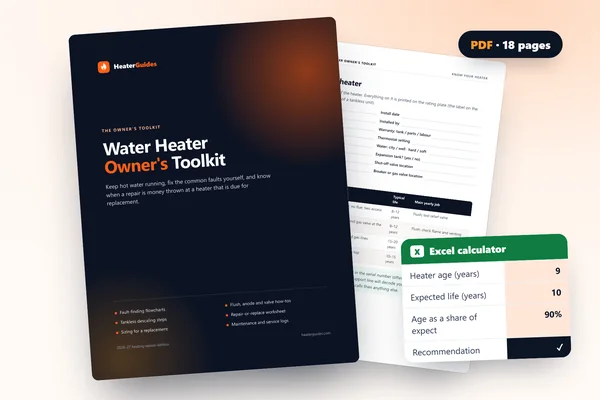 Water Heater Owner's ToolkitFix the common faults yourself, keep it running for years, and know when a repair is money wasted.No-hot-water flowcharts, gas and electricFlush, anode, relief valve and descaling stepsRepair-or-replace calculator (Excel)
When to Hire a Licensed Professional and Get Permits
Handling gas or electric connections for water heaters usually requires a licensed professional. These tradespeople ensure your installation meets safety codes and prevents hazards like leaks, fires, or electrocution.
Permits are mandatory for new water heater installations, fuel source changes, or major modifications. They verify that your setup complies with local codes, protecting your home and simplifying insurance claims if something goes wrong.
Replacing your old water heater is the ideal moment to upgrade to a more efficient model or switch fuel types, such as moving from gas to electric, if your electrical panel can handle the load or if ventilation requirements are met.
Common Mistakes That Cause Damage or Leaks
Choosing the right anode rod is key to preventing tank corrosion. Pick a rod made from magnesium or aluminum, depending on your water’s mineral content. Check it annually and replace it if it’s heavily corroded.
Improper venting often causes carbon monoxide buildup or water heater damage. Use the correct vent materials specified by the manufacturer and ensure vents slope upward to the outside without leaks.
Incorrect pipe connections or poor seals lead to leaks and water damage. Use proper fittings, apply thread sealant or Teflon tape to threaded joints, and tighten without overdoing it.
Failing to install or maintain a temperature and pressure (T&P) relief valve risks tank rupture. This valve must be installed according to code and checked regularly for functionality.


