

You found the perfect mid-century sofa. The walls are painted a soft sage. You hung art deco mirrors. Now winter hits, and your beautiful room has one problem: it’s freezing. A generic white space heater looks like a plastic tumor on your carefully curated decor. You need heat, but you don’t want to ruin the vibe.
This article cuts through the noise. I’ll walk you through the specific decisions that matter when choosing a vintage heater that complements your decor. We’ll cover how to match the heater’s style to your room’s era, how to size it so it doesn’t dominate the space, and how to balance realistic looks with actual warmth. You’ll walk away knowing exactly what to look for and what to avoid.
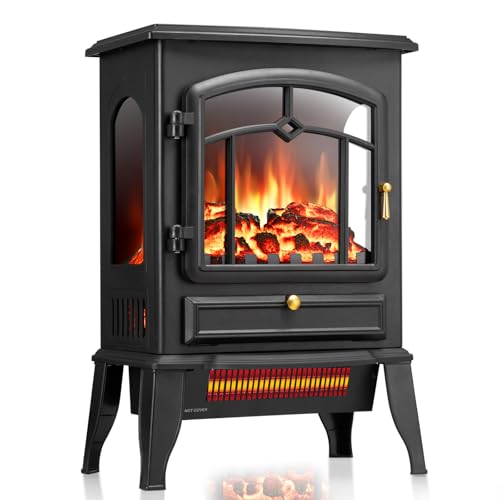
ZAFRO
Electric Fireplace Stove with 3D Flame Effect,…
- Charming Design: ZAFRO electric fireplace stove adopts a vintage - style stove body design, paired with highly realistic simulated…
- Fast & Powerful Heating: With up to 5,100 BTU of heating power and two heat settings—1000W and 1500W. This fireplace heater quickl…
- Realistic flame effect: This fireplace electric stove adopts 3D dancing flame technology with freely adjustable flame brightness f…
One option that balances form and function well is the ZAFRO Electric Fireplace Stove. Its vintage-style stove body uses an ebony finish, classic rack and door details, and a transparent glass window. The 3D flame effect is adjustable from dim to bright, and the 5100 BTU heater has overheat protection. It’s a compact, freestanding unit (15.35 inches wide, 22 inches tall) that can sit in a corner without screaming for attention.
Start With Your Room’s Dominant Era
Walk into your living room. What decade does it borrow from? Victorian spaces love ornate cast-iron or enamel details. Mid-century modern rooms want clean lines, tapered legs, and muted metals. Rustic or farmhouse decor calls for wood cabinets or weathered finishes. Industrial lofts need raw steel, exposed hardware, and a heavier footprint.
Match the heater’s silhouette to your room’s core style. A curved, potbelly electric stove looks wrong next to a Danish modern credenza. But put that same stove against exposed brick and reclaimed wood shelving, and it fits perfectly. If your room mixes eras, choose a heater that leans toward the most dominant visual element. For example, a room with a rustic wood coffee table but modern sofa can take a heater with wood trim or a dark finish rather than a glossy white box.
Don’t ignore the material of the heater itself. Glass-front electric stoves with brass or chrome accents work in traditional and transitional spaces. Dark finishes like ebony or matte black hide dust and blend into shadows. Glossy white stoves only look right in shabby-chic or very light Scandinavian rooms. If you’re unsure, pick a heater with a neutral body and warm flame tones — that gives you flexibility to rearrange furniture later.
Scale, Proportion, and Where You Put It
A heater that looks great in a product photo can overwhelm your room once it’s sitting on the floor. Measure the footprint first. Most vintage-style electric stoves are roughly 15–18 inches wide and 20–24 inches tall. That’s about the size of a small side table. It works in corners, beside a fireplace hearth, or under a window. But don’t shove it next to a sofa where people will bump into it — those outwardly expanding feet on some models (like the ZAFRO) create a wider base for stability, so you need a little extra clearance.
Heating capacity matters more than you think. A heater that’s too small runs constantly and still leaves cold spots. A heater that’s too large cycles on and off too often, wasting power. For vintage-style heaters you typically see 5100 BTU units (like the ZAFRO at 1000W/1500W). That range comfortably heats a 150–200 square foot room. If your space is larger, you’ll need either a higher BTU unit or a supplemental heater. Check the room’s insulation, too — an old drafty Victorian needs more heat than a modern sealed apartment.
Consider the heater’s depth. Some vintage stove designs are deeper than they look in pictures. A 9.45-inch depth like the ZAFRO is shallow enough to sit flush against a wall or inside a non-combustible fireplace opening. Deeper units stick out and become tripping hazards. Measure the spot before you buy. Also, think about the cord. Most freestanding heaters have a 5–6 foot cord. If your outlet is far away, you may need an extension cord rated for the heater’s wattage (or better, rearrange the room).
The Balancing Act: Realistic Looks vs. Real Heating
This is where most people get stuck. You want a heater that looks like a real wood stove but without the mess and danger of burning logs. The flame effect is the star of the show. Early electric fireplaces had fake orange bulbs and spinning plastic reflectors that looked like a sad Halloween decoration. Modern units use 3D dancing flame technology — layered LED projections that mimic real flame movement. The ZAFRO uses this, and you can adjust the brightness from dim to bright. A dimmer flame uses less electricity and looks more natural in a dimly lit room.
But here’s the reality: a flame effect is just visual. The heat comes from a fan-forced ceramic or metal coil element. You can run the flame without heat in warmer months. That’s a huge plus for vintage decor enthusiasts — the heater becomes a year-round decorative piece. The downside is that fan noise is present. Most units hum at 40–50 decibels, about the level of a quiet conversation. If you’re sensitive to sound, look for a model with a lower fan speed or a radiant heater instead (though radiant heaters don’t look as vintage).
Safety can’t be an afterthought. Vintage-style heaters often look like they belong in a 1920s parlor, but they must meet modern safety standards. Overheat protection is standard on most units now — the heater shuts off if internal temperatures get too high. Tip-over switches are another must; the ZAFRO’s outward-expanding feet help stabilize it. Never place any heater on a rug or carpet directly. Always put it on a hard, level surface. And keep anything flammable (curtains, books, blankets) at least three feet away. That’s not negotiable.
For more practical guidance on power and placement, check this ideal power for a portable heater guide — it covers wattage calculations room by room.
Comparing Vintage Heater Types at a Glance
| Heater Type | Heat Source | Aesthetic Compatibility | Safety Notes | Best For |
|---|---|---|---|---|
| Electric Stove (e.g. ZAFRO) | Fan-forced ceramic | Victorian, rustic, farmhouse, industrial | Overheat protection, tip-over stable base | Small to medium rooms, year-round decor |
| Gas Log Set (vented) | Natural gas/propane flame | Traditional fireplace openings, brick surrounds | Needs chimney or vent; carbon monoxide risk | Large rooms, real flame ambiance |
| Infrared Quartz | Infrared heating element | Often in wood cabinets or retro metal housings | Surface gets hot; keep away from children | Spot heating, silent operation |
| Oil-Filled Radiator | Electric heated oil | Typically modern white or silver; few vintage options | No fan; stays warm after shutoff; heavy | Continuous silent heat, bedrooms |
| Fan-Forced Ceramic | Ceramic element + fan | Usually modern plastic shells; some retro styled | Fan noise; overheat protection standard | Quick warm-up, small spaces |
The table shows the trade-offs. If vintage looks are your priority, an electric stove with a realistic flame is your best bet. If you need silent heat and don’t mind a more modern shape, an oil-filled radiator can fit in a corner behind furniture. But for most people decorating a vintage-inspired room, the electric stove wins on style and safety.
Five Questions People Actually Ask About Vintage Heaters
Do vintage-looking heaters actually heat a whole room?
Yes, but only a small to medium room. A 5100 BTU electric stove comfortably warms about 150–200 square feet. That’s a typical living room or master bedroom. For larger open-plan spaces, you’ll need two heaters or a single higher-BTU unit (look for 8000+ BTU). Also consider the ceiling height — a room with 9-foot ceilings needs more power than the same square footage with standard 8-foot ceilings.
Will a retro heater clash with modern decor?
Not if you pick the right finish. A matte black or dark bronze heater with a simple silhouette works as an accent piece even in a modern room. The key is to keep the heater’s lines clean — avoid overly ornate filigree unless your decor already has that. The ZAFRO’s ebony finish and minimal door detail crosses over well into transitional spaces. If your room is very minimalist, a vintage heater can become a conversation piece instead of a clash.
What’s the difference between flame effect and real flame?
A flame effect uses LEDs and mirrors to project moving light that looks like fire. It produces no heat, no smoke, and no safety risk. Real flame (gas or wood) creates actual combustion heat, requires ventilation, and generates ash or carbon monoxide. For pure decoration and supplemental heat, the flame effect is safer and more flexible. You can run it with or without heat. Real flame gives a more authentic smell and sound, but it’s much harder to install in an existing room.
How important is BTU rating?
Very. BTU (British Thermal Units) tells you how much heat the unit can produce per hour. For electric resistance heaters, 1 watt equals about 3.41 BTU. So 1500W gives roughly 5100 BTU. That’s the standard for a typical room heater. If you undershoot BTU, the heater will run continuously without reaching the thermostat temperature, wasting energy and wearing out faster. If you overshoot, the heater will cycle on and off frequently, which can be annoying. Match BTU to your room size using the rule of 20 BTU per square foot for average insulation. Add 10% for drafty rooms.
Can I use a vintage heater in a bedroom for safety?
Yes, with precautions. Choose a model with overheat protection and a tip-over switch. Place it on a hard floor, at least three feet from bedding and curtains. Never leave it running unattended — use the timer function if available. Electric stoves with enclosed heating elements are safer than exposed coil heaters. The ZAFRO’s ceramic element is enclosed and fan-forced, which reduces burn risk. For overnight use, set the thermostat lower (around 60°F) to avoid overheating the room.
For more on safe placement and sizing, read this portable heater guide that covers room-by-room tips.
Quick Checklist for Your Purchase
- Measure your room’s square footage and match the heater’s BTU (aim for 20 BTU per sq ft for standard insulation).
- Identify your decor’s dominant era — Victorian, mid-century, rustic, or industrial — and pick a heater silhouette that fits.
- Check the heater’s depth and width against your intended spot; leave at least 6 inches of clearance on all sides for airflow.
- Look for overheat protection and a stable base (wide feet or anti-tip bracket).
- Test the flame effect in person if possible, or watch video reviews. Adjustable brightness is a strong feature.
- Decide if you want the flame to run without heat — that makes the heater a year-round decorative piece.
- Read the return policy. Vintage-style heaters can look different in your lighting than in studio photos.
If you lean toward rustic or farmhouse decor, the vintage wood cabinet heater article has specific models and setup advice for that look.

I am a mechanical engineer and love doing research on different home and outdoor heating options. When I am not working, I love spending time with my family and friends. I also enjoy blogging about my findings and helping others to find the best heating options for their needs.
Related guides

Vintage Heater Inspiration: Style Meets Warmth
Explore unique vintage heater styles, such as Art Deco or Mid-Century Modern, to add character and warmth to…
Vintage Heaters: Timeless Style Meets Cozy Warmth
A vintage heater adds charm and character to any space, enhancing decor with its unique design and nostalgic…
Vintage Heater Integration: Style Meets Function
To seamlessly integrate a vintage heater, choose a complementary decor style, ensure proper installation, and maintain its functionality…
