How To Become A Master HVAC Specialist In 5 Steps
On this page 9 sections
- Why ‘Master’ Status Matters More Than a Standard License
- Step 1: Complete Your HVAC/R Technical Education
- Step 2: Earn Your EPA 608 Certification (The Non-Negotiable)
- Step 3: Log the Required Apprenticeship Hours
- Step 4: Pass the Journeyman Exam and Gain Field Mastery
- Step 5: Apply for the Master HVAC Specialist License
- Master HVAC Specialist Salary vs. Standard Technician Pay
- Frequently Asked Questions About Master Licensure
- What to Do With Your Master License
You’ve fixed your third condenser fan motor this week, and the homeowner keeps calling you ‘the AC guy.’ But your state license says ‘journeyman,’ and the contractor you work for pockets 60 percent of every invoice you generate. That gap between your skill level and your legal credential is costing you real money. The fix is the master HVAC specialist license, and it’s a five-step climb, not a mystery.
This article walks the exact ladder I used and that I’ve watched dozens of techs climb. We’ll cover the technical schooling, the EPA 608 hurdle, the 4,000-hour apprenticeship grind, the journeyman test, and the final master application with its business and law exam. You’ll also see the salary difference laid out in dollars, not vague promises. By the last section, you’ll know precisely where you stand and what to sign up for next week.
For a complete reference that covers the diagnostic side of this work, the HVAC BIBLE [10 in 1] from Majosta is a solid desk copy. It walks residential and commercial systems from setup through troubleshooting, which pairs well with the licensing path below.

Why ‘Master’ Status Matters More Than a Standard License
A standard journeyman license says you can work under someone else’s permit. A master license says you can pull your own permits, hire journeymen, and bid jobs as a prime contractor. Those three privileges change your income ceiling completely.
In most states, the master credential also resets your liability. You’re the responsible party on the permit, which means you carry the insurance and the legal weight. That’s a burden, but it’s also the barrier that keeps smaller contractors from competing with you on commercial work.
The title isn’t just a sticker. It’s a legal classification that dictates who can sign off on a pressure test or a new rooftop unit. Without it, you’re permanently an employee or a sub. With it, you’re a business owner.
Step 1: Complete Your HVAC/R Technical Education
Trade school isn’t optional if you want the master license in most jurisdictions. State boards typically require proof of a completed HVAC/R program from an accredited institution, usually 1 to 2 years long. That program covers thermodynamics, electrical schematics, load calculations, and code compliance.
Look for schools with HVAC Excellence or RSES certification alignment. Those accreditations mean the curriculum actually teaches to the industry standards, not just textbook theory. A 12-month certificate program from a local community college costs less than a four-year degree and gets you into the field faster.
You’ll also learn the math that matters. Manual J load calculations and duct sizing are the difference between a system that cools and one that freezes. Pay attention in that class; you’ll use it every week on custom homes.
Step 2: Earn Your EPA 608 Certification (The Non-Negotiable)
You cannot touch refrigerant without this card. The Clean Air Act requires it, and the EPA enforces it with fines that start around $37,500 per day for violations. The test is not hard, but it’s specific.
The EPA 608 exam has four sections: Core, Type I (small appliances), Type II (high-pressure systems), and Type III (low-pressure chillers). For a master track, you want the Universal certification, which covers all three types plus the core. That single card lets you work on everything from a window unit to a centrifugal chiller.
Study the refrigerant pressure charts and the recovery procedures. The test asks about ozone depletion potential and the proper recovery order for mixed refrigerants. Pass the Universal exam, and you’ve cleared the first major filter that keeps weekend warriors out of the trade.
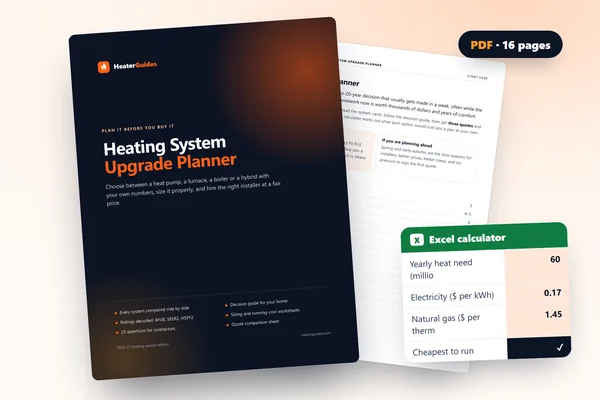 Heating System Upgrade PlannerChoose between a heat pump, a furnace, a boiler or a hybrid with your own numbers, and hire the right installer.Every system compared side by side25 questions for contractors, red flagsRunning-cost, payback and quote calculator (Excel)
Step 3: Log the Required Apprenticeship Hours
Here’s where the real education happens. The typical state requirement for a journeyman license is 4,000 hours of on-the-job training, which works out to about two years of full-time work at 2,000 hours per year. For the master license, most states stack another 2,000 hours on top of that, or they require you to hold the journeyman license for a set period, often 2 to 4 years.
Keep your own logbook. Do not rely on your employer’s records. You’ll need documented proof of hours when you apply, and if you switch companies mid-apprenticeship, the old boss might not be eager to sign off on your paperwork.
Tracking Your Hours Accurately
Use a spreadsheet or a dedicated trade app. Record the date, the job site, the hours, and the specific task performed. A generic entry like ‘service call’ won’t hold up under audit. Write ‘replaced TXV on 5-ton rooftop unit, recovered R-410A, brazed lineset.’ That specificity proves you did the work.
Get your supervising journeyman or master to sign your log monthly. If they drag their feet, you have a problem. Make it easy for them by printing a summary sheet each month and asking for a signature right then, not at the end of the quarter.
Moving from Residential to Commercial Experience
Residential work teaches you ductwork and split systems. Commercial work teaches you chillers, VRF systems, and building automation. A master specialist needs both.
If you’re stuck in residential, take a weekend job helping a commercial crew on changeouts. Many commercial contractors hire apprentices specifically for the grunt work on rooftop units. That exposure to three-phase power and larger refrigeration circuits is what the master exam will test.
Try to get at least 1,000 of your hours in commercial or industrial settings. It makes your application stronger and your practical knowledge broader. A master who’s only seen residential is a liability on a supermarket refrigeration rack.
Step 4: Pass the Journeyman Exam and Gain Field Mastery
Before you can even apply for the master test, you need the journeyman credential. The journeyman exam is a technical test covering system diagnostics, electrical troubleshooting, and code requirements. It’s a closed-book test in most states, and the pass rate hovers around 60 percent on the first attempt.
Study the International Mechanical Code and your state’s specific amendments. The test will ask about duct leakage rates, refrigerant piping insulation thickness, and clearance requirements for combustion air. You’ll also see practical questions about airflow measurement using a manometer and static pressure probes.
Passing the journeyman test puts you in the field as a licensed tech. That’s when you start making decisions on your own. Use the next two years to master the ventilation troubleshooting that stumps other techs. Learn to diagnose a bad capacitor by the click it makes, not just by the meter reading.
The field mastery part is about repetition. You need to see the same failure mode fifty times before you can spot it instantly. That’s why the hour requirements exist. They force you to put in the time.
Step 5: Apply for the Master HVAC Specialist License
The application itself is paperwork, but it’s dense paperwork. You’ll need your education transcripts, your EPA 608 Universal card, your journeyman license number, your hour logs, and proof of insurance. Some states also require a background check and a credit report.
The application fee varies by state but expect to pay between $100 and $400 just to sit for the exam. That’s before any study materials. Budget for the test like you would for a professional certification, not like a quick DMV visit.
The Business and Law Exam Component
This is the section that trips up most techs. The master exam isn’t just about refrigeration cycles; it’s about running a business. You’ll answer questions about lien laws, contract requirements, workers’ compensation rules, and how to handle a customer dispute.
You also need to know the licensing board’s rules for advertising and the penalties for working without a permit. These are not intuitive topics for someone who’s spent years with a wrench. Get a study guide specifically for the business and law portion, because the technical books won’t cover it.
One practical tip: learn your state’s mechanic’s lien process cold. The exam will give you a scenario where a commercial client hasn’t paid, and you need to file a lien within a specific window. Miss that window in the question, and you fail that section.
Insurance and Bonding Requirements
Once you pass the exam, you don’t just get the license. You need to prove you’re insurable. Most states require general liability insurance at a minimum of $500,000 per occurrence, and many require a surety bond of $10,000 to $25,000.
The bond is a line of credit that protects the consumer if you do shoddy work. It’s not insurance for you; it’s a guarantee you’ll finish the job. The cost of the bond is a percentage of the bond amount, usually 1 to 3 percent annually. For a $20,000 bond, that’s $200 to $600 per year.
Shop around for insurance. Rates vary wildly between carriers, and a clean driving record plus a solid work history makes a difference. Get the policy in place before you submit your final application, or the board will kick it back.
Master HVAC Specialist Salary vs. Standard Technician Pay
The financial jump is the reason to do this. A standard HVAC technician in the U.S. averages around $50,000 to $60,000 per year. A journeyman with a few years of experience often lands in the $65,000 to $75,000 range. A master HVAC specialist who owns a small shop or works as a lead on commercial projects frequently clears $90,000 to $110,000.
That’s the direct salary comparison. But the bigger number is the business leverage. As a master, you can bid a residential changeout at $8,000, pay a journeyman $400 for the day, and keep the margin. That’s how the money compounds.
Here’s a honest comparison of the three levels:
| Credential | Typical Hours Required | Primary Duties | Salary Range | Can Pull Permits? |
|---|---|---|---|---|
| HVAC Technician | 0 (entry-level) | Assist, clean, basic maintenance | $35k – $50k | No |
| Journeyman | 4,000 – 6,000 | Install, repair, diagnose independently | $55k – $75k | No (in most states) |
| Master Specialist | 6,000 – 8,000 + journeyman time | Supervise, bid, design, own business | $85k – $120k+ | Yes |
The certification costs are not trivial. Trade school runs $5,000 to $15,000. The EPA 608 test is around $100. The journeyman and master exams each cost $100 to $300. Study materials add another $200 to $500. Total out-of-pocket is roughly $6,000 to $16,000. Compare that to the $30,000 annual pay bump, and the payback period is under one year.
If you’re wondering how the daily inspection routine fits into this, a master’s eye for detail on a typical HVAC inspection is what catches the expensive failures early. That skill comes from the hours you log, not from a book.
Frequently Asked Questions About Master Licensure
How long does it take to become a master HVAC specialist?
Plan on five to seven years from zero experience. Two years of trade school, two years of apprenticeship for the journeyman license, then two to four years as a journeyman before you qualify for the master exam. Some states allow you to substitute extra work hours for the formal schooling, which can shave a year off the timeline.
Can I skip the journeyman license and go straight to master?
No. Every state I know of requires the journeyman license as a prerequisite. The master exam assumes you have field experience and a journeyman’s grasp of the code. Trying to skip it is like showing up for a calculus final without taking algebra.
What’s the hardest part of the master exam?
The business and law section, without question. Techs who can rebuild a compressor in the dark fail because they don’t know the difference between a performance bond and a payment bond. Spend at least 40 percent of your study time on the non-technical material.
Do I need a separate license for commercial work?
In many states, the master license covers both residential and commercial. Some states have a separate mechanical contractor license for large commercial jobs. Check your state’s licensing board website for the specific classification. The ventilation requirements for commercial buildings are stricter, and the exam will test those differences.
Is a master license worth it if I never want to own a business?
Yes, if you want to be a lead technician or a project manager. Many large commercial contractors pay a premium for a master license holder on staff because it lets them pull permits without hiring an outside contractor. You can earn the higher salary without the headache of payroll taxes.
What to Do With Your Master License
- Start the process this month. Enroll in an accredited HVAC/R program or verify that your current work hours can substitute for the education requirement.
- Take the EPA 608 Universal exam immediately. It’s a single afternoon of study and a cheap test that unlocks your ability to work on any system.
- Keep a meticulous hour log from day one. Use a spreadsheet with columns for date, site, hours, and task description. Get signatures monthly.
- Push for commercial exposure. Volunteer for rooftop unit changeouts and chiller maintenance. The master exam and the best-paying jobs live in that sector.
- Budget $1,000 for certification costs over the next three years. It’s a rounding error compared to the $30,000 annual raise you’re chasing.
- Study the business and law material for the master exam. Buy a dedicated guide, not just a technical codebook.
- Secure your insurance and surety bond before submitting the final application. The board won’t process your paperwork without proof of coverage.
The ladder is long, but every rung is climbable. You don’t need to be a genius. You need to be consistent with your hours, honest in your logbook, and willing to study the boring parts like lien laws. Do that, and the master license is a matter of time, not luck.