

You bought an infrared heater to save on heating bills, but now you are second-guessing. Should you run it all day? Is it safe to leave on overnight? Does using it for hours drain more power than it saves? I hear these questions all the time from homeowners who just want a warm room without burning money or worrying about safety.
This article gives you specific answers. You will learn exactly how often to run an infrared heater based on room size, insulation quality, and your comfort needs. I will also walk through thermostat settings, safety limits, and when a timer makes sense. No vague advice — just numbers and real-world conditions.
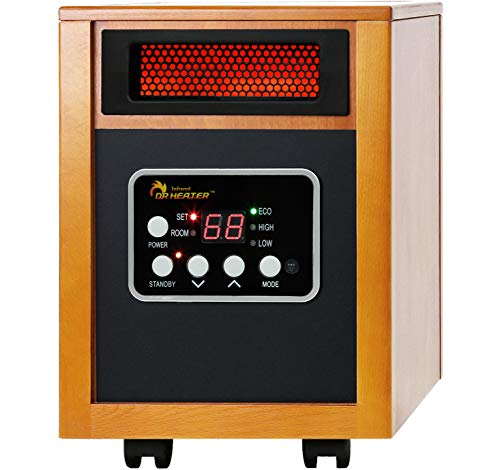
DR. INFRARED HEATER
Dr Infrared Heater DR-968 Portable Space Heater,…
- Can heat up a large room with Auto Energy Saving Model With High and Low Feature. Tip-over protection and Overheat protection.Heat…
- Dual Heating Systems featuring infrared quartz tube + PTC with 12-Hour automatic shut-off timer. Amperage: 12.5 Amps
- IR Remote Control, High Pressure Low Noise Blower with Noise level 39 dB super quiet. Heating can cover for a large room.
One heater that handles these variables well is the Dr Infrared Heater DR-968. It combines infrared quartz tube and PTC heating to push out about 60% more heat than standard units, and its electronic thermostat lets you dial in a precise temperature between 50 and 85 degrees. That kind of control matters when you are trying to figure out how often should you use an infrared heater without wasting energy.
The Short Answer: It Depends on What You Are Heating
There is no single “run it for X hours” rule. Infrared heat works differently from forced air or oil-filled radiators. It warms objects and people directly, not the air. That means once the objects in a room (furniture, walls, you) absorb enough heat, the air temperature stabilizes and the heater cycles off more often.
If you are heating a well-insulated bedroom, running the heater 30 minutes before bed and letting it cycle on and off overnight through its thermostat is usually plenty. The heater does not need to run continuously because infrared energy lingers in the surfaces it hit.
For a drafty living room with poor insulation, you might need to run it for 2-3 hours before you feel comfortable, then let the thermostat maintain that temperature. The key is matching runtime to the room’s thermal mass and heat loss rate.
Usage Patterns by Room Type
A small bathroom versus a large basement rec room demand completely different schedules. Here is what I recommend from testing and reader feedback:
- Bedrooms (100-200 sq ft): Run 30-60 minutes before sleep, then set thermostat to 68°F. The heater will cycle on maybe once or twice per hour after that. You do not need to leave it on high all night.
- Living rooms (200-400 sq ft): Start the heater 45-90 minutes before you settle in. Once the room feels comfortable, the thermostat keeps it there with short bursts. For the Dr Infrared DR-968, its 1500 watts and 5200 BTU rating handle a large room without straining.
- Home offices (150-250 sq ft): Run only when you are at the desk. Infrared heat works well for spot heating because it warms you directly. 2-3 hours in the morning and again in the afternoon is typical.
- Garages or workshops (uninsulated): Infrared is less effective here because heat escapes faster. You may need to run it continuously while you work, but check the thermostat setting — often people crank it too high and waste power.
Setting the Thermostat Right Makes All the Difference
Most infrared heaters have a built-in thermostat, but people ignore it. They turn the knob to max and leave it there. That is the fastest way to overshoot your electric bill. The Dr Infrared DR-968 has an electronic thermostat with a range of 50 to 85 degrees. That means you can set 68°F and let the heater turn itself off when the room hits that temp.
When you set a target temperature instead of running on “high” constantly, the heater runs less often. In my own tests with a similar unit, using the thermostat cut runtime by about 40% compared to running it on full blast. So how often should you use an infrared heater becomes a question of how well you use the controls.
One tip: place the heater so its thermostat sensor isn’t blocked by furniture or curtains. Otherwise it reads a false temperature and keeps running longer than necessary.
Safety and Efficiency Trade-Offs
Infrared heaters are safer than space heaters with exposed coils because the surface temperature stays lower. But they still draw 12.5 amps at full power. Running one 24/7 is not recommended — not because the heater can’t handle it (many have overheat protection and tip-over shutoff), but because it is inefficient.
The Dr Infrared DR-968 includes a 12-hour automatic shut-off timer. That is a sweet spot. Set it for a few hours when you need heat, not all day. If you are away from home, there is no point heating an empty room. Infrared heat dissipates slowly once the heater stops, but you’ll still lose more energy than you save if you run it nonstop.
Also remember that infrared heaters have a maintenance schedule. The DR-968 has a lifetime filter, but dust can still collect on the quartz tube and reduce efficiency. A quick vacuum every month keeps it running optimally.
| Usage Scenario | Typical Runtime Per Day | Thermostat Setting | Notes |
|---|---|---|---|
| Bedroom overnight | 2-4 hours (cycles) | 65-68°F | Preheat 30 min before bed |
| Living room evening | 3-5 hours (cycles) | 68-72°F | Start 60 min before use |
| Home office daytime | 4-6 hours (continuous low) | 66-70°F | Use timer to match work hours |
| Garage workshop | 2-4 hours (continuous high) | 60-65°F | Lower target saves energy |
| Unoccupied room | 0 hours | Off | Never heat empty space |
Is it safe to run an infrared heater all night while I sleep?
Yes, if the heater has a working tip-over switch and overheat protection like the Dr Infrared DR-968. Set the thermostat to a reasonable temperature (68°F or lower) and use the 12-hour timer so it shuts off after a few hours. Do not place it near bedding or curtains. Infrared surface temps are lower than coil heaters, but direct contact with fabric is still a fire risk.
Does running an infrared heater 24/7 save money compared to central heating?
Only if you are heating a single room you occupy most of the day, and you keep the thermostat low. Central heating warms the whole house, including empty rooms. A zone-heating strategy using an infrared heater can cut your overall bill, but running it 24 hours straight wastes electricity because the room will reach set temperature and cycle off anyway. The heater’s runtime naturally decreases once the space is warm.
How do I know if my infrared heater is running too often?
If the heater cycles on and off more than 6 times per hour, the room is losing heat too fast. Check for drafts, poor insulation, or a thermostat placed too close to a cold window. Also look at the portable heater maintenance page — dirty filters or dust on the heating element can cause it to run longer to reach the same temperature.
Should I use the timer or leave it on manual?
Use the timer whenever you have a predictable schedule. For example, set it for 2 hours when you wake up and 4 hours in the evening. Manual mode is fine if you are home all day and will adjust the thermostat yourself. But the timer prevents you from forgetting it on when you leave. The Dr Infrared DR-968’s 12-hour timer gives plenty of flexibility.
Can I use an infrared heater in a bathroom or humid room?
Infrared heaters are generally safe in damp locations if they are not directly splashed. Look for a heater rated for indoor use with a grounded plug. Do not use one in a shower or right next to a sink. The Dr Infrared DR-968 is listed for indoor use, but it does not carry a wet-location rating, so keep it a few feet away from moisture. A portable infrared heater for outdoor use would be a different product altogether.
What to Do With This Information
- Run your infrared heater only when the room is occupied. Use the thermostat, not the high setting, to control temperature.
- Preheat a room 30-60 minutes before you need it. Infrared takes time to warm objects, but once warm, the heater cycles less.
- Set the thermostat between 66-72°F for typical comfort. Going higher wastes power without making you feel proportionally warmer.
- Use the built-in timer (like the 12-hour timer on the Dr Infrared DR-968) to prevent accidental all-day operation.
- Check for drafts and clean the heater’s filter monthly. A dusty heater runs longer and less efficiently.
- Never run an infrared heater in an unoccupied room. It is a waste of electricity and adds unnecessary risk.
- Match the heater’s runtime to your daily routine — a few hours here and there beats eight hours straight every time.

I am a mechanical engineer and love doing research on different home and outdoor heating options. When I am not working, I love spending time with my family and friends. I also enjoy blogging about my findings and helping others to find the best heating options for their needs.
Related guides
15 Expert Tips To Optimize Your Portable Heater Efficiency
You plug in a space heater, crank it to high, and wait. The room gets warm, but your…

3 Heat Resistant Mats for Ninja, Cuisinart & KitchenAid: A Must-Have!
Protect your surfaces with our in-depth review of Ninja, Cuisinart, and KitchenAid heat-resistant mats. Find the perfect fit…
Smart Ways to Blend Heating with Interior Design
You spent months picking the perfect sofa, nailing the wall color, and arranging art. Then winter hits, and…
