

You’ve probably had one of those nights. The room feels fine when you get into bed, but you wake up at 3 a.m. with your heart racing, sheets tangled, and a thin layer of sweat on your neck. You kick a leg out from under the blanket, and somehow that tiny exposure to cooler air is enough to let you drift back off. That’s not a coincidence. Your body was telling you something specific about its internal thermostat.
Sleep isn’t just about turning off the lights and hoping for the best. It’s a physiological process that depends on a precise drop in your core body temperature. When that drop doesn’t happen, or happens too slowly, your sleep architecture suffers. This article walks through the science of thermoregulation, how heat and cold affect each sleep stage, and what you can do about it—including specific advice for shift workers, menopausal women, and anyone living through hotter summers.
YFONG
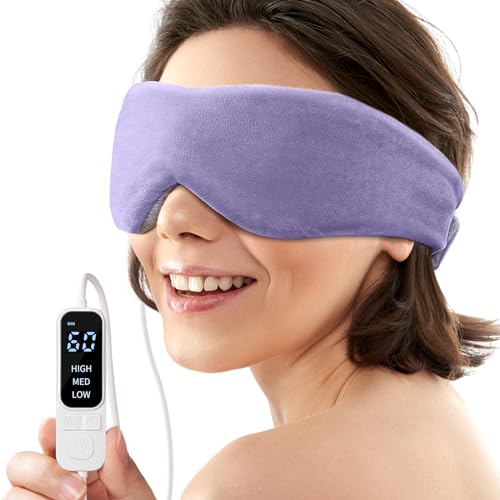
YFONG Heated Eye Mask, Warm Eye Compress…
- Deep Heating Relieves Eye Fatigue: Our heated eye mask uses far infrared heating technology to generate heat quickly, increase oil…
- Adjustable Temperature and Timer: Our Smart LED Controller Make thermostatic timed hot packs easy. Our electric eye mask designed…
- Fast and Even Heating: In order to shorten the waiting time for warming up, our sleep mask made an upgraded process by adding grav…
You’ll leave with a clear picture of your ideal sleep environment, the tools to create it, and a few honest trade-offs to consider along the way.
One tool that bridges the gap between a hot bedroom and your body’s need to cool down is a targeted warm compress. The YFONG Heated Eye Mask uses far infrared heating to deliver gentle, even warmth around the eyes, which can help relax tense muscles and support the natural winding-down process before bed. It’s not a replacement for fixing your room temperature, but it can be a useful addition to a wind-down routine when your eyes feel tired from screens and your mind is still racing.
The Science of Sleep Thermoregulation
Your body runs on a 24-hour cycle called the circadian rhythm. It governs when you feel alert and when you feel sleepy. One of its strongest signals is temperature. Core body temperature peaks in the late afternoon, usually around 4 to 6 p.m., and then begins a steady decline. That decline is the trigger for sleep onset.
About one to two hours before you naturally feel drowsy, your blood vessels dilate. This is vasodilation in action. Blood moves from your core to your hands, feet, and face, and you lose heat through the skin. Your core temperature drops by roughly 1 to 2 degrees Fahrenheit. That drop is the signal that tells your brain it’s time to sleep.
Skin temperature, especially on the hands and feet, rises as part of this process. It might feel counterintuitive—your hands feel warm, but your core is cooling. This is why warm socks or a warm foot bath often help people fall asleep faster. The warm extremities promote heat loss from the core.
Melatonin plays a supporting role here. It doesn’t directly cause sleepiness; it helps regulate the timing of your temperature rhythm. Melatonin release in the evening coincides with the drop in core temperature. If you’re exposed to bright light late at night, melatonin production shifts, and your temperature curve follows, delaying sleep.
Here’s the practical takeaway: you can’t override your circadian rhythm with willpower. You can only work with it. That means aligning your environment with the natural cooling process your body is already trying to do.
How Heat Exposure Disrupts Sleep Architecture
When your bedroom is too warm, your body struggles to drop its core temperature. The result is a longer time to fall asleep, more wake-ups during the night, and a lower sleep efficiency—the percentage of time you spend in bed actually asleep.
Research shows that ambient temperature above 75°F (24°C) starts to measurably increase wakefulness and decrease slow-wave sleep. At 86°F (30°C), sleep quality drops sharply. Your body is working hard to shed heat, but the environment won’t cooperate. You end up restless, turning frequently, and spending more time in lighter sleep stages.
The Impact on REM and Deep Sleep
Not all sleep stages respond to temperature the same way. Deep sleep, also known as slow-wave sleep, is most abundant in the first third of the night. It’s your body’s repair phase, when growth hormone is released and tissue recovery happens. Deep sleep is somewhat resilient to mild heat, but it’s the first to suffer when the room gets hot.
REM sleep, the stage where most dreaming occurs, is more sensitive to temperature in the opposite direction. REM sleep is characterized by a near-complete loss of your body’s ability to regulate its own temperature. You become poikilothermic, meaning your internal temperature drifts toward the ambient temperature. If the room is cold, your core temperature can fall too low, and your brain will interrupt REM to wake you up and restore warmth.
This creates a narrow window. Too hot, and you lose deep sleep. Too cold, and you lose REM. Most people who wake up feeling unrefreshed are losing time in one of these two stages without realizing it.
Heat exposure also increases your metabolic rate. Your body burns more energy just trying to maintain a stable internal temperature, even while you sleep. That extra metabolic load can fragment sleep and leave you feeling drained the next morning.
The Effects of Cold Exposure on Sleep Onset
Cold is less disruptive to sleep onset than heat, but it comes with its own problems. A cool room helps you fall asleep faster because it assists the natural drop in core temperature. But if the room is too cold, your body mounts a defense.
Shivering is an obvious sign, but even mild cold can cause your blood vessels to constrict. This vasoconstriction pulls blood back toward your core, which actually raises your core temperature. That’s the opposite of what you want for sleep. You might feel cold, but your internal temperature is climbing, and your brain gets conflicting signals.
Cold exposure also increases sympathetic nervous system activity. Your heart rate stays slightly elevated, and your body stays in a state of low-grade alertness. This makes it harder to reach the deep stages of sleep and easier to wake up from noise or movement.
The sweet spot for most people is a bedroom temperature between 60°F and 67°F (15.5°C to 19.5°C). Within that range, your body can shed heat efficiently without triggering a cold response. But this range isn’t universal, and that’s where things get interesting.
The Ideal Sleep Temperature: Myths vs. Reality
The number you see repeated everywhere is 65°F (18°C). It’s a good starting point, but it’s not a law of nature. Individual factors change the equation.
Body composition matters. People with more muscle mass generate more heat at rest. People with higher body fat have more insulation, which can slow heat loss. Your age, fitness level, and even your last meal affect how much heat you produce overnight.
Why 65°F (18°C) Isn’t Right for Everyone
If you’re a lean endurance athlete, you might find 65°F too cold. Your body’s heat production is high, but your low body fat means you lose heat quickly. You might sleep better at 68°F to 70°F.
If you’re postmenopausal, you might need the room cooler than 65°F. Hot flashes and night sweats are caused by sudden surges in core temperature. A cooler room gives you a buffer so those surges don’t push you into wakefulness.
If you sleep with a partner, you have to negotiate. Two people have different metabolic rates, different body compositions, and different temperature preferences. A practical compromise is to use separate bedding. One person uses a lighter duvet, the other a heavier one. This is more effective than fighting over the thermostat.
The real metric to track isn’t the thermostat reading—it’s how you feel. If you wake up with your face flushed or your neck damp, the room is too warm. If you wake up curled in a tight ball with cold hands, it’s too cold. Your body gives you feedback; you just have to pay attention.
Humidity and Airflow: The Invisible Factors
Temperature alone doesn’t tell the full story. Humidity and air movement dramatically change how you perceive temperature.
Your body cools itself through evaporation. Sweat on your skin turns to vapor, and that process pulls heat away from your body. But evaporation slows down when the air is humid. At high humidity, your sweat stays on your skin, and you feel hotter than the thermometer suggests. This is the perceived temperature effect.
For sleep, the ideal relative humidity is between 40% and 60%. Below 40%, your nasal passages and throat can dry out, leading to snoring or a sore throat in the morning. Above 60%, you feel sticky and uncomfortable, and your body’s ability to cool itself is compromised.
Air movement is the fix. A ceiling fan or a small floor fan doesn’t lower the room temperature, but it increases evaporation from your skin. A gentle breeze can make a room feel 3 to 4 degrees cooler without changing the thermostat. This is why a fan is often more effective than cranking the air conditioning.
One caveat: air blowing directly on your face all night can dry out your eyes and sinuses. Aim the fan so the airflow passes over your body but not directly at your head. Or use a fan with a rotating function that doesn’t stay fixed on one spot.
Who is Most Vulnerable to Temperature Disruption?
Some groups face steeper challenges with temperature and sleep. Understanding your specific risk profile helps you target your solutions.
Shift Workers, Menopause, and Athletes
Shift workers live against their circadian rhythm. Their core temperature is trying to peak during the day while they’re trying to sleep. A dark, cool, quiet room is non-negotiable for them. Blackout curtains, a fan, and a consistent pre-sleep routine that includes cooling down are essential. Even then, their sleep architecture will be lighter than someone on a regular schedule.
Menopausal women deal with vasomotor symptoms—hot flashes and night sweats. These are sudden episodes of vasodilation that cause a rapid rise in skin temperature and a feeling of intense heat. They often trigger arousal from sleep. Strategies that help include layered bedding that can be kicked off quickly, moisture-wicking sleepwear, and keeping the room on the cooler side. Some women find that a cool pack on the bedside table, applied to the back of the neck during a flash, shortens the episode.
Athletes have a different problem. They need deep sleep for recovery, but their core temperature runs higher for hours after intense training. A hot shower right before bed is a mistake; it raises core temperature further. Instead, a lukewarm shower 60 to 90 minutes before bed allows the body to start cooling. Some athletes use cooling vests or cold packs on pulse points to accelerate the drop in core temperature.
Older adults also deserve a mention. The ability to regulate body temperature declines with age. The circadian rhythm flattens, meaning the night-time temperature drop is less pronounced. This contributes to lighter, more fragmented sleep. A slightly warmer room, around 68°F to 69°F, often works better for older adults than the 65°F recommendation.
Climate Change and the Future of Sleep
This isn’t just a personal issue; it’s a public health one. Climate change is making nights warmer, and the data shows it’s costing people sleep.
A 2026 study published in Science Advances looked at temperature and self-reported sleep data from hundreds of thousands of people across the globe. The researchers estimated that by 2050, climate change could cause 110 million additional nights of insufficient sleep per year in the U.S. alone. The effect is most pronounced in summer months, among older adults, and in low-income communities without reliable air conditioning.
Nighttime temperatures are rising faster than daytime temperatures in many regions. That’s bad news because the night-time cool-down is exactly what your body needs to initiate sleep. When the low temperature for a day stays above 75°F, your bedroom never gets a chance to cool off.
Adaptation strategies for heatwaves go beyond turning on the AC. Close curtains and blinds during the day to block solar gain. Use a fan to create airflow at night. Take a warm (not cold) shower before bed; cold showers can cause a rebound effect where your body generates extra heat to compensate. Sleep on the lowest floor of your home, since heat rises. And consider a cooling mattress pad or breathable sheets made from natural fibers like cotton or linen.
The broader point is that your sleep environment is not static. It changes with the seasons, with weather patterns, and with your own body. Treating it as something you set once and forget is a mistake.
Practical Strategies to Optimize Your Sleep Environment
Here’s the actionable part. You don’t need to overhaul your entire life to sleep better in the heat or cold. You need to make a few targeted changes.
Bedding, Sleepwear, and Pre-Sleep Cooling Rituals
Start with your mattress. Memory foam retains heat. If you sleep hot, a memory foam mattress can act like a heat sink, trapping your body heat all night. A cooling gel topper or a breathable mattress protector can help, but the most effective fix is to choose a mattress with less heat retention, like a hybrid or innerspring model.
Sheets matter more than most people think. Thread count is less important than the fiber. Cotton percale is crisp and breathable. Linen is even more breathable but has a rougher texture. Bamboo viscose is soft and moisture-wicking. Satin and sateen, while smooth, trap heat and are poor choices for hot sleepers.
Sleepwear should be loose and breathable. A cotton t-shirt and shorts beat flannel pajamas in summer. In winter, layering beats a single heavy garment because it allows you to adjust by shedding a layer.
Pre-sleep cooling rituals can make a real difference. Here’s a sequence that works for most people:
- Take a warm shower 60 to 90 minutes before bed. The warm water increases blood flow to your skin, which accelerates heat loss when you step out.
- Set your thermostat to your target temperature about 30 minutes before you plan to sleep. Don’t wait until you’re already in bed.
- Use a fan to create a gentle breeze. Aim it at your legs or torso, not your face.
- If your feet are cold, wear socks to bed. Warm feet promote vasodilation and help your core cool down.
- Keep a glass of cold water on your nightstand. A few sips if you wake up hot can help, but don’t drink so much that you need to use the bathroom.
- If you use a warm compress like the YFONG heated eye mask, do it as part of your wind-down routine, then remove it before you actually try to fall asleep. The goal is to relax, not to retain heat.
One honest caveat: none of this works if your room is fundamentally too hot or too cold. The strategies above are adjustments, not substitutes for a reasonable ambient temperature.
Frequently Asked Questions
What is the exact best temperature for sleep?
For most adults, 65°F to 68°F (18°C to 20°C) works well. But your personal ideal depends on your body composition, age, and bedding. Track your sleep quality for a week at 68°F, then try 65°F. Your subjective feeling in the morning is the best metric.
Does a warm room cause nightmares or vivid dreams?
Not directly. But heat increases wakefulness and can cause you to surface from REM sleep more often. When you wake from REM, you’re more likely to remember your dreams, which can make them seem more intense or disturbing. It’s not the heat causing the nightmare; it’s the interrupted sleep architecture.
Why do I feel hot but my partner feels cold at the same temperature?
Metabolic rate differences are the main reason. People with more muscle mass generate more heat. Women often have a lower resting metabolic rate and different vasodilation patterns, which can make them feel colder at the same ambient temperature. Separate duvets are the simplest solution.
Is it bad to sleep with a fan blowing directly on me?
It can dry out your eyes, nasal passages, and skin. It can also trigger muscle stiffness in your neck if the air is cold. Use the fan on a low setting and position it so it’s not blowing directly on your face. A ceiling fan on low is often a better option.
Can I train my body to sleep in a hotter room?
You can adapt somewhat, but there’s a limit. Heat acclimatization takes weeks and never fully compensates for the physiological need to drop core temperature. If you live in a hot climate without AC, focus on airflow, moisture-wicking bedding, and pre-sleep cooling rituals. Your sleep will still be lighter than it would be in a cooler room.
What Actually Matters: A Final Checklist
You’ve read the science. Here’s what to do with it.
- Set your thermostat to 65°F to 68°F (18°C to 20°C) and adjust based on how you feel, not what a study says.
- Keep relative humidity between 40% and 60%. Use a dehumidifier in summer and a humidifier in winter if needed.
- Use a fan for airflow. It lowers perceived temperature by 3 to 4 degrees without changing the thermostat.
- Choose breathable bedding. Cotton percale or linen sheets beat high-thread-count sateen for hot sleepers.
- Take a warm shower 60 to 90 minutes before bed to accelerate core cooling.
- Pay attention to your sleep stages, not just total sleep time. If you wake up unrefreshed, temperature is a likely culprit.
- If you’re a shift worker, menopausal, or an athlete, your needs differ. Adjust your room temperature and bedding accordingly.
Your sleep environment is a system. Temperature, humidity, airflow, and bedding all interact. Change one variable and you change the whole equation. Start with the room temperature, then layer in the other factors until you find what works. It took me a few weeks of experimenting to dial in my own setup, and it’s worth the effort.

I am a mechanical engineer and love doing research on different home and outdoor heating options. When I am not working, I love spending time with my family and friends. I also enjoy blogging about my findings and helping others to find the best heating options for their needs.
Related guides

5 Heating Pads That Will Transform Your Relief Experience
Struggling with lower back pain? The best heating pad for relief combines comfort and effectiveness for soothing warmth.…
How Hot Weather Impacts Mental Health (And What to Do)
Hot weather can negatively impact mental health by increasing irritability, anxiety, and mood disorders, particularly in vulnerable populations.…

Can Temperature Changes Cause Health Issues?
Yes, temperature changes can lead to health issues such as heat exhaustion, hypothermia, respiratory problems, and exacerbation of…