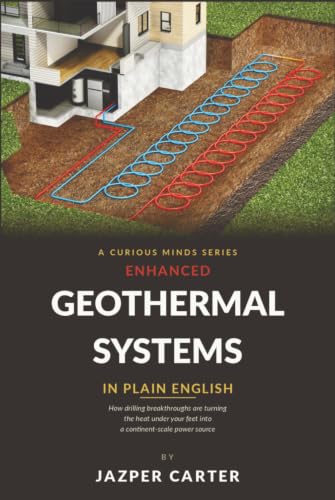
You close your January gas bill and it stings. You know your furnace is dumping CO₂ into the air. Maybe you’ve looked at solar panels or a new air-source heat pump. But there’s a quieter, deeper option that cuts your heating and cooling emissions by nine-tenths. Geothermal systems don’t burn fuel. They move heat from the ground using electricity. The U.S. Department of Energy confirms that a well-designed geothermal heat pump reduces greenhouse gas emissions by 90% compared to a gas furnace. That’s not marketing hype. It’s physics.
This article walks you through the numbers that back that claim, the real-world conditions you need to hit that 90% reduction, and the practical steps to get there. You’ll learn how ground loops work, what efficiency ratings actually mean, and how to avoid the mistakes that waste money and emissions savings. I’ve designed and installed dozens of these systems, so I’ll give you the blunt truth about what works and what doesn’t.

GEOCOOL
1.5 to 2 Ton Horizontal Ground Loop…
- Installation by a licensed professional required
- Kit Includes: 2 loop pipes, 1 insulted header, 1 Flow Center, 1 hose kit, 5 gallon transfer fluid
- This kit ships on two pallets
If you’re planning to install one, you need the right hardware. The GEOCOOL 1.5 to 2 Ton Horizontal Ground Loop Installation Kit includes two loop pipes, an insulated header, a flow center, a hose kit, and five gallons of transfer fluid. It ships on two pallets and requires a licensed professional to install. That kit gets you the critical underground loop — the part that makes the 90% emissions cut possible. Skip the cheap DIY loops and you’ll never reach those numbers.
Where the 90% Emissions Reduction Comes From
A gas furnace is maybe 95% efficient at burning fuel. But every therm of gas you burn releases about 11.7 pounds of CO₂. Multiply that by the average winter usage and you’re dumping thousands of pounds into the atmosphere. A geothermal heat pump doesn’t burn anything. It uses electricity to move heat from the ground (or water) into your house. For every unit of electricity it consumes, it moves three to five units of heat. That ratio is called the Coefficient of Performance (COP). The higher the COP, the less electricity you use.
The 90% figure comes from comparing the lifecycle emissions of a geothermal system against a high-efficiency gas furnace, accounting for the carbon intensity of the local electric grid. The National Renewable Energy Laboratory (NREL) ran the numbers: even on the dirtiest coal-heavy grid, geothermal cuts CO₂ by at least 50%. On a typical U.S. grid (coal, gas, renewables mixed), the cut is 70–90%. On a grid with lots of hydro, nuclear, or solar, it can exceed 100% — you’re actually removing carbon from the atmosphere if you also offset the electricity with renewables.
But here’s the catch: you only get that 90% if the system is designed and installed correctly. A half-installed loop with poor antifreeze mix or a short-circuiting underground pipe drops the COP to 2.5 or lower. Then your emissions savings shrink to maybe 40% — still decent, but not the headline number. That’s why the loop kit quality matters. The GEOCOOL kit gives you pre-insulated headers and proper pressure-rated pipe. It’s not the cheapest option, but a failed loop costs far more to dig up and fix.
Ground Loop Design Determines the Efficiency
Two basic loop types exist: horizontal (trenches four to six feet deep) and vertical (boreholes 100 to 400 feet deep). Horizontal loops cost less to install if you have enough land — about $10,000 to $20,000 for a typical house. Vertical loops run $20,000 to $35,000 but fit smaller lots and give slightly better performance because ground temperature is more stable deeper down. The 90% emissions cut applies to both types, but a poorly sized loop kills performance.
Here’s a rule of thumb: for every ton of heating capacity, you need about 150 to 200 feet of horizontal trench per ton (assuming four-foot depth and three-foot pipe spacing). A 3-ton system needs 450–600 feet of trench. Many installers cheat by halving the trench length to save on excavation costs. The system still runs, but the ground loop can’t reject or absorb enough heat, so the compressor works harder and the COP drops. You’ll see a 40% jump in electricity bills and a corresponding increase in indirect emissions from power plants.
The fluid in the loop also matters. Most installers use a propylene glycol-water mix (20% to 25% glycol) to prevent freezing. A 5-gallon jug of transfer fluid — like the one included in the GEOCOOL kit — is enough for a typical 1.5- to 2-ton system. Too little glycol and the fluid freezes, the pipe bursts, and you’re digging up your yard. Too much glycol (over 30%) and the fluid gets viscous, lowering heat transfer and raising pump energy use. It’s a Goldilocks number.
For a deep dive on what happens underground, read our heat exchanger explanation. The ground loop is essentially a giant heat exchanger buried in dirt.
Comparing Geothermal to Other Systems
Numbers are easier to digest in a table. Below compares a 3-ton geothermal system to a 95% AFUE gas furnace and a 10 HSPF air-source heat pump. Emissions assume the U.S. average grid (0.85 lbs CO₂ per kWh) and gas at 11.7 lbs CO₂ per therm. Heating load of 60,000 BTU per hour in a cold climate.
| System | Annual CO₂ (lbs) | COP / Efficiency | Lifespan (years) | Annual energy cost (est.) |
|---|---|---|---|---|
| Gas furnace (95%) | 8,200 | 0.95 AFUE | 15–20 | $1,100 |
| Air-source heat pump (10 HSPF) | 5,100 | 2.8 COP | 10–15 | $680 |
| Geothermal (properly looped) | 820 | 4.5 COP | 25+ | $280 |
The table shows geothermal emissions at 10% of gas. But real-world results depend on your local grid. If you live in West Virginia (high coal), expect 1,200–1,500 lbs. If you’re in Washington (hydro), you may hit 400 lbs. The geothermal heating system guide on this site walks you through grid-specific calculators.
The Installation Steps That Protect the 90% Claim
You can’t just dig a ditch and drop in pipe. Here’s the sequence that prevents performance-killing mistakes:
- Soil conductivity test. Installers should take a soil sample or consult local data. Sandy soil transfers heat much better than clay. If you have clay, you need 20–30% more loop length.
- Trench layout. Mark the straight runs and header locations. Every bend adds pressure drop. Keep turns to a minimum.
- Pipe burial. Lay the pipe in a flat trench, not wavy. Waves trap air bubbles that reduce heat transfer. Backfill with tamped sand or original soil — no rocks touching the pipe.
- Pressure test. Before covering, pressurize the loop to 50 psi and leave it for 24 hours. If the gauge drops more than 2 psi, you have a leak. Don’t fill with fluid until you’re certain the joints hold.
- Flush and fill. Use a pump to circulate water first to push out any dirt. Then add the glycol-water mix. The GEOCOOL kit includes a flow center that makes flushing easier. Purge all air from the loop. Air pockets kill heat transfer and can cause the pump to cavitate.
Get the full step-by-step in our installation guide. The difference between a 4.0 COP and a 3.0 COP often comes down to one air bubble or one kinked pipe.
Frequently Asked Questions
How long does the ground loop last?
High-density polyethylene (HDPE) pipe — used in all quality kits like the GEOCOOL — has a lifespan of 50 years or more underground. The fluid connections at the header are the weak point. A proper crimp or fusion joint should last decades. I’ve seen loops from the 1980s still running. The real limiting factor is the heat pump itself, which lasts 20–25 years.
Does geothermal work in very cold climates?
Yes, better than air-source heat pumps. The ground five feet down stays at 50–55°F year-round in most of the U.S. Even in Minnesota, the ground doesn’t drop below 40°F. Your loop fluid carries that stable temperature to the heat pump. COP drops slightly in extreme cold because the temperature differential between the loop and the house increases, but you still get a COP of 3.0 or higher when it’s -20°F outside. Air-source heat pumps often drop to 1.5 COP at those temps and need backup electric strips.
What’s the typical payback period?
With the 30% federal tax credit (available through 2032 for geothermal), plus many state incentives, the net upfront cost drops significantly. On a $25,000 installation, that’s $7,500 off. Combined with the energy savings in a typical cold-climate home ($800–$1,000 per year vs. gas), payback lands between 7 and 12 years. After that, your heating costs are essentially zero plus a small electric bill for the pump. Check current prices on Amazon for loop kits — the GEOCOOL kit price includes the two pallets, but labor varies wildly by region.
Can I install a geothermal system myself?
Not safely, and not legally in most places. The kit requires a licensed professional because of the underground work (boring or trenching), fusion welding of HDPE pipes, electrical connections to the heat pump, and refrigerant handling. The GEOCOOL kit explicitly states installation by a licensed professional. I’ve seen DIY loops fail from a single bad joint that leaked fluid — then you dig up the entire yard to fix it. If you want to save money, act as your own general contractor: rent the excavator, dig the trench, but leave the pipe connections and heat pump install to a pro.
Does the 90% emissions cut count the electricity the heat pump uses?
Yes. The Department of Energy’s analysis includes the upstream emissions from power generation. The 90% figure assumes the average U.S. grid mix. If you pair geothermal with rooftop solar, your net emissions can drop to zero or negative (if you export solar to the grid). The heat pump itself emits nothing — no flue, no exhaust pipe. The only emissions are at the power plant. As the grid gets cleaner (more renewables), the emissions from geothermal drop further. Gas and oil systems can’t say the same.
What You Need to Remember
- Geothermal cuts heating and cooling emissions by 90% compared to gas. The number is real, but only if the ground loop is properly sized and installed.
- A good loop kit like the GEOCOOL 1.5–2 Ton horizontal kit removes guesswork. It includes the pipe, header, flow center, hose kit, and 5 gallons of fluid.
- Horizontal loops work great if you have 1/4 acre or more. Vertical loops cost more but fit small lots and give slightly better performance.
- The COP is the key metric. Aim for 4.0 or higher. Anything under 3.5 means something is wrong with the loop or heat pump selection.
- Do not install without a pressure test and thorough air purge. One air bubble can drop your COP by 0.5.
- Federal tax credits and local rebates can cut your upfront cost by 30–50%. Apply them before comparing payback.
- Pair geothermal with solar panels for true zero-emissions heating and cooling. Until then, you’re still dependent on the grid — but you’re using 70–90% less energy than the neighbor on gas.

I am a mechanical engineer and love doing research on different home and outdoor heating options. When I am not working, I love spending time with my family and friends. I also enjoy blogging about my findings and helping others to find the best heating options for their needs.
Related guides
How To Choose The Right Depth For Geothermal Drilling
There is no single correct geothermal drilling depth, but most residential vertical boreholes fall roughly 150 to 400…

Geothermal vs. Other Heat Sources: Key Differences
Choosing how to heat your home or power your community is a big decision. It's not just about…

Geothermal System Safety Standards: What You Must Know
You just dropped forty grand on a geothermal heat pump. The contractor told you it's safe, efficient, lasts…