

Clean coils enhance HVAC efficiency by improving heat exchange, reducing energy consumption, and prolonging system lifespan, ensuring optimal indoor climate control.
Dirty HVAC coils force your system to work harder, increasing energy costs by up to 30%. Clean coils transfer heat more efficiently, reduce strain on components, and extend equipment lifespan. This guide reveals why coil maintenance matters and how to do it right.

HVAC Guys
HVAC Guys Coil Cannon | AC Coil…
- AUTOMATICALLY MIXES INDUSTRY STANDARD DILUTION RATIOS – Just add your coil cleaner, select from HVAC industry-standard ratios (3:1…
- MAXIMUM FOAM – MAXIMUM PENETRATION –The Foaming wand creates a thick penetrating foam and powerful spray to deep clean evaporator…
- LARGE MOUTH 2QT HEAVY-DUTY BOTTLE – Made with high grade chemical resistant components, the large mouth bottle makes pouring conce…
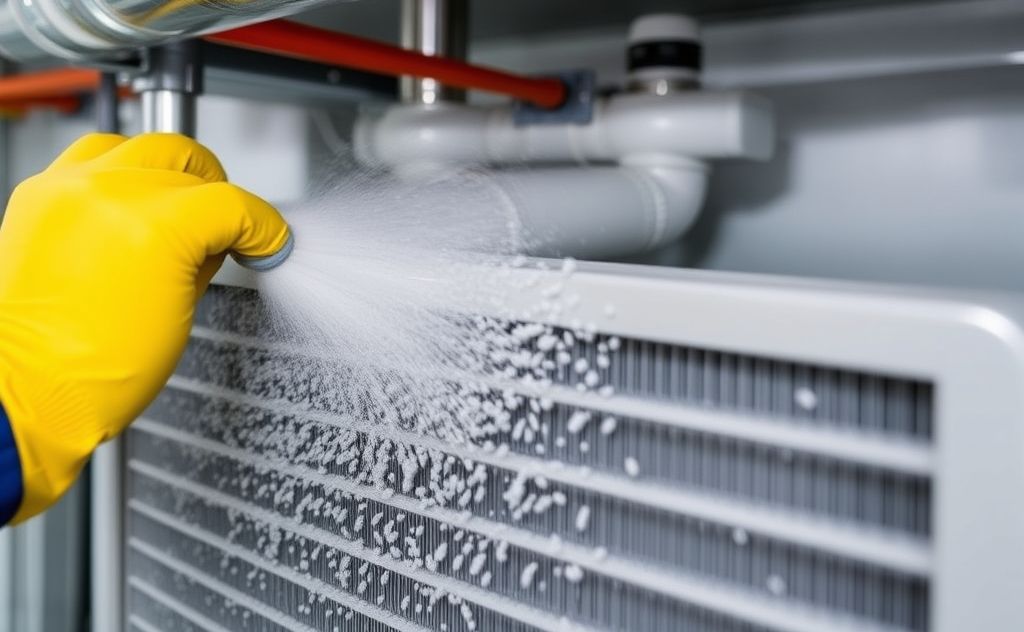
Why Clean Coils Matter for HVAC Performance
HVAC coils are the heart of your system’s heat transfer process. When coated with dirt, they can’t exchange heat properly. The U.S. Department of Energy confirms dirty coils significantly reduce efficiency and increase operating costs.
The Science Behind Coil Efficiency
Clean coils have:
- Unobstructed airflow
- Optimal heat transfer surface area
- Proper refrigerant temperatures
| Coil Condition | Energy Use | Capacity Loss |
|---|---|---|
| Clean | 100% (baseline) | 0% |
| Moderately Dirty | 115% | 15% |
| Severely Dirty | 130%+ | 30%+ |

Condenser vs. Evaporator Coils: Different Cleaning Needs
Outdoor Condenser Coils
These coils release heat outside and collect:
- Pollen
- Grass clippings
- Dust
- Cottonwood seeds
Indoor Evaporator Coils
These absorb indoor heat and develop:
- Dust buildup
- Mold growth
- Bacterial films
For optimal performance, consider upgrading your thermostat alongside regular coil maintenance.
Step-by-Step Coil Cleaning Guide
Outdoor Unit Cleaning
- Turn off power at the breaker
- Remove debris with a soft brush
- Apply foaming coil cleaner
- Rinse gently with water
- Straighten bent fins with a fin comb
Indoor Unit Cleaning
- Shut off power
- Access the coil panel
- Use mild detergent solution
- Gently brush away buildup
- Allow complete drying before reassembly
Professional Maintenance Tips
The ASHRAE recommends professional coil cleaning:
- Annually for residential systems
- Quarterly for commercial systems
- After major construction projects
For homes with built-in heating systems, coordinate coil cleaning with annual furnace maintenance.
Signs Your Coils Need Cleaning
- Higher energy bills
- Reduced cooling capacity
- Longer run times
- Ice buildup on coils
- Musty odors from vents
Advanced Cleaning Technologies
Commercial facilities now use:
- UV-C light systems
- Electrostatic precipitators
- Antimicrobial coatings
- Automated coil washing systems
Related pick: Check today's price on Amazon

I am a mechanical engineer and love doing research on different home and outdoor heating options. When I am not working, I love spending time with my family and friends. I also enjoy blogging about my findings and helping others to find the best heating options for their needs.
Related guides

Eco-Friendly HVAC Cleaning: Safer Products for Better Air
Eco-friendly cleaning products for HVAC systems effectively reduce indoor air pollution while promoting sustainability and enhancing system efficiency.…
HVAC Duct Cleaning: The Complete Process Explained
You vacuum the floors, dust the shelves, and change the air filter on schedule. Yet somehow, a week…
Top 7 Benefits of Professional HVAC Cleaning: A Cost-Benefit Analysis
You walk into your living room and catch a faint musty smell. The vents push air, but the…
