

You’re standing in the home improvement store next to a pallet of wood pellets. They’re stamped ‘renewable,’ ‘carbon neutral,’ ‘local.’ The price per ton is up again, but you keep hearing this fuel is the green choice. You’re ready to buy a pellet stove, but something makes you pause. Is it really that clean?
This article walks through the environmental case for wood pellets – the good, the bad, and the overlooked. You’ll learn what the carbon cycle actually looks like for pellets, where the hidden emissions live, and how this fuel stacks up against gas, electric, and solar heating. After reading you’ll have a grounded view to decide if wood pellets fit your priorities.

UNITED STATES STOVE Co
Hardwood Heating Pellets - Pallet,1 Bag
- Reliable heat source: Our Hardwood Heating Pellets are a reliable and efficient choice for keeping your home warm and cozy during…
If you decide wood pellets are right for you, having a reliable supply matters. The Hardwood Heating Pellets from UNITED STATES STOVE Co (one bag, but often bought in pallets) are a standard option used in many stoves. Check the current price on Amazon to see if it fits your budget.
The basic environmental case for wood pellets
The main argument goes like this: trees absorb carbon dioxide as they grow. Burn them, and you release that same CO2 back into the air. Over a short cycle – regrow the trees in 20-30 years – the net carbon added to the atmosphere is near zero. That’s the theory.
Wood is a renewable fuel when forests are managed sustainably. Unlike coal or natural gas, which take millions of years to form, you can replant a tree this year. The U.S. Energy Information Administration considers biomass (including wood pellets) a renewable energy source.
Pellet stoves also burn fuel efficiently. Modern EPA-certified units hit 70-85% efficiency, which means less wasted energy than an open fireplace. And because pellets are compressed, they have low moisture content – about 6-8% – which reduces creosote buildup in your chimney.
Local sourcing further shrinks the carbon footprint. If your pellets come from a mill within 100 miles, transport emissions are minimal. Some small-scale producers use waste wood from sawmills or forest thinnings, which would otherwise rot and release methane.
The hidden environmental costs nobody talks about
Here’s where things get murky. The carbon neutrality claim assumes the harvested trees are regrown quickly. In reality, many pellets come from whole logs cut specifically for fuel, not just sawmill scrap. If a forest takes 60 years to regrow, burning that log today means a 60-year debt of excess CO2 in the atmosphere. That’s not neutral on the timescale that matters for climate change.
Processing creates its own footprint. Turning logs into pellets requires chipping, drying, grinding, and pressing. Drying alone uses significant energy – often natural gas or electricity from fossil fuels. One study from the European Environment Agency estimated that producing a ton of wood pellets emits 200-300 kg of CO2 equivalent before it ever leaves the mill.
Transportation can flip the balance. Pellets shipped from Canada to the UK or from the U.S. Southeast to Europe carry a heavy diesel burden. That’s why some environmental groups argue that large-scale pellet exports are worse for the climate than burning coal. For home heating, if your pellets travel more than 300 miles by truck, the carbon advantage begins to erode.
Forest management matters too. Unsustainable harvesting strips nutrients from the soil, disrupts wildlife habitat, and can lead to erosion. Look for certification from the Pellet Fuels Institute (PFI) or Sustainable Biomass Program (SBP) to verify responsible sourcing.
Air quality and health – the real trade-off
Even the cleanest pellet stove produces particulate matter (PM2.5) that gets deep into your lungs. The EPA’s New Source Performance Standards for wood heaters set limits of 2.5 grams per hour for pellet stoves, but that’s still more than a gas furnace or heat pump. In practice, real-world emissions can be higher if the stove isn’t maintained or uses low-quality pellets.
Indoor air quality depends on proper venting. A sealed direct-vent system pulls combustion air from outside and exhausts outside. But a leaky flue or poor installation can spill smoke into your home. Carbon monoxide detectors are non-negotiable.
Outdoor air quality is a growing concern in neighborhoods with many wood-burning appliances. In places like the Pacific Northwest, winter inversions trap wood smoke near the ground, causing smog warnings. Some cities now restrict pellet stove use on high-pollution days.
Compare that to natural gas: a high-efficiency condensing furnace emits virtually no PM2.5. Heat pumps produce zero emissions at the point of use. If local air quality is a priority for you, pellets lose this round.
How wood pellets stack up – a comparison table
| Heating method | Carbon footprint (kg CO2 per MMBtu) | Efficiency rating | PM2.5 emissions | Fuel cost stability | Renewable? |
|---|---|---|---|---|---|
| Wood pellets (local, sustainable) | ~30-50 (supply chain only) | 70-85% | Medium-High | Variable, tied to wood costs | Yes, with caveats |
| Natural gas | ~53 (combustion) | 90-98% | Negligible | Volatile; market-driven | No |
| Propane | ~62 (combustion) | 90-95% | Negligible | Volatile; higher than gas | No |
| Electric heat pump | Depends on grid mix | 200-400% (COP) | Zero at point of use | Relatively stable | If powered by renewables |
That table simplifies a complex reality. The carbon footprint of wood pellets can actually swing from net-negative (if using waste wood that would decay) to net-positive (if from whole logs with long regrowth). Your local fuel supply and stove model matter more than the averages.
Frequently asked questions
Are wood pellets really carbon neutral?
Not in a strict sense. Carbon neutrality assumes that new trees absorb the CO2 released from burning. That takes decades. Over a 20-year climate target, burning pellets adds extra CO2 compared to leaving the forest standing. For carbon accounting purposes, most international rules treat biomass as carbon neutral, but many scientists disagree with that approach.
Do wood pellets create harmful air pollution?
Yes, especially fine particulate matter (PM2.5). An EPA-certified pellet stove emits about 1-2 grams per hour of PM2.5, while a gas furnace emits less than 0.1 grams. Over a winter, that difference adds up. Proper stove operation and dry, high-quality pellets can reduce emissions, but they won’t match gas or electricity.
How much do wood pellets cost compared to other fuels?
Prices vary by region and season. A ton of pellets currently ranges from $200 to $350, depending on where you live. At that price, pellets are often cheaper than propane and competitive with natural gas in some areas, but more expensive than a heat pump in regions with low electricity rates. Always compare cost per million BTUs using local fuel prices – check current prices on Amazon or at your local supplier.
Can I use any brand of wood pellets in my stove?
Most stoves accept standard 6-mm (1/4-inch) diameter pellets. But quality matters. Premium pellets have low ash content (under 1%) and few fines (dust). Low-quality pellets can clog the auger, produce more ash, and cause clinkers (hard glassy deposits). Buy a small bag first and test it in your stove before buying a pallet.
Are wood pellets bad for forests?
They can be if sourced irresponsibly. Some pellet mills take whole trees from natural forests, which degrades ecosystems. Others use mill residues (sawdust, bark) or thinnings from managed plantations – that’s much lower impact. Look for PFI or SBP certification on the bag to ensure sustainable sourcing. For more details on the trade-offs, see our full guide to pellet heater pros and cons.
What to do with this information
- Buy pellets from certified sustainable sources – look for PFI or ENplus labels on the bag.
- Run your stove at the recommended burn rate to minimize emissions and maximize efficiency.
- Have your chimney and stove inspected yearly, and replace any worn gaskets.
- Factor in the full lifecycle: purchase price of stove, installation, delivery fees, and storage space.
- If you live in a valley or area prone to inversion layers, check local ordinances – you may face burn bans.
- Consider pairing a pellet stove with a heat pump for mild days and using pellets only during deep cold snaps. That cuts overall emissions and saves money.
- For an alternative renewable heating option, read our breakdown of solar air heaters to see if they fit your situation.

I am a mechanical engineer and love doing research on different home and outdoor heating options. When I am not working, I love spending time with my family and friends. I also enjoy blogging about my findings and helping others to find the best heating options for their needs.
Related guides

Pellet Stove Heating Costs: Save 50% vs Oil & Electric
Heating costs with pellet stoves are generally lower than traditional heating methods, averaging $1,000 annually, depending on usage…
Top Pellet Stove Brands for Reliable Heating in 2026
Top brands of pellet stoves include Traeger, Harman, Quadra-Fire, and Englander, known for their efficiency, durability, and innovative…
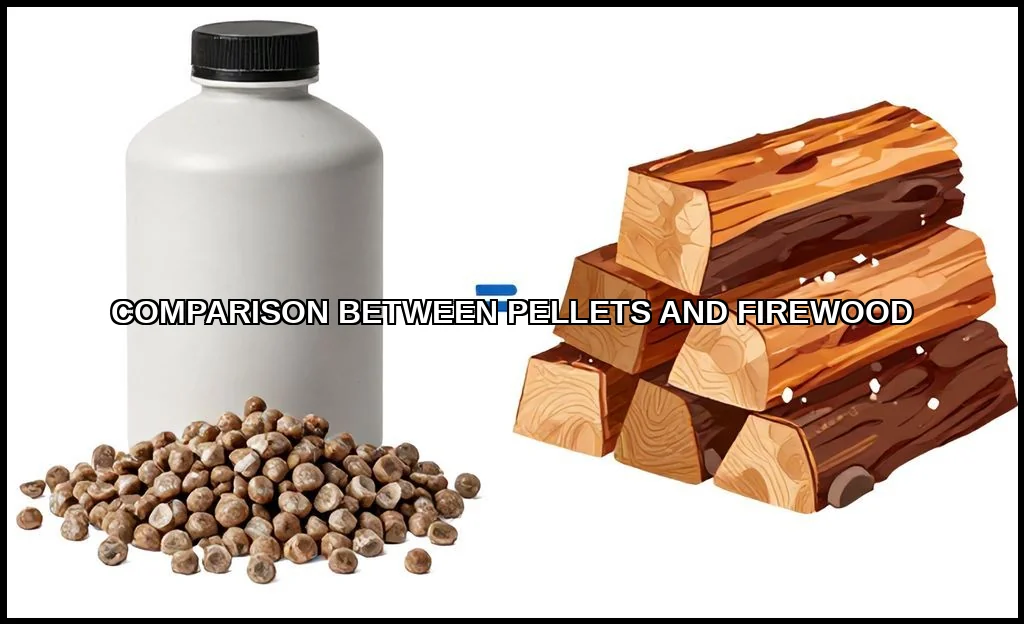
Pellets vs Firewood: Which Fuel is Better for You?
Choosing how to heat your home is a big decision. It's about comfort, cost, and your lifestyle. The…
