Most Energy-Efficient Electric Heaters (Smart-Heat Picks)
On this page 8 sections
- Energy-Efficient Heater Comparison
- Best Energy-Efficient Electric Heaters for Targeted Warmth
- How Electric Heaters Save Energy With Smart Controls
- Matching Heater Size and Type to Your Room and Usage
- Comparing Heater Types: Ceramic, Oil-Filled, Infrared, and Fan-Forced
- Safety Features and Certification Matter for Overnight and Family Use
- How Home Insulation and Usage Patterns Affect Heater Efficiency
- Frequently Asked Questions
Energy-Efficient Heater Comparison
| Rank | Model | Best for | Heat Output (W) | Room Coverage (sq ft) | Smart ECO Mode | Price |
|---|---|---|---|---|---|---|
| 1 | DREO 1500W Oscillating Ceramic HeaterTop Energy Saver | Large rooms up to 270 sq ft with precise climate control | 1500 | 270 | Yes | Check price |
| 2 | R.W.FLAME 1500W Portable Ceramic HeaterBest for Small Spaces | Heating bedrooms, offices, and garages up to 200 sq ft quietly | 1500 | 200 | Yes | Check price |
| 3 | DREO 1500W Portable Ceramic Heater with RemoteQuiet & Safe | Bedrooms and offices needing quiet, safe, and adjustable heat | 1500 | — | Yes | Check price |
| 4 | PELONIS 23″ Oscillating Ceramic Tower HeaterBest Tower Heater | Medium rooms 106-167 sq ft needing steady heat and timer | 1500 | 106-167 | Yes | Check price |
| 5 | R.W.FLAME 50″ Smart Electric Fireplace HeaterBest for Ambiance | Up to 400 sq ft spaces needing heat plus decorative flames | 750/1500 | 400 | — | Check price |
High heating bills and cold spots call for a heater that targets warmth without wasting energy. Electric heaters convert power to heat at nearly 100% efficiency, but smart controls and heat delivery matter most to save money.
This guide ranks the best energy-efficient electric heaters by real-world features: smart thermostats, ECO modes, room size coverage, noise levels, and safety. You’ll see what fits your space, budget, and heating needs quickly.
Best Energy-Efficient Electric Heaters for Targeted Warmth

DREO 1500W Oscillating Ceramic Heater

R.W.FLAME 1500W Portable Ceramic Heater

DREO 1500W Portable Ceramic Heater with Remote

PELONIS 23″ Oscillating Ceramic Tower Heater
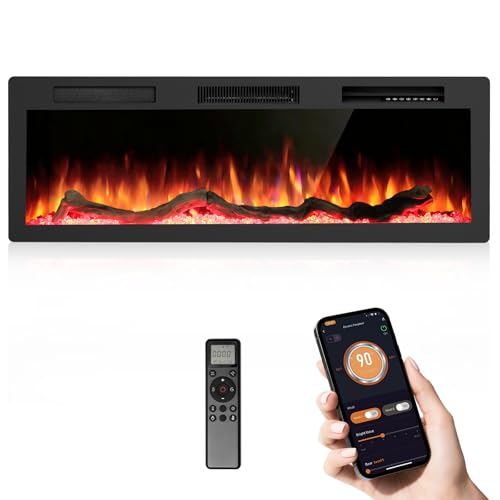
R.W.FLAME 50″ Smart Electric Fireplace Heater
How Electric Heaters Save Energy With Smart Controls
Electric heaters use electricity to generate heat almost perfectly, so the real energy savings come from how they control that heat.

The lowest energy use electric heaters are the ones with smart thermostats or ECO modes that avoid running full power all the time. Instead, they cycle between lower and higher wattage—say, from 900 W up to 1,500 W—to keep your room comfortably warm without waste.
A smart thermostat on an electric heater measures room temperature and turns the heater off or down when it hits the set point. This cycling can cut electricity use by 10 to 20 percent or more, depending on your settings and how well your room holds heat.
ECO modes do something similar but usually simpler, limiting maximum power and using a temperature sensor to keep heat steady. These modes prevent the heater from blasting full power once the room is warm, saving both energy and your electric bill.
Wide oscillation spreads warm air more evenly across the room. This stops hot spots from forming near the heater, which can cause the thermostat to shut off too soon and then turn back on frequently. Fewer on/off cycles mean less electricity wasted on reheating cold patches.
For example, the Dreo Solaris H3 oscillates 70 degrees quietly, helping heat spread out so the thermostat runs the heater less often. This smooth delivery keeps your room comfortable while trimming energy use.
In short, all electric heaters convert power to heat efficiently, but the best energy savings come from smart controls that regulate output based on real-time temperature. These controls keep the heater running only as much as needed, which is where you find the real cut in your electricity use.
If you want to see how these savings add up, look for models with programmable thermostats and ECO modes. They’re the closest you’ll get to the lowest energy use electric heaters without switching to a completely different heating system.
For more on models that combine these features effectively, see our guide to top energy efficient space heaters that wow.
 Winter Heating Bill CutterSee what every heater in your home really costs, heat the rooms you use, and cut the waste in 30 days.Cost-per-hour tables for every heaterThermostat schedule and draft-proofing planRunning-cost and bill calculator (Excel)
Matching Heater Size and Type to Your Room and Usage
Electric heaters convert electricity to heat efficiently, but picking the right size and type is key to real energy savings and comfort.
A small portable electric heater rated at 1,000 watts heating a 720 square-foot area is not energy efficient. It will struggle to heat the space, run constantly, and waste electricity without reaching a comfortable temperature.
Electric heaters work best as zone heat for small to medium rooms or supplemental heating. Trying to stretch a low-wattage heater across a large room leads to constant cycling and wasted energy.
A 1,500-watt heater typically covers between 150 and 270 square feet, depending on the room’s insulation and the heater’s heat delivery method. Poor insulation or high ceilings reduce effective coverage.
Oil-filled radiators shine in bedrooms or medium-sized rooms up to about 200 square feet. They deliver sustained radiant heat and keep warming after the thermostat turns the element off, using less energy overall for steady heating.
Ceramic heaters heat up quickly, making them ideal for small to medium rooms or as supplemental heat. They often include fan-forced convection, which circulates warm air fast but may use a bit more power during operation.
Infrared heaters provide radiant warmth that feels immediate and cozy but mainly heat objects and people in their path rather than the whole room. This makes them excellent for spot heating but less effective for uniform room heating.
Matching heater type to your usage is just as important as size. For example, an oil-filled radiator is better for overnight use due to silent, steady heat, while ceramic heaters excel at quick warm-ups for short periods.
Electric heaters are generally energy efficient for targeted heating, but their overall efficiency depends on size, room insulation, usage patterns, and the heat delivery method. Choosing the right combination avoids wasted power and ensures comfort.
For large rooms, especially in climates like Australia’s, reviews show that electric heaters struggle to maintain warmth efficiently unless combined with good insulation or used alongside other heating methods.
Smart thermostats and programmable settings help any heater avoid running unnecessarily once the desired temperature is reached, improving energy savings regardless of type or size.
Comparing Heater Types: Ceramic, Oil-Filled, Infrared, and Fan-Forced
All electric resistance heaters convert electricity to heat with nearly 100% efficiency, so the real differences come down to how that heat is delivered and how it feels in the room.
Ceramic heaters use resistive heating elements combined with a ceramic component that heats up quickly and transfers warmth to the air. They often include oscillating fans to distribute heat evenly, making them energy-efficient for short bursts or when you want rapid warmth. The quick heat-up and targeted airflow mean less wasted energy warming unused space. So yes, ceramic heaters are energy efficient in practical use because they warm spaces fast and avoid overheating.
Oil-filled electric heaters work differently. Inside, a special oil is heated by an electric element, which then radiates heat slowly over time. Even after the heater turns off, the oil retains warmth, releasing it gradually into the room. This reduces the heater cycling on and off frequently. While the electricity used during operation is similar to other heaters, the sustained heat means less frequent power draw overall. Oil-filled heaters suit longer heating sessions where a steady, gentle warmth is preferred over rapid temperature swings.
Infrared heaters don’t warm the air directly. Instead, they emit infrared radiation that heats objects and people in their path, similar to how sunlight feels warm on your skin. This radiant heat is effective for spot heating and can feel warmer at lower air temperatures because it targets surfaces and skin rather than the surrounding air. Infrared heaters are especially useful in poorly insulated rooms or drafty spaces where conventional convection heaters struggle to maintain temperature efficiently.
Fan-forced heaters rely on a heating element and a fan to blow warm air into the room quickly. They heat air fast and spread it evenly but can be noisy and sometimes less comfortable for long-term use because the moving air can feel dry or cause temperature fluctuations. They’re best when you want immediate heat on demand, like in a small bathroom or workspace, rather than for all-night use.
Efficiency differences between these types mainly depend on your use case: if you need fast, directed heat to a small area, ceramic or fan-forced heaters with oscillation work well. For consistent background warmth, oil-filled radiators hold heat longer and reduce cycling. Infrared heaters save energy when you want to warm people or objects directly without heating all the air in a drafty room.
Safety Features and Certification Matter for Overnight and Family Use
The best energy-efficient electric heater for overnight use is one equipped with essential safety features like a tip-over switch, overheat protection, and recognized safety certifications such as ETL or UL. These features ensure the heater can operate safely through the night without constant supervision, protecting your family and home from fire hazards.
Electric heaters with smart controls also manage energy use efficiently by cycling power on and off to maintain the set temperature, minimizing waste while keeping rooms comfortable. That means you get safety and energy efficiency combined.
Look for a tip-over switch that cuts power immediately if the heater falls. Overheat protection triggers a shutdown if internal components get too hot, preventing fires. Certified models from ETL or UL have passed rigorous tests that validate their safety claims.
Families with kids or pets should also consider heaters with child locks and cool-touch exteriors. Child locks disable controls to prevent accidental changes, and cool-touch surfaces reduce burn risk when curious little hands or paws get too close.
Quiet operation is another safety and comfort factor, especially for bedrooms or offices. Heaters like the Dreo Solaris H3 run at noise levels as low as 37.5 decibels—about the sound of a soft whisper—so they won’t disturb sleep or concentration.
Never use extension cords with electric heaters. Plug them directly into wall outlets to avoid overheating and fire risk. Some heaters go further by including flame-retardant materials and enhanced safety plugs, providing extra peace of mind for overnight and family use.
Choosing a heater with these safety features and certifications protects your household and lets you use electric heating efficiently and confidently. If you want to explore models that combine smart energy-saving features with top safety, check out our detailed picks for energy efficient space heaters that wow.
How Home Insulation and Usage Patterns Affect Heater Efficiency
Energy-efficient home heating depends heavily on your home’s insulation quality and how you use your heaters. Good insulation slows heat loss, letting your electric heaters maintain the set temperature with less power cycling. For example, a well-insulated room might only need the heater to run half the time compared to a poorly insulated one, cutting electricity use substantially.
In contrast, heaters in rooms with poor insulation run nearly continuously, driving up your electricity bills even if you use an energy-efficient model. The heater’s efficiency can’t overcome the physics of warm air escaping through gaps and thin walls. That means investing in insulation upgrades can deliver bigger savings than swapping heater brands.
Electric resistance heaters generally convert electricity to heat at nearly 100% efficiency, but their performance as whole-home heating systems is limited. Heat pumps are more energy efficient for central heating because they move heat rather than generate it. However, electric heaters excel at zone heating, where you heat only the occupied rooms. Using heaters strategically this way reduces overall heating costs by avoiding wasted energy warming empty spaces.
Smart thermostats and timers improve heater efficiency by matching heat output to occupancy patterns. They shut off or lower power when rooms are empty or when the desired temperature is reached. Scheduling heaters to warm a room just before you arrive and turning them off afterward prevents unnecessary electricity use. For example, a programmable thermostat can cut heating hours by several each day, trimming monthly costs noticeably.
Central heating radiators linked to HVAC systems benefit from insulation and smart controls too, but their energy efficiency depends on the entire system’s design. Electric resistance heaters cost less initially but can be more expensive to run if used for whole-house heating. Heat pumps and high-efficiency HVAC systems often have higher upfront costs but pay off over time with lower energy bills, especially in colder climates.
To put costs in perspective, a 1,500-watt space heater running 8 hours daily uses 12 kWh. At 17 cents per kWh, that’s about $2.04 a day or $61 a month. If poor insulation doubles the running time, the cost doubles. Improving insulation to reduce heater runtime by half could save you $30 monthly, roughly the same as a smart thermostat’s contribution to cutting wasted heat.
Zone heating with portable electric heaters, especially those with built-in thermostats and ECO modes like the Dreo 1500W Oscillating Space Heater, lets you focus warmth where you need it. You avoid heating unused rooms, making your heating energy go further. Combining this with better insulation and smart scheduling is the best way to keep your bills down without sacrificing comfort.