Electric Water Heater Recommendations That Fit Your Home
On this page 6 sections
- Electric Water Heater Recommendations for Different Needs
- How Electric Water Heaters Heat Water and What That Means
- Electrical and Installation Requirements for Electric Water Heaters
- Comparing Long-Term Costs, Maintenance, and Reliability
- Environmental Impact and Integrating Renewable Energy
- Frequently Asked Questions
Say your household has three people and uses about 50 gallons of hot water per day. Choosing between a 50-gallon tank heater, a tankless model delivering 4 gallons per minute, or a hybrid heat pump heater means balancing upfront cost, running cost, and installation complexity.
This article breaks down how electric water heaters work, how to size them, what installation involves, and the pros and cons of each type to help you select the right one.
Electric Water Heater Recommendations for Different Needs
Electric water heater recommendations come down to demand: a 50 gallon electric water heater is a sensible whole-house starting point for many families, while a tankless electric water heater suits limited space and steady demand only when your electrical service can handle it. For the highest efficiency electric water heater, look first at a hybrid heat pump model, then compare its UEF, installation requirements, and available recovery rate.
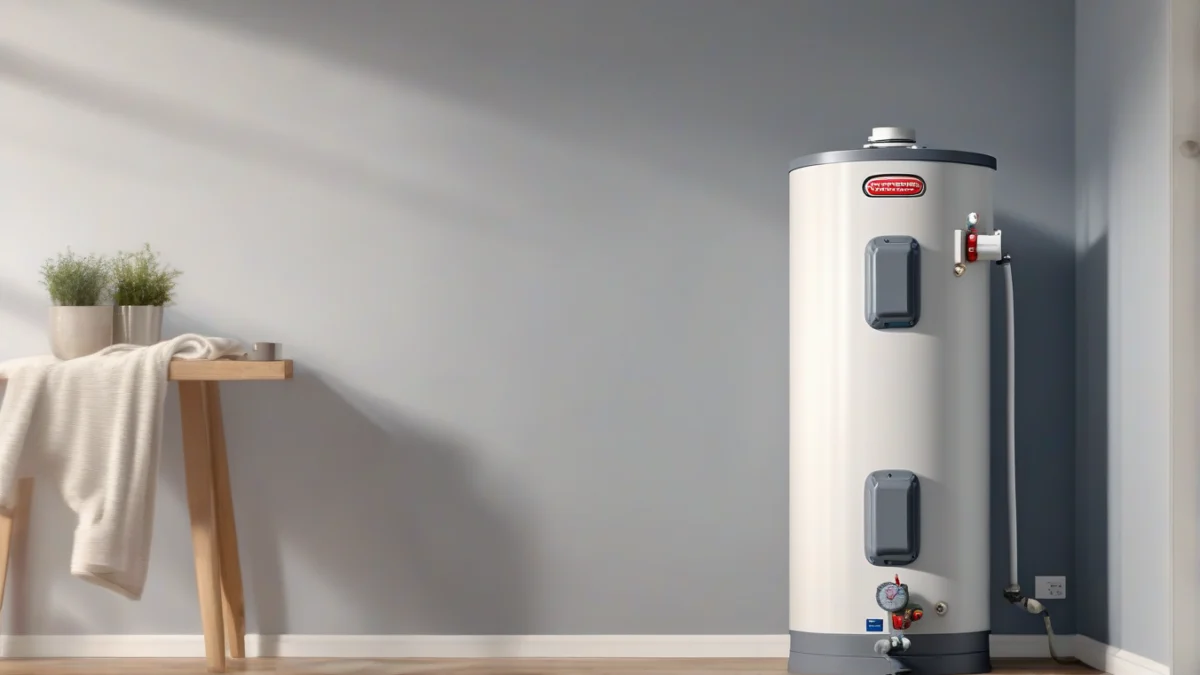
An electric tank water heater is usually the least complicated whole-house choice because it stores heated water for several fixtures to share. A tankless unit heats water as it flows, a hybrid heat pump moves heat from surrounding air into the tank, and a point-of-use heater serves one nearby sink or fixture instead of the whole home.
| Type | Sizing measure | Best fit | Main catch |
|---|---|---|---|
| Electric tank | Gallons and first-hour rating | Homes wanting familiar, stored hot water | Standby heat loss and limited stored supply |
| Tankless electric | Flow rate in GPM | Small spaces or homes with demand spread over time | High amperage draw; cold inlet water reduces flow |
| Hybrid heat pump | Tank gallons and recovery rate | Households seeking lower energy use | Needs suitable space, airflow, and a higher upfront budget |
| Point of use | Small tank gallons or local flow rate | Remote sinks, offices, and low-demand fixtures | Usually can’t replace a whole-house heater |
For tank sizing, use gallons as the starting point, then check the manufacturer’s first-hour rating. A 50 gallon electric water heater can work well for a typical family when showers, laundry, and dishwashing don’t all peak together; a larger tank gives more stored reserve, while a smaller tank may work for one or two people with modest demand. A household with unusually long showers or several bathrooms should compare first-hour ratings instead of choosing by gallon label alone.
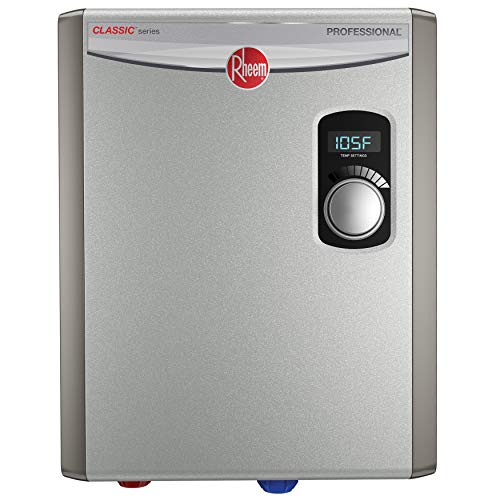
Tankless sizing uses flow rate in GPM, not gallons in a reservoir. Add the fixtures you might run at the same time, then confirm the heater can deliver that flow at your winter inlet-water temperature; a unit’s advertised maximum can fall when it must raise colder water to the set temperature. The Rheem 18kW tankless model provides up to 4.4 GPM and uses self-modulating technology, adjusting power as demand changes, but its electrical service still needs careful checking.
Efficiency labels tell different parts of the story. UEF estimates how much useful hot water a heater produces from its energy input over a standardized cycle; COP describes the heat a heat pump moves for each unit of electricity, so it matters especially for hybrid models. Standby heat loss describes energy escaping from stored water while the heater waits, which tankless units largely avoid but storage heaters can’t eliminate.
Installation ranges from a point-of-use plug-in unit to a service upgrade for a large tankless heater. The Bosch Tronic 3000T mini-tank is a 2.5-gallon, 120V plug-in unit at 98% efficiency, while the EcoSmart ECO 11 requires a 60-amp service and delivers 3.1 GPM. A licensed plumber or electrician should confirm wiring, breakers, water connections, relief-valve piping, and local code before installation; a simple-looking swap can become an electrical project in a hurry.
How Electric Water Heaters Heat Water and What That Means

An electric water heater usually reheats a storage tank more slowly than a gas model, but it can deliver steady, quiet heat with no flue or combustion; your running cost depends on the heater’s wattage, how long it runs, and your electric rate. A tank stores hot water, while a tankless unit heats water only as it passes over electric elements.
Inside an Electric Tank Water Heater, one or more electric resistance elements sit in the water, much like an oversized immersion heater. A thermostat switches an element on when the water cools below its setting and switches it off after the tank reaches temperature. The tank’s insulation slows heat escaping into the room, although some standby heat loss continues even when nobody opens a faucet.
Gas heaters often recover a tank faster because their burners can deliver a higher heating input, but there isn’t a universal gas-versus-electric speed winner without comparing the models’ input ratings and tank sizes. Electric resistance heat is predictable and quiet; the tradeoff is that a heavily used tank may need more recovery time between showers.
Tankless Heat Follows Flow
A Tankless Water Heater turns its elements on when a flow sensor detects water movement. Self-modulating technology adjusts the electrical input as flow and incoming-water temperature change, but the unit still has a hard limit: more gallons per minute require more power to produce the same temperature rise. An EcoSmart ECO 11, for example, is rated at 3.1 GPM and 99.8% energy efficiency, so several simultaneous fixtures can exceed its useful output.
Tankless heating avoids storage standby loss and can provide hot water continuously at its rated flow, but the water may take a moment to reach the faucet through the plumbing. A tank keeps a reserve ready, so it often feels more forgiving during a shower followed by a sink or laundry load.
| Heater | Watts | Per hour | Per day (2 h) | Per month (30 days) |
|---|---|---|---|---|
| Electric water heater element | 4,500 W | 77¢ | $1.53 | $45.90 |
Electric elements make little operating noise beyond an occasional click from the thermostat, and tank models usually provide a consistent temperature once properly adjusted. Tankless units can hold a steady outlet temperature within their design limits, but a sudden flow change or an undersized unit may produce cooler water. A hybrid heat pump adds compressor and fan noise because it moves heat from the surrounding air instead of making all of it directly with resistance elements.
Electrical and Installation Requirements for Electric Water Heaters
Electrical water heater installation is a code-and-capacity job: a storage tank usually needs a dedicated 240-volt circuit, while a tankless unit can demand far more amperage and may require a service upgrade. For the common question about electric water heater fuse size, use the manufacturer’s nameplate and installation manual—not a guess based on the tank’s gallon rating. Most homes use circuit breakers rather than fuses.

A tankless electric water heater must be sized for both flow rate and incoming water temperature, then wired on the number and size of circuits its manual specifies. For example, the EcoSmart ECO 11 delivers 3.1 GPM and requires a 60-amp service. That is a serious electrical load, so an electrician should confirm the main panel, service rating, breaker space, wire size and grounding before the unit is ordered. A practical guide to the correct tankless water heater setup can help you compare those requirements before installation.
| Heater type | Electrical planning point | What to verify |
|---|---|---|
| Storage tank | Dedicated circuit sized from the nameplate | Voltage, wattage, breaker and conductor size |
| Tankless | Higher amperage; some models need multiple circuits | Required amperage, flow rate, service capacity and wire routing |
| Mini-tank | Some smaller units plug into a 120V outlet | Outlet condition, grounding and the manufacturer’s instructions |
A breaker protects the wire from overheating; it isn’t a tuning dial for getting more hot water. The electrician matches the overcurrent protection and conductors to the listed equipment and local code, installs the disconnect where required, and checks bonding and grounding. Never replace a breaker with a larger one because it trips. The wire may overheat before the breaker does its job.
Converting a gas furnace to electric doesn’t automatically mean you must replace the water heater. The furnace and water heater are separate appliances, so an existing gas water heater can remain if it is safe, legal and properly vented. Replacing that water heater with an electric model is a separate choice, and the panel may need additional capacity.
Warranty coverage can depend on installation that follows the manual and local code, plus proof of licensed work or permits. Keep the model number, receipts, permit records and electrical changes with the appliance paperwork; that folder is much more useful than a blurry photo of the old label.
 Water Heater Owner's ToolkitFix the common faults yourself, keep it running for years, and know when a repair is money wasted.No-hot-water flowcharts, gas and electricFlush, anode, relief valve and descaling stepsRepair-or-replace calculator (Excel)
Comparing Long-Term Costs, Maintenance, and Reliability
The highest-efficiency electric water heater is usually a hybrid heat pump model, because it moves heat into the water instead of making all of it with resistance elements. A Rheem Performance Platinum 50 gallon electric water heater uses hybrid heat pump technology, making it a sensible long-term choice when you have room for the unit and can accept a higher purchase and installation cost.
A tankless electric unit can also be highly efficient while heating, since it has little standby heat loss. The EcoSmart ECO 11, for example, is rated at 99.8% energy efficiency and delivers 3.1 GPM, but its 60-amp requirement can make the electrical work expensive. Compare the UEF label, expected hot-water use, installation quote, and available rebates before treating a small efficiency gain as a bargain.
| Type | Long-term strength | Costs and tradeoffs |
|---|---|---|
| Storage tank | Simple controls and familiar repairs; the tank stores hot water for several fixtures | Standby heat loss; the anode rod and tank eventually need attention |
| Tankless | No large tank to leak and little standby loss | Higher electrical demand; flow sensors, heating elements, and scale can need service |
| Hybrid heat pump | Usually the lowest energy use among electric choices | Higher upfront cost; needs suitable space and periodic filter care |
There isn’t a single trustworthy failure-rate table proving that every tankless heater outlasts every tank. A storage heater has fewer operating decisions but a steel tank that can eventually leak; a tankless heater avoids tank failure but adds flow sensing and electronic controls. Hard water, undersized capacity, poor installation, and skipped maintenance can shorten either one’s life.
Keep the Water Heater Serviceable
If your Rheem electric water heater is beeping, treat the sound as an alert rather than normal operation. Read the display for an error code, check the model’s manual for that code, and don’t remove access panels while energized; a repeated alarm or no-hot-water condition calls for Rheem support or a licensed technician.
An electric water heater warranty usually separates the tank or heat exchanger from parts and labor. A leaking storage tank may qualify for replacement coverage, while thermostats, elements, sensors, labor, removal, and installation can follow different rules. Keep the receipt, register the unit if required, and confirm whether professional installation, approved parts, water conditions, and maintenance records affect coverage before buying.
For a closer look at coverage differences by manufacturer, compare the details for a Bradford White electric water heater rather than judging a warranty by its headline years alone.
Environmental Impact and Integrating Renewable Energy
The most efficient electric water heater is usually a hybrid heat pump model, and a hybrid water heater is worth the extra cost when your household uses enough hot water for its lower electricity use to repay the higher purchase price. It pulls heat from the surrounding air, so the compressor does much of the work that resistance elements would otherwise do.
That choice matters beyond the utility bill. A heat pump water heater can reduce demand from the electric grid, especially in a home supplied by solar or other low-carbon electricity. Your actual environmental benefit still depends on the local grid, the unit’s Energy Efficiency rating, how long it operates, and how much hot water your household uses.
Tank and tankless heaters also leave different material footprints. A storage tank contains a large steel vessel, insulation, heating elements, thermostats, and plumbing connections; a tankless unit uses less storage material but has heating elements, electronic controls, heat exchangers, and often substantial copper wiring. Neither belongs in ordinary household trash.
When replacement day arrives, ask the installer or local waste facility about appliance recycling, metal recovery, and any refrigerant-handling rules for a heat pump model. Drain and disconnect the old tank safely, and don’t cut into a hybrid unit’s refrigerant circuit. The tank may be bulky, while the tankless unit’s smaller size doesn’t make its electronics or metals disposable.
Pair Heating With Solar Power
Solar panels can supply some of the electricity used by any electric water heater, but smart controls make the timing more useful. A controller may heat water during sunny hours, use a schedule, limit operation during expensive rate periods, or respond to a utility demand program when the model supports those functions.
Smart features justify a higher price only when you’ll use the data or scheduling. Energy monitoring can show whether the heater is running during solar production, vacation mode can prevent needless heating, and leak alerts can limit water damage; remote control by itself rarely changes the environmental result.
For a closer look at units built around low electricity use, compare the most efficient electric water heater options by UEF, operating mode, installation space, and expected household demand rather than by the efficiency percentage printed on the box: most efficient electric water heaters.