Perfect Electric Fireplace Heater Wattage for Open Floor Plan
On this page 6 sections
- Perfect Electric Fireplace Heater Wattage for Open Floor Plans
- Ceiling Height, Insulation, and Climate Affect Wattage Needs
- Effects of Undersizing or Oversizing Your Electric Fireplace Heater
- Heating Multiple Connected Rooms with One Electric Fireplace
- Clearance and Installation Impact on Fireplace Heater Performance
- Frequently Asked Questions
Sizing an electric fireplace for an open floor plan isn’t just about picking a standard wattage. Open layouts lose heat differently, and ceilings often run higher, so you need a tailored approach.
Most people grab a 1,500-watt heater thinking it’s enough, only to find their space still chilly or the heater running constantly. Understanding the wattage rules and how to adjust them saves you money and hassle.
Perfect Electric Fireplace Heater Wattage for Open Floor Plans
Electric fireplaces typically need around 1,500 watts to heat an open floor plan effectively. This wattage suits spaces up to about 500 square feet, balancing warmth and energy use.

The 10 watts per square foot rule comes from basic heat output calculations. One watt equals about 3.41 BTU per hour, so a 1,500-watt fireplace produces roughly 5,100 BTU. For reference, a space of 150 square feet needs about this much heat to stay comfortable under average conditions.
Open floor plans lose heat differently than closed rooms. Without walls to contain warmth, heat spreads out more, requiring either higher wattage or multiple heaters to maintain even temperature. This makes sizing an electric fireplace for open layouts less straightforward.
Most electric fireplaces range from 1,000 watts to 1,500 watts, which can heat between about 100 and 150 square feet effectively. Larger open spaces often demand units at the top end of this range or combination heating strategies to cover the area.
Heat distribution in open floor plans depends on airflow and room shape. Electric fireplaces radiate heat directly and use a fan to push warm air out, but without partitions, you might feel temperature swings more. Positioning the heater to promote circulation helps.
Ceiling Height, Insulation, and Climate Affect Wattage Needs
Electric fireplace heater dimensions don’t directly dictate heat output; wattage does. A unit’s width or height mainly affects its style and how it fits your space, not how much heat it produces. The “e5” marking you might see on some electric fireplaces is a model or error code, not a power rating, so don’t confuse it with wattage or heating capacity.
Higher ceilings increase the volume of air to heat, so wattage should rise accordingly. For ceilings over 9 feet, add roughly 10 to 15 percent more watts per foot above standard 8-foot ceilings to maintain comfort.
Insulation quality changes heat retention dramatically. Older homes or spaces with poor insulation lose heat faster, forcing the heater to work harder. A 1,500-watt fireplace that heats 150 square feet in a well-insulated room might only cover 120 square feet effectively if walls or windows leak cold air. Upgrading insulation or sealing drafts reduces wattage needs and running costs.
Climate zone is a big factor. In colder regions, the inlet temperature—the temperature of the air coming into the room—starts lower, so the heater must output more heat. The usual 10 watts per square foot rule applies for moderate climates. If you live somewhere that regularly dips below freezing, bump your wattage target by 15% to 25%. That means a 150 square foot area could need 1,725 to 1,875 watts instead of 1,500.
Remember that electric fireplaces are designed as zone heaters to warm specific areas, not whole houses. Open floor plans can distribute heat unevenly, especially if the space is large or has many windows. You may need multiple units or one with adjustable heat settings and fans to improve circulation.
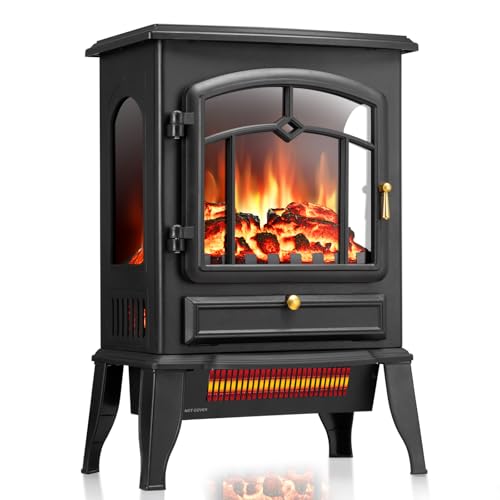
The physical size of an electric fireplace—how much wall space or floor area it occupies—doesn’t affect its heating capacity. A slim, wall-mounted 1,500-watt unit heats the same as a bulky freestanding model at the same wattage. Choose the style that fits your room and clearance requirements best.
Sizing up wattage to account for higher ceilings, poor insulation, and colder climates ensures your electric fireplace heater works efficiently without running constantly or falling short on comfort.
If you want to explore how electric fireplace wattage affects your energy bills or compare models, check out our detailed electric fireplace wattage guide.


Effects of Undersizing or Oversizing Your Electric Fireplace Heater
An undersized electric fireplace won’t warm your space adequately, leaving cold spots and increasing energy use as the unit runs longer. Oversizing wastes electricity and may cause uneven heat distribution, as the heater cycles off before the room reaches a steady temperature.

Undersizing means the heater runs almost constantly to meet the temperature you set. Instead of cycling on and off, it pushes full power for longer periods, using more electricity and driving up your energy bill. The room never quite feels warm enough, and your comfort suffers.
Oversizing your electric fireplace heater leads to short cycling—where the heater heats the space quickly, then shuts off soon after. This on-off pattern wastes energy because startup phases generally draw more power and strain components. It also results in uneven heat distribution, with sudden bursts of warmth followed by cool spells.
Operating cost rises in both cases but for different reasons. Undersized units run longer, burning more total watts. Oversized units use energy inefficiently through frequent cycling. If you consider a 1,500-watt heater running 8 hours, that’s 12 kWh; at 17 cents per kWh, expect about $2.04 nightly. Running constantly or cycling often pushes that higher.
The lifespan of your heater also depends on correct sizing. Longer runtimes from undersizing wear out heating elements and fans faster. Oversizing causes frequent starts and stops, which stress electrical components and relays. Both shorten the unit’s reliable service period.
Thermostats and timers help by limiting runtime and maintaining temperature, but they don’t fix the core issue of wrong wattage. A thermostat on an undersized unit still lets it run all day trying to catch up. A timer can reduce hours but at the cost of comfort. Oversized units, meanwhile, keep short cycling even if the timer restricts use.
Open floor plans complicate this because heat spreads to connected areas, lowering the temperature in the immediate zone and tempting you to oversize. Instead, size based on the primary living area and use supplemental heating if needed for adjoining spaces. That balances efficiency and comfort better than one oversized unit fighting a large open space.
Heating Multiple Connected Rooms with One Electric Fireplace
One electric fireplace can heat multiple connected rooms, but its effectiveness diminishes as the area grows beyond about 500 square feet.
One electric fireplace can heat multiple connected rooms if they share open sight lines and airflow. However, closed doors and walls block heat, so sizing up and adding fans or vents helps maintain warmth across zones.
Furniture placement also matters. Sofas, bookcases, and room dividers can block heat flow, creating cold spots. Long corridors or L-shaped rooms reduce heat reach, forcing some areas to remain cooler.
Adding multiple electric fireplaces or supplemental heating sources becomes necessary once you exceed roughly 500 square feet or have complex layouts. Zone heating—using dedicated units for different areas—lets you control temperatures room by room and saves energy compared to one oversized heater.
Freestanding electric fireplaces typically provide better heat spread because you can position them centrally and move them as needed. Wall-mounted units focus heat forward and up, which looks sleek but limits airflow to adjacent rooms.
Say your open plan has a living room and dining area totaling 700 square feet. One 1,500-watt wall-mounted fireplace might warm the living room comfortably but leave the dining area chilly. Placing a freestanding unit centrally or adding a second heater near the dining space improves overall comfort.
Clearance and Installation Impact on Fireplace Heater Performance
Clearance rules vary by model type but generally keep at least 3 feet of space around the fireplace free of combustibles. Wall-mounted units need clearance above and below to prevent heat damage, while freestanding models require floor clearance and space for air intake and exhaust.
Minimum side and rear clearance from walls varies by unit but generally runs from 3 to 6 inches to prevent heat damage and allow proper airflow. Wall-mounted fireplaces usually require more clearance behind to avoid overheating the wall.
Where you place the fireplace affects how well heat circulates. Freestanding units benefit from open space on at least three sides to distribute warmth evenly. Wall-mounted models direct heat forward, which suits rooms where people gather in front but may not warm corners or adjacent rooms well.
Many electric fireplaces integrate with smart home thermostats or remote controls to maintain comfortable temperatures while saving energy. Setting timers and adjusting heat output remotely prevent overheating and reduce electricity waste.
Regular maintenance keeps heat output steady. Dust the vents and fan blades every few months, and check for blockages or damage to the heater’s grill. A clogged fan slows airflow, reducing efficiency and increasing electric bills.
Electric fireplace heater dimensions range widely but often fit within a 40- to 60-inch width for wall-mounted units and around 20 inches wide for freestanding stoves. Knowing these sizes helps plan clearance and furniture layout.