

Choosing the right portable heater can save you money and keep your space comfortable without noise or safety risks. Dreo’s line of portable electric heaters uses PTC ceramic technology and smart temperature controls to balance warmth, efficiency, and peace of mind.
Getting the model wrong means wasting energy, dealing with cold spots, or risking safety hazards like tip-over fires or overheating. This guide breaks down the pros and cons of Dreo portable heaters to help you pick the right one for your needs.
Dreo Portable Heaters Compared: Features and Safety
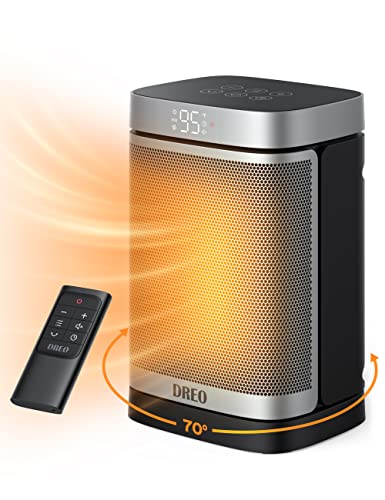
Dreo portable heaters compared side by side are strongest in small and mid-sized rooms because their 1,500-watt PTC ceramic systems heat quickly, hold a precise setpoint, and run quietly. Among these portable electric heaters, product 2 adds 70° oscillation and ETL-listed Shield360° protection, while products 1 and 3 offer 34 dB operation, 41–95°F controls, and a carry handle.

If you’re searching for portable heaters at Walmart or a portable heater Walmart listing, check the actual model number and safety details rather than choosing by the product photo. A portable heater should have tip-over and overheat protection, use flame-retardant materials, carry a UL, ETL, or CSA listing where stated, and plug directly into a wall outlet.
| Feature | Product 1 | Product 2 | Product 3 |
|---|---|---|---|
| Heating system | 1,500 W Hyperamics PTC with heat funnel | Up to 1,500 W Hyperamics system | 1,500 W Hyperamics PTC with heat funnel |
| Temperature control | 41–95°F, 1°F increments | 41–95°F, 1°F increments | 41–95°F, ±1°F increments |
| Noise claim | As low as 34 dB | As low as 37.5 dB | As low as 34 dB |
| Air movement | Heat funnel; circulation reach claim up to 200% farther than traditional heaters | 70° wide-angle oscillation | Heat funnel; circulation reach claim up to 200% farther than traditional heaters |
| Safety details | Tilt-detection sensor, overheat protection, V0 flame-retardant materials | ETL-listed Shield360°, tip-over and overheat protection, enhanced safety plug, UL94 V-0 materials | Tilt-detection sensor, overheat protection, V0 flame-retardant materials |
| Portability and controls | Carry handle, remote, Power Heat, ECO, Fan Only | Digital thermostat and ECO mode | Remote, Power Heat, ECO, Fan Only |
| Best fit | Bedroom or office where low noise matters | A room needing wider air coverage | Bedroom or office with remote control needs |
Why PTC Ceramic Heats Quickly
PTC ceramic heating uses ceramic elements whose electrical resistance rises as they warm, helping regulate the element instead of letting it continue climbing unchecked. The fan moves air across that warm ceramic surface, so you feel heat within seconds rather than waiting for a metal coil or a large mass to warm.
The PTC element doesn’t create free heat, though. At full power, a 1,500-watt heater uses 1.5 kWh for every hour it runs: 1.5 kWh × 8 hours = 12 kWh overnight. The faster warm-up can improve comfort and the thermostat can reduce run time, but the wattage still sets the upper limit on electrical use.

Thermostat Control Is More Precise
All three models offer a thermostat range around 41–95°F, with controls intended to change the target in 1°F steps. That lets you set 68°F instead of relying on a vague low, medium, or high switch; product 3 describes its control accuracy as ±1°F.
ECO mode adjusts heating toward the selected temperature instead of holding full output continuously. The thermostat measures room air near the heater, so don’t tuck the unit behind furniture or place it beside a cold doorway and expect that reading to represent the whole room.
Safety Features Worth Checking
Portable heater safety depends on the protection circuit and how you place the heater. Product 1 and product 3 list a tilt-detection sensor, overheat protection, and V0 flame-retardant materials; product 2 lists ETL certification through its Shield360° system, plus tip-over and overheat protection, an enhanced safety plug, and UL94 V-0 flame-retardant materials.
Noise, Handles, And Air Coverage
Products 1 and 3 list noise as low as 34 dB, while product 2 lists up to 37.5 dB, making all three plausible bedroom or office choices for people bothered by fan noise. Those figures are manufacturer claims and can change with fan mode, airflow, and the room’s background noise.
A carry handle makes it easier to move one heater between a desk, bedroom, or bathroom, but the product data doesn’t provide cabinet dimensions, so check the model’s listed measurements before buying for a cramped shelf or bedside table. Product 2’s 70° oscillation sweeps warm air across a wider section of the room; products 1 and 3 use a heat-funnel design instead. Oscillation improves distribution, not the heater’s total heat output.
Running Costs and Energy Efficiency of Dreo Heaters
A Dreo portable heater draws up to 1,500 watts, so eight hours at full output uses 12 kilowatt-hours; the thermostat and ECO mode determine how often it actually reaches that maximum. That answers the portable heater wattage question first: plugged into a standard 120-volt outlet, a 1,500-watt model draws about 12.5 amps.

| Heater | Watts | Per hour | Per day (8 h) | Per month (30 days) |
|---|---|---|---|---|
| Dreo portable heater at maximum output | 1,500 W | 26¢ | $2.04 | $61.20 |
A thermostat stops the heating element after the room reaches your set temperature, then turns it back on as the room cools. ECO mode space-heater settings usually combine that thermostat control with a lower-power setting or automatic adjustment, so consumption falls when the room needs less heat; they don’t create heat from less electricity.
Compared with another plug-in electric heater, Dreo’s running cost is governed mainly by wattage and runtime, not the brand or the word ceramic on the box. A 1,500-watt oil-filled radiator or fan heater uses the same 1.5 kWh for each hour it stays on at full output; the oil radiator releases heat more gradually, while the fan heater moves warm air faster. A heat pump can use less electricity for the same heating job, but it isn’t a like-for-like portable resistance heater.
The PTC ceramic element has no exposed glowing coil, but the fan, control board, display, and tip-over switch still face wear from dust, heat, and repeated starts. Keep the intake and outlet clear and clean the heater as the manual directs; careful use helps durability, but no fixed service life can be promised from the wattage or heating method alone.

Who Should Skip Dreo Portable Heaters
Skip a Dreo portable heater for a large open area, an off-grid space, or any room that needs fuel-fired heat; its practical limits are a 1,500-watt plug-in supply, moving air, and the outlet’s reach. Portable heaters for large rooms work best when the heat stays near the occupied zone, not when one small unit must cover a drafty open floor plan.
A Dreo heater has no battery, propane tank, kerosene reservoir, or other fuel option, so a portable heater with no electricity isn’t a Dreo solution. A generator or other approved power source changes the electrical supply, not the heater’s basic 1,500-watt demand, and it must be used according to its own safety instructions.
Digital controls can also bother light sleepers: a bright display may remain visible in a dark bedroom even when the heat and fan are quiet. Check the manual for a display-off setting before putting one beside the bed; a short power cord can create another problem if the only suitable outlet sits across the room.
Choose something else if your space requires a vent-free gas or kerosene heater for heat during an outage or in a location without a usable electrical outlet. Those fuel appliances bring carbon-monoxide, ventilation, fuel-storage, and local-code requirements; use only an indoor-rated model exactly as its manual and local rules require, never a patio, torpedo, or construction heater indoors.
What Buyers Say About Reliability and Safety
Portable heater repair is usually a replacement decision, not a circuit-board project: unplug a Dreo that smells hot, sparks, trips the breaker, or has a damaged cord, and don’t open the case. Dreo portable electric heater reviews generally point to quick heat, quiet operation, and useful temperature control, while the repeated annoyances are a short cord and a bright display in a dark bedroom.
Dreo’s limited warranty is intended for defects in materials and workmanship during the stated warranty period, with the exact term and claim process varying by model and sales region. Misuse, drops, water damage, normal wear, altered wiring, and unauthorized repairs typically fall outside coverage, so keep the receipt, model number, and photos of the rating label. Check the manual for the unit you own before assuming a failed control board is covered.
Safety is one of Dreo’s stronger areas because the heaters commonly combine a tip-over switch, overheat protection, thermostat control, and flame-retardant plastic materials; the exact package depends on the model. The ceramic PTC element also limits how hot the heating element can become as conditions change, but that doesn’t make a blocked intake or covered heater safe.
What Usually Fails First
Typical ceramic-heater trouble starts with dust restricting airflow, a worn fan motor, a thermal fuse that opens after overheating, or a failed thermostat, display, or control board. Those are ordinary failure points in this category, so a blank screen or a fan that runs without heat doesn’t automatically indicate a dangerous design. A burning-plastic smell, scorched plug, repeated breaker trips, or a cord that feels hot does call for immediate replacement and an electrician’s inspection of the outlet.
For model-by-model owner impressions and testing details, the Dreo space heater review is the useful next stop; buyers who care most about a dim bedroom should pay closer attention to display controls and timer behavior than to headline wattage.
More Questions, Answered
What safety features do Dreo portable heaters include?
Can Dreo portable heaters run all night without risk?
How much electricity does a 1,500W Dreo heater use per hour?
Is the noise level low enough for bedroom use?
Do Dreo portable heaters come with a warranty, and how long is it?

HeaterGuides covers home heating, water heating and HVAC: how the equipment works, what it costs to run, and how to use it safely.