

Yes, temperature changes can shift the equilibrium position of a reaction, favoring either the reactants or products based on Le Chatelier’s principle.
Temperature changes directly impact chemical equilibrium positions by favoring either endothermic or exothermic reactions. This fundamental principle explains why heating or cooling a system can dramatically alter reaction outcomes in industrial processes, biological systems, and everyday chemical interactions.

ALDON
Innovating Science - Le Chatelier's Principle Kit…
- EXPLORE CHEMICAL EQUILIBRIUM || Investigate how temperature, pressure, and concentration changes affect reaction equilibrium.
- ENGAGING HANDS-ON EXPERIMENTS || Includes three different reactions to demonstrate equilibrium shifts in real time.
- PREDICT & TEST REACTION SHIFTS || Students hypothesize equilibrium changes and observe experimental outcomes.
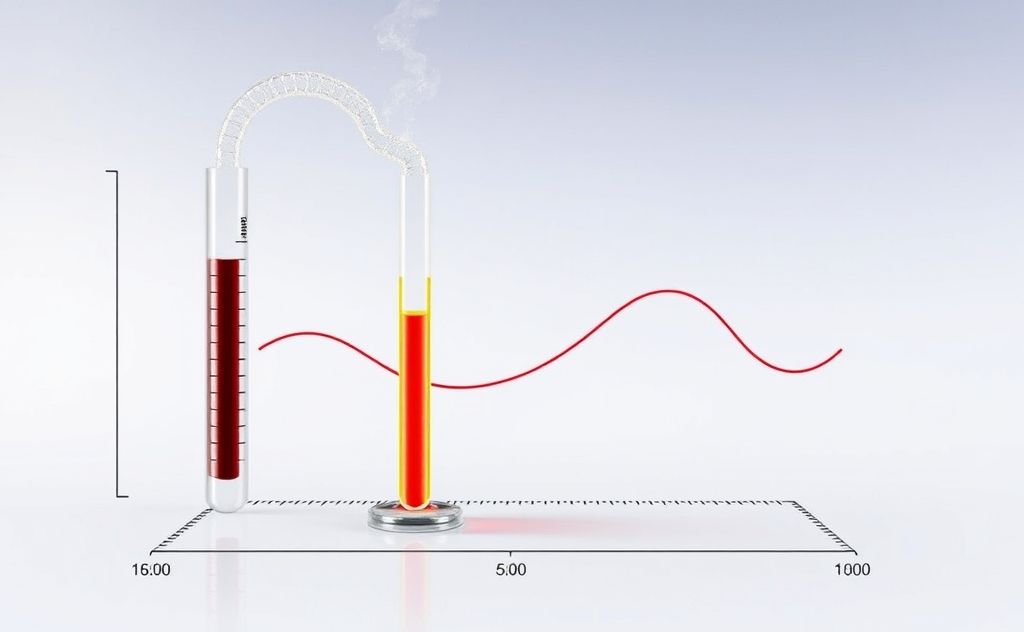
Le Chatelier’s Principle and Temperature Effects

Le Chatelier’s Principle states that when a system at equilibrium experiences stress (like temperature changes), it responds to counteract that stress. For temperature specifically:
- Increasing temperature favors the endothermic direction (absorbs heat)
- Decreasing temperature favors the exothermic direction (releases heat)
Consider the reaction for making ammonia (Haber process):
| Reaction | ΔH (enthalpy change) |
|---|---|
| N₂(g) + 3H₂(g) ⇌ 2NH₃(g) | -92 kJ/mol (exothermic) |
Since this reaction is exothermic (releases heat), lowering the temperature shifts equilibrium toward more ammonia production. This explains why industrial ammonia synthesis uses moderate temperatures (400-450°C) rather than extremely high ones.
Real-World Example: Water Heating Systems
In water heater thermostat control systems, temperature regulation maintains equilibrium between energy input and heat output. The thermostat acts as the control point for this equilibrium.
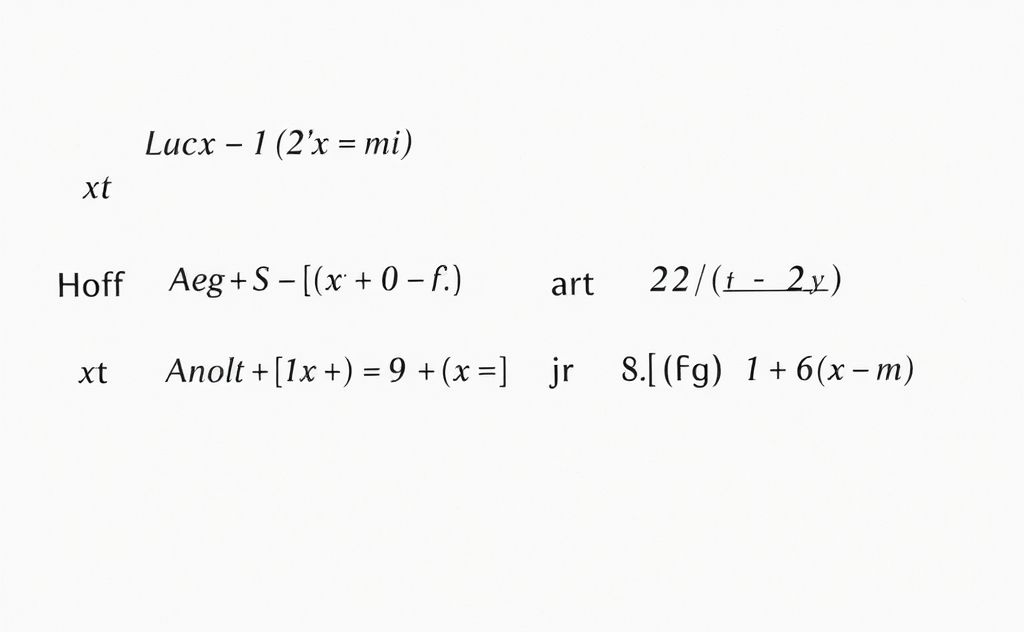
Mathematical Explanation: The Van’t Hoff Equation
The temperature dependence of equilibrium constants is quantified by the Van’t Hoff equation:
ln(K₂/K₁) = (-ΔH°/R)(1/T₂ – 1/T₁)
Where:
- K₁ and K₂ are equilibrium constants at temperatures T₁ and T₂
- ΔH° is the standard enthalpy change
- R is the gas constant (8.314 J/mol·K)
Practical Implications
This equation explains why:
- Endothermic reactions (ΔH > 0) show increased K with temperature
- Exothermic reactions (ΔH < 0) show decreased K with temperature
Industrial Applications
Temperature control of equilibrium is crucial in:
1. Sulfuric Acid Production
The contact process involves equilibrium between SO₂, O₂, and SO₃. Since the reaction is exothermic, moderate temperatures (400-450°C) with vanadium pentoxide catalyst optimize yield.
2. Steam Reforming of Methane
This endothermic reaction (CH₄ + H₂O ⇌ CO + 3H₂) requires high temperatures (700-1100°C) to favor hydrogen production, as explained by LibreTexts Chemistry.
Biological Systems and Temperature
Enzyme-catalyzed reactions in living organisms demonstrate temperature-sensitive equilibria. The indoor heating systems in research labs must maintain precise temperatures for studying these biochemical equilibria.
Hemoglobin-Oxygen Binding
This exothermic process explains why:
- Fever reduces oxygen binding efficiency
- Cold-water fish have adapted hemoglobin with different temperature responses
Common Misconceptions
Many students confuse equilibrium position shifts with changes to the equilibrium constant (K). Remember:
| Change | Equilibrium Position | Equilibrium Constant (K) |
|---|---|---|
| Temperature | Changes | Changes |
| Concentration | Changes | Constant |
| Pressure (gases) | May change | Constant |
Only temperature changes the actual equilibrium constant value, as thoroughly explained by Siyavula’s physical science resources.
Related pick: Check today's price on Amazon

HeaterGuides covers home heating, water heating and HVAC: how the equipment works, what it costs to run, and how to use it safely.
