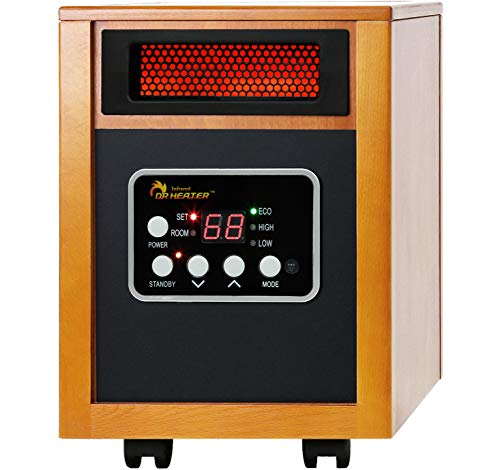
You buy a space heater to stop shivering, not to start a research project. But standing in the aisle—or scrolling through listings—you hit a fork: ceramic or infrared? Both plug into the same outlet. Both claim to warm your room. The difference lies in how they warm it, and that difference decides whether you get cozy in five minutes or tolerate a stuffy, dusty breeze for an hour.
This guide walks through the physics, the real-world trade-offs, and the numbers that matter: decibels, wattage, heat retention, and operating cost. You’ll leave with a clear decision matrix based on your room size, noise tolerance, and whether you have pets or allergies. No fluff, just the details that separate a good purchase from a regret.

Amazon Basics
Amazon Basics Ceramic Space Heater, Portable Indoor…
- CUSTOMIZABLE HEATING OPTIONS: Choose from three settings to suit your needs - High (1500W), Low (900W), or Fan Only for air circul…
- COMPACT & PORTABLE: Weighing just 3 lbs and sized at 7.5“L x 6.3”W x 9.5“H, this space heater is easy to move and perfect for your…
- Built-in Tip-Over Protection, Overheat Protection, and a Power Indicator Light for safe operation.
One solid entry point for small rooms and offices is the Amazon Basics Ceramic Space Heater. It’s a compact 1500W unit with three settings—high, low, and fan-only—plus tip-over and overheat protection. It’s a useful baseline to compare against as we break down the category.

The Core Difference: Heating Air vs. Heating Objects
Ceramic heaters use a convection approach. They pull cool air from the floor, push it across a hot ceramic element, and blow warm air back into the room. The air itself becomes the heat carrier. That’s why you feel a warm draft almost immediately—but the room’s surfaces stay cold for a while.
Infrared heaters work like the sun. They emit electromagnetic radiation that travels through the air without heating it. Instead, the radiation warms whatever it touches: your skin, the chair, the wall, the floor. The air warms secondarily, as those objects release their heat back into the room.
Think of it this way. A ceramic heater is a hair dryer on low. An infrared heater is a campfire. Both keep you warm, but the mechanism changes everything about comfort, noise, and cost.
How Ceramic Heaters Work (And Their Pros & Cons)
Inside a ceramic heater, electricity heats a ceramic plate or PTC (positive temperature coefficient) element. A fan blows air across that element. The heated air rises and circulates, gradually raising the room’s average temperature.
The fan is the defining feature. It moves air, which means it makes noise—typically 40 to 50 decibels, roughly the level of a quiet conversation or a library. The Amazon Basics unit runs at 43 dB, which is noticeable in a bedroom but fine for a workshop or living room.
Pros of ceramic:
- Fast warm-up: You feel warm air within seconds, though the room takes longer to reach an even temperature.
- Even heating: The fan circulates air, reducing cold spots in small to medium rooms.
- Lower surface temperature: The outer housing stays cooler than infrared units, which matters for homes with kids or pets.
- Cheaper upfront: Ceramic heaters generally cost less than infrared models with similar wattage.
- Multi-function: Many units offer fan-only mode for summer air circulation.
Cons of ceramic:
- Noise: The fan runs constantly. If you need silence for sleep or work, this gets old fast.
- Air quality: The fan stirs up dust, dander, and allergens. For sensitive people, this can trigger sneezing or congestion.
- Heat retention: The moment the heater shuts off, the air cools quickly. There’s no thermal mass holding warmth.
- Drying effect: Moving air across your skin accelerates moisture loss. You may feel drier than with infrared.
Best Use Cases for Ceramic
Ceramic heaters shine in small, enclosed spaces where you want quick, even warmth and don’t mind fan noise. Think home offices, garages, workshops, or a bedroom if you’re a heavy sleeper. They’re also a solid choice for spot heating—warming just the area around your desk while the rest of the house stays cool.
If you have allergies or asthma, the dust circulation is a real drawback. You can mitigate it by running an air purifier, but that adds another machine and another filter to maintain. For most people, ceramic is the practical, budget-friendly default. It’s not glamorous, but it works.
How Infrared Heaters Work (And Their Pros & Cons)
Infrared heaters contain a heating element—usually quartz, carbon, or halogen—that glows when electricity passes through it. This element emits infrared radiation. A reflector behind it directs the radiation forward into the room.
There’s no fan. The heater is silent, save for the occasional click of the thermostat or the soft hum of a built-in fan in some hybrid models. The absence of moving air is the biggest advantage for many buyers.
Pros of infrared:
- Silent operation: Zero fan noise. You’ll hear the thermostat click, nothing else.
- No dust circulation: Air stays still, so allergens stay put. Great for allergy sufferers and asthmatics.
- Heat retention: Objects absorb infrared energy and re-radiate it after the heater turns off. The room stays warm longer.
- Comfortable warmth: You feel warm directly, like standing in sunlight, even if the air temperature is lower.
- Better for large spaces: Infrared doesn’t rely on air circulation, so it can warm a larger area more effectively than a fan-based unit.
Cons of infrared:
- Directional heating: Only objects in the line of sight get warm. The other side of the room stays cold.
- Hot surface: The quartz or carbon element and the grille can reach high temperatures. Some models have cool-touch housings, but the front grille is often off-limits.
- Higher upfront cost: Quality infrared units typically cost more than ceramic units of similar wattage.
- Slower room warming: You feel heat on your skin immediately, but the air temperature takes longer to rise.
Best Use Cases for Infrared
Infrared heaters excel in rooms where you sit still for long periods: a reading chair, a home office, a bedroom. They’re also ideal for drafty spaces with high ceilings, where convection heat rises and escapes. Because they don’t rely on air movement, they work well in rooms with poor circulation.
For pet owners, infrared has a hidden benefit. Pets sleep on the floor, and infrared warms the floor directly. A ceramic heater warms the air near the ceiling first. Your dog will find the infrared heater’s spot on the floor much cozier. Just be careful—some units get hot enough to burn a curious nose. Cool-touch housing is critical.
If you want to understand the technology deeper, check out this infrared technology overview for a closer look at how the elements differ.
Head-to-Head Comparison: Ceramic vs. Infrared
Let’s put the two side by side. The table below summarizes the key differences you’ll actually notice in daily use.
| Factor | Ceramic | Infrared |
|---|---|---|
| Heating method | Convection (fan blows heated air) | Radiant (electromagnetic waves warm objects) |
| Warm-up time | Air feels warm in 1–2 minutes | Skin feels warm in seconds; room air takes 10–20 minutes |
| Noise level | 40–50 dB (fan hum) | 0 dB (silent, except thermostat clicks) |
| Heat retention after off | Poor—air cools quickly | Good—objects re-radiate heat for 20–40 minutes |
| Air quality | Stirs dust and allergens | No air movement; dust stays put |
| Surface temperature | Usually cooler to the touch | Front grille can get very hot |
| Room size suitability | Best under 200 sq ft | Works well in larger or drafty spaces |
| Directional warmth | Omnidirectional (heats whole room) | Directional (heats what’s in front) |
| Energy efficiency | ~100% of electricity converts to heat | ~100% of electricity converts to heat |
| Typical cost per hour (1500W) | ~$0.18 at $0.12/kWh | ~$0.18 at $0.12/kWh |
| Upfront price range | $20–$80 | $80–$200+ |
| Best for | Small rooms, quick warmth, budget | Silence, allergies, large rooms, pets |
Noise, Heat Retention, and Air Quality
Noise is the most obvious differentiator. A ceramic heater’s fan runs constantly, and at 43–50 dB, it’s audible over soft music but not over a TV. Infrared units are silent. If you’re a light sleeper or record podcasts in your office, that alone decides the winner.
Heat retention is subtler but matters for cost. A ceramic heater warms the air, and air loses heat fast. Turn it off and the room feels cold within five minutes. An infrared heater warms the mass of the room—walls, furniture, floor. That mass releases heat slowly, so the room stays comfortable for 20–40 minutes after the unit cycles off. Over a night, that means the infrared heater cycles on less frequently, saving a small amount of electricity.
Air quality is the hidden factor most reviews miss. Ceramic fans create a gentle dust storm. If you have allergies or a dust allergy, you’ll notice it within an hour. Infrared heaters don’t move air at all, so they don’t stir up particulates. For asthma sufferers, this is often the deciding factor.
Safety Features and Surface Temperatures
Both types should have tip-over protection and overheat shut-off. These are standard on any reputable unit, including the Amazon Basics ceramic heater. The difference is surface temperature.
Ceramic heaters typically have a plastic or metal housing that stays warm but not scalding. The Amazon Basics unit is compact and designed with a cool-touch exterior, making it safer for homes with kids or pets who might bump into it.
Infrared heaters are hotter. The front grille over the quartz element can reach 300–500°F. Even with a protective mesh, a curious pet or toddler can get burned. Some models have cool-touch housings, but the front is always a hazard zone. If you choose infrared, place it out of reach or behind a baby gate. For a deeper look at safety standards, read this infrared safety guide before buying.
Cost Analysis: Initial Price vs. Long-Term Efficiency
Here’s the part that surprises people. Both ceramic and infrared heaters are 100% efficient at converting electricity to heat. That’s not marketing—it’s physics. Every watt of electricity becomes a watt of heat, regardless of technology. So the operating cost per hour is identical for the same wattage.
At 1500W, a heater draws 1.5 kWh per hour. At the US average electricity rate of about $0.16/kWh, that’s $0.24 per hour. Run it 8 hours a day for a month, and you’re looking at roughly $58. That number doesn’t change between ceramic and infrared.
What changes is how often the heater cycles on and off. An infrared heater’s heat retention means it runs less frequently once the room’s objects are warm. In a well-insulated room, that could cut your usage by 10–20%. In a drafty room, the difference shrinks because the heat escapes before retention matters.
Upfront cost is where the gap shows. A decent ceramic heater costs $25–$60. A comparable infrared unit runs $80–$200. The payback period for the infrared premium is long—several seasons of use. But if you value silence or have allergies, the extra cost is worth it.
For a broader look at how electric heaters compare to other fuel sources, see this efficiency comparison.
The Decision Matrix: Which Heater Fits Your Room?
Forget generic pros and cons. Answer these three questions, and the choice makes itself.
1. What’s your room size?
- Under 150 sq ft (bedroom, office, small studio): Ceramic wins. It heats the air quickly and evenly. A 1500W unit is overkill but fine—it’ll cycle on and off.
- 150–300 sq ft (living room, open kitchen): Either works. Infrared is better if the room is drafty or has high ceilings. Ceramic is better if you want even temperature without hot spots.
- Over 300 sq ft: You need multiple heaters or a different solution. One 1500W unit won’t cut it. For large spaces, infrared directed at your seating area is more effective than trying to heat the whole volume.
2. How much noise can you tolerate?
- Zero tolerance (sleeping, reading, recording): Infrared. No contest.
- Can ignore a low hum (working, watching TV): Ceramic is fine. 43 dB is quieter than a dishwasher.
- Need white noise: Ceramic’s fan actually helps mask other sounds.
3. Do you have allergies, asthma, or pets?
- Yes: Infrared. The lack of air movement keeps dust and dander on the floor where they belong.
- Pets that sleep on the floor: Infrared warms the floor directly. Your cat will thank you.
- Small children or clumsy pets: Ceramic’s cooler housing is safer. Or choose an infrared model with a verified cool-touch exterior.
Score your answers. Two or more votes for one type and you have your answer. If it’s a tie, default to ceramic for the lower price and faster warm-up—you can always upgrade later.
Top Picks for Each Category (Under $150)
For ceramic, the Amazon Basics Ceramic Space Heater is a dependable choice. It’s compact, weighs 3 pounds, and has the essential safety features. The three settings give you flexibility, and the 43 dB noise level is acceptable for most rooms. It’s not fancy, but it does exactly what it promises.
For infrared, look for a unit with a quartz or carbon element, a reflector, and a cool-touch housing. Brands like Dr. Infrared Heater and Lifesmart offer models in the $100–$150 range. Check the wattage—most portable units are 1500W, which is the max for a standard 15-amp household circuit.
Before you buy, measure your room and check the heater’s BTU output. One watt equals roughly 3.41 BTUs. A 1500W heater produces about 5,100 BTUs. That’s enough for a 150 sq ft room with average insulation. If your room is larger or poorly insulated, you’ll need more power or a secondary heat source.
Final Verdict: Making the Smart Choice
Here’s the short version for skimmers.
- Ceramic heats air fast and cheap, but the fan noise and dust circulation are real downsides.
- Infrared is silent, doesn’t stir dust, and retains heat longer, but costs more and has a hot front grille.
- Both use the same electricity per watt—there’s no efficiency winner.
- Choose ceramic for small rooms, budgets, and anyone who doesn’t mind a low hum.
- Choose infrared for bedrooms, allergy sufferers, pet owners, and drafty spaces.
- Always look for tip-over protection and overheat shut-off, regardless of type.
- Measure your room and match the wattage. A 1500W unit covers about 150 sq ft.
One last thought. A space heater is a tool, not a lifestyle. Buy the one that fits your actual room and your actual habits. If you read in silence at night, the infrared’s quiet warmth is worth every extra dollar. If you just want to stop freezing at your desk, the Amazon Basics ceramic heater will do the job for less. Either way, you’re warm—and that’s the whole point.

I am a mechanical engineer and love doing research on different home and outdoor heating options. When I am not working, I love spending time with my family and friends. I also enjoy blogging about my findings and helping others to find the best heating options for their needs.
Related guides
Ceramic vs Infrared Quartz Heaters: Which is Better?
Ceramic heaters use electric coils to heat ceramic plates for efficient warmth, while infrared quartz heaters emit infrared…

How To Choose The Most Energy Efficient Infrared Portable Heater
To choose an energy-efficient infrared portable heater, look for models with high wattage efficiency, adjustable thermostats, safety features,…
Infrared Portable Heater Safety: What You Must Know
Safety criteria for infrared portable heaters include overheat protection, stable base design, tip-over shutoff, and certification by recognized…