

You picked out beautiful oak planks. Then someone told you that wood and underfloor heating don’t mix. Now you’re stuck comparing horror stories about warped boards and lukewarm rooms. The truth is more nuanced. Wood works with radiant heat, but only if you choose the right construction and follow strict installation rules. Get it wrong and you’ll curse the day you skipped the tile. Get it right and you’ll have warm floors that look stunning for decades.
| 1st Pick |

|
| SunTouch SunTouch TapeMat Electric Radiant Floor Heating Mat,… |
| See on Amazon |
This guide treats wood flooring as an engineering problem, not a shopping decision. The key variables are thermal resistance (measured in tog), moisture content, and dimensional stability. A great choice balances heat output with structural integrity. The industry standard is engineered wood with a thick wear layer, installed as a floating floor over a quality underlayment. Solid wood is a high-risk gamble that most professionals will talk you out of.
Below, we break down the physics, the species, and the installation rules that separate success from failure. We also review one specific product that solves a common problem: heating a room before you’ve even chosen your final floor covering. For a broader look at all your options, check our flooring guide.
Here is a quick comparison of the key specs for the product we review.
| Features | SunTouch TapeMat |
|---|---|
| Type | Electric radiant mat |
| Voltage | 120V AC |
| Coverage | 10 sq ft (5′ x 2′) |
| Thickness Added | 1/8 inch |
| Compatible Floors | Tile, stone, laminate |
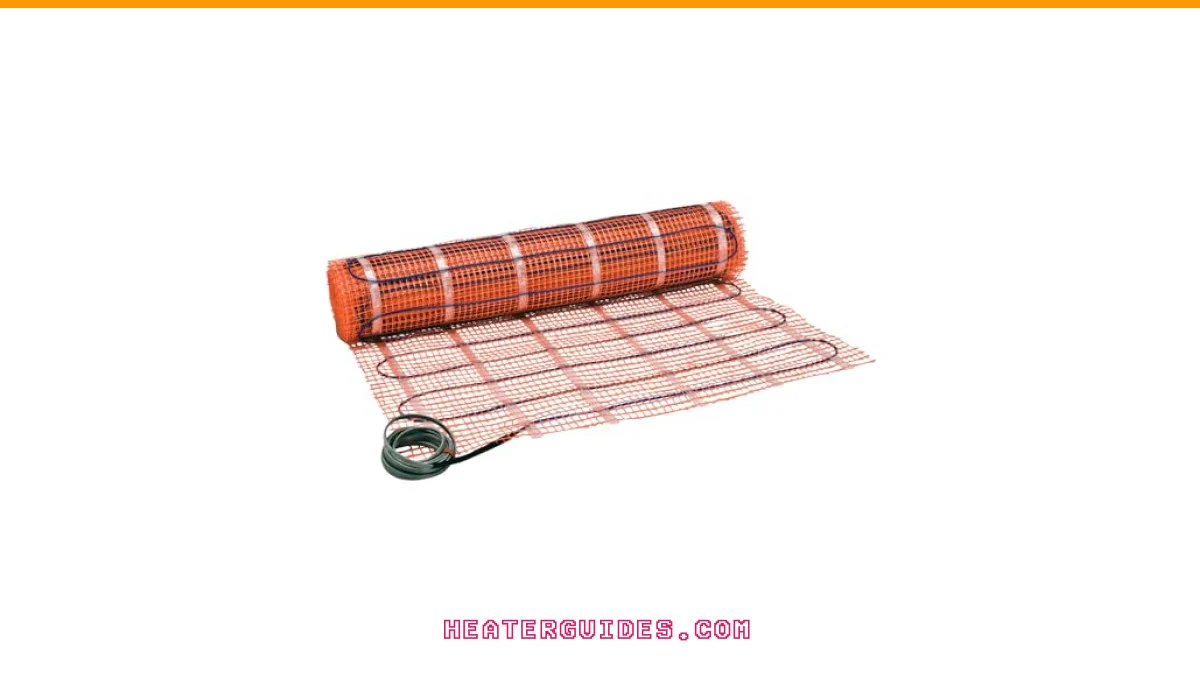
SunTouch TapeMat Electric
SunTouch
SunTouch TapeMat Electric Radiant Floor Heating Mat,…
- FLOOR HEATING MAT: Step onto warm floors all year round with the SunTouch TapeMat Heating Mat, an open-weave floor heating mat tha…
- VERSATILE HEATING: This heating mat is completely safe for home use and provides affordable underfloor heating beneath tile, stone…
- MULTIPLE SIZE OPTIONS: Offered in a wide array of sizes to suit every space, the TapeMat floor heating mesh mat easily rolls out a…
This isn’t a wood floor. It’s the heat source that goes beneath one. The SunTouch TapeMat is an electric radiant heating mat designed for spaces where you want warm floors but haven’t committed to a final surface. It’s perfect for a bathroom, a small entryway, or a kitchen nook where you plan to install tile, stone, or laminate. If you’re building a new room or renovating an old one, this mat solves the problem of cold feet before you ever lay a single plank.
What stands out is the installation flexibility. The mesh is an open weave, so it rolls out flat and you cut it with scissors to fit around toilets, vanities, and corners. The blue heating wire pulls out of the mesh, letting you run it around awkward obstructions that would trip up a rigid mat. You set it in thin-set mortar or a self-leveler, which bonds directly to your subfloor. The 1/8-inch thickness means it disappears into your tile installation without creating a noticeable step.
There are trade-offs. This mat is designed for hard surfaces and laminate, not for thick engineered wood with a high tog rating. If you put a heavy, insulating wood floor on top, you’ll blunt the heat output significantly. Also, this specific unit covers just 10 square feet. Larger rooms will need multiple mats, and you’ll need to manage the wiring connections. It’s a solution for a single zone, not a whole-house system.
- 120V AC connection with consistent heat distribution across the mat
- Open-weave mesh cuts easily with scissors for custom layouts
- Blue wire detaches from mesh to navigate pipes and obstructions
- Installs in one step using thin-set mortar or a self-leveler
- Adds only 1/8 inch to the finished floor height
Best for: A homeowner installing tile or laminate in a small room who wants DIY-friendly radiant heat without tearing out the subfloor.
Why Wood is a Tricky Choice for UFH
Wood is a natural insulator. That’s great for keeping a house warm, but terrible for letting heat pass through. Every layer you add between the heating pipes and the room air resists the flow of warmth. This resistance is measured in tog. A typical carpet with underlay sits around 2.5 tog. Solid wood is about 1.0 to 1.5 tog. Engineered wood with a backing layer runs lower, often under 1.0 tog. The lower the tog rating, the faster and more efficiently your room heats up.
The bigger problem is movement. Wood expands when it absorbs moisture and shrinks when it dries out. Underfloor heating accelerates this cycle. The heat drives moisture out of the boards, causing them to shrink and gap. When the system shuts off, the wood reabsorbs moisture and expands. Over a season, this constant cycling can warp, cup, or crack boards that aren’t properly constructed. The goal is to pick a product that handles this movement without self-destructing.
The Critical Difference: Engineered vs. Solid Wood
Why Solid Wood is a High-Risk Gamble
Solid wood is a single piece of timber. It reacts to humidity changes across its entire thickness. When you install it over underfloor heating, the bottom of the board gets hot and dry while the top stays cooler. This moisture differential causes the board to cup. The wider the board, the worse the problem. A 5-inch wide solid oak plank can develop a noticeable curve within a single heating season. You can mitigate this with very narrow strips and strict humidity control, but you’re fighting physics the whole time. Most flooring manufacturers void their warranty for solid wood over UFH.
Why Engineered Wood is the Industry Standard
Engineered wood has a top layer of real hardwood veneer bonded to multiple layers of plywood or HDF underneath. The layers run in alternating directions, which locks the board against warping. When heat hits the bottom, the cross-layered construction distributes the stress evenly. The result is a board that stays flat. You get the look and feel of real wood, but with the dimensional stability of a composite. For UFH, you want a thick wear layer (at least 3mm) so you can sand it later, and a total thickness between 14mm and 20mm. Thicker isn’t automatically better; density matters more.
The Tog Factor and Heat Output
Every floor covering has a maximum tog rating for UFH. The industry benchmark is 1.5 tog for water-based systems and slightly higher for electric. Anything above that and you’re wasting energy. The heat has to work harder to push through, which means higher running costs and a slower response time. For engineered wood, look for a tog rating under 1.0. That’s achievable with a thin board and a low-resistance underlay.
Heat output is measured in watts per square meter (W/m²). A well-designed system delivers 65 W/m² through engineered oak. Walnut, being slightly less dense, often hits 70 W/m². Exotic hardwoods like ipe or cumaru are so dense that they resist heat flow, dropping output to around 50 W/m². The difference matters. In a room with poor insulation, that 20 W/m² gap could mean the difference between a cozy floor and a lukewarm one.
Decoding Wood Species
Species choice affects both heat transfer and stability. Oak is the default for a reason. It’s dense enough to resist dents but not so dense that it blocks heat. Walnut is slightly softer and transfers heat a touch better. Ash has a pronounced grain and similar thermal properties to oak. Avoid very dense tropical hardwoods. They look stunning but act like a thermal blanket. Also avoid softwoods like pine or fir. They’re too insulating and too soft for floor traffic.
The “2cm rule” is a myth. Some people think a thicker board provides better insulation. In reality, a 20mm engineered board with a 4mm wear layer performs nearly identically to a 14mm board for heat transfer. The density of the core material matters far more than the thickness. A high-density HDF core conducts heat better than a low-density softwood plywood core, even if it’s thinner. Don’t pay extra for bulk. Pay extra for a quality wear layer and a stable core.
The 5 Installation Rules You Cannot Break
Acclimatization and Moisture Content
Wood must acclimate to the room before installation. Store the boards in the room for at least 48 hours. The moisture content should be between 8% and 10% for most hardwoods. Use a moisture meter to check. If the boards are too wet, they’ll shrink after installation. Too dry, and they’ll expand and buckle. The room’s relative humidity should sit between 35% and 55%. Below 35%, the boards dry out and gaps open up. Above 55%, they swell and cup. Run a dehumidifier in winter and a humidifier in summer to stay in that range.
The Right Underlayment
Underlayment is a balancing act. It must provide acoustic insulation without blocking heat. Standard foam underlay has a high tog rating and acts as a barrier. Instead, use a purpose-built UFH underlay. These are typically thin (2-3mm) aluminum-foil-faced foam or rubber composites. The foil reflects heat upward, and the thin profile keeps the tog rating low. For sound transmission, these underlays also reduce impact noise. A floating floor over UFH will always be noisier than a glued floor. The hollow space amplifies footfall. A good underlay reduces that drumming sound significantly.
Expansion Gaps and Floating vs. Glue-Down
Wood needs room to move. Leave a 10-15mm expansion gap around the entire perimeter of the room. Cover it with skirting boards or a transition strip. Never butt the floor hard against a wall or a fixed object. For UFH, a floating floor is the safest method. The boards lock together but aren’t fixed to the subfloor, so they can expand and contract as one unit. Glue-down is more stable but riskier. If the subfloor heats unevenly, the glue can fail or the boards can crack. If you must glue, use a flexible adhesive rated for UFH and follow the manufacturer’s instructions for heat ramp-up.
Realistic Heat Outputs
Don’t expect a wood floor to feel like a heated tile floor. Tile conducts heat almost instantly. Wood is a natural insulator, so it will feel warm but not toasty. A water-based system under engineered oak typically delivers a surface temperature of 24-27°C (75-80°F). That’s comfortable for bare feet but not scorching. An electric system under laminate can hit 29°C (84°F) because laminate is a better conductor. If you want maximum heat output, choose a thin engineered wood or a wood-look tile. If you want the authentic wood feel, accept the slightly lower temperature.
The heat-up time also differs. A screed-based water system under wood can take several hours to reach temperature. An electric mat like the SunTouch TapeMat warms up in 15-20 minutes. That’s a key advantage for rooms you use intermittently, like bathrooms. You can switch it on when you wake up and have a warm floor by the time you’re out of the shower.
Maintenance and Longevity
Wood over UFH requires a different maintenance mindset. The constant heating and cooling cycles put stress on the finish. Use a hard-wearing lacquer or oil finish. Avoid wax-based finishes, which soften under heat. You can sand and refinish engineered wood, but only if the wear layer is thick enough (3mm or more). Sanding removes about 1mm of material per pass. A 4mm wear layer allows for two or three refinishing jobs over the floor’s life. That’s a major advantage over laminate, which can’t be sanded at all.
Be careful when sanding over UFH. The pipes or cables sit just below the subfloor. If you sand too aggressively, you could damage them. Always check the installation plan before sanding. In practice, you’ll rarely need to sand a floor more than once in its lifetime. The bigger threat is humidity. Monitor the room’s relative humidity seasonally. If you see gaps opening up in winter, raise the humidity. If you see cupping in summer, lower it. A hygrometer costs a few dollars and can save your floor.
Final Verdict: The Best Wood Flooring Types for UFH
Ranked by performance, here’s how the options stack up. At the top is engineered oak with a 3-4mm wear layer and a high-density HDF core. It offers the best balance of heat transfer, stability, and longevity. A close second is engineered walnut, which transfers heat slightly better but is softer and more prone to dents. Third is engineered ash, a solid choice if you want a lighter, more dramatic grain. Solid wood is last. It’s a gamble that only makes sense in a climate-controlled home with narrow boards and a professional installer. For most people, engineered wood is the only rational choice.
For the heating system itself, the SunTouch TapeMat is a solid option for small rooms with tile or laminate. It’s not designed for thick engineered wood, but for a bathroom or entryway, it’s a reliable, DIY-friendly solution. If you’re heating a large open-plan space with wood, a water-based system is usually more efficient. Read our comparison of electric vs hydronic systems to see which fits your project. And if you’re still weighing your options, our floor covering guide covers tile, vinyl, and carpet too.
How We Chose These Products
We evaluated the SunTouch TapeMat based on three criteria: installation simplicity, compatibility with common floor coverings, and real-world heat output. The open-weave mesh design is a genuine advantage for DIYers because it eliminates the need to precisely route a heating cable around obstacles. We also checked that it works with laminate, which is a common choice for budget-conscious homeowners who want a wood look without the maintenance.
We did not include products we couldn’t verify. Many heating mats on Amazon have vague specifications or are missing critical details like voltage ratings and coverage area. SunTouch has a long track record in the radiant heating industry, which gives us confidence in the product’s durability. We also cross-referenced the installation method with standard industry practices for thin-set mortar and self-leveling compounds.
Buying Guide: What Really Matters
Before you buy any heating mat, measure your room accurately. The SunTouch TapeMat covers 10 square feet. Most bathrooms are larger than that. You’ll need to buy multiple mats and connect them to a thermostat. Check whether the mats can be wired in parallel or if each needs its own connection. This affects the complexity of the electrical work.
Also consider the floor covering. This mat works with tile, stone, and laminate. It does not work well with thick engineered wood or carpet. If you’re set on wood, look for a mat with a lower wattage output and pair it with a thin engineered board. If you’re using tile, the 1/8-inch thickness is perfect. You’ll barely notice it under the thinset. Finally, always buy a floor sensor thermostat. It regulates the temperature based on the floor surface, not the air. This prevents overheating and protects your floor covering.
Our Top Recommendation
The SunTouch TapeMat is our pick for small, tiled spaces. It’s the easiest way to add radiant heat to a bathroom or entryway without a major renovation. The installation is genuinely DIY-friendly, and the 10-square-foot size is perfect for a single zone. For larger areas, or for use under engineered wood, you’ll want a different approach. A water-based system with a low-tog underlay is the better long-term investment. But for a quick, effective heating solution under tile or laminate, the TapeMat gets the job done.
Frequently Asked Questions
Can I install this mat under existing tile? No. The mat must be embedded in thin-set mortar or a self-leveler during installation. It cannot be retrofitted under an existing floor without removing the tile.
What’s the maximum room size for a single mat? This specific mat covers 10 square feet. For larger rooms, you’ll need multiple mats. Check the manufacturer’s guidelines for how many mats can be connected to a single thermostat.
Does this mat work with a wooden subfloor? Yes, but you need to ensure the subfloor is clean, dry, and structurally sound. The mat is laid over the subfloor and then covered with the mortar or leveler. A plywood subfloor is fine, but avoid installing over particleboard.
How long does it take to warm up? An electric mat like this warms up in 15-20 minutes. The surface temperature will depend on the floor covering. Tile will feel warmer than laminate because it conducts heat better.

I am a mechanical engineer and love doing research on different home and outdoor heating options. When I am not working, I love spending time with my family and friends. I also enjoy blogging about my findings and helping others to find the best heating options for their needs.
Related guides

Where to Buy Miami Heat Tickets: Best Sites & Tips
Securing your spot at a Miami Heat game is about more than just a transaction. It's the first…

Best Automotive Sound Deadening and Heat Insulation Review
Want quieter, cooler drives? Pick the best automotive sound deadening and heat insulation to cut noise and cabin…
Naturally keeps my cat cozy and warm all night!
Keep your furry friend cozy this winter! Find the best heated pad for cats that offers warmth and…
