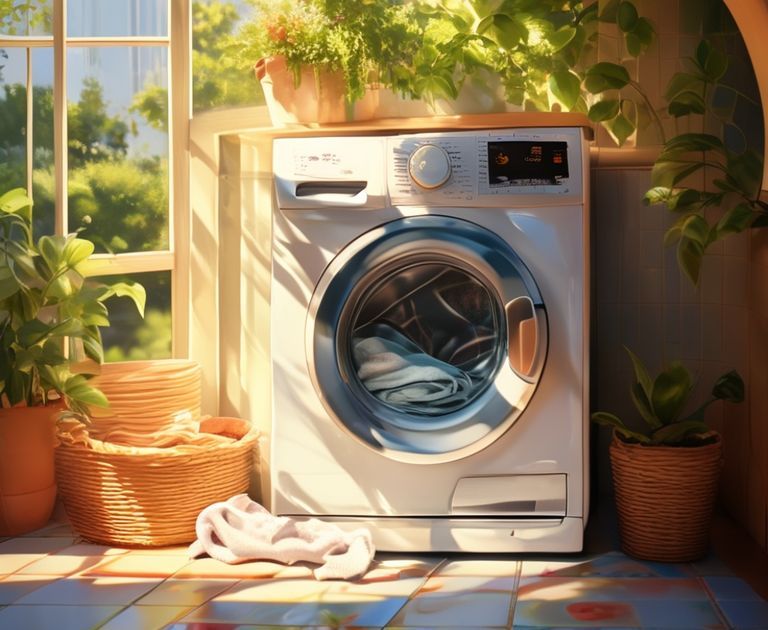
The laundry room turns into a sauna in July. You toss a wet load into the dryer, and the room temperature climbs ten degrees. The dryer pushes hot, moist air into the space, and your AC unit works overtime to pull the heat back out. It’s a vicious cycle that costs you money and wears out your machines.
Most people just pick a random time to wash. That’s a mistake. The clock you choose affects your utility bill, the lifespan of your washer and dryer, and how long your clothes actually last. This guide breaks down the exact hours to run your machines during a heat wave, the science behind why it matters, and a few tricks to keep your laundry room from becoming a furnace.
DedCool
DedCool, Liquid Laundry Detergent in Xtra Milk,…
- AMPLIFIED MILK FRAGRANCE: A richer take on DedCool’s Milk scent with warm amber, white musk, and bergamot for a more pronounced ar…
- POWERFUL CLEAN: Concentrated, plant-derived detergent removes stains, eliminates odors, and refreshes fabrics while keeping clothe…
- NATURAL ESSENTIAL OILS: Infused with natural essential oils that enhance fragrance and freshness, providing a subtle yet elevated…
You’ll walk away knowing how to schedule loads around peak heat hours, time-of-use electricity rates, and even your home’s cooling load. No vague advice here—just numbers, conditions, and a practical plan you can use today. And if your detergent is adding to the heat problem, a concentrated formula like the DedCool Liquid Laundry Detergent cuts down on rinse cycles and keeps your machine running efficiently.

Why Laundry Timing Matters More in Summer
Your dryer is a heat pump in reverse. It pulls room air, heats it to around 135°F, and blows it through wet clothes. That process dumps heat and humidity directly into your laundry room. In winter, that’s a bonus. In summer, it’s a fight against your air conditioner.
Consider the numbers. A standard electric dryer uses between 1,800 and 5,000 watts per cycle. Running it for an hour during peak heat hours—usually 2 PM to 8 PM—adds significant heat to your home’s interior. Your AC must then remove that heat, which costs roughly 30% more energy than the dryer itself used. You’re paying twice for the same load of laundry.
There’s also the humidity angle. Every pound of dry laundry removes about a pound of water from wet clothes. That water turns into vapor and enters your living space. High indoor humidity makes your AC work harder because it must condense that moisture out of the air. A single dryer load can add 2 to 4 pints of water to your home’s air. Your AC’s cooling coil handles that, but it takes energy and time.
The fix is simple: run your laundry when the outdoor temperature drops and your AC runs less. That timing also protects your clothes from heat damage, which we’ll get into shortly.
The Worst Hours to Run Your Washer and Dryer
Avoid the afternoon window from 2 PM to 7 PM during summer. That’s when electricity demand peaks, utilities charge the highest rates, and outdoor temperatures hit their maximum. Running a dryer at 4 PM on a 95°F day means your AC fights the dryer’s heat output while also fighting the sun’s heat gain through your walls and windows.
The washer alone isn’t a big heat source—most of its energy goes to spinning the drum and heating water if you use warm or hot cycles. But the dryer is the real problem. If you must wash during peak hours, use cold water and skip the dryer entirely. Hang clothes in a shaded, well-ventilated area instead.
One more thing to avoid: late afternoon loads right before dinner. You’ll be tempted to toss in a load at 5 PM, run it through the wash, and dry it at 7 PM. That puts your dryer running right at peak heat hours. Plan backward from your bedtime instead. Start the wash at 8 PM, move to the dryer by 9:30 PM, and you’re done by 10:30 PM. The house cools down overnight, and your AC gets a break.
The Optimal Window: Morning vs. Evening vs. Night
Morning loads: pros and cons
Morning is the second-best option after night. The outdoor temperature is still moderate, usually below 80°F before 9 AM. Your AC hasn’t kicked into high gear yet, so the dryer’s heat output is easier to absorb. Morning also works well if you have solar panels—production starts ramping up by 8 AM, and you can run the dryer directly off solar power.
The downside: morning humidity can be high, especially in humid climates. Dew point peaks around sunrise. Drying clothes in a humid morning means the dryer works harder to evaporate water because the air already holds moisture. You’ll add 10-15% to the drying cycle time. If you live in a dry climate like Arizona or Nevada, morning is nearly as good as night.
Evening and overnight: pros and cons
Evening and overnight are the clear winners for most homes. After 8 PM, outdoor temperatures drop, and your AC runs less frequently. The dryer’s heat becomes a minor issue rather than a major load on your cooling system. Nighttime also aligns with time-of-use (TOU) electricity rates—many utilities charge half the per-kilowatt-hour price after 9 PM.
Overnight drying has another benefit people overlook: cooler ambient temperatures extend the life of your dryer’s motor and heating element. Electronics and motors run cooler when the surrounding air is cooler. A motor that runs at 140°F instead of 160°F will last measurably longer. The same applies to your washer’s pump and control board.
The trade-off is noise. A dryer running at 11 PM might disturb light sleepers. Modern dryers with inverter motors run quieter, but the tumbling sound still carries through walls. If noise is an issue, start the load at 8 PM and finish by 10 PM rather than running overnight.
How Heat and Humidity Sabotage Your Dryer’s Performance
Your dryer isn’t just a heating box. It’s a dehumidifier. It pulls air in, heats it, passes it through the clothes, and vents the moist air outside. When the air in your laundry room is hot and humid, the dryer’s efficiency drops. The heating element must work harder to raise the air temperature, and the moisture removal rate slows down.
Here’s a concrete example. On a 75°F day with 40% humidity, a typical dryer finishes a full load in about 45 minutes. On a 95°F day with 70% humidity, that same load takes 60-70 minutes. The extra time means more energy consumption and more heat dumped into your home. It’s a compounding problem—the hotter it gets, the slower the dryer works, and the more heat it produces.
Your dryer vent matters here too. A clogged or partially blocked dryer vent reduces airflow, which makes the dryer even less efficient. Check the vent hose and the exterior flap at least twice a year. Also clean the dryer lint filter before every single load. A full lint filter can add 20% to your drying time. That’s not an exaggeration—it’s a measurable airflow restriction.
One more factor: load size. Overloading the dryer blocks airflow through the drum. The clothes tumble less, and the moisture has nowhere to go. Split large loads into two smaller ones on hot days. The total drying time will be roughly the same, but each load dries more evenly, and the dryer runs at a lower temperature.
Smart Strategies to Keep Your Laundry Room Cool
Ventilation and exhaust fan placement
Your laundry room needs to breathe. If the room has a window, open it during dryer operation. Cross-ventilation—opening a door or window on the opposite side of the room—creates a draft that pushes hot air out. If you have an exhaust fan, run it while the dryer is on. That fan pulls humid air out and brings in drier air from the rest of the house.
Pre-cool the room before starting a load. Close the blinds, turn on a floor fan, and let the room drop a few degrees before the dryer kicks on. This gives the dryer slightly cooler air to work with, which improves efficiency by 5-8%. It’s not a huge number, but it adds up over a summer of weekly loads.
If your dryer is in a closet or small enclosed space, consider adding a louvered door or a vent grille. A closed closet door traps heat and humidity, forcing the dryer to recycle the same hot air. You’ll see drying times jump by 10-15 minutes per load. That’s wasted energy.
Using high spin speed to cut dryer time
Your washer’s spin cycle is your best friend on hot days. A high spin speed extracts more water from clothes before they hit the dryer. A typical washer spins at 1,000 RPM, leaving clothes with about 60% water by weight. A high spin at 1,400 RPM drops that to 50%. That 10% difference cuts dryer time by roughly 15-20 minutes per load.
Use the highest spin setting your washer offers for cotton, denim, and towels. Delicates should get a lower spin to avoid fabric damage, but everything else benefits from maximum extraction. This is the single cheapest way to reduce dryer energy use—it costs nothing extra and saves time on every load.
Pair this with moisture control settings on your dryer. Most modern dryers have a moisture sensor that stops the cycle when clothes are dry. Use it instead of a timed cycle. The sensor prevents over-drying, which wastes energy and damages fabric fibers. Your clothes will also last longer because they’re not baked at high heat.
Energy-Saving Settings and Load Tactics for Hot Days
Switch to cold water washes during summer. Hot water heating accounts for 90% of a washer’s energy use. Cold water cleans just as well for most loads, especially with modern detergents designed for cold water. Your clothes also suffer less thermal stress—hot water causes dye bleeding and fabric shrinkage that cold water avoids.
Run full loads, but don’t cram the machine. A half-empty washer wastes water and energy per item. A stuffed washer doesn’t clean properly. Aim for a load that fills the drum about 80% full. That’s the sweet spot for cleaning efficiency and water usage.
Consider a heat pump dryer if you’re replacing your current unit. Heat pump dryers use about 50% less energy than conventional electric dryers because they recycle heat instead of venting it. They run at lower temperatures, which is gentler on clothes. The trade-off is longer cycle times—usually 20-30 minutes more per load. But on a hot day, that longer cycle dumps far less heat into your home.
For time-of-use rate plans, set your washer to start at 9 PM and your dryer to finish by 7 AM. Many machines have a delay start feature. Program the delay start, load the machine in the evening, and let it run overnight. You’ll pay the lowest electricity rates and avoid the heat of the day entirely.
Air Drying Done Right (Without Making Your Home Humid)
Air drying is the ultimate heat-wave strategy—it uses zero electricity and produces zero heat. But hanging wet clothes indoors can backfire. The evaporating water raises indoor humidity, which makes your AC work harder. You trade dryer energy for AC energy, and you might end up worse off.
The solution is to air dry outdoors or in a well-ventilated space. A clothesline in the shade works best. Direct sunlight can fade dark colors and weaken fabric fibers over time. The shade still allows airflow, which is what actually dries clothes. Sunlight is a bonus, not a requirement.
If you must dry indoors, use a dehumidifier in the same room. A dehumidifier removes moisture more efficiently than your AC, and it uses less energy. Set it to 50% relative humidity and run it while clothes dry. You’ll keep the room comfortable and prevent musty odors.
For faster air drying, use a fan. A simple box fan pointing at the clothesline or drying rack increases evaporation rate by 30-40%. Position the fan to blow across the clothes, not directly at them. That creates a continuous airflow that carries moisture away.
One more tip: shake out clothes before hanging them. This separates the fibers and allows air to reach all surfaces. Items that are stuck together take twice as long to dry and may develop mildew smells.
A Quick Heat Wave Emergency Plan
Heat waves don’t wait for your schedule. When the temperature hits 100°F and your AC is already struggling, you need a protocol. Here’s the plan for when you must wash during peak hours.
- Use cold water only. Hot water adds heat to your home and stresses your water heater. Cold water cleans fine for everyday loads.
- Max out the spin speed. Extract as much water as possible. This is non-negotiable if you’re drying indoors.
- Skip the dryer entirely. Hang clothes on a rack or line in the shade. If you must use the dryer, run it in 15-minute bursts with a cool-down period in between. This prevents heat buildup in the laundry room.
- Run the exhaust fan and open windows. You need to push hot, humid air out of the house as fast as possible.
- Dry during the coolest part of the day. If the heat wave breaks at 6 PM, start the dryer at 6:30 PM. Even a 10-degree drop in outdoor temperature helps your AC recover.
This plan isn’t perfect—it won’t be as efficient as a normal schedule. But it keeps your home livable and your machines running without overheating.
Final Checklist for Beat-the-Heat Laundry Success
- Run laundry after 8 PM or before 9 AM during summer heat waves. Align loads with time-of-use electricity rates if your utility offers them.
- Use the highest spin speed on your washer to cut dryer time by 15-20 minutes per load.
- Clean the dryer lint filter before every load. Check the vent hose twice a year for blockages.
- Use cold water washes exclusively in summer. Your washer uses 90% of its energy to heat water.
- Air dry outdoors in the shade or indoors with a dehumidifier and fan. Avoid drying in direct sunlight to prevent fading.
- Pre-cool your laundry room with a fan and exhaust vent before starting the dryer. Open doors and windows for cross-ventilation.
- Use a concentrated detergent like the DedCool Liquid Laundry Detergent to reduce rinse cycles and keep your washer running efficiently. Check the current price on Amazon if you’re interested.
One last thought. Your dryer doesn’t care what time it is, but your wallet and your AC do. A little planning goes a long way. Start your next load at 9 PM instead of 3 PM, and you’ll feel the difference in your home’s temperature and your monthly utility bill. For more on how your home’s heating and cooling systems interact, see our guide on water heater heat impact.
Common Questions About Summer Laundry Timing
Is it really cheaper to do laundry at night?
Yes, if your utility uses time-of-use rates. Nighttime rates can be 40-60% lower than peak afternoon rates. Even without TOU rates, night laundry reduces your AC’s cooling load, which saves energy indirectly. The dryer’s heat output at 10 PM is absorbed by a cooler house, so your AC runs less.
Does running the dryer make my AC work harder?
Yes. A dryer dumps 5,000-10,000 BTUs of heat per hour into your home. Your AC must remove that heat. For every BTU the dryer adds, your AC uses energy to pump it out. The efficiency loss is roughly 30%—you pay for the dryer’s energy plus the AC’s extra work.
What’s the best temperature for the laundry room during summer?
Keep it below 80°F if possible. Your dryer works best with cooler intake air. If the room is above 85°F, the dryer’s heating element strains and drying times extend. Use a fan or open a window to keep the space around 75-78°F.
Can I leave wet clothes in the washer overnight?
Don’t do it. Wet clothes sitting in a warm washer for 8 hours will develop mildew and a sour smell. If you can’t move the load to the dryer immediately, set a timer to transfer it within 2 hours. Or use a delay start on your washer so the cycle finishes when you’re ready to dry.
Does cold water really clean as well as hot water?
For most everyday loads, yes. Modern detergents are formulated with enzymes that work at cold temperatures. Cold water is actually better for removing protein-based stains like blood and sweat because heat sets those stains. Hot water is only necessary for heavily soiled items or sanitizing cycles. If you’re worried about the quality of your wash, a concentrated cold-water detergent handles the job well. For more on water heating and appliance efficiency, check out this thermostat operation guide.
Related guides
Discover the Best Backup Heat Source for Winter Comfort
Looking for the best backup heat source? Find out which options keep your home cozy and efficient during…
Best High-Heat Cooking Sprays: Top 5 Non-Stick Options
High-heat cooking often leads to smoke and burnt food. The right cooking spray solves this. The best cooking…
Best Baseboard Heat Covers: Simple Styling Tips
Stop wasting heat - shop the Best Baseboard Heat Covers for safer, sleeker rooms and quick installation.