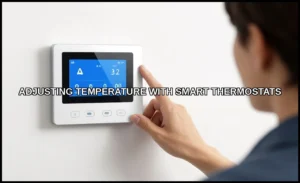
Mysa Smart Thermostat V2 is the best thermostat for baseboard heaters for most readers because it fits 120V to 240V line-voltage systems, adds scheduling and remote control, and keeps the room steadier than a plain dial. Choose a manual thermostat only if you want the simplest, cheapest control and do not need app features.
Getting the wrong thermostat wastes comfort first and money second. A loose temperature swing means the heaters run longer than they should, and a mismatch between voltage, wiring, and load can leave you with a dead thermostat or a tripped breaker.
Baseboard heat is simple physics, but the controls are picky. Match the thermostat to line voltage, wire count, and the total wattage on the circuit, or the bargain you bought turns into a warm wall ornament.
Top Picks for Baseboard Heater Control
#1Best Overall
Mysa Smart Thermostat V2
Best for 120V-240V electric baseboards needing app control
Mysa is the closest match to a true line-voltage thermostat, working with 120V-240V electric baseboards and electric fan-forced heaters. Scheduling, geofencing, remote control, and a humidity sensor suit households that want steadier control than a basic dial. It requires one neutral or second live wire.
Voltage 120V-240VControl WiFi programmable touchscreenCompatibility Electric baseboards and electric fan-forced heatersInstall time 15 minutes or lessWiring One neutral or second live wire required
Why it made the cut
Works with 120V-240V systems
Scheduling and remote control
No subscription
Touchscreen and humidity sensor
Good to know
Requires one neutral or second live wire
Installation involves line-voltage wiring
Skip it if Skip it if you want a simple manual control or your wiring lacks a neutral or second live wire.
Best for Simple dial control on a portable convection baseboard heater
The COMFORT ZONE keeps control simple with a manual adjustable thermostat knob and two heat settings. Its low-profile baseboard design uses natural air circulation for quiet, even warmth. Choose it when you want hands-on control without app setup.
Control Manual adjustable thermostatHeat settings 2Heating method Natural air circulationDesign Low-profile baseboard
Why it made the cut
Manual adjustable thermostat
Two heat settings
Low-profile baseboard design
Natural convection heating
Good to know
No scheduling or remote control
Voltage and wattage aren’t stated
Skip it if Skip it if you need a wall-mounted line-voltage thermostat for a permanently installed heater.
Best for Portable supplemental heat with an adjustable thermostat
BEYOND HEAT combines an adjustable thermostat with 750W and 1500W heat settings, so you can choose between lower and higher output. The convection design runs without fan noise, while tip-over and overheat protection add useful safeguards for portable use.
Best for A fixed 120V baseboard heater needing a separate thermostat
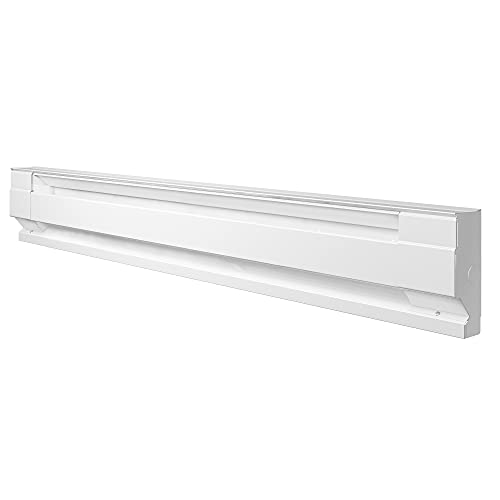
The Cadet F Series is a hardwired baseboard heater, not a thermostat, but it gives you a clear pairing target: a separate line-voltage thermostat or built-in end thermostat kit. Its 750W output and 36-inch cabinet suit supplemental heating in smaller rooms.
Voltage 120 voltLoad 750 wattLength 36 inchesControl Separate line voltage thermostatSafety Automatic overheat cut-out
Why it made the cut
120V hardwired design
750W output
Thermostat sold separately
Automatic overheat cut-out
Good to know
Doesn’t include a thermostat
Professional installation is recommended
Skip it if Skip it if you’re shopping for the thermostat alone rather than the baseboard heater it controls.
Best for Small portable spaces needing a thermostat and remote
The R.W.FLAME is a portable ceramic heater with a built-in thermostat, remote, timer, and four operating modes. Its 1500W output is aimed at spaces up to 200 sq.ft., so it fits a desk, bedroom, office, or RV better than a fixed baseboard circuit.
Load 1500WCoverage Up to 200 sq.ft.Control Thermostat, remote, and touch controlsTimer 24HCertification ETL-certified
Why it made the cut
Built-in thermostat and remote
1500W output
24-hour timer
Tip-over and overheat protection
Good to know
Not a baseboard thermostat
Portable ceramic heater rather than a hardwired control
Skip it if Skip it if you need to control an installed electric baseboard heater.
Mysa Smart Thermostat V2 is the best digital thermostat for a baseboard heater when your wiring matches because it works with 120V to 240V line-voltage systems and adds scheduling, Wi-Fi control, geofencing, and humidity sensing. It suits most readers comparing thermostats for electric baseboard heating, provided the thermostat’s load rating matches the heaters.
A baseboard heater thermostat is usually line-voltage equipment, not the 24V low-voltage thermostat used with many furnaces. A low-voltage thermostat won’t safely control an electric baseboard circuit. Check the heater label and existing wiring before you buy; the voltage and total heater load have to agree with the thermostat.
Pick
Voltage
Control type
Load
Best fit
Mysa Smart Thermostat V2
120–240V
Smart, digital, line-voltage
Must stay within Mysa’s listed load rating
Most electric baseboard systems with compatible wiring
Honeywell CT410B
Line voltage; verify heater label
Manual wall control
Must stay within the CT410B rating
Simple single-zone control with no app
Cadet F Series built-in thermostat
Match the Cadet heater label
Manual, end-mounted
Matched to the Cadet F Series heater
A Cadet F Series unit needing an end control
Confirm voltage and load at the heater and thermostat before installation.
Honeywell CT410B is the best budget and manual pick for a room where you want a wall knob, no app, and no learning curve. Cadet’s built-in end thermostat is the right choice only when the heater itself is a Cadet F Series unit and you specifically want the control mounted at the heater end; otherwise, choose a separate thermostat.
Good for
Mysa: changing schedules, remote adjustments, geofencing, and room-by-room control
Honeywell CT410B: straightforward manual control
Cadet built-in control: a clean match for a Cadet F Series heater
Skip it if
Mysa needs compatible line-voltage wiring and a correctly sized load
Manual controls don’t change the temperature while you’re away
The Cadet control is tied to the F Series heater family
In short
Choose Mysa if you want smart control and your 120V or 240V system fits its requirements. Choose Honeywell CT410B for simple manual control, or Cadet’s built-in thermostat only with a Cadet F Series heater.
From HeaterGuides · our own guidePage 7 is a thermostat schedule that saves without leaving you cold.Winter Heating Bill CutterSee what every heater in your home really costs, heat the rooms you use, and cut the waste in 30 days.Cost-per-hour tables for every heaterThermostat schedule and draft-proofing planRunning-cost and bill calculator (Excel)$14.99$9.99Get it for $9.99See what's inside and watch the 2-minute video →14-page printable PDF + Excel calculator · instant download · 30-day refund
Manual, Programmable, Or Smart
Manual knobs suit rooms kept at one temperature, programmable thermostats suit changing routines, and smart thermostats suit remote or room-by-room control. That is the useful rule behind searches for the best programmable baseboard thermostat and the best smart thermostat for baseboard heating.
A manual thermostat works well in a room used at the same temperature every day because there’s nothing to program and nothing to forget. Honeywell CT410B fits that job. If you’ll change the setting by hand every day, a smart model is usually wasted money; if you regularly forget to turn the heat down, smart control can earn its keep.
Programmable control helps when the room schedule changes from morning to night, especially in a bedroom or guest room that sits empty for part of the day. Smart thermostats for electric baseboard heating systems add remote changes, geofencing, and separate schedules for rooms equipped with compatible controls. Mysa is the smart pick here if the line-voltage wiring and load match.
Myth
A low-voltage baseboard smart thermostat is the right search for any electric baseboard heater.
Fact
Low voltage belongs to a different heating system. Electric baseboards usually switch the heater’s line-voltage power, so check the heater label before buying a low-voltage thermostat or a Honeywell programmable baseboard thermostat.
Match the control to the room
Same temperature every day: choose a manual thermostat.
Different morning, daytime, and night settings: choose a programmable model.
Remote changes, geofencing, or separate room schedules: choose a compatible smart thermostat.
Any low-voltage listing: stop and verify the heater wiring before purchase.
One room at a time
A smart thermostat only helps a room it can control. If two baseboard heaters share one thermostat, both follow that thermostat’s schedule; separate room schedules require separately controlled zones.
Voltage And Wiring Decide The Shortlist
A thermostat for a baseboard heating system must match the heater’s line voltage—usually 120V, 208V, or 240V—shown on the heater label. Installing baseboard heaters with a thermostat starts at that label, not at the thermostat box. A low-voltage thermostat made for a furnace usually can’t switch an electric baseboard directly.
120V, 208V, or 240V
Match the heater voltage
The thermostat and heater must be rated for the same system voltage before you compare smart features or schedules.
Wire count narrows the choice next. A simple mechanical thermostat often switches the live conductor without needing a neutral, while some smart thermostats need a neutral or a second live wire for their electronics. If the wall box has unfamiliar wires, don’t guess from color; turn off the breaker and have a licensed electrician identify them.
1
Read the heater label
Record the voltage and wattage printed on each baseboard. A thermostat for 240V baseboard heating isn’t a substitute for a 120V model.
2
Count and identify wires
Check the wiring diagram and the thermostat instructions for neutral, line, load, single-pole, or double-pole requirements. Keep the breaker off during hardwired work.
3
Add the heater loads
Several baseboards can share one thermostat when their combined wattage stays within both the thermostat rating and the circuit rating.
Single-pole control opens one hot leg, so parts of the heater circuit can remain energized when the thermostat is off. Double-pole control opens both hot legs and gives a true off position. Baseboards on one properly designed circuit are generally wired in parallel, not in series; a double-pole thermostat can control that shared load when its ratings and the wiring diagram allow it.
Don’t Force A Match
A smart thermostat for several separate baseboard heaters still needs compatible voltage, wire arrangement, and total-load capacity. If you’re installing a thermostat for electric baseboard and can’t positively identify the line and load wires, stop at the breaker and call a licensed electrician.
Before You Buy
Heater voltage matches thermostat voltage
Combined baseboard wattage fits the thermostat and circuit ratings
Wire count and neutral requirement match the installation instructions
The thermostat is line-voltage, not ordinary low-voltage furnace control
The thermostat controls when heat runs; the baseboard wattage determines how much heat the room can receive and how much electricity it can use. A 750 W heater on a 120 V circuit is a modest zone heater, while a 1,500 W unit needs more careful circuit planning and draws 12.5 amps at 120V.
Worked Example
Say one baseboard is rated at 750 W and runs for 8 hours. Its energy use is 750 ÷ 1,000 × 8, or 6 kWh. A 1,500 W heater running for the same 8 hours uses 1.5 × 8, or 12 kWh. The cost block uses 17 cents per kWh so you can compare both loads on the same terms.
750 W for 8 hours6 kWh
1,500 W for 8 hours12 kWh
Assumed electricity rate$0.17/kWh
Heater
Watts
Per hour
Per day (8 h)
Per month (30 days)
750 W baseboard heater
750 W
13¢
$1.02
$30.60
1,500 W baseboard heater
1,500 W
26¢
$2.04
$61.20
Calculated at 17¢ per kWh. Eight hours per day for 30 days at 17 cents per kWh; actual thermostat cycling will change the runtime.
To operate baseboard electric heat on one thermostat, add the wattage of every heater that thermostat controls and check the total against the thermostat and circuit ratings. One control can serve multiple heaters only when the wiring, breaker, voltage, and listed load capacity all agree.
A baseboard heater with a built-in thermostat is convenient when the heater model was designed and listed for that control. A factory-installed thermostat or manual knob can be useful in a small room, but retrofitting a knob onto the wrong unit isn’t a shortcut; use the heater’s instructions or choose a properly rated wall thermostat instead.
Useful for built-in control
Cadet F Series 36 in. Electric Baseboard Heater (Model: 3F750-1W
The Cadet F Series is worth comparing when you want a dedicated electric baseboard rather than adding a thermostat to an incompatible heater; see best baseboard heaters with built-in thermostats for that buying path.
Low temperature settings help in spare rooms and vacation homes, but frost protection depends on the thermostat’s lowest setting and the room’s insulation. A poorly insulated room can still freeze plumbing even when the thermostat is calling for heat.
The R.W.FLAME portable heater is a temporary-heating contrast, not a baseboard replacement: it can warm a small occupied area, but it doesn’t create a permanent wired heating zone. Plug-in heaters belong directly in a wall outlet and need the clearance and safety controls specified by the manufacturer.
Safety And Code Checks
The best electric baseboard heater thermostat is one that is listed, correctly wired, and kept away from anything that can distort its temperature reading. A useful baseboard thermostat review should check the label and installation before praising schedules or app control; thermostats and electric baseboards must work as one correctly protected circuit.
Check Before Buying
Look for a UL, ETL, or CSA listing on the electric baseboard thermostat.
Match the heater installation to the clearances in the manufacturer’s instructions.
Leave free air around a wall thermostat; avoid sunlight, a supply register, an exterior draft, or mounting directly above the heater.
Confirm the circuit and breaker protection are appropriate for the installed heater.
Built-in thermostats on electric baseboard heaters can control temperature reasonably well, but their accuracy depends heavily on placement and airflow. A control mounted in the heater or close to its warm air may shut off before the rest of the room feels even, so a properly placed wall thermostat often gives steadier room control.
Stop If You See Heat Damage
Turn the circuit off and call an electrician if the old thermostat charred the electrical box, smells burned, shows melted parts, or has wire insulation that looks baked or brittle. Don’t reuse damaged wiring or guess at a connection because the heater still turns on.
Portable Heaters Are Different
Tip-over and overheat protection matter for portable heaters such as the R.W.FLAME, but those safeguards don’t replace correct baseboard wiring or breaker protection. Never run a plug-in electric heater from an extension cord or power strip, and never use either with hardwired baseboard equipment; plug portable heaters directly into a wall outlet.
Questions People Ask
What is the best thermostat for baseboard heaters?
Mysa Smart Thermostat V2 is the strongest all-around pick when your baseboard circuit is 120V to 240V and you want scheduling or remote control. A manual line-voltage thermostat is the better choice for a room that needs one steady setting and no app.
How do I choose a thermostat for electric baseboard heating?
Start with the heater’s voltage, then check the thermostat’s supported voltage and maximum load. Match the control to your routine: manual for one setting, programmable for predictable schedules, and smart for remote access or more detailed scheduling.
Can I use a regular thermostat for baseboard heaters?
A standard low-voltage furnace thermostat usually cannot switch electric baseboard power directly. Baseboard heaters need a line-voltage thermostat rated for the circuit, commonly 120V, 208V, or 240V; the wrong control can fail or create a wiring hazard.
Are smart thermostats good for electric baseboard heating systems?
Smart thermostats work well when the model is made for line-voltage electric heat and your wiring matches its requirements. Scheduling can reduce heating during predictable absences, while remote control helps you change a room before you arrive; app features won’t fix an undersized heater.
How do I install a thermostat for electric baseboard heat?
Turn off the correct breaker and verify the wires are de-energized before any work. Because this is line-voltage wiring, hire a licensed electrician in most locations, and have them confirm the voltage, load, grounding, connections, and thermostat listing.
What features should I look for in a baseboard thermostat?
Look for the correct line-voltage range, a load rating that covers the connected baseboard wattage, and a listing appropriate for the installation. Add programmable scheduling if your routine changes; choose remote control only if app access will genuinely help you manage the room.
How do I operate baseboard electric heat on one thermostat?
One line-voltage thermostat can control multiple baseboard heaters in the same zone when they use the same voltage and the combined load stays within the thermostat’s rating. An electrician should confirm the circuit and wiring, since adding heaters can exceed the control or breaker capacity.
Before you go · a welcome giftGet the Winter Heating Bill Cutter for $4.99See what every heater in your home really costs, heat the rooms you use, and cut the waste in 30 days. Normally $14.99; your welcome price saves $10.00. We'll email your link right now.or buy it now for $9.99 without the gift →One email with your link now. We never share your address.



 Winter Heating Bill CutterSee what every heater in your home really costs, heat the rooms you use, and cut the waste in 30 days.Cost-per-hour tables for every heaterThermostat schedule and draft-proofing planRunning-cost and bill calculator (Excel)