For most homes, product 3 is the best tankless hot water heater gas pick: it runs on natural gas or propane, delivers up to 11.1 GPM, and has a 0.98 UEF. Choose product 2 for a condensing natural-gas model at a lower stated flow, or product 4 for higher flow without condensing technology.
What to remember
Product 3 supports natural gas or propane and is rated up to 11.1 GPM.
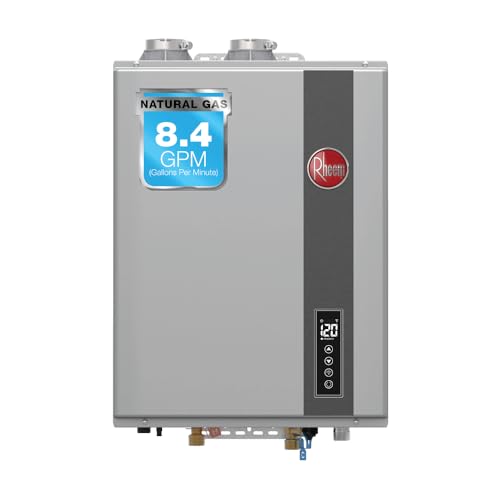
Product 2 is a condensing natural-gas unit rated at 8.4 GPM at a 35°F rise.
Product 4 is rated at 9.5 GPM at a 35°F rise, but uses non-condensing technology.
Size by winter temperature rise and simultaneous demand, not household size alone.
Gas-line, venting and 240 V work should be handled by licensed tradespeople where required.
The costly mistake is choosing by the biggest GPM number alone. Flow depends on how cold your incoming water gets, so an undersized unit can fall short during winter showers even when its headline rating looks generous.
These picks cover different household needs, not every installation. The correct choice also depends on your fuel, vent route, incoming water temperature and how many fixtures you expect to run at once.
Best Gas Tankless Water Heaters
#1Best for Most Homes
Rinnai Condensing Gas Tankless Heater
Best for Homes needing up to 11.1 GPM and natural-gas or propane compatibility
Product 3 supports natural gas or propane and delivers up to 11.1 GPM, giving you flexibility if your fuel supply or household demand changes. Its 0.98 UEF and indoor-or-outdoor installation options make it the broadest fit of these gas models.
Fuel Natural gas or propaneFlow rate Up to 11.1 GPMEfficiency 0.98 UEFInstallation Indoor or outdoorInput Up to 11.1 GPM
Why it made the cut
Works with natural gas or propane
Up to 11.1 GPM and 0.98 UEF
Can be installed indoors or outdoors
Good to know
Outdoor installation requires the RX-OVC vent cap
Wi-Fi control requires a separate Controlr module
Skip it if Choose product 2 if you specifically want a condensing natural-gas model with a lower stated flow rate.
Best for Natural-gas homes seeking a condensing model rated at 8.4 GPM
Product 2 is a direct fit if your home uses natural gas and you want condensing technology. It is rated for 8.4 GPM at a 35°F rise, with a 0.93 UEF and indoor direct-vent installation.
Fuel Natural gasFlow rate 8.4 GPM at 35°F riseEfficiency 0.93 UEFInstallation Indoor, direct ventInput 157,000 BTU/hr
Why it made the cut
Condensing design with 0.93 UEF
Rated 8.4 GPM at a 35°F rise
Built-in freeze protection
Good to know
Natural gas only
Stated flow rate is lower than products 3 and 4
Skip it if Skip it if you need propane compatibility or a higher stated flow rate.
Best for Natural-gas homes prioritizing 9.5 GPM without condensing technology
Product 4 offers a stated 9.5 GPM at a 35°F rise from a non-condensing design. Its 199,900 BTU/hr output and indoor direct-vent setup suit homes with several water points running at once.
Fuel Natural gasFlow rate 9.5 GPM at 35°F riseEfficiency 0.82 UEFInstallation Indoor, direct ventInput 199,900 BTU/hr
Why it made the cut
9.5 GPM at a 35°F rise
Non-condensing design
Built-in freeze and flame-failure protection
Good to know
0.82 UEF, lower than the condensing models listed here
Natural gas only
Skip it if Choose a condensing model if higher stated efficiency is your priority.
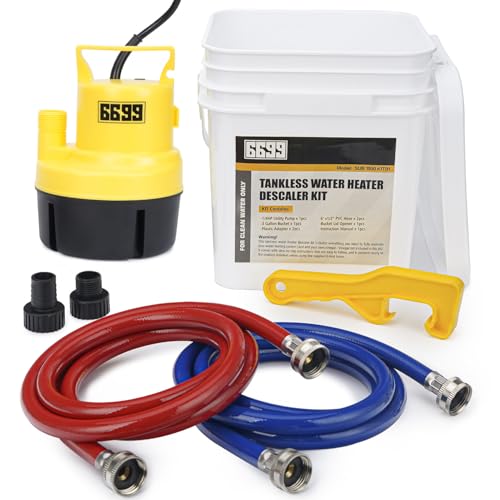
Best for Tankless owners who need a pump, hoses, and bucket for flushing
Product 5 is a maintenance kit, not a water heater. It includes a 1/4 HP pump, two 6 ft hoses, and a 3-gallon pail for flushing a compatible tankless system.
Pump 1/4 HPHoses Two 6 ft hosesPail 3 gallonsPump voltage 115V/60Hz
Why it made the cut
Includes pump, hoses, and pail
Pump has thermal overload protection
Good to know
Does not heat water
Pump’s maximum fluid temperature is 95°F
Skip it if Skip it if you are shopping for a gas tankless water heater rather than maintenance equipment.
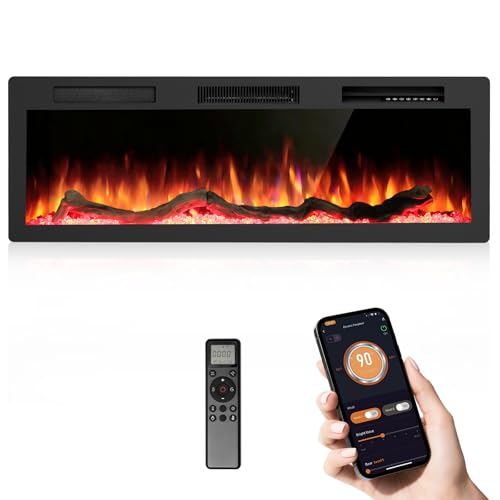
Best for Supplemental electric heat and a recessed or wall-mounted fireplace
Product 1 is an electric fireplace, not a gas tankless water heater. Its 750W and 1,500W heating modes are intended for supplemental zone heating, with a stated coverage area of up to 400 square feet.
Fuel ElectricHeating modes 750W and 1,500WStated coverage Up to 400 square feetInstallation Wall-mounted or recessed
Why it made the cut
Two heating modes: 750W and 1,500W
Wall-mounted or recessed installation
Stated supplemental coverage up to 400 square feet
Good to know
Does not heat water
Runs on electricity, not gas
Skip it if Skip it if you need a tankless water heater for showers or household hot water.
The Rinnai RX199iN is the best tankless hot water heater gas pick here for most homes: it supports natural gas or propane, works indoors or outdoors, and is rated up to 11.1 GPM. The best tankless water heater depends on fuel, winter demand and installation fit; these model specifications can help you compare the best tankless water heaters without guessing which brand is most reliable.
11.1 GPM
Rinnai RX199iN maximum stated flow
Its 0.98 UEF is the highest of these three models. A maximum flow rating alone doesn’t tell you how much hot water it can deliver at your home’s winter temperature rise.
Model
Stated flow and condition
Efficiency and type
Fuel and location
Rinnai RX199iN
Up to 11.1 GPM
0.98 UEF; condensing
Natural gas or propane; indoor or outdoor
Rheem RTGH Series
8.4 GPM at a 35°F rise
0.93 UEF; condensing
Natural gas; indoor
Rheem RTG Series
9.5 GPM at a 35°F rise
0.82 UEF; non-condensing
Natural gas; indoor
The Rheem flow figures are stated at a 35°F rise; don’t treat them as available at every temperature rise.
For the most efficient tankless water heater by stated UEF, the RX199iN leads this comparison, followed by the condensing Rheem RTGH and the non-condensing RTG. Condensing units recover more heat from exhaust, which helps explain the higher efficiency figures; the non-condensing RTG may suit a buyer who wants its higher stated flow than the RTGH at the specified 35°F rise. These figures don’t establish which brand is most reliable, and warranty coverage should be checked for the exact model and installation.
Before choosing
Confirm the unit’s approved fuel matches your home’s gas supply; don’t assume a natural-gas model can run on propane.
Compare flow at the temperature rise your home needs, not just the largest GPM figure.
Check the model’s installation-location requirements and venting plan.
Read the model-specific warranty terms and installation conditions.
From HeaterGuides · our own guideTankless? Page 8 is the descaling routine, page 15 checks the size.Water Heater Owner's ToolkitFix the common faults yourself, keep it running for years, and know when a repair is money wasted.No-hot-water flowcharts, gas and electricFlush, anode, relief valve and descaling stepsRepair-or-replace calculator (Excel)$14.99$9.99Get it for $9.99See what's inside and watch the 2-minute video →18-page printable PDF + Excel calculator · instant download · 30-day refund
How to Size a Tankless Water Heater for Winter
The correct tankless water heater setup starts with your home’s coldest incoming water temperature and the hot-water temperature you want; subtract the first from the second to get the required temperature rise. Then add the flow rates of fixtures likely to run at once and compare that demand with the heater’s flow at that rise.
Hypothetical winter sizing check
Say your incoming water is 40°F and your target is 120°F. The heater must provide an 80°F rise. If a shower and sink together draw 3.0 GPM, the unit must meet that demand at an 80°F rise. This example doesn’t predict the output of any listed model; check its flow chart for the required rise before choosing.
Incoming water40°F
Target hot water120°F
Required rise80°F
Simultaneous demand3.0 GPM
A published GPM number without its temperature-rise condition isn’t a complete sizing answer. For example, the Rheem RTGH is listed at 8.4 GPM at a 35°F rise, and the RTG at 9.5 GPM at a 35°F rise; those figures don’t establish their flow at the 80°F rise in the example.
A tankless water heater with recirculation can reduce the wait for hot water at a distant tap, but it needs compatible equipment and a correctly designed return line or crossover arrangement. None of the listed product details says recirculation is included, so verify compatibility rather than assuming it.
Gather these numbers first
Coldest incoming-water temperature at your home
Desired hot-water temperature
Flow rates of fixtures you expect to use together
The heater’s flow at the required temperature rise
Approved fuel configuration: the Rinnai RX199iN supports natural gas or propane; the two Rheem models listed are natural-gas models
For a propane installation, select a unit approved for propane or use only a manufacturer-approved conversion configuration; never connect a natural-gas model to propane by assumption.
Tankless Water Heater Installation Cost and Setup
Tankless water heater installation cost depends on your existing gas-line capacity, vent route, condensate drain needs, electrical supply and removal of the old heater; the available facts don’t support one national total. Those same factors determine tankless water heater cost, so get a site-specific quote before choosing a model.
Installing a tankless water heater inside is possible when the model is approved for indoor use and its vent route and clearances meet the installation manual. Products 2 and 4 are listed for indoor installation with direct vent. Product 3 can be installed indoors or outdoors; its outdoor configuration requires the RX-OVC vent cap.
A tankless unit isn’t automatically a drop-in replacement for a tank heater: existing gas pipes, venting and electrical supply may not suit it. A correct setup must follow the exact model’s manual and local code for fuel sizing, venting, condensate handling where applicable, water connections and electrical needs.
Use Licensed Trades
Gas connections, venting and 240 V electrical work are jobs for licensed tradespeople in most places. Don’t attempt to install a gas unit or alter its venting yourself.
1
Describe the existing setup
Tell each installer what fuel the home uses, where the current heater sits, and whether you want the new unit inside or outside.
2
Compare the scope
Ask each bidder to state whether the gas line, vent route, condensate drain, electrical supply and old-heater removal need work.
3
Confirm the job details
Ask who will obtain permits, which vent materials the model requires, and how the installer will commission the unit. Homeowners can compare those details without doing the gas work.
Indoor Venting, Safety and Local Code
You can’t seal a tankless water heater inside a tight cabinet or block its service access; an indoor gas model needs the venting and clearances specified by its listing and installation manual. Common locations include utility rooms and other approved indoor spaces, provided the installation meets the model instructions and local code.
Products 2 and 4 are described as indoor direct-vent models, and product 2 is listed as CSA certified. Combustion appliances need the correct combustion-air arrangement and exhaust termination; an installer must verify both against local code and the exact model instructions.
Before approving the installation
Confirm the model is listed for the proposed indoor location.
Have the installer verify the approved vent route, termination and required clearances.
Keep service access open; don’t modify the cabinet or venting without manufacturer approval and code compliance.
Confirm permit requirements and install a working CO alarm near sleeping areas, following its instructions. The alarm doesn’t replace correct venting.
Product 3’s outdoor option is a separate approved installation configuration, not permission to improvise venting. None of these listed products is described as vent-free; restrictions on vent-free gas appliances vary by location, so check local code before considering one.
Winter Maintenance and Freeze Protection
A tankless water heater frozen in winter may have damaged pipes or a heat exchanger; built-in freeze protection isn’t a guarantee against freeze damage. Products 2 and 4 list freeze protection, but it depends on power and installation conditions, and exposed piping can still freeze. Follow the manual’s freeze-protection instructions and protect exposed pipes as local conditions require. No heater can be promised to survive a prolonged power outage.
Common complaints about tankless water heaters include reduced hot-water flow and recurring error codes. Mineral scale can build up in the heat exchanger, especially with hard water, and may contribute to performance problems. Tankless water heater maintenance should follow the manufacturer’s schedule and flushing procedure, adjusted for your water conditions.
Winter maintenance checks
Check the manual for freeze-protection steps and maintenance intervals.
Ask a technician about recurring error codes, reduced hot-water flow, unusual burner behavior or leaks.
Arrange flushing according to the manufacturer’s instructions and your water conditions.
The flushing kit isn’t the heater
Product 5 is a flushing kit, not a water heater. Consider it only if its connections match your installed model’s service valves and its procedure matches the heater’s instructions.
Don’t open gas components
Leave burner or gas-component repairs to a qualified technician. If you notice unusual burner behavior or a leak, stop using the unit and contact a technician; don’t try to troubleshoot inside the gas assembly.
Questions People Ask
How does a tankless water heater work?
A tankless unit heats water as it flows through the heat exchanger, rather than storing a full tank. Opening a hot-water tap triggers the burner; when flow stops, the burner shuts off, though the unit may briefly continue its fan or pump cycle.
Which is better, a tankless water heater or a tank water heater?
Tankless suits homes that want hot water on demand and can meet the unit’s gas, venting and flow requirements. A tank heater is often simpler to replace and can supply several fixtures at once from stored hot water; compare installed cost and your peak demand, not efficiency alone.
Can you install a tankless water heater yourself?
A like-for-like electric replacement may still involve electrical work, while gas units require correctly sized fuel lines and approved venting. In most places, gas connections and venting should be handled by a licensed plumber; 240 V electrical work may require a licensed electrician.
How do you override the temperature on a tankless hot water heater?
Use the heater’s control panel or its compatible remote to change the setpoint, following the model’s manual. Don’t raise the setting to compensate for a mixing or flow problem: water above 120°F at the tap increases scald risk, especially for children and older adults.
Is there a tankless water heater with a heat pump?
Heat-pump water heaters are generally storage-tank units, not tankless gas heaters. They extract heat from surrounding air and use it to warm stored water, so they need suitable installation space and are a separate option to compare.
Are portable tankless water heaters suitable for a whole house?
Usually not: portable units are generally intended for limited, point-of-use demand, and their output may not cover multiple household fixtures in cold weather. Check the model’s rated flow at your required temperature rise before considering one for a home.
Can an outdoor tankless water heater be installed indoors?
No. An outdoor-rated model must be installed outdoors as its listing and manual specify; it isn’t made for indoor venting. Choose an indoor-rated unit for an indoor location, with its required vent, clearances and service access.
Before you go · a welcome giftGet the Water Heater Owner's Toolkit for $4.99Fix the common faults yourself, keep it running for years, and know when a repair is money wasted. Normally $14.99; your welcome price saves $10.00. We'll email your link right now.or buy it now for $9.99 without the gift →One email with your link now. We never share your address.



 Water Heater Owner's ToolkitFix the common faults yourself, keep it running for years, and know when a repair is money wasted.No-hot-water flowcharts, gas and electricFlush, anode, relief valve and descaling stepsRepair-or-replace calculator (Excel)