For a complete solar hot water heater, buy a matched collector, storage tank, controls, and backup heat—not a collector alone. Of these picks, product 3 is the best starting point for a small custom system because it includes 10 evacuated tubes and heat pipes, but it still needs compatible equipment and professional installation.
Buying a component as if it were a complete heater can leave you with no hot shower and a second bill for the parts you still need. A mismatched pump or tank can also keep the collector from transferring heat properly.
The products below serve different jobs. Treat the collector as a system component, the tank as storage, and the pump as a circulation part; none is listed as a complete, ready-to-install solar water heater.
Solar Hot Water Picks by Use
#1Best Collector Start
MISOL 10-Tube Heat-Pipe Collector
Best for A small custom system or a solar-heating training project
This is the only listed product that is itself a solar collector: it includes 10 evacuated tubes and 10 matching heat pipes. Its insulated aluminum-alloy manifold makes it a starting point for a custom setup, but it does not include a storage tank, controls, or backup heat.
Tubes 10 vacuum glass tubes, 58 mm diameter × 500 mm lengthHeat pipes 10 units, suitable for 58 × 500 mm tubesManifold shell Aluminum alloy, 1.8 mm thickManifold insulation Rock wool
Why it made the cut
Includes 10 vacuum glass tubes and 10 heat pipes
Rock-wool insulation in the manifold
Made for solar water-heating systems or training projects
Good to know
Collector only; compatible system parts are not included
No capacity or output figure is provided
Skip it if Skip it if you need a complete, ready-to-install water-heating system.
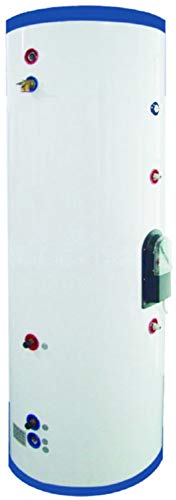
Best for A custom solar system that needs a 300-liter storage tank
The 300-liter tank adds storage to a system that already has a compatible collector and controls. Its 66-foot TU1 copper coil is the heat exchanger, while the polyurethane insulation is listed at R-Value 12.5. It is a tank component, not a complete solar heater.
Tank capacity 300 liters / 79 gallonsInner tank Food Grade SUS 304-2BIn-tank coil TU1 copper, 66 ft lengthInsulation Polyurethane foaming layer, R-Value 12.5Water ports 3/4″ NPT
Why it made the cut
Food-grade SUS 304-2B inner tank
66-foot copper heat-exchanger coil
Polyurethane insulation with R-Value 12.5
Good to know
Collector, controls, and backup heat are not listed as included
Port sizes need to match the rest of the system
Skip it if Skip it if you need a collector or a complete packaged system rather than a storage tank.
Best for A compatible solar loop that needs a small circulation pump
The 12 V pump is intended for water circulation and is listed for solar water-heater systems. Its stated maximum flow is 2.1 GPM and maximum discharge head is 9.8 ft, so check those figures against your loop before buying. It is non-self-priming, which matters when planning the plumbing.
Power source DC 12 V; power adapter includedMaximum flow rate 2.1 GPMMaximum discharge head 9.8 ftConnections 1/2″ male threadMaximum circulating water temp 100°C / 212°F
Why it made the cut
12 V DC power adapter included
Maximum flow rate of 2.1 GPM
Brushless motor
Good to know
Non-self-priming
Cannot be immersed in water above 50°C / 122°F
Skip it if Skip it if your system needs a self-priming pump or the stated flow and head do not fit your loop.
Best for Supplemental room heat, separate from a solar water-heating system
This portable ceramic heater does not heat water or connect to a solar collector. It can provide separate room heat, with 1,500 W output, a thermostat, and tip-over shutoff. Its 200 sq. ft. coverage is the product’s stated figure, not a guarantee for every room.
Power 1,500 WStated coverage Up to 200 sq. ft.Timer 24 hoursCertification ETL-certified
Why it made the cut
1,500 W heating setting
Thermostat and 24-hour timer
ETL-certified with tip-over and overheat protection
Good to know
Does not heat or store water
Must be plugged directly into a wall outlet
Skip it if Skip it if your goal is to heat domestic hot water with solar energy.
Best for Supplemental room heat and fireplace-style display
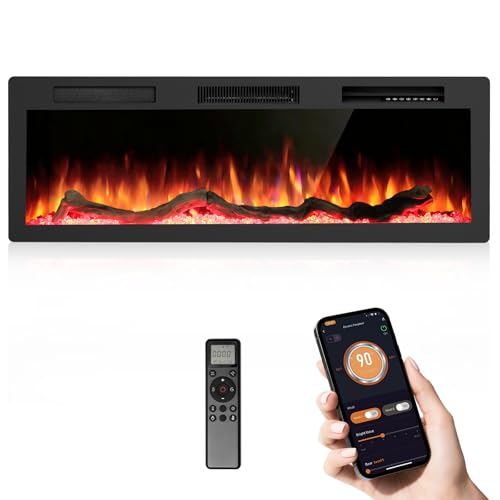
This is an electric fireplace, not a solar water heater or a water-system component. Its 750 W and 1,500 W heating modes provide separate zone heat, and it can be wall-mounted or recessed. Choose it for room comfort or appearance, not for domestic hot water.
Width 50 inHeating modes 750 W and 1,500 WStated zone-heating coverage Up to 400 square feetTemperature setting range 59–95°F
Why it made the cut
Two heating modes: 750 W and 1,500 W
Wall-mounted or recessed installation
Remote, touch, Wi-Fi, and Alexa controls
Good to know
Does not heat water or connect to a solar collector
Requires a compatible wall opening for recessed installation
Skip it if Skip it if you are shopping for a solar hot-water collector, tank, or circulation pump.
The best solar hot water heater is a complete, matched system—not a collector, tank, or pump bought on its own. For a small custom system, the MISOL collector is a possible starting point, but it needs compatible equipment and professional installation.
For the best solar water heater type comparison, neither flat-plate nor evacuated-tube collectors are automatically best. To choose between a flat-plate and evacuated-tube heater, compare the rated output and certification of specific complete systems, your roof conditions and local climate, and your installer’s guidance. The product data here doesn’t provide enough information for a performance comparison.
Component
What it does
What the listed pick provides
Collector
Captures solar heat.
MISOL collector: 10 evacuated glass tubes, each 58 mm in diameter and 500 mm long, with heat pipes and a rock-wool-insulated aluminum manifold.
Storage tank
Stores heated water.
The 300 Liter 79 Gallon tank has a single copper coil. Its volume and coil are storage and heat-exchange details, not proof of household output or compatibility with the MISOL collector.
Heat exchanger
Transfers heat from the collector loop to the water you use.
Product 4’s copper coil is one exchanger detail; compatibility still needs to be confirmed.
Pump, controls, backup
A pump moves fluid in an active loop; controls manage operation, and backup heat helps keep hot water available.
The bayite BYT-7A015 is a circulation pump, not a complete system. Controls and backup heat aren’t included in the listed component descriptions.
These are the main solar water heater components; the listed options don’t make a ready-to-install system.
Myth
A collector alone is a solar water heater.
Fact
A collector captures heat, but usable hot water also depends on storage, heat transfer, suitable circulation and controls, and backup heat. The listed products are separate components, not a complete package.
If you want to compare complete packages, start with a guide to solar water heater systems; verify the exact components and compatibility with the installer before buying.
From HeaterGuides · our own guidePages 9 to 13 are the fault flowcharts: no hot water, noises, smells and leaks, in order.Water Heater Owner's ToolkitFix the common faults yourself, keep it running for years, and know when a repair is money wasted.No-hot-water flowcharts, gas and electricFlush, anode, relief valve and descaling stepsRepair-or-replace calculator (Excel)$14.99$9.99Get it for $9.99See what's inside and watch the 2-minute video →18-page printable PDF + Excel calculator · instant download · 30-day refund
Check the Installed Cost Before You Buy
Certified solar water heater prices and solar water heater installation cost depend on the complete project; the supplied product data gives no installed price. For a local solar water heater cost estimate, ask qualified installers for itemized quotes covering the system, applicable certification, equipment, labor, permits, roof work, backup heater, and warranty.
Your solar water heater cost will vary with system size, roof access, plumbing, climate, permits, and whether backup heat is included. The best solar water heater cost estimate is a like-for-like comparison of the same scope—not the price of one collector or tank. What should you expect to pay for a decent solar water heater? Only a local quote can answer that for your home.
Ask each installer to itemize
Complete system and applicable certification
Collector, tank, heat exchanger, pump, and controls
Labor, permits, roof work, and any plumbing changes
Backup heater and its installation, if included
Warranty coverage and what it excludes
Compare the same job
Ask every installer to quote the same system scope and household hot-water assumptions. A lower quote may leave out roof work, permits, or backup heat.
For a solar water heater cost calculator, compare your current water-heating energy bill with the installer’s estimated annual energy use and maintenance. Request the assumptions for household hot-water use, fuel price, and expected energy use; use your own bill and actual fuel rate rather than an unsourced savings promise.
Build an estimate from your own inputs
Use placeholders until you have local bids: enter your current annual water-heating cost, the installer’s estimated annual energy cost, and estimated maintenance. Subtract the latter two from the first to estimate annual operating-cost difference; compare that figure with the quoted installed cost without assuming a payback date.
Current annual water-heating cYour bills: $___
Estimated annual energy and maInstaller’s figures: $___ + $___
Installed project costItemized local quote: $___
If you finance the work, compare the cash price, loan term, APR, fees, and total repayment. Check current federal, state, utility, and lender terms for tax-credit or rebate eligibility before counting an incentive; eligibility and program terms can change.
Match the System to Your Hot-Water Use
A household solar water heater supplies a shower from hot water stored in a tank; an instant shower water heater heats water as it flows and must be sized for your shower’s flow rate and temperature rise. A hot-water shower head may restrict flow, but it doesn’t replace a properly sized heater. Portable shower water heaters are generally made for specific temporary or outdoor uses, not as substitutes for a code-compliant whole-home system.
System
How it serves a shower
What to check
Stored solar hot water
Solar heat warms water in a storage tank; backup heat can help when solar gain falls short.
Usable hot-water delivery at your winter inlet-water temperature and peak shower demand.
Instant shower heater
Heats water on demand as it passes through the unit.
Whether it can deliver the required flow while raising cold incoming water to the needed temperature.
A generic gallon rating or heater label won’t tell you how long a shower will stay hot.
Size the system for occupants and for hot-water uses that overlap, such as two showers running while a dishwasher draws water. Have an installer calculate the storage volume and collector area for your home; don’t infer system output from the MISOL collector’s 10 tubes or the 300-liter tank’s 79-gallon capacity alone.
A demand check before choosing
Say two people shower while another household member uses hot water at a sink. Ask the installer to model that overlap using the home’s winter inlet-water temperature, shower flow and expected shower duration. The result should be a projected hot-water delivery, not a promise based only on tank capacity.
Demand to modelTwo showers plus a sink draw
Key seasonal inputWinter inlet-water temperature
Ask forExpected delivery at peak demand
Solar collectors can gather heat in winter and cloudy weather, but available heat changes with sunlight, weather and the site. Backup heat may be needed for dependable showers, especially during stretches with limited sun. Ask the installer how the system performs under your winter conditions—not just on a sunny-day estimate.
Verify Certification, Installation, and Service
Have a qualified installer verify the complete system before you buy; none of the listed products is identified as a certified complete solar water heater. The UL listing described for the bayite pump’s included 12 V adapter applies to the adapter, not the pump or the full system.
If you’re looking up how to install a solar water heater or how to connect its pipes, treat those as installer jobs, not a DIY connection recipe. Incorrect plumbing or pressure-relief arrangements can cause leaks, scalding or equipment damage; tank connections and electrical work should be handled by qualified tradespeople.
Confirm Before Purchase
Collector and tank compatibility, plus roof structure and plumbing materials.
Freeze protection suited to the site, and correctly specified pressure and temperature controls.
Electrical supply for the controls or pump, and required local permits and code compliance.
Expected installation schedule; installation time depends on the home and system, so get the contractor’s estimate.
Check the Pump’s Temperature Limits
The bayite BYT-7A015 is non-self-priming, has a maximum flow of 2.1 GPM and a discharge head of 9.8 ft, and uses a 12 V adapter. Its listed maximum circulating-water temperature is not permission to immerse the pump in equally hot water: the product data says not to immerse it in water hotter than 122°F. Confirm both limits against the installation conditions.
Solar thermal systems generally store heat in the water tank, not in a battery; an active pump may still need electricity to circulate fluid. A battery is a separate design choice for running a pump or controls during an outage.
Solar Water Heater Maintenance Checklist
Follow the system manual for collector inspection and cleaning.
Check for leaks and verify pump and control operation as the manual directs.
Service heat-transfer fluid where the system uses it, following the manufacturer’s schedule.
Inspect the tank anode as specified for that tank; service intervals vary by model and water conditions.
Questions People Ask
How does an active solar water heater work?
An active solar water heater uses a pump to move heat-transfer fluid through roof-mounted collectors and back to a storage tank or heat exchanger. Sensors and controls start the pump when the collector is hotter than the tank, while backup heat covers cloudy periods or heavy use.
What does a solar panel do in a solar water heater?
The solar collector captures sunlight and transfers that heat to water or a separate heat-transfer fluid. It isn’t the same as a photovoltaic panel, which makes electricity; a thermal collector heats water directly or through a heat exchanger.
How efficient are solar water panels?
Solar thermal panels can be effective, but their real-world output changes with sunlight, collector temperature, wind, shading, insulation, and hot-water demand. A well-matched system loses less heat than an oversized or poorly insulated one, so the collector’s rated efficiency alone doesn’t predict your savings.
What is the cost and benefit of a solar water heater?
The benefit is lower use of conventional water heating during sunny periods, with the biggest savings where hot-water demand and usable sun are both strong. Compare the full installed cost, expected backup-heater use, maintenance, and local incentives against your current water-heating bills; a collector-only price can’t show the payback.
How long does solar water heater installation take?
Installation time depends on roof access, tank location, pipe runs, permits, and whether backup heat or structural work must be added. An installer should inspect the roof, plumbing, storage space, controls, and local requirements before giving you a schedule.
How do you change the anode in a Rheem solar water heater tank?
Turn off the backup heat, shut off the water supply, and relieve tank pressure before removing the anode, then install the correct replacement and check every connection for leaks. Solar tanks can involve high temperatures and pressurized plumbing, so have a qualified plumber handle the job if the tank manual doesn’t give a clear procedure or access is restricted.
Before you go · a welcome giftGet the Water Heater Owner's Toolkit for $4.99Fix the common faults yourself, keep it running for years, and know when a repair is money wasted. Normally $14.99; your welcome price saves $10.00. We'll email your link right now.or buy it now for $9.99 without the gift →One email with your link now. We never share your address.




 Water Heater Owner's ToolkitFix the common faults yourself, keep it running for years, and know when a repair is money wasted.No-hot-water flowcharts, gas and electricFlush, anode, relief valve and descaling stepsRepair-or-replace calculator (Excel)

