What SEER Heat Pump Rating Do You Really Need in 2026?
On this page 9 sections
- Compare These SEER Heat Pump Picks
- Best SEER Heat Pumps for Different Homes
- SEER Heat Pump Ratings and What They Mean
- Choose the Right SEER2 and HSPF2 for Your Climate
- Match SEER2 Heat Pumps to Your Home and Ducts
- Rebates, Minimums and Choosing Real Models
- Cold-Weather Limits and Backup Heat Planning
- Run This Heat Pump Buying Checklist First
- More Questions, Answered
Compare These SEER Heat Pump Picks
| Rank | Model | Best for | Capacity | Efficiency (SEER/SEER2) | Configuration | Price |
|---|---|---|---|---|---|---|
| 1 | Goodman 2 Ton 15.2 SEER2 SystemBest For Most Homes | Small-to-mid homes wanting 15.2 SEER2 efficiency in a standard ducted split system. | 2 Ton | 15.2 SEER2 | Heat pump + multi-position air handler | Check price |
| 2 | Goodman 2.5 Ton 14 SEER SystemStep-Up Capacity | Mid-size ducted homes needing about 2.5 tons from a matched Goodman split system. | 2.5 Ton | 14 SEER | Heat pump + multi-position air handler | Check price |
| 3 | Cooper & Hunter 5 Ton 16 SEER2 DuctedSmart Big-Home Pick | Large homes up to about 3,000 sq ft wanting 16 SEER2 inverter efficiency and app control. | 60,000 BTU (5 Ton) | 16 SEER2 | Central ducted mini split, single zone | Check price |
| 4 | Goodman 3.5 Ton 14 SEER PackageCompact Packaged Unit | Homes or small buildings that need a 3.5 ton all-in-one packaged heat pump outdoors. | 3.5 Ton | 14 SEER | Packaged heat pump | Check price |
| 5 | Goodman 4 Ton 14 SEER PackageHigh-Cap Packaged | Larger ducted spaces that need about 4 tons of capacity in one packaged heat pump. | 4 Ton | 14 SEER | Packaged heat pump unit | Check price |
Buying a heat pump just by chasing the highest SEER number is one of the fastest ways to overpay for equipment you never fully use. The real win is matching SEER2 and HSPF2 to your climate, house and ductwork so the system earns its keep on your power bill.
Most people who regret their purchase did two things: they paid thousands extra for a premium SEER2 model, then lost half the benefit to poor ductwork or sloppy installation. You’ll avoid that by using SEER2 as one tool, not the only one, and by going in with a short list of checks for your installer.
Best SEER Heat Pumps for Different Homes
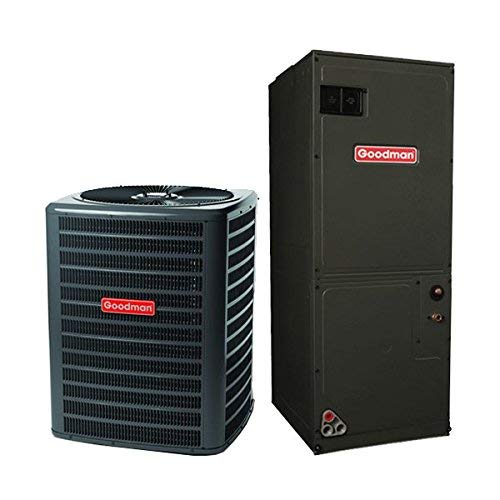
Goodman 2 Ton 15.2 SEER2 System

Goodman 2.5 Ton 14 SEER System
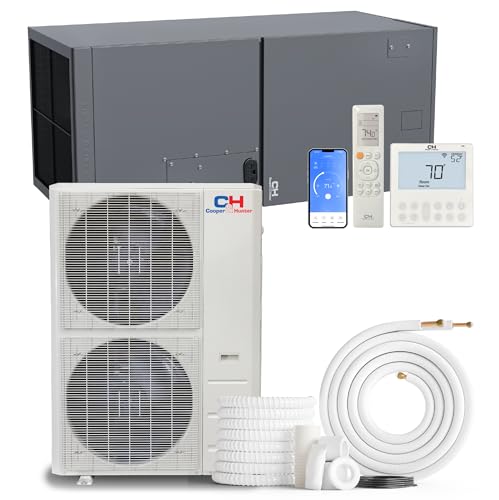
Cooper & Hunter 5 Ton 16 SEER2 Ducted
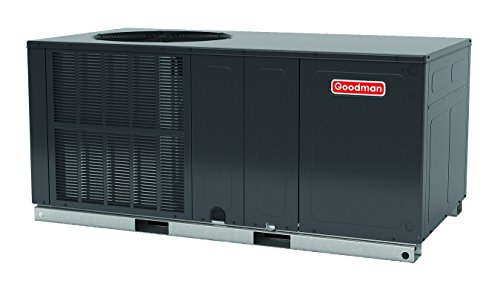
Goodman 3.5 Ton 14 SEER Package

Goodman 4 Ton 14 SEER Package
SEER Heat Pump Ratings and What They Mean

For a heat pump, SEER is the seasonal cooling efficiency rating: if you came here searching for the SEER heat pump meaning, it’s the score for how much cooling you get over a whole summer for the electricity you pay for. In technical terms, SEER (Seasonal Energy Efficiency Ratio) is the total BTUs of cooling delivered in a typical cooling season divided by the watt‑hours of electricity used.
So what is SEER for heat pumps in plain language? Think of it as miles per gallon for cooling: a SEER 20 heat pump gives about 20 units of cooling for each unit of power, while a SEER 15 unit gives 15. For the same cooling, the SEER 20 unit should use about 25% less electricity than the SEER 15 unit, because 15 ÷ 20 = 0.75, which is a simple explanation of SEERs for a heat pump you can keep in your back pocket.
SEER2 is the newer version of that rating and is what you’ll see on most 2023 and newer equipment. The U.S. Department of Energy changed to an M1 test in 2023 that runs ducted systems at a higher static pressure, 0.5 inches of water column instead of the old 0.1 inches, to better reflect real ducts. That extra resistance makes the blower work harder in the lab, so SEER2 numbers are lower than old SEER numbers for the same equipment, even though the hardware did not suddenly get worse.
On the heating side, the matching numbers are HSPF and HSPF2 (Heating Seasonal Performance Factor). They work the same way: total BTUs of heat delivered over the heating season divided by the watt‑hours used. If you’ll rely on the heat pump for most of your winter heating, HSPF2 matters as much as SEER2, and premium cold‑climate models reach HSPF2 scores around 10–12 or higher.
So what counts as a good SEER or SEER2 rating for a heat pump in 2026? Federal minimum SEER2 for split systems is 15.0 in most regions and 16.0 in the Southeast and Southwest, so 15–16 SEER2 is the basic starting point. Mid‑tier systems land in the high‑teens to around 20 SEER2. Only premium air‑source models hit the top end, roughly 22–24 SEER2, like Carrier Infinity 24 (24.0 SEER2), Lennox SL25XPV (24.0 SEER2), Trane XV20i (23.5 SEER2) and Mitsubishi Hyper‑Heating H2i around 22 SEER2.
You might also wonder if 28 SEER exists in a heat pump. Some ductless mini‑split systems still advertise very high legacy SEER numbers in the high‑20s or even above 30 for cooling a single zone, but those are SEER, not SEER2, and they’re usually small ductless units. Whole‑house ducted systems today typically top out in the low‑to‑mid 20s on the stricter SEER2 scale.
SEER2 and HSPF2 are still lab ratings, not guarantees for your house. Duct leaks, high real‑world static pressure, incorrect refrigerant charge, and thermostat or control settings can drag a 20‑SEER2 system down to something that behaves more like a basic unit on your bill. The right rating is your starting point; the way your system is designed and installed decides how close you get to it.
 Heating System Upgrade PlannerChoose between a heat pump, a furnace, a boiler or a hybrid with your own numbers, and hire the right installer.Every system compared side by side25 questions for contractors, red flagsRunning-cost, payback and quote calculator (Excel)
Choose the Right SEER2 and HSPF2 for Your Climate
The best SEER rating for a heat pump is usually a 15–16 SEER2 unit in most U.S. climates, with higher SEER2 only paying off if you run cooling a lot at high electricity rates.
For a SEER heat pump, that means your goal isn’t to chase the biggest number on the box, it’s to match SEER2 (and HSPF2 for heating) to how many hours you actually run the system. In short: 15–16 SEER2 is a smart default, 18–20 SEER2 makes sense in long, hot, humid seasons or very expensive kWh, and ultra‑high units above that are usually only for heavy users who never let the thermostat rest.
If you’re hunting for the “best 16 SEER heat pump” type of setup for a whole house, a solid ducted system around 16 SEER2—like the Cooper & Hunter 60,000 BTU 230V Central Ducted Mini Split in the picks—often hits the right balance of efficiency, comfort, and equipment cost if your ducts are in decent shape.
How Climate And Run Hours Change The Right SEER2
SEER2 pays back faster where the AC runs a lot, and barely moves the needle where it only runs a few weeks a year.
Two numbers decide most of the math: your annual cooling hours and your electric rate. A house in Phoenix might see 2,000–2,500 hours of cooling, while a place in Minneapolis might only log 500–700. At 17¢/kWh those Phoenix hours are expensive; at 11¢/kWh in a mild area, less so.
Thermostat setting is the quiet third factor. Holding 72°F all summer can easily double your run time compared with letting the house drift to 76–78°F when you’re away. If you like the house cool all the time, you’re closer to the “heavy user” group that can justify higher SEER2.
If the 20 SEER2 option is, say, $2,000 more installed than a 16 SEER2, that $153/year saving is roughly a 13‑year payback; if the jump from 14 to 16 SEER2 is only a few hundred dollars, the ~ $109/year saving pays back in just a few seasons.
| Heater | Watts | Per hour | Per day (8 h) | Per month (30 days) |
|---|---|---|---|---|
| 3‑ton 14 SEER2 heat pump (≈2,600 W while cooling) | 2,600 W | 44¢ | $3.54 | $106.08 |
| 3‑ton 16 SEER2 heat pump (≈2,250 W while cooling) | 2,250 W | 38¢ | $3.06 | $91.80 |
| 3‑ton 20 SEER2 heat pump (≈1,800 W while cooling) | 1,800 W | 31¢ | $2.45 | $73.44 |
Where HSPF2 Matters More Than SEER2
In heating‑dominated climates, HSPF2 should be your main efficiency number; SEER2 becomes secondary.
If winter runs from October to April and your heat pump runs far more hours in heating than cooling, the savings live in HSPF2. Premium cold‑climate units can reach HSPF2 around 10–12+, which means they move a lot of heat per kWh even when the outdoor temperature drops.
A simple rule: if your furnace or heat pump runs more days for heating than for cooling, shop by HSPF2 first and treat SEER2 as a tie‑breaker. If you’re mostly worried about winter bills, you’ll get more value from hspf‑focused options and cold‑climate models than from pushing SEER2 into the 20s.
Balancing SEER2 And HSPF2 In Mixed Climates
Many places sit in the middle, with serious heating and a real cooling season. In those mixed climates, you’re looking for balanced numbers instead of chasing the maximum on one side.
A good target there is something like 15–18 SEER2 with a strong HSPF2 rating from the same unit. That usually means an inverter or variable‑speed compressor that can ramp up and down efficiently in both summer and winter instead of short‑cycling.
One way to decide: think about which bill surprised you more, the July power bill or the January one. If summer hurt more, favor the higher SEER2 within reason. If winter did, prioritize HSPF2 and cold‑weather performance and stop at a mid‑tier SEER2 number.
For example, a 16 SEER2 ducted system with a solid HSPF2 is often a better year‑round choice than a 20+ SEER2 unit that only shines in light cooling loads but doesn’t hold capacity as well in a cold snap.
Match SEER2 Heat Pumps to Your Home and Ducts
Matching a SEER2 heat pump to your home and ductwork has more impact on comfort and bills than chasing the very highest efficiency rating. For anyone shopping a seer heat pump, remember the label is tested in a lab; the basic heat pump seer meaning is seasonal cooling efficiency under specific conditions that your house may or may not meet.
Sizing comes before SEER2 because an oversized unit will waste energy and feel worse to live with, even if the rating looks great. Too many tons means short run times, so the system turns on hard, shuts off, and repeats: rooms see temperature swings, summer humidity stays high, and the compressor and blower rack up wear from constant starts.
As a very rough sanity check, many homes land around 500–700 square feet per ton of cooling, depending on insulation and climate. Say your house is 2,100 square feet; that back-of-the-napkin range suggests something like 3 to 4 tons, but a tight, well-insulated home in a mild climate might pencil out closer to 2.5–3 tons on a proper Manual J calculation. The point is to use the square-foot rule only to catch obvious mistakes while a pro sizes the actual load.
Configuration matters next: ducted, ductless, or central-ducted mini-split. Traditional split systems and central-ducted mini-splits use a single indoor air handler and ductwork to feed multiple rooms, like the Goodman systems and the Cooper & Hunter 60,000 BTU central ducted mini split in the picks. By contrast, a ductless mini-split hangs small air handlers on the walls or ceilings of the rooms you want to condition, which can be a better fit if you have no ducts at all or only heat with radiators today.
All the featured systems here are ducted or central-ducted, which assumes you have reasonably designed ducts or are willing to install or fix them. Long, undersized, or leaky duct runs can erase a lot of SEER2 advantage by forcing the blower to work harder and dumping cooled or heated air into your attic or crawlspace instead of the rooms where you sit.
Static pressure is the hidden number that ties the ducts back to the SEER2 rating. The newer SEER2 test uses 0.5 inches of water gauge static pressure, which mimics fairly realistic duct resistance; if your ducts are more restrictive than that because of kinks, crushed flex, or too few return grilles, the blower will draw more power and move less air, cutting into the efficiency the label promises. Duct leakage adds another hit, because any air that slips out into unconditioned spaces is energy you still pay for.
| Duct condition | What happens to efficiency | How it feels in the house |
|---|---|---|
| Tight, well-sized ducts with static pressure near 0.5 in. w.g. | Blower power and airflow are close to the SEER2 test conditions, so the system runs near its rated efficiency. | Even temperatures from room to room, quieter vents, and cycles that feel steady instead of frantic. |
| Tight but undersized or very long ducts (high static pressure) | Fan has to work harder to push air, and airflow across the coil drops. | Some rooms never quite reach setpoint, registers hiss, and bills are higher than the SEER2 label led you to expect. |
| Leaky attic or crawlspace ducts | Conditioned air dumps into unconditioned spaces while hot or cold outdoor air gets pulled into returns. | End rooms feel stuffy or uncomfortable, dust increases, and the unit runs longer to make up the losses. |
| Many closed or blocked supply registers | Static pressure spikes and air finds the few open paths, often right near the unit. | Nearby rooms get blasted with air while distant rooms starve, noise goes up, and short cycling gets worse. |
Package units versus split systems change where the hardware lives, not the basic physics. A package unit, like the 3.5 Ton 14 Seer Goodman Package Heat Pump or the Goodman 4 Ton 14 SEER Heat Pump Package Unit, puts the compressor, coil and blower in one big cabinet that sits outdoors on a slab or roof, with supply and return ducts attaching right to the box. A split system, like the Goodman 2 Ton 14 Seer Heat Pump System or the Goodman 2.5 Ton 14 SEER Heat Pump GLZS4BA3010, separates the outdoor unit and indoor air handler, which usually gives you more flexibility in tight houses and keeps the blower and coil out of the weather.
Compressor and blower type also affect how well a unit hits its SEER2 rating in real life. Single-stage equipment runs either at full blast or off, so any oversizing or duct issue shows up as short cycling and lower realized efficiency. Variable-speed inverter systems, like the Cooper & Hunter central ducted mini split, can throttle down and run longer, gentler cycles, which helps them hold closer to their rated SEER2 while keeping humidity in check and noise down.
Rebates, Minimums and Choosing Real Models
Rebates and federal SEER2 minimums decide which heat pumps you can actually buy and which ones will pay you back. For any SEER heat pump on your shortlist, the key is where its SEER2 rating sits: split-system heat pumps must be at least 15.0 SEER2 in most of the country and 16.0 SEER2 in the Southeast and Southwest. If you’re hunting for the “best 16 seer heat pump“, you’re really looking at units that clear that 16.0 SEER2 bar in hot states or sit a step above the 15.0 minimum elsewhere so they qualify for more incentives.
Federal minimums apply to new split systems manufactured under the current rules, so any full replacement should meet your region’s SEER2 floor. A complete outdoor-and-indoor match that comes in under 15.0 SEER2 (or 16.0 in the Southeast/Southwest) is essentially off the table for new installs, except for very narrow replacement carve-outs your contractor has to follow. On spec sheets you’ll often still see older “14 SEER” labels; that rating uses the pre-2023 test and translates to a lower SEER2 number, which is below today’s split-system minimum and why it mainly shows up on remaining stock or special applications.
Legacy 14 SEER ratings are most common on package units, like the 3.5 Ton 14 Seer Goodman Package Heat Pump or the Goodman 4 Ton 14 SEER Heat Pump Package Unit, and on a few specific replacement-grade systems. A 14 SEER package heat pump can still be appropriate where regulations allow and the goal is a quick, like-for-like rooftop or slab replacement in a mild climate, with low run hours and no real interest in rebates. In that scenario you accept higher ongoing energy use in exchange for a lower upfront bill and a simpler swap.
| SEER2 Band | Where It Fits | Typical Climate | Incentive Level (rough) |
|---|---|---|---|
| 15–16 SEER2 | Code-minimum split systems and value picks | Mild or mixed climates, decent insulation | Basic or entry-level rebates, often only if HSPF2 also clears a listed threshold |
| 17–18 SEER2 | Higher-efficiency ducted or ductless systems | Hotter climates or homes that run cooling many hours a year | Mid-tier utility/state rebates and stronger tax-credit eligibility |
| 19–24 SEER2 | Premium inverter systems focused on efficiency | Very hot regions or all-electric homes with high kWh rates | Highest incentive tiers, but much higher equipment and install cost |
The Cooper & Hunter 60,000 BTU 230V Central Ducted Mini Split sits around 16 SEER2, which in most regions puts it just above the 15.0 minimum and in the Southeast/Southwest right on the 16.0 line. That makes it a strong candidate for basic or mid-tier incentives in many programs, provided its HSPF2 and features (often including Energy Star) meet the fine print. By contrast, the Goodman 14 SEER package units in the picks are more budget or special-case choices: good for straightforward replacements where rebates don’t apply, but unlikely to hit any aggressive incentive tiers.
Most federal, state and utility programs pay out only if you beat the minimums and hit specific efficiency boxes on both sides of the meter. They’ll usually list a minimum SEER2 for cooling, a separate HSPF2 for heating, and often require Energy Star certification so they know your system is tested as a matched combination. That’s why the sweet-spot 15–16 SEER2 gear in this guide can be the best overall value: it clears the code hurdle and often the basic incentive thresholds, without the steep price jump of 19–24 SEER2 showpieces.
Premium systems in the 22–24 SEER2 class, like the Carrier Infinity 24, Lennox SL25XPV, Trane XV20i, and Mitsubishi Hyper-Heating H2i, usually sit in the top row of those utility spreadsheets. They often qualify for the richest incentives because their SEER2 and HSPF2 numbers are so far beyond the minimums, especially in cold-climate versions, but their upfront price, install complexity and repair costs are all higher. For many homes, the smarter move is a solid 15–18 SEER2 system installed well, with money left over to tighten ducts and insulation so it can actually hit its rated efficiency.
Cold-Weather Limits and Backup Heat Planning
Cold weather is where a seer heat pump can surprise you, because SEER and SEER2 only rate summer performance, and the real explanation seers for heat pump efficiency in winter lives in the HSPF2 number and the low-temperature specs.
SEER and SEER2 are cooling ratings, so they don’t tell you how the unit behaves at 25°F or 10°F. For heating, manufacturers publish HSPF or HSPF2 and a minimum operating temperature, plus capacity tables that show how many BTUs the unit still delivers as outdoor temperature falls. As the air outside gets colder, the heat pump has less heat to grab and has to work harder, so capacity and efficiency both slide down.
Standard ducted systems, like the 14–15.2 SEER2 Goodman units on this page, usually deliver their full heating output around the 40°F range and then taper off as you head below freezing. At some point, they either struggle to hold setpoint or the electric strip heat comes on. Those strips are just big toasters in your ductwork: 5 kW of strip heat running for 4 hours is 5 × 4 = 20 kWh; at $0.17 per kWh, that’s $3.40 for one chilly evening.
Cold-climate heat pumps, including models in the same class as Mitsubishi Hyper-Heating H2i with HSPF2 around 10–12, are engineered to hold much more of their capacity at low temperatures. They often stay effective well below freezing, which can cut how often backup heat runs in northern climates and make the higher price pencil out over several winters, especially where electricity is expensive and heating hours are long.
A simple rule is to assume you’ll need backup heat if your local winter design temperature is lower than the unit’s rated minimum, or if the capacity tables show a big drop in BTUs at your typical coldest nights. In those cases, backup can be electric strips in the air handler, a dual-fuel gas furnace, or a separate space heater plan for the rare cold snap, depending on your panel size and budget.