Transform Your Space with These Top Recessed Electric Fireplace Inserts
On this page 8 sections
- Recessed Electric Fireplace Inserts Comparison
- Best Recessed Electric Fireplace Inserts for Style and Heat
- What Makes the Most Realistic Recessed Electric Fireplace
- How to Choose the Right Size and Heat Output for Your Room
- Installation Requirements and Electrical Considerations
- Safety and Certification You Should Expect
- Smart Features, Controls, and Long-Term Maintenance
- Frequently Asked Questions
Choosing the right recessed electric fireplace insert can change your room’s look and warmth dramatically. These units combine space-saving installation with customizable flame effects and supplemental heat for rooms up to about 400 square feet.
Picking the wrong model wastes money and leaves you with poor flame realism, insufficient heat, or complicated installation headaches. This guide cuts to the specs that matter and highlights the best picks for different needs.
Recessed Electric Fireplace Inserts Comparison
| Model | Best for | Heat Output (BTU) | Power (W) | Flame Colors | Installation Depth (in) | Price |
|---|---|---|---|---|---|---|
| Kentsky 45″ Electric Fireplace Insert | Best Overall | — | 750 / 1500 | 13×13 | 5.9 | Why it is here |
| Electactic 60″ Electric Fireplace Insert | Ultra Slim | — | 750 / 1500 | 12 + 12 | 3.86 | Why it is here |
| R.W.FLAME 50″ Electric Fireplace Insert | Thinnest Profile | — | 750 / 1500 | 12 | 3.86 | Why it is here |
| GLACER 28.5″ Electric Fireplace Insert | Compact Size | — | 750 / 1500 | 3 | 6 | Why it is here |
| VEVOR 40″ Electric Fireplace Insert | Classic Style | 5000 | 750 / 1500 | 9 | 6 | Why it is here |
Best Recessed Electric Fireplace Inserts for Style and Heat

Kentsky 45″ Electric Fireplace Insert
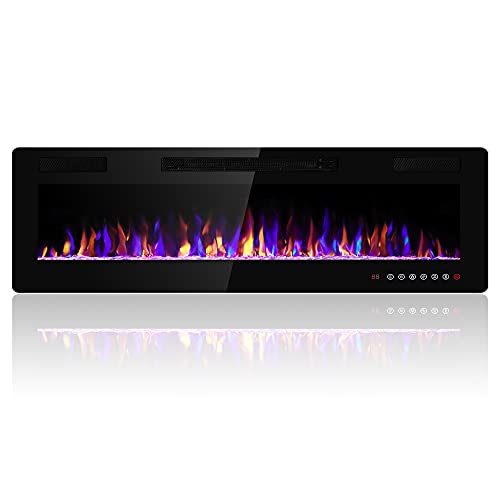
Electactic 60″ Electric Fireplace Insert
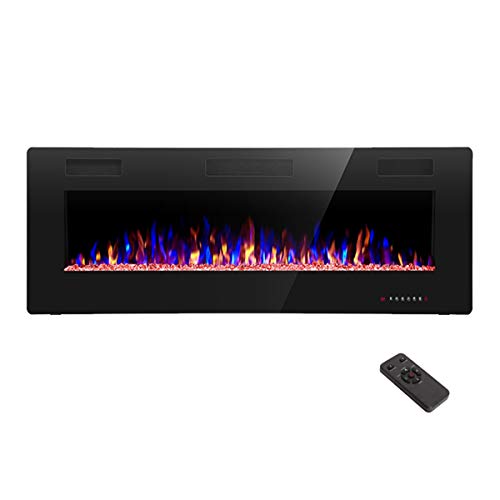
R.W.FLAME 50″ Electric Fireplace Insert

GLACER 28.5″ Electric Fireplace Insert
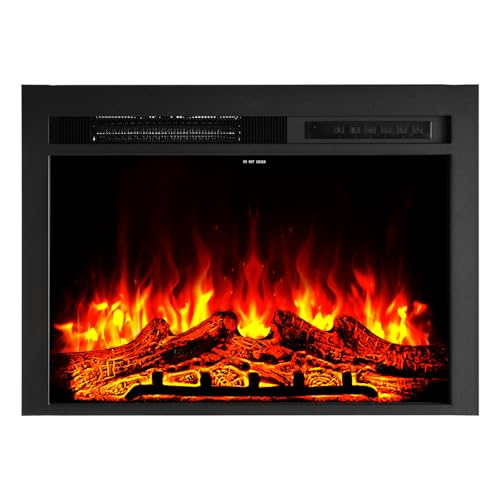
VEVOR 40″ Electric Fireplace Insert
What Makes the Most Realistic Recessed Electric Fireplace

The most realistic recessed electric fireplace combines advanced LED flame technologies with customizable effects to mimic real fire closely. These fireplaces use layered LED lights and reflective mirrors to create three-dimensional flames that flicker and dance like a natural fire.
Flame and ember color options vary by model, often including orange, red, blue, and even purple hues to match different fire moods. Brightness levels adjust so you can dim the flames for subtle ambiance or brighten them for a lively hearth effect.
A key feature is the ability to run flame effects independently of the heat. This means you can enjoy the visual warmth and cozy atmosphere year-round without the electric heater running, which saves energy and avoids overheating.
Additional effects, like crackling sound simulating burning wood and ember bed lighting, add depth to the experience. These features enhance realism by engaging multiple senses, making the fireplace feel more authentic.
Among top models, the Kentsky 45″ Electric Fireplace Insert stands out for balancing flame realism with efficient heat and user-friendly installation. Its flame colors and effects are vivid and adjustable, delivering that sought-after look and feel in a recessed design.
How to Choose the Right Size and Heat Output for Your Room
Choosing the right size insert depends on your room’s square footage and heating needs. Most recessed electric fireplaces offer heat outputs of 750 to 1,500 watts, roughly 2,500 to 5,000 BTUs, suitable for supplemental heating in rooms up to about 400 square feet.
For small rooms under 200 square feet, a 750-watt insert can provide sufficient warmth. Medium rooms up to 400 square feet typically need the full 1,500 watts. Larger living rooms will require additional heating sources, as these inserts aren’t designed to replace central heating.
These units work best as supplemental heaters, adding comfort and ambiance rather than being primary heat sources. If you rely solely on an electric fireplace insert in a large space, you may find it underpowered and inefficient.
Thermostat controls and adjustable heat settings help maintain consistent comfort while managing energy consumption. Setting the thermostat to your preferred temperature means the insert cycles on and off to avoid wasting power, keeping your room cozy without high electricity bills.
For example, a 1,500-watt heater running 8 hours a day consumes 12 kWh. At 17 cents per kWh, that costs about $2.04 per day to run. Using thermostat control reduces unnecessary run time, trimming that cost further.
When selecting your insert, match the heat output to your room size and consider whether supplemental heat meets your needs. If your space exceeds 400 square feet or lacks insulation, plan for additional heating methods.
The Kentsky 45″ Electric Fireplace Insert fits well in medium rooms, balancing heat and flame effects without excessive power draw. It’s a practical choice for those looking to transform their space with a recessed fireplace that heats efficiently and looks great.
For detailed sizing and heating advice, see supplemental heat and thermostat-controlled space heaters guidance in related pages.
Installation Requirements and Electrical Considerations
Recessed electric fireplace inserts can go into most interior walls, but the cavity depth and cutout dimensions must match the unit exactly. A typical insert needs a wall cavity of at least 4 inches deep; ultra-thin models like the R.W.FLAME 60-Inch require less depth, around 3.86 inches. Measure your wall before buying to avoid costly modifications.
You can choose between recessed, wall-mounted, or freestanding inserts. Recessed units save floor space and offer a sleek built-in look but need precise wall preparation. Wall-mounted models hang on brackets and require less construction work. Freestanding fireplaces just plug in and move anywhere but take up more room.
Most inserts plug into standard 120 V outlets, drawing up to 12.5 amps at 1,500 watts, so they usually don’t demand a dedicated circuit. However, if your home’s circuit is already near capacity or you plan to run multiple high-draw appliances, installing a dedicated circuit is safer and avoids tripping breakers. Confirm your breaker panel’s available capacity first.
Installing an insert under a television is common and safe if you maintain at least 12 inches of clearance above the fireplace to prevent heat damage. Keep all combustibles, including TV mounts and cables, at least 3 feet away from the front and sides of the unit. These fireplaces don’t require vents or chimneys because they run on electricity without combustion.
DIY installation is possible if you’re comfortable cutting drywall, measuring carefully, and dealing with electrical outlets. Make sure to follow the manufacturer’s installation template exactly. If you’re not confident with electrical work or wall framing, hire a licensed electrician or contractor to avoid wiring errors and structural issues.
Safety and Certification You Should Expect
Recessed electric fireplaces are safe for homes with children and pets when built-in safety features are standard. Look for overheat protection that shuts off the unit if it gets too hot, tempered glass fronts that resist shattering, and tip-over sensors if the model is freestanding or wall-mounted.
ETL certification means the fireplace has been tested to meet North American safety standards for electrical appliances. It’s your assurance that the insert complies with fire and electrical safety regulations, including proper insulation and wiring.
Because these fireplaces operate without burning fuel, they are smoke-free and vent-free, so they don’t impact indoor air quality or require chimneys or special ventilation. This makes them a clean heating option with no carbon monoxide risk.
Maintain safe clearance distances: keep combustibles like curtains, furniture, and electronics at least 3 feet away from the insert’s front and sides. The glass front stays warm but not dangerously hot. Still, supervise children around the unit to prevent burns or accidental damage.
Smart Features, Controls, and Long-Term Maintenance
Smart controls on recessed electric fireplace inserts offer convenience but vary in reliability. WiFi connectivity paired with Alexa or Google Home lets you adjust flames and heat remotely, yet app glitches and connection drops are common. If the app fails, most models include manual controls on a touchscreen panel or a physical remote as reliable backups.
Remote controls and touchscreens provide immediate access without the need for a smartphone. Look for units with clearly labeled buttons and a responsive panel to avoid frustration. These controls work independently of WiFi, so you can still operate the fireplace during network outages or app updates.
Maintenance extends beyond regular dusting. Inspect wiring at least twice a year to catch loose connections or wear that could cause failures or hazards. Dust buildup can block vents, reducing airflow and heat output, so blow out vents with compressed air or a vacuum hose attachment to keep performance steady.
Flame effects rely on LED bulbs or light strips that can dim or fail over time. Replacing bulbs every few years keeps the flames bright and realistic. Check your model’s manual for bulb type and replacement instructions — some require a technician, others are user-friendly. Neglecting this step can lead to dull or uneven flame appearance.
Routine cleaning of the glass front ensures the best viewing experience. Use a soft cloth and non-abrasive cleaner to avoid scratching. Avoid spraying liquids directly onto the fireplace to protect electronics. Most inserts require maintenance every six to twelve months depending on use and environment.