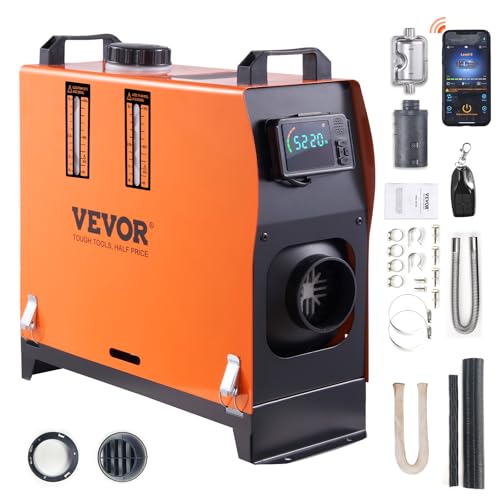
The best rated diesel heater for most readers is Product 5 because it pairs 8 kW output with Bluetooth control, 12/24V compatibility, and a built-in CO alarm. If you want fast heat for a garage, camper, or boat and you’re choosing on a short deadline, that’s the most balanced pick.
What to remember
Pick Product 5 if you want the safest all-around package: 8 kW output, Bluetooth control, 12/24V compatibility, and a built-in CO alarm.
Choose Product 4 if you need a 110V transformer in the kit and want a simpler plug-in option for a garage or basement setup.
Use Product 1 only for living spaces where a flame effect matters and the room is a legal indoor electric-heater job, not for diesel heat.
A 5 kW unit suits smaller sheds and tighter cabins; an 8 kW unit is the better bet for larger, leakier spaces.
Noise usually comes from the fuel pump and ducting, so look at the muffler, hose run, and mounting before you blame the heater itself.
Say your garage is 24 by 24 feet, the doors leak, and the thermometer sits near 20°F before sunrise. A 8 kW diesel air heater can move enough heat for that kind of space if you vent it correctly and size the ducting so the warm air actually reaches the room, not the floorboards.
The cleanest choice is still the one that matches your power, fuel, and noise limits. A heater with a good controller is nice; a heater that keeps carbon monoxide outside is the part that matters.
Best Rated Diesel Heater Picks
#1Best Overall
VEVOR 8KW 12/24V Diesel Heater
Best for Fast heat with flexible DC power and built-in CO monitoring
Product 5 is the strongest all-around pick because its 8kW output, DC 12-24V compatibility, and built-in CO alarm cover the needs most garage, RV, and camping users bring to this search. Bluetooth, remote, and display controls make preheating less of a cold-weather chore.
Heat output 8kWPower DC 12-24VFuel consumption 0.18-0.35L/hControls Bluetooth app, remote control, display panelSafety Built-in CO alarm
Why it made the cut
8kW output with 0.18-0.35L/h consumption
Works with DC 12V and 24V power
Built-in CO alarm with alerts or auto shut-off
Bluetooth app, remote, and display controls
Good to know
Runs at up to 75dB
Its 8kW output may be more than a small space needs
Skip it if Skip it if you only have a 12V setup and don’t need the extra power flexibility.
Best for Camping and vehicles at elevations up to 18,045 feet
Product 3 matches Product 5’s 8kW output and adds automatic altitude compensation up to 18,045 feet. Bluetooth control, a 32-foot remote, and a 5L tank make it a practical choice for high-elevation trips, provided your setup has 12V power.
Heat output 8KWPower 12VCoverage 215-269ft²/20-25m²Altitude adjustment Up to 18,045 feet/5,500 metersFuel tank 5L/1.3 gal
Why it made the cut
8kW output
Automatic altitude compensation to 18,045 feet
Bluetooth control and 32-foot remote
0.16-0.62L/h fuel consumption range
Good to know
Requires 12V power
The listed consumption range is wider than Product 5’s
Skip it if Skip it if your power system is 24V or you want built-in CO monitoring stated in the product data.
Best for Garages and campers that need 12V, 24V, or 110V input
Product 4 is the useful middle ground for people moving between a vehicle and a garage outlet. Its 12V/24V support and included 110V transformer avoid an extra power-conversion purchase, while the foldable handle and 5L tank suit portable use.
Heat output 5KWPower 12V/24V/110VFuel consumption 0.18-0.53L/HFuel tank 5LOperating temperature -40℉-104℉
Why it made the cut
Supports 12V, 24V, and 110V with included transformer
5KW output
Foldable handle for carrying
Fuel tank cover is designed to prevent oil spilling
Good to know
Less heat output than the 8KW picks
Fuel consumption is listed at 0.18-0.53L/h
Skip it if Skip it if you need 8KW output or automatic altitude compensation.
Best for Small indoor rooms with a nearby wall outlet
Product 2 is an electric backup, not a diesel heater, but its 1,500W ceramic element delivers heat in 2 seconds for spaces up to 200 square feet. The thermostat, 24-hour timer, tip-over shutoff, and ETL certification fit office or bedroom use better than a fuel-burning unit.
Heat output 1,500WCoverage Up to 200 sq.ftNoise 35dBTimer 24HSafety Overheat protection, 45° tip-over shutoff, ETL-certified
Why it made the cut
1,500W output with 2-second heat
Rated for spaces up to 200 square feet
35dB operation
45° tip-over shutoff and overheat protection
Good to know
Not a diesel heater
Needs a wall outlet
Limited to 1,500W output
Skip it if Skip it if you need off-grid heat or diesel fuel operation.
Best for Indoor rooms where supplemental heat and flame effects matter
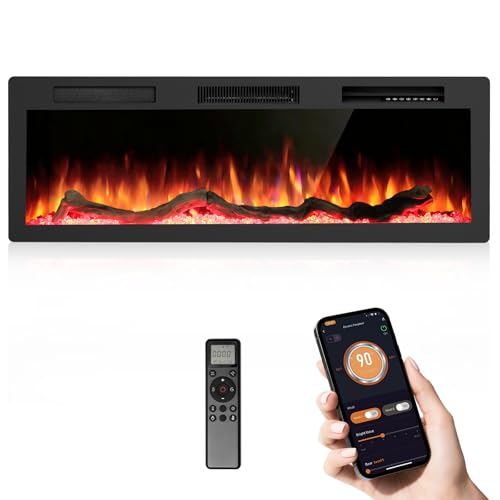
Product 1 is another electric alternative, aimed at indoor supplemental heating rather than portable diesel use. Its recessed or wall-mounted design, 750W/1500W modes, and remote, touch, smartphone, and Alexa controls make sense when appearance matters as much as heat.
Dimensions 50L x 17.32H x 5.71WHeating modes 750W/1500WCoverage Up to 400 square feetTemperature range 59-95℉Controls Remote, touch panel, smartphone, Alexa
Why it made the cut
750W and 1,500W heating modes
Supplemental heating for up to 400 square feet
Wall-mounted or recessed installation
Remote, touch, smartphone, and Alexa controls
Good to know
Not a diesel heater
Requires indoor installation and electrical power
Designed for supplemental zone heating
Skip it if Skip it if you need a portable heater for a vehicle, campsite, or garage.
The best rated diesel heater for your setup is the one whose output, fuel range, controls, noise profile, and power input match the space. A diesel heater for garage use usually needs more reserve than one for a camper, boat, or insulated shed.
Start with heat output: 5 kW is the smaller class in this group, while 8 kW is the larger class. A large diesel heater for garage use makes sense when the building leaks heat or has a high ceiling, but extra output won’t fix poor insulation. Check the listed fuel-consumption range too, because that determines how long a tank lasts and how often you’ll refill it.
Spec
What To Check
Why It Matters
Output
5 kW or 8 kW
Matches the space and heat loss
Power
12V, 24V, or 110V
Must match the available supply
Controls
Bluetooth app, remote, display, timer
Changes how easily you start and adjust heat
Temperature control
Thermostat-style setting
Cycles heat instead of running blindly
Noise
Pump, fan, and duct sound
Points to the part that needs attention
A diesel heater controller may be a Bluetooth app, handheld remote, display panel, or timer. Thermostat control is more useful than a simple on-off switch in a room you occupy for hours; a diesel heater timer helps preheat a vehicle or workshop before you arrive.
The quietest diesel heater still has several possible noises. The pump makes a regular tick, the fan makes a whir, and air moving through a narrow or poorly supported duct can rumble. A silent diesel heater is marketing shorthand, not a promise of absolute silence.
In short
Choose 5 kW for smaller, better-insulated spaces and 8 kW for larger or leakier ones. Match the heater to your available 12V, 24V, or 110V supply and choose controls you’ll actually use.
Match The Space
For a garage, camper, boat, shed, or room, check the installation instructions for that use and plan the exhaust route before buying. The VEVOR 8KW Diesel Heater, DC 12V/24V, Bluetooth APP Control, … suits shoppers who want higher output with app control; the LF Bros 5KW Diesel Heater, 12V/24V/110V Diesel Parking Air… covers more power-input situations.
Sizing And Running Cost
Yes, a diesel heater will heat your shed if its output matches the heat loss; a small insulated shed may suit the 2 kW class, while a leaky garage usually needs 5 kW to 8 kW. A campervan or boat often needs less heat than an open workshop, but insulation and drafts decide more than floor area alone.
Worked Example
Say a heater’s specification lists a low-to-high fuel rate of L to H litres per hour. Running it for 8 hours uses L × 8 to H × 8 litres. Use the same calculation with the actual range printed for your model, rather than treating the maximum rate as its all-night average.
Runtime8 hours
Low estimateListed low rate × 8
High estimateListed high rate × 8
For diesel heater garage setups, one larger unit is usually simpler than several smaller ones. Using multiple diesel heaters in garage space can work only when each unit has its own safe exhaust path and the room can handle the combined airflow; don’t merge exhaust pipes or assume one controller makes separate heaters a single system.
A 2 kW portable diesel heater fits a small insulated shed, compact cabin, or modest campervan better than a large unit running at the edge of its range. For a bigger shed, leaky garage, or drafty boat, 5 kW to 8 kW gives more useful reserve. Readers comparing van and RV options may also want best compact diesel heaters.
12V
Supply to verify before buying
A 12V heater needs a solid battery supply and wiring that can handle its startup load, including the glow plug. RV diesel heater battery consumption compared with a propane RV furnace depends on the exact blower, pump, controls, and startup cycle, so compare the electrical draw in both manuals rathe
The best diesel heater for shed use is therefore the smallest class that can cover the shed’s heat loss without running flat out all the time. For a boat, give equal attention to the available power system, duct route, and installation instructions; the warmest rating on the box is not a substitute for a workable fit.
Safety And Venting
A diesel heater must exhaust outside the occupied space, and its combustion-air intake needs a separate, unobstructed path. That applies in a garage, camper, cabin, boat, or roof-top tent; diesel exhaust contains carbon monoxide, which can build quickly in a small enclosure.
For a diesel heater fitting outside or in a garage, follow the model’s mounting instructions: keep the heater and hot exhaust clear of fuel, fabric, wood, and other combustibles, route the exhaust outdoors, and keep the combustion-air intake away from the exhaust outlet. A garage installation isn’t automatically safe just because the door is nearby. Ventilation requirements still matter.
The diesel heater air intake brings combustion air to the burner, while the diesel heater hose carries warmed cabin air or exhaust, depending on which hose the manual identifies. Keep those paths separate. Use duct hose rated for the heater’s temperature; ordinary dryer duct can soften, leak, shed material, or create extra noise if it isn’t approved.
Small Enclosures Need More Care
A diesel heater roof top tent or roof tent diesel heater deserves special caution. Never sleep with a heater running unless the exact heater, installation, and ventilation arrangement are approved for that use, and place a working carbon-monoxide alarm inside the occupied space. A camper diesel heater can be on while sleeping only when the manual allows it, the exhaust is sealed and outside, the intake and outlet stay clear, and the alarm works.
Before You Run It
Exhaust terminates outdoors and cannot re-enter through a door, window, vent, or fabric opening.
Combustion-air intake and exhaust outlet are separated and unobstructed.
Hot exhaust parts have the clearances required by the manual.
The heater is mounted where fuel spills and loose bedding cannot reach it.
A carbon-monoxide alarm is operating inside the occupied space.
Myth
Using heating oil in a diesel heater is always fine.
Fact
Use only the fuel listed by the manufacturer. If the manual doesn’t specifically allow heating oil, don’t improvise; different fuel properties can affect ignition, deposits, smoke, and safe operation.
Smart Controls And Power Options
A 12V diesel heater needs a stable 12V DC power source for its fan, fuel pump, and control board; diesel supplies the heat, but electricity runs the parts that make combustion usable. No electricity needed diesel heaters are not normal diesel air heaters.
A 12v diesel heater power supply can be a suitable battery system or the power source specified by the manufacturer, with wiring and protection sized for the heater. A weak or unstable supply can cause startup failures, shutdowns, or an incomplete cooldown, so don’t treat any random adapter as a power supply.
Support
What It Means
Example
12V DC
For vehicles, batteries, and other 12V systems
VEVOR 8KW Diesel Heater, DC 12V/24V, Bluetooth APP Control
24V DC
For compatible 24V vehicle or battery systems
VEVOR 8KW Diesel Heater, DC 12V/24V, Bluetooth APP Control
110V AC plus DC
Can support household AC when the specified power setup is used
Check the exact label and manual before connecting power; support varies by model.
A diesel heater controller handles the daily jobs: a five button diesel heater controller usually starts or stops the unit, adjusts heat or fan level, sets a diesel heater timer, and displays temperature or operating status. Button labels and timer behavior vary, so keep the manual nearby until the symbols stop looking like a tiny heating hieroglyph.
App Control Has Limits
Bluetooth control can preheat a vehicle or cabin before you enter, but it doesn’t replace outdoor exhaust routing, a clear intake, a carbon-monoxide alarm, or safe mounting. Product 5’s app control is useful only after those basics are right.
Choose Power First
For a battery-powered vehicle or camper, start with a heater that matches the vehicle’s DC voltage. For household operation, choose a model that explicitly supports the available AC or use the manufacturer-approved power arrangement; 12V/24V DC or household AC power use isn’t interchangeable by wishful thinking.
What To Do Before The First Cold Snap
Before ordering, confirm the space, power source, and exhaust route; a heater that fits the listing but not the installation is expensive storage. A “diesel heater air force heater” search usually means a forced-air diesel heater, which moves warmed air through a duct while sending combustion exhaust outside.
1
Match the use
A diesel heater for a rooftop tent or overlanding setup must stay outside the occupied shelter, with the warm-air duct entering and the exhaust kept safely away from openings. Choose an indoor-rated diesel air heater for occupied spaces; outdoor, patio, and construction heaters aren’t substitutes.
2
Confirm the power
Check the heater’s required voltage against the vehicle, battery, or power supply. Product 5 suits installations needing 12V or 24V DC and adds Bluetooth control, but the wiring and supply still need to support startup.
3
Plan the hardware
Choose the heater first, then the ducting, then the fuel line and fittings that match the heater and routing. The best fuel line is the supplied or specified fuel-rated line; don’t improvise with hose meant for water or air.
4
Route and mount it
Use the ducting size and bends allowed by the manual. Insulated diesel heater hose helps retain heat and protect nearby materials, while a solid mount reduces vibration. Noisy or weak heat often comes from crushed ducting, excessive bends, poor hose insulation, or a loose mount—not the kW number alone.
Before You Buy
Measure the heated space and identify where the warm-air outlet can point.
Confirm the available 12V, 24V, or other specified power source.
Mark a safe exhaust path outside the occupied space, away from doors and windows.
Check that the listing is an indoor-rated diesel air heater, not an outdoor unit.
If searching for “diesel heater air cncest,” verify the exact model’s voltage, controls, vent parts, and indoor rating before ordering.
First Run
Test the heater before the first cold night, with the exhaust outside and a working carbon monoxide alarm nearby. Stop if exhaust enters the space, the fuel connection leaks, or the unit overheats.
The buying order is simple: measure, choose output, check power, plan exhaust, then buy fittings.
Questions People Ask
What is the best rated diesel heater for a garage?
For most garages, Product 5 is the balanced pick because its 8 kW output suits larger or less-insulated spaces, and it adds Bluetooth control, 12/24V compatibility, and a built-in CO alarm. Size still depends on insulation and heat loss; an oversized unit may cycle more often.
Can you use a diesel heater in a garage overnight?
You can only do so if the heater is approved for that use and installed exactly as its manual requires, with combustion exhaust outside and a working CO alarm. Keep the heater, exhaust, and fuel lines clear of stored materials, and don’t run it unattended if the manufacturer prohibits that mode.
How much power does a 12V diesel heater need?
The exact draw depends on the heater and its operating stage, so use the manual’s wiring and fuse requirements rather than guessing from the heater’s BTU rating. Startup usually demands more from the battery than steady operation, while voltage drop can cause shutdowns or fault codes.
What is the quietest diesel heater?
There isn’t one universal quietest model because fan speed, fuel-pump clicks, mounting, and exhaust routing all affect noise. A unit with a low-output mode and a specified sound rating is the better comparison; mounting the pump on a rubber isolator can also reduce transmitted clicking.
Can I use heating oil in a diesel heater?
Use heating oil only if the heater’s manual explicitly approves that fuel. Otherwise, stick with the listed diesel fuel, since an unapproved substitute can cause poor combustion, deposits, smoke, or fuel-system damage.
Do diesel heaters turn themselves off when they reach room temperature?
Many diesel heaters reduce output or shut down when the thermostat reaches the set temperature, but the exact behavior varies by controller. After shutdown, the fan may keep running for a purge cycle to cool the heater and clear combustion gases; don’t cut its power during that process.