


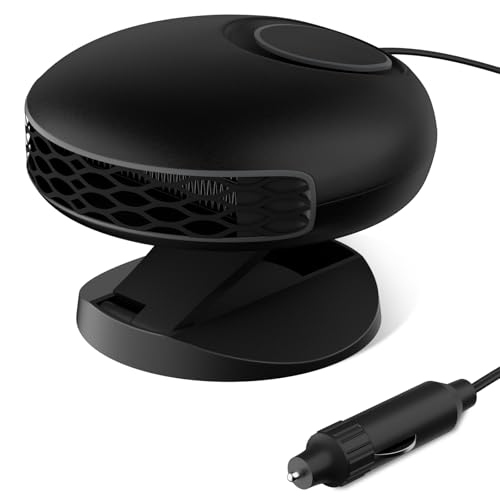
Say your garage measures 20 by 20 feet and you want a compact, energy-efficient heater to clear windshield fog and add cabin warmth without rewiring. A 12V PTC ceramic heater suits this well, offering self-regulating heat that won’t overheat or draw excessive current.
This guide highlights the best 12V PTC ceramic heaters for home and vehicle use, comparing power, safety features, and ease of installation to help you choose quickly and confidently.
12V PTC Ceramic Heater Comparison
| Model | Best for | Power (W) | Plug Type | Heating Modes | Safety Features | Price |
|---|---|---|---|---|---|---|
| Blytra 12V 200W Car Heater Defroster | Best All-Round | 200W | 12V cigarette lighter | Heating and ventilation | Fuse on plug, heat resistant housing | Check today’s price |
| CYDZSW 12V 800W Car Heater Defroster Kit | Most Powerful | 800W | Direct battery wiring | Heating only | Overload and insulation protection | Check today’s price |
| QEPJO 12V 200W Portable Car Heater Fan | Quick Heat & Cool | 200W | 12V cigarette lighter | Heating and cooling | Built-in fuse | Check today’s price |
| GDBadais 12V 150W Portable Car Heater Fan | Compact & Versatile | 150W | 12V cigarette lighter | Heating and cooling | — | Check today’s price |
| Blytra 12V 150W Car Heater Defroster | Reliable Budget Pick | 150W | 12V cigarette lighter | Heating and fan | Heat resistant ABS housing | Check today’s price |
Best 12V PTC Ceramic Heaters for Home and Vehicle Use
Blytra 12V 200W Car Heater Defroster
CYDZSW 12V 800W Car Heater Defroster Kit
QEPJO 12V 200W Portable Car Heater Fan
GDBadais 12V 150W Portable Car Heater Fan
Blytra 12V 150W Car Heater Defroster
How 12V PTC Ceramic Heaters Deliver Safe, Steady Heat
12V PTC ceramic heaters provide steady heat safely by automatically limiting their temperature as they warm up. Their ceramic elements increase resistance with heat, reducing current flow and preventing overheating without extra controls.
The core of these heaters is a ceramic heating element made from materials like barium titanate. As the element heats, its electrical resistance rises, cutting power draw and preventing hot spots. That means the heat spreads evenly across the surface, avoiding the burn risks and wear that coil heaters can face.
Because the ceramic element controls temperature internally, you don’t need external thermostats or switches to manage safety. This makes 12V PTC heaters inherently safer than traditional wire-based models, especially in confined spaces like vehicles or small rooms.
Beyond safety, the ceramic construction resists bending, moisture, and chemical exposure much better than metal coils. That durability helps these heaters last longer under typical home or automotive conditions, saving you from early replacements.
Energy efficiency is another strength. The heater uses only the power needed to reach and maintain its set temperature. It won’t keep pulling full current once warmed, so you get steady heat without wasted electricity. That’s why 12V PTC ceramic heaters are a solid choice for running off batteries or low-voltage systems.
Which 12V PTC Heater Fits Your Space and Power Needs
12V PTC ceramic heaters usually come in power ratings from about 150 watts to 800 watts, which affects how quickly and effectively they heat your space. Lower wattage models, like 150W or even 5W units, suit small areas or gentle warming, while 800W heaters can clear frost or warm larger zones faster but draw more current.
PTC heaters at 12 volts deliver reliable heating with lower electrical stress and improved safety compared to higher voltage units. Their self-regulating ceramic stones ensure even heat spread without hot spots, making them suitable for small to medium home spaces with limited power supply.
Before buying, confirm your vehicle or battery voltage matches the heater’s 12V requirement. Using a 12V heater with a mismatched voltage can cause poor performance or damage. Portable 12V ceramic heaters, like the Blytra 12V 200W Car Heater, fit most cars and trucks, offering a good blend of heat and efficiency.
For example, a 12V 200W portable car heater is popular because it runs safely off a vehicle’s electrical system and provides steady warmth without overloading circuits. If you need faster frost clearing, consider an 800W model, but be mindful it will draw more current—up to roughly 66.7 amps at 12 volts, which requires a robust electrical setup.
Smaller 5W 12V ceramic heaters exist, but they’re for very limited heat output and won’t replace more powerful models. Choose the wattage that matches your space and power source to avoid underheating or straining your battery. If you’re unsure, start with a mid-range model around 150 to 200W and adjust based on your heating needs.
Check out our detailed picks to find the best PTC ceramic heater 12V for your application, balancing power, size, and vehicle compatibility for efficient, safe heating.
Installation and Integration Tips for 12V PTC Heaters
Installing a 12V PTC heater involves connecting it to a compatible DC power source and ensuring proper airflow around the heater for effective heat distribution. Integration with existing home systems may require a DC-DC converter or dedicated 12V supply, depending on your setup.
To install a 12V ceramic heater, simply connect the plug to the socket ensuring the polarity matches — positive to positive and negative to negative — to prevent damage to the heater’s circuitry.
Some models include built-in fuses or circuit protection which guard against electrical faults or short circuits, reducing fire or damage risk during use.
Wiring a 12V heater directly into your vehicle or home system requires attention to polarity and circuit capacity; use appropriate gauge wire and connect via a fuse to the positive lead for safety.
Integrating a 12V PTC heater with an existing home heating system usually isn’t practical because these heaters run on low voltage DC power, unlike standard home systems that use mains voltage AC; however, they can supplement heat in specific zones powered by a 12V source like a battery bank or solar setup.
Running Costs, Lifespan and Environmental Impact
12V PTC ceramic heaters are energy efficient thanks to their self-regulating ceramic elements that adjust electrical resistance as they heat, preventing energy waste from overheating.
With proper use, these heaters typically last more than three years — their durable ceramic stones resist bending, moisture, and chemical damage better than traditional coil heaters.
Their low power draw, often between 150 and 800 watts, minimizes battery drain in vehicles or off-grid systems, making them suitable for extended use without rapidly depleting power reserves.
Unlike fuel-burning heaters, 12V PTC ceramic heaters produce no toxic emissions since the ceramic elements heat electrically without combustion, and many components are recyclable, reducing environmental impact.
Efficiency numbers vary, but a 12V 200W heater running for 8 hours consumes 1.6 kWh; at 17 cents per kWh, that’s about 27 cents per day — a low operating cost compared to other heating options.
The environmental benefits come from cleaner operation and the longer lifespan of 12V PTC heaters, which means fewer replacements and less waste, plus many use recyclable materials.
If your setup includes solar panels or batteries, pairing with a 12V PTC heater can further cut your carbon footprint by using renewable energy to power efficient, safe heat.
To learn more about how ceramic elements work and stay efficient, see ceramic element space heaters.
What Safety Certifications and Features Matter Most
Ceramic heaters, including 12V PTC models, are generally safe for indoor use when chosen and operated properly. Their self-regulating ceramic elements prevent overheating by increasing electrical resistance as the temperature rises, effectively minimizing fire risks without needing external controls.
Look for heaters with built-in fuses and overheat protection. These features act as vital safeguards by cutting power if the heater overheats or if electrical faults occur, preventing damage or hazards before they escalate.
Certifications like UL or ETL listings show that a heater complies with established safety standards. These third-party approvals mean the product has passed rigorous testing for electrical safety, fire resistance, and durability. Avoid models without such certifications, as their safety claims are unverified.
Avoid using 12V PTC ceramic heaters in unventilated or wet environments unless the manufacturer explicitly rates them for those conditions. Moisture can degrade electrical components or cause shorts, and poor ventilation can trap heat or fumes, increasing risks.
Checklist Before Buying or Installing Your 12V PTC Heater
Confirm your power source matches the heater’s 12V DC requirement. Using the wrong voltage risks damaging the heater and voiding warranties.
Choose a heater wattage that suits your heating needs. For example, a 150W model works for small spaces or vehicles, while 800W suits larger areas. Matching wattage avoids under- or over-heating and keeps energy use efficient.
Ensure the heater includes built-in safety features like fuses, overheat protection, and tip-over switches where applicable. These protect you from electrical faults and accidents.
Plan the installation location carefully. Place the heater where airflow is free and clear of obstructions, with at least 3 feet clearance from flammable materials. Avoid damp or enclosed spots unless rated for those conditions.
Test the heater before regular use. Power it up to check steady heat output, listen for unusual noises, and verify that safety cut-offs work. Early testing prevents surprises on cold nights.
Maintain your 12V PTC heater by cleaning dust and debris from vents with a soft brush or compressed air. Avoid water or solvents that can damage ceramic elements. Regular cleaning preserves airflow and heating efficiency.
Ceramic heaters rarely short out if intact, but inspect wiring and plugs periodically for cracks or corrosion. Replace damaged parts immediately to prevent shorts and fire risks.
Frequently Asked Questions
What is a 12V PTC ceramic heater and how does it work?
Are 12V PTC ceramic heaters safe for indoor and vehicle use?
How do 12V PTC heaters compare to higher voltage models in efficiency?
Can I plug a 12V PTC ceramic heater directly into my car’s cigarette lighter?
What is the typical lifespan of a 12V PTC ceramic heater?
How do I maintain and troubleshoot my 12V PTC ceramic heater?
Are 12V PTC ceramic heaters suitable for outdoor home heating?

HeaterGuides covers home heating, water heating and HVAC: how the equipment works, what it costs to run, and how to use it safely.
