Top Best Portable Space Heaters for Large Rooms Reviewed
On this page 8 sections
- Portable Space Heater Comparison
- Top Portable Space Heaters for Large Rooms
- Choose Heaters With Enough Power and Wide Heat Distribution
- Check Safety Features Especially for Homes with Children or Pets
- Compare Running Costs and Energy Efficiency for Large Spaces
- Understand Noise Levels and Comfort for Long-Term Use
- Avoid Common Mistakes That Waste Energy and Reduce Comfort
- Frequently Asked Questions
Portable Space Heater Comparison
| Rank | Model | Best for | Power (W) | Oscillation Angle | Noise Level (dB) | Price |
|---|---|---|---|---|---|---|
| 1 | DREO 16 Inch Electric Heater for Large RoomBest for Large Rooms | Large rooms up to 250 sq.ft needing fast, quiet heat | 1500 | 70° | 34 | Check price |
| 2 | DREO Indoor Heater with Thermostat, 1500WQuiet & Efficient | Energy-conscious users wanting quiet, uniform heat | 1500 | 70° | 34 | Check price |
| 3 | DREO Portable Electric Heater with ThermostatVersatile Controls | Users wanting multiple heat modes and remote control | 1500 | — | 34 | Check price |
| 4 | GiveBest Portable Space HeaterQuiet & Portable | Small to medium rooms needing quiet, dual-mode heating | 1500 | — | — | Check price |
| 5 | BLACK+DECKER Personal Ceramic HeaterPersonal Use | Small spaces and personal desks needing quiet warmth | 1500 | — | — | Check price |
Choosing a portable space heater that can effectively warm a large room means balancing heating power, safety, and energy use. Many buyers pick models that are too small or noisy, leaving them cold or paying too much to run the heater.
This guide reviews top heaters designed for large rooms, comparing their specs and features, and explains how to avoid common mistakes that waste money and reduce comfort.
Top Portable Space Heaters for Large Rooms
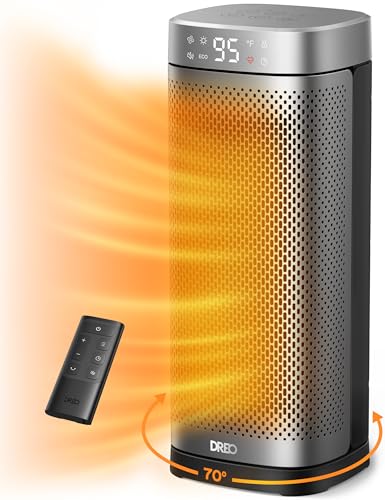
DREO 16 Inch Electric Heater for Large Room

DREO Indoor Heater with Thermostat, 1500W

DREO Portable Electric Heater with Thermostat

GiveBest Portable Space Heater

BLACK+DECKER Personal Ceramic Heater
Choose Heaters With Enough Power and Wide Heat Distribution

The DREO 1500W Portable Space Heater is the sensible size for one large room, provided the room is reasonably insulated. At 120 volts, 1,500 watts draws about 12.5 amps, close to the practical limit of a standard 15-amp household circuit. A budget, Walmart, battery-powered or solar portable heater may cost less to buy, but lower wattage usually means slower heating rather than cheaper heat per hour.
Room size matters more than the word “large” on the box. A 20 × 15-foot living room is 300 square feet, and drafts, ceiling height, windows and insulation can make that room feel much bigger to a heater. The DREO’s 70° oscillation sweeps warm air across more of the room instead of concentrating it in one hot patch beside the heater.
Choose the DREO for a living room, office or bedroom where you want quick fan-forced heat spread across a seating area. Its 70° swing and 34dB operating noise address two common complaints about portable heaters: uneven warmth and a fan that becomes the loudest thing in the room. Aim the airflow into the room, leave clear space around the unit, and plug it directly into a wall outlet.
An oil-filled radiator is the better fit if you prefer silent, steady heat and can wait longer for warm-up; it heats its oil first and usually stays warm after the thermostat clicks off. It generally won’t distribute heat as broadly because it doesn’t oscillate or push air. For more large-room options, compare these top 5 electric heaters for large rooms by coverage and heat distribution.
 Winter Heating Bill CutterSee what every heater in your home really costs, heat the rooms you use, and cut the waste in 30 days.Cost-per-hour tables for every heaterThermostat schedule and draft-proofing planRunning-cost and bill calculator (Excel)
Check Safety Features Especially for Homes with Children or Pets
Essential safety features for portable space heaters include tip-over switches and overheat protection. Tip-over switches automatically cut power if the heater falls, preventing fire hazards from overheating surfaces or flammable materials. Overheat protection shuts off the heater if internal temperatures exceed safe limits, guarding against component damage and fire risk.
Look for heaters with tip-over switches and overheat protection, especially if you have kids or pets. The tip-over switch cuts power immediately if the heater falls, preventing fires. Overheat protection shuts the heater down if internal temperatures get too high. Models with cool-to-touch exteriors or low exhaust temperatures are safer around curious hands and paws. Remote controls help keep the heater on the floor and out of reach, reducing accident risks.
UL, ETL, or CSA certification means the heater has passed rigorous safety testing by independent labs. These certifications cover electrical safety, fire resistance, and operational reliability. Always look for one of these marks before buying, as uncertified heaters may lack basic safeguards.
Remote controls add a layer of safety by letting you operate the heater without bending down or reaching near hot surfaces. You can turn the heater on or off, adjust temperature, or change oscillation settings from a distance, reducing the chance of accidental contact or tipping.
Tip-over switches work through a built-in sensor that detects when the heater is not upright. It immediately cuts power to the heating elements. Overheat protection uses a thermal sensor inside the unit to monitor temperature; if it rises above a preset threshold, the heater shuts off until it cools.
For large rooms, where heaters may be placed on the floor or in less visible spots, these safety features are even more critical. Always position heaters on stable, level surfaces away from foot traffic. Never leave a portable heater running unattended or while sleeping, unless the model explicitly states it is designed for continuous operation.
Compare Running Costs and Energy Efficiency for Large Spaces
Running costs depend on power use and electricity rates. A 1,500 W heater running 8 hours daily uses 12 kWh. At 17 cents per kWh, that’s about $2.04 a day, or $61 a month. Efficiency varies little among electric heaters, but choosing models with thermostats and timers can reduce waste.
Smart heaters can cut those costs by switching to ECO modes that dial power down to about 1,000 watts or cycle the heater on and off to hold a set temperature rather than running full blast.
Running costs depend mainly on wattage, usage time, and electricity rates. For example, a 1,500 W heater running 8 hours daily uses 12 kWh. At 17 cents per kWh, that adds up to about $2.04 per day. Some heaters offer eco or smart modes that adjust power to maintain temperature, cutting energy use. Oil-filled radiators hold heat longer after switching off, which can reduce run time. Drafty or poorly insulated rooms need more energy to maintain warmth, so consider sealing leaks first.
Fan-only modes are useful when you want air circulation without heat, like in shoulder seasons. They pull less power but don’t add to heating costs.
Scheduling features let you heat rooms only when needed — say, just before you arrive home or during evening hours — which further reduces daily energy consumption.
Energy consumption varies among portable heaters mostly based on wattage, thermostat accuracy, and operational modes. Models with smart controls and eco settings clearly use less power across a heating season.
Understand Noise Levels and Comfort for Long-Term Use
The DREO 1500W Portable Space Heater is a strong comfort pick for a living room or home office because its listed noise level is 34 dB and its 70° oscillation spreads warm air instead of leaving one hot spot. That rating is quiet on paper, though you’ll still hear the fan and airflow in a silent bedroom.
For long sessions, the thermostat matters as much as the decibel rating. Set your target temperature and let the heater cycle instead of running at full power constantly; the fan and heat output pause as the room reaches the setting, then return when it cools. If automatic temperature control is your priority, compare room heaters with thermostats before buying.
Oscillation helps when you’re sitting off to one side of the heater, since the 70° sweep sends warmth across a wider section of the room. Keep the heater on a level, open floor rather than beside your chair or under a desk, where a narrow stream of hot air can feel harsh while the rest of the room stays cool.
An oil-filled radiator is quieter because it has no fan, but it responds more slowly; a fan heater such as the DREO feels faster and usually makes more sound. Choose the DREO for quick warmth and wider distribution, but don’t treat a quiet 34 dB rating as permission to leave it running unattended or overnight unless the manual specifically allows that use.
Avoid Common Mistakes That Waste Energy and Reduce Comfort
Placing your heater improperly wastes energy and lowers comfort. Avoid blocking airflow by keeping at least 3 feet clear around the heater. Position it near where you spend time but not directly under vents or drafts that carry heat away. On cold floors, raise the heater slightly to improve circulation. Using oscillation helps distribute heat evenly, preventing hot and cold zones. Regularly clean dust from grills and fans to maintain efficiency and prevent overheating.
Oil-filled radiators keep heating after power off by radiating stored heat slowly, making them quieter and better at steady warmth in large rooms than most ceramic heaters, which rely on fans for direct heat and cool quickly when off.
Remote controls add safety and convenience by letting you adjust settings without walking over to a hot unit, reducing burn risk and helping manage comfort from a distance—especially useful in large rooms where heaters sit on the floor.
Choosing a heater too small for the room means running it at full power for longer periods. For example, a 1,000-watt heater in a 250-square-foot room uses more energy over time than a 1,500-watt model that heats faster and cycles off sooner.
Placing a heater in a corner or behind furniture blocks airflow and heat distribution. The warm air pools in one spot instead of spreading, raising runtime and electricity use without making the room feel warmer.
Manual controls can waste energy because they don’t maintain temperature precisely. Thermostats and ECO modes cycle the heater on and off to keep the room at a steady temperature, cutting unnecessary electricity consumption.
Checking safety features matters, especially with kids or pets. A tip-over switch shuts the heater off if knocked down, and overheat protection prevents fires by cutting power when surfaces get too hot. Avoid models with hot exhaust outlets that can cause burns.