Top Picks for the Most Efficient Point of Use Water Heater
Joye
Updated September 24, 2026 14 min read
Quick answer
Rheem RTEX-06T is the best pick for most efficient point of use water heating, offering on-demand hot water with precise temperature control and compact size that fits tight spaces while saving energy.
What to remember
Tankless electric point of use heaters like the Rheem RTEX-06T save energy by heating water only on demand and fit in tight spaces.
Mini-tank heaters provide instant hot water with simple plug-in installation but have standby losses and limited capacity.
Sizing a point of use heater means matching flow rate (GPM) to fixture demand; oversizing wastes energy, undersizing causes cold water.
Electric tankless models often need upgraded wiring and a dedicated breaker; check your panel before buying.
Look for UL listing and Energy Star certification to ensure safety and efficiency.
Point of use water heaters deliver hot water right where you need it, cutting wait times and water waste. They come mainly as tankless electric models or mini-tank units, each with trade-offs in capacity, efficiency, and installation.
Many believe tankless models always save the most energy. That’s partly true: they avoid standby heat loss but can require costly electrical upgrades and may struggle with multiple simultaneous demands. Mini-tanks hold a small reserve, easing peak needs but use some energy keeping water warm.
Best Point of Use Water Heaters for Efficiency and Convenience
#1Most Efficient
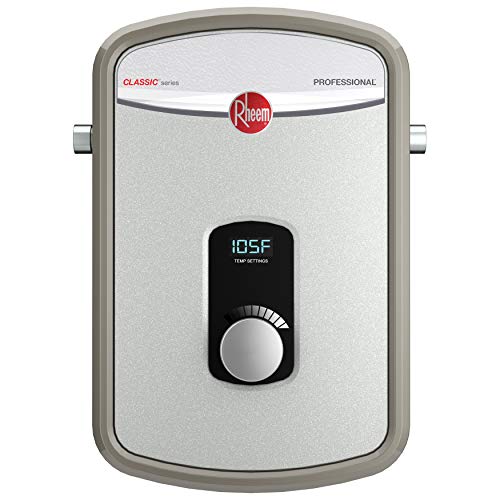
Rheem RTEX-06T Tankless Electric Water Heater
Best for Compact spaces needing precise on-demand hot water
The Rheem RTEX-06T delivers endless hot water on demand with precise thermostatic control within 1 degree of your setting. Its compact size saves space by being 90% smaller than traditional tanks, making it ideal for tight spots. It only heats water when you use it, cutting energy waste for anyone wanting efficient, reliable point-of-use heating.
Power 6.5 kWFlow Rate —Tank Capacity TanklessElectrical Requirements 240V
Why it made the cut
Consistent temperature control
Compact and space-saving design
Energy efficient — heats only when needed
Good to know
Requires 240V power supply
Lower flow rate limits multiple simultaneous uses
Skip it if Skip if you need a larger tank capacity or only have 120V outlets available.
Rheem 11kW Multi Fixture Tankless Electric Water Heater
Best for Multiple fixture use needing higher flow rates
This Rheem model supports multiple fixtures with a higher flow rate of up to 2.68 GPM and an 11 kW power rating. It uses digital thermostatic controls adjustable in 1-degree increments, letting you dial in precise temperatures. It suits homes with 240V power and a panel that can handle a 50-amp breaker for reliable on-demand hot water across several taps.
Best for Users seeking a simple, durable tankless option
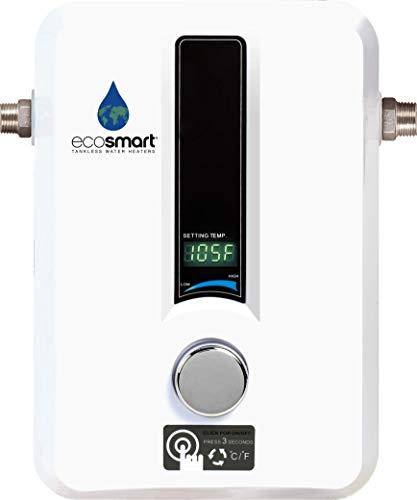
The EcoSmart ECO 8 stands out for durability and ease of use, offering a straightforward electric tankless design. While detailed specs are limited, it suits those who want a reliable, low-maintenance heater with an 8 kW rating. It’s a practical choice if you want a basic tankless heater without complex installation requirements.
Power 8 kWFlow Rate —Tank Capacity TanklessElectrical Requirements —
Why it made the cut
Durable construction
Simple operation
Compact size
Good to know
Limited detailed specs
Manufactured in China — some may prefer domestic brands
Skip it if Skip if you need precise temperature control or detailed performance specs.
Best for Small sinks needing instant hot water with tank capacity
This ThermoMate model offers 4 gallons of ready hot water with fast recovery and a 99% efficient Incoloy 800 heating element that resists corrosion. It plugs into a standard 120V outlet, making it easy to install under a sink or cabinet. It’s a good fit when you want instant hot water but prefer a small tank over tankless units.
Power 1.44 kWFlow Rate —Tank Capacity 4 gallonsElectrical Requirements 120V
Why it made the cut
Fast recovery with 4-gallon capacity
Corrosion-resistant heating element
Plug-in 120V installation
Good to know
Lower flow compared to tankless
Larger footprint than tankless heaters
Skip it if Skip if you want tankless efficiency or only have very limited space.
ThermoMate 2.5 Gallon Mini Tank Water Heater ES250
Best for Very small point-of-use needs with 120V plug-in
The ThermoMate 2.5 gallon tank heater provides instant hot water with a compact size that fits tight spots. It features a corrosion-resistant Incoloy 800 heating element and plugs into a standard 120V outlet. This model suits kitchens or bathrooms where only a small volume of hot water is needed quickly and conveniently.
Power 1.44 kWFlow Rate —Tank Capacity 2.5 gallonsElectrical Requirements 120V
Why it made the cut
Compact size for tight spaces
Corrosion-resistant heating element
Plug-in 120V convenience
Good to know
Limited tank capacity
Lower power and slower recovery than larger models
Skip it if Skip if you need more hot water capacity or tankless operation.
Point of Use Water Heater Types Ranked by Energy Efficiency
The most efficient electric point of use water heaters are tankless models that heat water on demand, eliminating the standby heat loss that mini-tank units always have.
Tankless water heaters do not store hot water but heat it only when you open the tap. That means no energy is wasted keeping water warm when you’re not using it. Electric tankless units usually have a Uniform Energy Factor (UEF) ranging from about 0.8 to 0.99, with higher values indicating better efficiency.
Mini-tank water heaters, by contrast, store a small volume of hot water—typically 2 to 7 gallons—in an insulated tank. These units often reach around 98% thermal efficiency because they heat water efficiently, but they still lose heat constantly through the tank walls, which means energy is spent maintaining the temperature even when there’s no demand.
Gas tankless water heaters with condensing technology achieve even higher efficiencies by recycling heat from exhaust gases. However, that technology is mostly used in whole-house units rather than point of use models, so it’s less relevant here.
Electric mini-tanks are simpler to install since they generally require only a standard electrical circuit and no special wiring, but they don’t match the on-demand efficiency of electric tankless heaters.
Type
Thermal Efficiency
Standby Loss
Installation Complexity
Electric Tankless
80–99% (UEF)
None
Requires appropriate circuit capacity
Electric Mini-Tank
~98%
Yes, continuous heat loss
Simple, standard circuit
Gas Tankless with Condensing
Up to 95%+
None
Complex; venting and gas line needed
Efficiency and Features of Point of Use Water Heaters
How To Size a Point of Use Water Heater for Single Fixtures
Sizing a point of use water heater correctly means matching its hot water output to the flow rate of the fixture it serves, avoiding wasted energy or cold water.
Most kitchen faucets use about 1.5 gallons per minute (GPM), while bathroom sink faucets typically flow between 0.5 and 1 GPM. Tankless models specify a maximum flow rate they can heat effectively, while mini-tanks list their tank volume and recovery rate—the speed at which they heat new water.
Oversizing a heater raises upfront and operating costs without adding comfort, while undersizing leads to disappointing cold water during use.
Example Sizing for a Bathroom Sink
Say you have a 12 by 14 ft bathroom with a sink that needs about 1 GPM hot water flow. You want a point of use heater that at least meets this flow rate to avoid temperature drops when running hot water.
A compact electric tankless unit with a max flow of 1.5 GPM fits nicely here, delivering hot water on demand without standby losses. Alternatively, a mini-tank with a 2–3 gallon capacity and a recovery rate matching or exceeding 1 GPM can provide brief bursts of hot water but will use extra energy keeping water warm between uses.
If you expect multiple fixtures to run simultaneously, add their flow rates together to find the total demand, then size your heater accordingly. For a single fixture, match the heater’s max flow or volume closely to that fixture’s typical flow.
Sizing Checklist for Single Fixture Water Heaters
Measure or estimate the fixture’s maximum flow rate in GPM
Choose tankless models with a max flow rate at or above this number
For mini-tanks, pick a volume and recovery rate that covers peak usage
Avoid oversizing to keep energy use and installation costs down
Consider simultaneous fixture use if applicable
Correct sizing helps you get the most efficient electric water heater for your needs, balancing cost, performance, and energy use without compromise.
Electrical Requirements for Electric Tankless Under-Sink Heaters
Yes, electric tankless under-sink water heaters often require electrical upgrades because they usually need 240 volts, a dedicated circuit breaker, and heavy gauge wiring to handle their high current draw.
Typical units rated around 6.5 kW draw roughly 27 amps at 240 V, which means they need a dedicated breaker of at least 30 amps. Larger 11 kW models demand even more power and require a 50 amp breaker to operate safely without tripping.
Before buying, check your household electrical panel’s capacity and available breaker slots. Many older homes don’t have the spare capacity or wiring gauge needed for these units, so you may need an electrician to upgrade your panel or install new circuits.
Model Power
Voltage
Current Draw
Breaker Size
6.5 kW
240 V
27 A
30 A
11 kW
240 V
46 A
50 A
Typical electrical requirements for electric tankless under-sink heaters
In contrast, mini-tank water heaters plug into a standard 120 V outlet drawing under 15 amps, so they usually don’t require electrical upgrades. That makes installation simpler and less costly, especially in retrofit situations.
Installation Complexity
Electric tankless under-sink units often demand rewiring and panel upgrades that add to installation cost and complexity. Don’t underestimate this step—improper installation risks tripped breakers and safety hazards.
Electrical Upgrade Checklist Before Buying
Confirm your main panel has enough capacity for a new 30 or 50 amp breaker
Check if existing wiring supports heavier gauge cables (8 or 6 AWG typically)
Verify available breaker slots for dedicated circuits
Consider hiring a licensed electrician for assessment and installation
Maintenance Needs for Point of Use Water Heaters
Point of use water heaters need regular maintenance to keep running efficiently and extend their lifespan.
Electric tankless units require periodic descaling in areas with hard water. Mineral buildup inside the heat exchanger reduces efficiency and flow rate. Flushing the system with a vinegar solution or descaling agent every 6 to 12 months helps prevent this.
1
Flush the Heater
Turn off power and water supply, connect hoses to flush out sediment and scale deposits regularly.
2
Inspect Anode Rod (Mini-Tanks)
Check the anode rod annually to prevent tank corrosion; replace it if heavily corroded.
3
Test Temperature and Pressure Valve (Mini-Tanks)
Lift the valve lever to ensure it releases water properly, preventing overpressure issues.
4
Check Heating Elements and Sensors
Inspect electric elements and temperature sensors as per manufacturer instructions to detect faults early.
Mini-tank models also require monitoring of the glass-lined tank’s condition and the anode rod that protects it from corrosion. Regular inspection and flushing remove sediment that settles at the bottom.
Maintenance costs are generally modest but vary with water hardness and frequency of use. Hard water areas may see increased descaling and part replacement frequency.
Maintenance Tip
Installing a water softener or a scale inhibitor upstream reduces mineral buildup and cuts maintenance needs.
Following the manufacturer’s maintenance schedule preserves efficiency and helps avoid costly repairs down the line. Neglecting maintenance can shorten the heater’s service life and increase energy bills.
Point of Use Water Heaters and Multiple Simultaneous Hot Water Demands
Point-of-use water heaters usually can’t handle multiple simultaneous uses well because they have strict flow rate or storage limits. Tankless models have a maximum flow rate, often between 2 and 4 gallons per minute (GPM), beyond which the water temperature falls as the unit struggles to heat enough water quickly.
Mini-tank heaters store only a few gallons—typically 2 to 4—and once that hot water is depleted, you must wait for the tank to recover. Recovery rates vary but are generally too slow to sustain multiple fixtures running at once.
For example, a 2.68 GPM tankless heater can usually supply one or two fixtures but can’t keep up with a full bathroom and kitchen running simultaneously. If a shower uses about 2 GPM and a kitchen faucet 1.5 GPM, that’s 3.5 GPM—over the 2.68 GPM limit—resulting in cooler water or reduced flow.
Worked example
Say your household wants to run a shower and kitchen sink at the same time. With a 2.68 GPM heater, the shower alone nearly maxes the flow. Add the faucet, and the heater can’t keep water hot at both points simultaneously, causing a temperature drop.
Tankless flow rate2.68 GPM
Shower flow2 GPM
Kitchen sink flow1.5 GPM
Total flow3.5 GPM (exceeds heater max)
Large households or homes with high peak demand usually need a whole-house water heater or multiple point-of-use units distributed to meet simultaneous needs. Installing several compact heaters near heavy-use fixtures can keep water hot without oversizing any single unit.
Think about your peak usage patterns before buying. If people often run showers, faucets, and appliances at once, a single point-of-use heater won’t suffice. Check the flow rate and tank size specs relative to your fixtures’ combined demand to avoid unexpected cold water.
Consider these before choosing
Number of fixtures served simultaneously
Flow rate of each fixture (GPM)
Heater’s max flow rate or tank capacity
Recovery rate for mini-tank models
Whether multiple units or a whole-house system might be better
Myth
Tankless water heaters always provide enough hot water for every demand
Fact
Tankless units have max flow limits; exceeding them reduces output temperature, causing lukewarm water when multiple fixtures run simultaneously.
Questions People Ask
What is a point of use water heater?
A point of use water heater is a compact unit installed near a single fixture, like a sink or shower, to provide hot water instantly without running pipes from a central heater. It reduces water waste and energy by limiting heat loss in pipes and heating only what you need at that spot.
What are the benefits of a point of use water heater?
Point of use water heaters save water and energy by delivering hot water right where you need it, cutting down wait time and heat loss in pipes. They also reduce the demand on your main water heater and can be easier to install in tight spaces or additions without extensive plumbing.
How do I choose the best point of use water heater?
Choosing the best point of use water heater means matching its capacity and flow rate to the fixture’s demand, considering fuel type, installation space, and electrical requirements. Look for models with high energy efficiency ratings and features like precise temperature control to avoid overheating and wasted energy.
Are electric tankless water heaters more efficient than mini-tanks?
Electric tankless water heaters generally have higher energy efficiency since they heat water only when needed, eliminating standby losses that mini-tanks always have. Mini-tanks store hot water ready to use but lose heat over time, making them less efficient despite sometimes quicker delivery to fixtures.
Do electric tankless under-sink water heaters need electrical upgrades?
Most electric tankless under-sink water heaters require electrical upgrades because they need 240 volts, a dedicated circuit, and thicker wiring to handle their high power draw. Without these upgrades, the unit may not operate safely or efficiently, which can add to installation cost.
Can a point of use water heater handle multiple fixtures at once?
Point of use water heaters are designed for single fixtures and usually can’t supply enough hot water for multiple simultaneous uses. Attempting to run several fixtures from one unit can lead to reduced water temperature and flow, so larger or multiple units are needed for multiple demands.
Are there rebates or tax incentives for installing point of use water heaters?
Rebates and tax incentives often apply to energy-efficient water heaters, including some point of use models with high Uniform Energy Factors or Energy Star certification. Availability depends on your local utility and government programs, so check for current offers before purchasing.
Share
Written byJoye
HeaterGuides covers home heating, water heating and HVAC: how the equipment works, what it costs to run, and how to use it safely.
Top Pick
102 Top Picks for Homeschool Curriculum: Choosing…