
Imagine turning on your shower and getting hot water immediately. No waiting, no running out halfway through. That’s the promise of an instantaneous water heater, also called a tankless or on-demand water heater. These compact units heat water directly as it flows through, eliminating the standby energy loss of a traditional tank. It’s a smart upgrade for modern homes focused on efficiency and space.
The market is full of options, from electric point-of-use models under your sink to powerful whole house instant heater systems. Choosing the best one isn’t just about brand loyalty. You need to consider your home’s fuel source, your family’s hot water habits, and your local climate. For many electric installations, a model like the Rheem 18kW 240V is a popular and reliable choice, offering a solid balance of performance for a standard household.
What is an Instantaneous Water Heater?
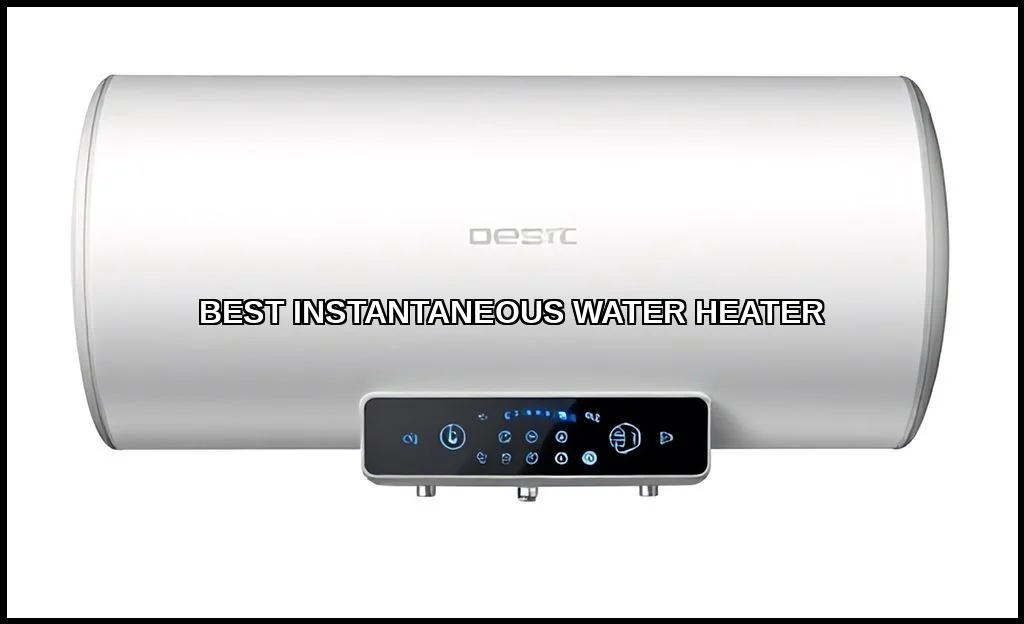
An instantaneous water heater, or tankless water heater, is a wall-mounted appliance that provides hot water only when you need it. Cold water travels through a heat exchanger, where either a gas burner or an electric element rapidly heats it to your set temperature. The moment you close the tap, it stops heating. This fundamental shift from storage to on-demand is what creates an endless hot water heater experiencein theory.
There are two main categories: whole-house systems and point-of-use units. A whole house instant heater is typically installed where your main water line enters the home and is designed to handle multiple fixtures. A point of use water heater is smaller, installed near a single sink or shower, and perfect for remote bathrooms or kitchenettes. Your choice between an electric vs gas instant heater will be one of the biggest decisions, impacting installation complexity, operating costs, and performance.
Key Factors for Choosing the Best Model
Selecting the right unit means moving beyond marketing claims. You must match the heater’s specs to your home’s reality. Get this wrong, and you’ll face lukewarm showers and frustration.
Performance Metrics: Flow Rate and Temperature Rise
These two numbers are inseparable. The flow rate (GPM) is how many gallons of hot water the heater can deliver per minute. Temperature rise is the number of degrees it can increase the incoming water temperature. A heater might deliver 5 GPM at a 35F rise, but only 2 GPM at a 70F rise. If your groundwater is 50F and you want 120F shower water, you need a 70F rise. Check your local groundwater temperatureit’s critical.
- Small Apartment? A single point-of-use electric unit or a modest whole-house model may suffice. The search for the best instantaneous water heater for a small apartment often ends with a compact electric model.
- Family of Four? You’re likely looking at a higher-output gas or electric model. Figuring out what size tankless water heater do I need for a family of 4 requires calculating simultaneous use (shower + dishwasher + sink).
Fuel Source: Electric vs Gas Instant Heater
Electric models, like the Rheem 18kW 240V, are simpler to install if you have the electrical capacity. They require a dedicated, high-amperage circuit. Gas models (natural gas or propane) generally have higher flow rates and are better for colder climates or larger homes, but they need proper venting and gas line sizing. Condensing vs non-condensing is a key distinction here; condensing models are more efficient but have more complex vent requirements.
Efficiency and Operating Costs
Look for the Uniform Energy Factor (EF). A higher EF means greater efficiency. While tankless units are generally more efficient than tanks, their actual savings depend heavily on your hot water usage patterns. A detailed instantaneous water heater pros and cons list always highlights lower long-term energy costs as a major “pro,” but the high upfront cost as a significant “con.”
Top Instantaneous Water Heater Brands & Models Reviewed
Several brands dominate the tankless space, each with strengths. Navien is often praised for its advanced condensing technology and recirculation options, making it a top contender for whole-house gas systems. Rinnai and Noritz are other powerhouse names in gas tankless, known for reliability.
For electric, brands like Stiebel Eltron, EcoSmart, and Rheem lead. Electric models are often easier to install as point-of-use heaters. It’s worth researching if a brand like Bradford White, known for its traditional tanks, also offers a good tankless option for your specific scenario. Always cross-reference model specs with your calculated flow rate and temperature rise needs.
Installation Considerations & Costs
This is where DIY dreams often meet professional reality. Installation can be complex and is not just about hanging the unit on the wall.
System Requirements
- Gas Line Requirements: Most whole-house gas models need a larger gas supply line than a standard tank heater. A professional must verify your home’s gas meter and line can supply the necessary BTU input.
- Electrical Circuit Amp: A large electric unit like an 18kW model requires a 240-volt, 75-amp dedicated circuit. Your home’s electrical panel must have capacity.
- Venting: Gas models require specialized, category-specific venting. Condensing models use PVC pipe, while non-condensing need expensive stainless steel.
Breaking Down the Investment
So, how much does it cost to install a tankless water heater? The unit itself ranges from $200 for a point-of-use electric to over $2,000 for a high-end gas model. Professional installation, however, can easily match or exceed that cost, especially if you need a new gas line, upgraded electrical service, or complex venting. Total costs of $3,000 to $5,500 are common for a full whole-house system replacement. Get multiple quotes.
FAQs: Maintenance, Efficiency, and Longevity
How do I maintain my instant hot water system?
Annual descaling is non-negotiable, especially in areas with hard water. Mineral buildup can destroy the heat exchanger. For gas models, a technician should check the burner and venting. Many manufacturers require annual servicing to keep the warranty valid. It’s a small price for a long life.
Are they truly more efficient?
Yes, but with nuance. By eliminating standby loss, they can be 24%-34% more energy-efficient for homes using 41 gallons or less daily, according to the official source on energy efficiency. For homes with very high usage (over 86 gallons daily), the efficiency advantage shrinks. Your savings depend entirely on your habits.
How long do they last?
A well-maintained tankless water heater can last 20 years or more, significantly longer than a standard tank’s 10-15 year lifespan. The investment is front-loaded, but the longevity is a key part of the value proposition.
The journey to endless hot water starts with honest assessment. Audit your home’s fuel sources, calculate your true hot water demand, and budget for professional installation. The best instantaneous water heater isn’t the most expensive oneit’s the one perfectly sized and specified for your life. It’s an upgrade that rewards careful planning with decades of reliable, efficient service.
