
Choosing a water heater is a big decision. It impacts your daily comfort, energy bills, and home’s plumbing system for years. If you have a boiler for home heating, you’re sitting on a potential goldmine for hot water efficiency. That’s where the best indirect hot water heater comes into play, offering a robust and often superior alternative to standard tank or tankless models.
For homeowners with a hydronic heating system, an indirect-fired water heater is a logical and powerful upgrade. It leverages your existing boiler’s power to heat water, often providing a more consistent and abundant supply. A model like the Triangle Tube SMART40 is frequently cited by pros for its smart design and excellent recovery rate, making it a top contender for many installations.
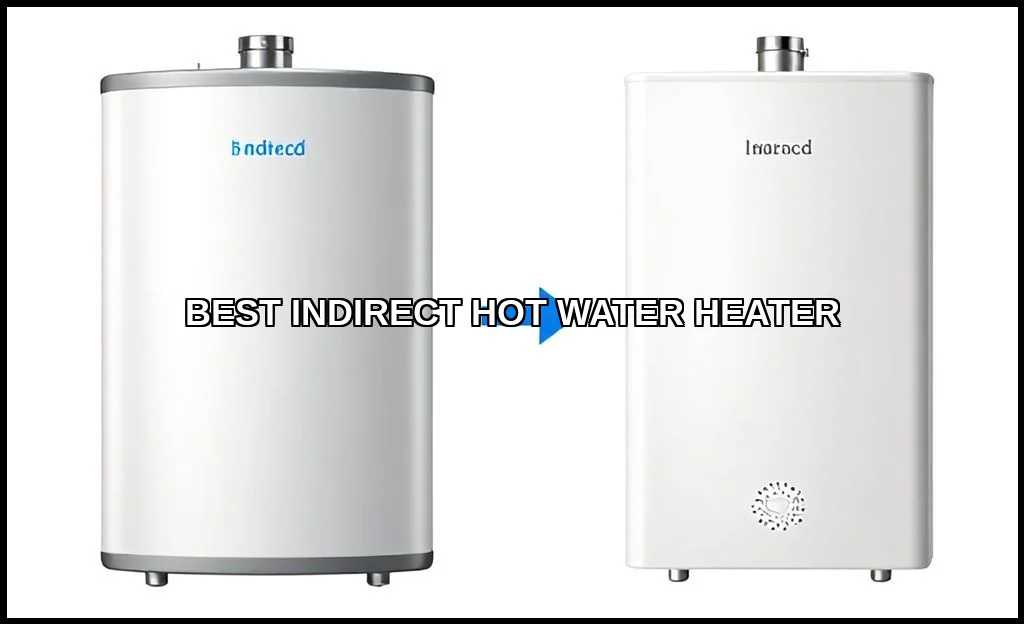
What is an Indirect Water Heater? Core Technology Explained
At its heart, an indirect water heater is a brilliantly simple concept. It’s a storage tank that gets its heat not from its own burner or electric elements, but from your home’s main boiler. Think of it as a dedicated hot water battery for your domestic hot water needs, charged by your heating system.
The magic happens inside via a heat exchanger. This is typically a coil or external jacket through which super-hot boiler water circulates. This coil is immersed in the water inside the storage tank, transferring heat without ever mixing the two water supplies. Your boiler water stays in the closed-loop heating system, and your clean potable water stays in the tank. It’s an elegant separation of duties.
This setup is fundamentally different from a tankless coil inside a boiler, which heats water on-demand and can struggle with volume and efficiency. An indirect system uses the boiler’s high output to rapidly heat a large reserve of water, then lets the boiler shut off. The well-insulated tank holds the heat for hours.
How It Integrates with Your Home System
Your boiler doesn’t run constantly. It fires up when your home needs heat. An indirect water heater adds another “zone” to that system. When the tank thermostat calls for heat, it signals the boiler to fire and send hot water through the heat exchanger. Once the tank is up to temperature, the boiler can return to its main job or shut down entirely.
This makes it a perfect partner for a modern, high-efficiency boiler. The boiler operates in longer, more efficient cycles to heat the water tank, rather than short-cycling for small demands. For systems like radiant floor heating, which also benefit from sustained boiler operation, an indirect water heater is a harmonious fit. In fact, finding the best indirect water heater for radiant floor heating often comes down to matching the tank’s recovery rate with your boiler’s output.
Top 5 Best Indirect Water Heaters: Brand & Model Breakdown
The market has several standout players. Heres a breakdown of top brands and what they bring to the table.
1. Triangle Tube (Precision & SMART Series)
Triangle Tube is a specialist, and it shows. Their SMART series, like the mentioned SMART40, features a unique internal stainless steel coil heat exchanger and exceptional insulation. They’re known for incredibly fast recovery and high efficiency. The build quality is top-tier, aimed at professional installations where longevity is key.
2. A.O. Smith (BTH & Voltex Indirect)
A.O. Smith is a giant with a broad range. Their indirect tanks are known for reliability and often feature a glass-lined steel tank with a sacrificial anode rod, similar to their direct-fired models. They offer versatile options that are compatible with a wide array of boilers, making them a safe choice for many retrofit projects.
3. Bradford White (Heat Manager & RE Series)
Bradford White builds durable, contractor-grade equipment. Their Heat Manager series is a standout, designed for high demand with heavy insulation and a large heat exchanger surface. They have a strong reputation for durability. If you’re wondering just how good Bradford White water heaters are, their indirect line is a big part of that answer, often praised for its robust construction in professional circles.
4. Rheem (Marathon & Professional Classic)
Rheem offers both plastic (Marathon) and glass-lined steel tanks. The Marathon is particularly interestingits polybutylene tank cannot rust, which is a major selling point in areas with aggressive water. Their models are widely available and often come with strong warranties, providing a good balance of innovation and value.
5. Boiler-Mounted Units (Like those from Weil-McLain)
Some manufacturers make indirect-fired storage tanks that are designed as a seamless add-on to their own boilers. These boiler-compatible units are engineered to work perfectly together, optimizing control and efficiency. They’re an excellent choice if you’re installing a whole new system.
Indirect Water Heater Pros, Cons, and Total Cost of Ownership
Is an indirect system right for you? Let’s weigh the real-world factors.
The Advantages: Efficiency and Endless(ish) Hot Water
- High Efficiency: By using your boiler’s BTU rating (which is often much higher than a standalone water heater’s), water heats rapidly. The boiler then shuts off, and the super-insulated tank holds heat with minimal loss. This is why many ask, “is an indirect water heater more efficient than a direct?” with a modern boiler, the answer is often a resounding yes.
- Superior Recovery Rate: This is the star feature. You can literally run multiple showers and appliances simultaneously without a temperature drop. The recovery rate is typically double or triple that of a standard tank.
- Longer Lifespan: With no direct flame or electric elements attacking the tank, the only wear component is the heat exchanger, often made of long-lasting stainless steel. Tanks regularly last 20-30 years.
- Compatibility: Works beautifully with most modern boilers, including combi-boilers set up for an external tank.
The Drawbacks: Upfront Cost and Complexity
- Higher Initial Cost: The tank itself and the required plumbing/control modifications make the install more expensive than swapping a standard water heater. You’re buying two appliances in essence.
- Dependent on Boiler: If your boiler fails, you lose both heat and hot water. This is a key point in the indirect water heater vs tankless coil pros and cons debatea tankless coil has the same single-point failure risk.
- Space Requirements: You need room for a sizable storage tank, typically 30 to 120 gallons.
Cost-Benefit Analysis
The math involves the higher install cost versus long-term energy savings and longevity. If your boiler is efficient and you have a large hot water demand, the payback period can be attractive. You’re also adding value with a premium, whole-home system. For a detailed look at efficiency from an official source, the DOE’s guide is invaluable.
Key Buying Guide: Sizing, Installation, and Boiler Compatibility
Getting this right requires a bit of homework. Don’t just guess.
Sizing: It’s About Recovery, Not Just Gallons
Ask yourself, “what size indirect water heater do I need for a family of 4?” The answer isn’t just a tank volume. It’s about the First Hour Rating (FHR)how much hot water the system can deliver in one hour of peak use. A family of four might be perfectly served by a 40-gallon tank with a high recovery rate, while a larger, slower tank might disappoint.
Consider your peak usage: two showers running plus a dishwasher? Size the system to meet that demand. Your installer will calculate based on your boiler’s output and the tank’s heat exchanger capacity.
Installation & Compatibility: A Pro’s Job
This is not a DIY project. Installation requires integrating with the boiler’s controls and plumbing, adding circulator pumps, zone valves, and often an expansion tank. The system must be boiler-compatible. Not all boilers are suited for an indirect tank, especially some older or very small models. A HVAC professional will assess your boiler’s capacity and condition first.
The choice of materials matters. Look for tanks with a stainless steel or high-quality glass-lined interior. The insulation should be thick (polyurethane foam is standard) to minimize standby loss.
FAQs: Efficiency, Maintenance, and Common Problems
How efficient is an indirect system really?
When paired with a high-efficiency condensing boiler, the overall system efficiency for heating water can exceed 90%. It’s often the most efficient way to get a large volume of domestic hot water. The tank’s standby losses are minimal compared to the gains in heating speed.
What maintenance is required?
Very little. The boiler side needs its annual service. The tank itself may need the anode rod checked every few years (if it has one), but many stainless steel models don’t use one. Periodically checking the pressure relief valve is a good idea. It’s famously low-maintenance compared to direct-fired tanks.
Can I use it with a tankless boiler (combi-boiler)?
Yes, and it’s a fantastic upgrade. Many combi-boilers have a small internal tank or a slow on-demand coil. Adding an external indirect hot water tank gives you the endless hot water of a combi with the volume and simultaneous-use capability of a tank. It solves the common complaint about combis struggling with multiple outlets. Brands like Navien, a leading combi manufacturer, often have specific indirect tanks designed to pair with their units.
What are common failure points?
The most likely issue is a failure of the external components: the circulator pump that moves boiler water to the tank, or the zone valve. The tank itself, if properly installed, is remarkably reliable. Sediment buildup can be an issue in areas with hard water, so a water softener is a wise companion investment.
The best indirect hot water heater isn’t a one-size-fits-all product. It’s a strategic component for a specific kind of home: one with a boiler and a desire for exceptional hot water performance. It requires a higher initial investment and professional installation. But in return, you get a system that delivers abundant, efficient hot water for decades with remarkable reliability. It turns your heating boiler into a dual-purpose powerhouse, maximizing your home’s mechanical investment. For the right homeowner, it’s not just an upgradeit’s the final piece of a high-performance hydronic system.

