The best heater for most bed bug treatment jobs is Product 1, because it is built for room-sized heat treatment, includes the fan and temp sensor you need, and is sized for up to 600 sq ft. One checkable number matters here: Product 1 needs 66 amps for full operation, which tells you this is a treatment system, not a plug-in space heater.
Bed bug heat works only when the whole space and the hiding spots reach lethal temperature for long enough. That means airflow, monitoring and room size matter more than the heater label on the box.
Buy for the space you actually have, not the infestation you fear. A 400 sq ft room and a 600 sq ft room are different jobs, and the wrong setup wastes time at best and leaves cold pockets at worst.
Best for Rooms up to 600 square feet needing complete heat-treatment equipment
Product 1 is the strongest fit for most room-sized treatments because the package includes the ePro 600 heater, a 4,000 CFM air mover, eight power cords and a hand-held laser temperature sensor. Its 26,212 BTU output is sized for rooms up to 600 square feet, and the sensor helps you monitor the temperatures that matter during treatment. Choose it only if the 66-amp full-operation requirement fits your electrical plan.
Heat output 26,212 BTUFull-operation draw 66 ampsRoom capacity Up to 600 square feetAir mover 4,000 CFMTemperature control Hand-held laser temperature sensor
Why it made the cut
Complete heater, airflow and temperature-sensing package
Treats rooms up to 600 square feet
Includes eight power cords and a 4,000 CFM air mover
Good to know
Requires 66 amps for full operation
Heavier and more equipment than an item-treatment unit
Skip it if Skip it if you can’t provide the required 66 amps or only need to heat individual furniture and belongings.
Best for Rooms up to 400 square feet with a lower electrical requirement
Product 2 gives you the same basic treatment approach in a smaller package: an ePro 400 heater, a 4,000 CFM Air Mover 4000 and a hand-held laser temperature sensor. Its 19,659 BTU output covers rooms up to 400 square feet, while the 48-amp requirement is lower than Product 1’s. That makes it the sensible choice when the room fits its capacity and your electrical service cannot support the larger system.
Heat output 19,659 BTUFull-operation draw 48 ampsRoom capacity Up to 400 square feetAir mover 4,000 CFMTemperature control Hand-held laser temperature sensor
Why it made the cut
Sized for rooms up to 400 square feet
Requires 48 amps for full operation
Includes airflow equipment and a laser temperature sensor
Good to know
Lower heat output than Product 1
Includes six power cords rather than eight
Skip it if Skip it if the treatment area exceeds 400 square feet or you need the larger system’s capacity.
Best for Sofas, beds, desks and other individual items
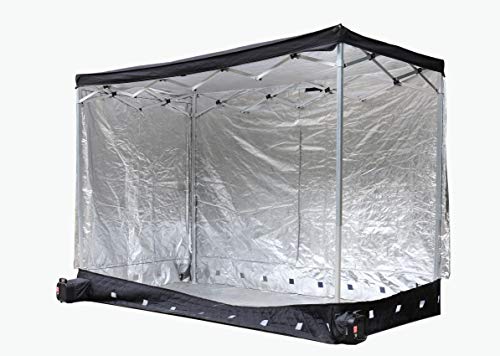
Product 3 is built around a 112L × 58W × 79H-inch service space for loading infested items such as sofas, beds and desks. Its easy setup makes sense when you need to treat belongings rather than heat an entire room. The listed data doesn’t provide a BTU output, amp requirement or included airflow rating, so you can’t size it from those figures.
Model DR-122X4Service space 112L × 58W × 79H inchesTreatment type Non-toxic heat treatmentSuitable items Sofas, beds, desks and more
Why it made the cut
Large service space for furniture and other items
Designed for sofas, beds, desks and similar belongings
Easy to set up and load
Good to know
No listed room-size capacity
No listed heat output, amp requirement or airflow rating
Skip it if Skip it if you need a complete room-treatment package with a listed heater output, air mover and temperature sensor.
The best heater for bed bug treatment is a purpose-built heat-treatment system with enough room capacity, strong airflow and temperature monitoring; a normal plug-in space heater may warm the room while leaving cold spots inside furniture. For a portable bed bug heater buying guide, start with the room, the available electrical service and the objects that need heating—not the mattress alone.
What size heater do you need for bed bugs? Choose by the entire treatment area and the heater’s rated capacity, then leave room for air to move around beds, drawers and upholstered furniture. The Portable Electric Bed Bug Eradication Heater System is listed for spaces up to 600 sq ft and includes the fan and temperature sensor needed to move and check heat. That makes its room rating more useful than a large wattage number printed on an ordinary heater.
Spec To Check
What To Look For
Why It Matters
Room capacity
A rating that covers the whole room
Heat must reach hiding places beyond the bed
Amp draw
A service plan that can supply the listed load
High-draw systems need suitable circuits and connections
Airflow
An included fan or a clearly specified air-moving system
Moving air reduces cold pockets behind and beneath furniture
Temperature monitoring
A sensor or controller that shows treatment conditions
You need to verify the room reaches and holds the required heat
A treatment heater is a system for heating and checking the whole space.
The 66-amp and 48-amp figures attached to purpose-built systems are the giveaway that you’re looking at specialized equipment, not a heater for a standard wall outlet. A typical 1,500-watt plug-in heater draws about 12.5 amps at 120 volts; these treatment systems need a planned electrical setup, so have an electrician confirm the service and circuits before delivery. Never bridge the gap with an extension cord, power strip or improvised adapter.
Open-Room Or Enclosed-Item Treatment
Open-room treatment heats the room and its contents together, while enclosed-item treatment places luggage, clothing or smaller belongings inside a controlled chamber. Pick a system designed for the job you actually have: a room heater may be awkward for a suitcase, and a small enclosure won’t treat a sofa or bedroom. For a broader comparison of heat-based treatment approaches, see bed bug heat or chemical treatment.
Check Before You Buy
Measure the room’s length and width, including closets or connected areas that will be treated.
Confirm the heater’s stated room capacity covers the full space, not only the bed area.
Identify every outlet, circuit and panel location the system may need; confirm the amp requirement with an electrician.
List bulky items that could block airflow, including mattresses, drawers, sofas and packed boxes.
Check how the heater, fan and temperature sensor will enter the room and where you’ll monitor them.
Match The Room, Not The Bed
A queen bed may occupy roughly the same floor area in two homes, but the rooms around it can differ greatly. Size the treatment system for the whole room and its contents; bed bugs are perfectly happy to hide six feet from the mattress.
Which Product Fits Your Room Size
For a 400 sq ft room, choose the Portable Electric Bed Bug Sanitation Heater; for a 600 sq ft room, choose the Portable Electric Bed Bug Eradication Heater System. The larger system is the better fit when furniture, closets and wall gaps make even heating difficult.
Treatment job
Better fit
Why
Up to 400 sq ft
Portable Electric Bed Bug Sanitation Heater
Sized for smaller room treatments and rated for 48 amps.
Up to 600 sq ft
Portable Electric Bed Bug Eradication Heater System
Room capacity, fan and temperature sensor suit a larger treatment area.
Bulky items or an enclosed space
Dr. Infrared Heater DR-122X4 Large Size Bedbug Treatment System
Use it for enclosed treatment space or individual bulky items, not whole-room heat treatment.
Match the heater to the space being heated, not simply to the product name.
4,000 CFM
Airflow that helps move treatment heat
The 4,000 CFM airflow is useful because heat must reach corners, furniture gaps and the space behind objects instead of collecting near the heater. Air movement supports even temperatures, but it doesn’t replace temperature monitoring in cold spots.
Worked Example
Say the room is 20 × 20 feet, for 400 sq ft before counting closets or adjoining treatment space. Product 2 is the sensible starting point for that room. A 20 × 30-foot area is 600 sq ft, so Product 1 fits the stated capacity better; choose the larger system when packed furniture leaves more places for cool pockets to hide.
400 sq ft room20 × 20 ft
600 sq ft room20 × 30 ft
Larger room choiceProduct 1
Product 3 belongs in a different category: its large-size design makes more sense for bulky belongings or an enclosed treatment space than for heating an entire bedroom, apartment or house. Treat room capacity as a limit, not a promise that every corner will reach the target temperature at the same time.
Measure Before You Buy
Add the floor area of every connected space you plan to treat, then account for beds, wardrobes and other bulky items. A room that fits on paper may need the larger system if the setup creates blocked airflow or hidden cold areas.
How The Power Draw Changes The Buy
Bed bug heater power requirements can rule out a model before room size does: Product 1 draws 66 amps at full operation, while Product 2 draws 48 amps. Those are treatment-system loads, not ordinary plug-in heater loads, so plan the electrical supply before buying.
66 amps
Product 1 full-operation draw
A 66-amp bed bug heater usually needs dedicated electrical planning, with a qualified electrician confirming the available service, circuit arrangement and connection method.
Worked Example
A standard household circuit is 15 amps at 120 volts. Product 1’s 66-amp requirement is more than four times that circuit’s current rating, and Product 2’s 48 amps is more than three times the rating. Even before you compare heating output or BTU claims, the amp figures tell you these systems can’t run as ordinary plug-in space heaters from that circuit.
Standard household circuit15 A at 120 V
Product 166 A
Product 248 A
The 48 amps heater for bed bugs still needs a planned supply; a 15-amp outlet won’t make Product 2 suitable just because the unit has a household-style plug or sits in a bedroom. Ask an electrician to verify the installation rather than guessing from the breaker label.
Skip Makeshift Power
Don’t use an extension cord, power strip or improvised adapter for either system when the setup depends on wall power. Undersized wiring can overheat before the breaker responds, and a breaker that trips is a warning—not an invitation to use a larger fuse or breaker.
The 66 amps bed bug heater also changes the total job cost: the electrical work can matter more than a headline BTU figure because the heater can’t do its job without an adequate supply. Confirm the power requirement, voltage and installation plan in the product documentation before scheduling treatment.
Safety, Monitoring And Certification Checks
Bed bug heat treatment safety depends on controlled airflow, continuous temperature checks and a room cleared of anything that can ignite. An UL, ETL or CSA listing is worth looking for when the product data supports it, along with overheat protection and airflow control; those features don’t turn a heater into a safe unattended appliance, though.
Why The Laser Sensor Matters
Bed bug heater temperature monitoring has to happen at the room’s cold spots, not just at the heater outlet. Product 1 includes a hand-held laser temperature sensor, which lets you check mattress seams, furniture joints, flooring and areas behind objects against the treatment instructions. A thermostat on the heater tells you what the unit senses; the laser helps reveal what the room is actually doing. Aim at the surface you need to verify, since a laser thermometer doesn’t measure the air inside a wall, box spring or tightly packed pile.
Prepare Before Heating
Remove aerosols, candles, lighter fluid, paper piles and other flammables from the treatment area.
Open or arrange furniture as the heater instructions require so hot air can circulate around hiding places.
Keep cords, the heater and the fan away from water, curtains and loose bedding.
Confirm the heater has overheat protection, airflow control and an applicable UL, ETL or CSA listing in its product data.
Place working smoke and carbon monoxide alarms as required for the equipment and building.
Standard space heaters are a poor substitute for a dedicated bed bug system because they usually lack the combined room capacity, forced airflow and treatment monitoring needed to expose hidden cold spots. A 1,500-watt plug-in heater may warm the air beside its grille while the far side of a bed, closet or upholstered chair stays below the required treatment temperature. Product 1 is designed around the fan and sensor workflow; an ordinary heater is designed to heat the person sitting nearby.
Don’t Leave It Unattended
Never leave a bed bug heat-treatment setup running with nobody home. Monitor continuously, keep the room closed as the treatment instructions require, and stop the equipment if you smell scorching, see smoke, hear unusual electrical noise or find a cord or outlet getting hot. Let the system cool before moving it, and don’t defeat a tip-over switch, overheat control or circuit protection to keep the job going.
Before starting, write down the places you will check and take readings throughout the treatment rather than trusting one convenient measurement. If the sensor shows a cold area, move the fan or heater only as the instructions allow, clear the obstruction and recheck that location; adding a household space heater beside the system can create a fire risk without fixing the cold spot.
What Competitors Leave Out About Bed Bug Heat
A bed bug heat treatment kit is a working system, not one hot box: you need the heater, fan, power cords and temperature sensor to move heat and confirm that the room is heating evenly. That is what you need for bed bug heat treatment, and it separates a portable bed bug heater kit from an ordinary space heater.
What comes in the kit
The Portable Electric Bed Bug Eradication Heater System includes 8 power cords, an Air Mover 4000 and a hand-held laser temperature sensor. The Portable Electric Bed Bug Sanitation Heater includes 6 power cords, an Air Mover 4000 and the same type of hand-held laser sensor.
Those parts do real work. The Air Mover 4000 circulates heated air so furniture and room corners are less likely to stay cold, while the laser sensor lets you check temperatures at separate points instead of trusting the heater’s display alone. The cords are part of the electrical setup, so their number and your available circuit capacity matter before the heater arrives.
A different job for Product 3
Dr. Infrared Heater DR-122X4 Large Size Bedbug Treatment Sy is best understood as a large enclosed-item treatment system rather than a room heater. Choose it for the type of contained treatment its design supports, not because a large heater automatically treats an entire bedroom.
Owning a dedicated system makes sense when you expect repeat treatments, manage several rooms or want the equipment available on your schedule. For one infestation, a rental or professional heat-treatment service can be the more sensible buy: the equipment is specialized, the electrical load can exceed a normal household setup, and correct monitoring matters as much as producing heat.
Choose The Smallest System That Covers The Space
1
Measure the room
Record the floor area and include the spaces the treatment must actually reach. Don’t choose by a vague room label such as bedroom or apartment.
2
Check the circuit
Confirm the available electrical service before buying. Product 1’s 8 cords and Product 2’s 6 cords support their setups, but they don’t create capacity that your panel or circuits don’t have.
3
Match the system
Select the smallest dedicated system rated for your measured space, with its fan and temperature sensor included. A larger unit isn’t a substitute for a room that hasn’t been measured or monitored.
Before You Order
Room area measured
Available circuit and connection plan checked
Fan and hand-held temperature sensor included
Rental or professional service compared for a one-off treatment
More Questions, Answered
What size heater do I need for bed bugs in a 400 sq ft room?
For a 400 sq ft room, the Portable Electric Bed Bug Sanitation Heater is the listed fit. Confirm the room measurement before buying, since furniture, adjoining spaces and the treatment plan can change the actual heated area.
What size heater do I need for bed bug treatment in a 600 sq ft room?
A 600 sq ft treatment calls for the Portable Electric Bed Bug Eradication Heater System. Product 1 is sized for that area and includes the fan and temperature sensor needed to move and verify heat throughout the room.
Can I use a regular space heater for bed bugs?
A regular plug-in space heater is the wrong tool for a bed bug treatment. It lacks the room-sized airflow, temperature monitoring and electrical capacity of a treatment system, and leaving several household heaters unattended creates a serious fire risk.
How many amps does a bed bug heat-treatment heater need?
Product 1 draws 66 amps at full operation, while Product 2 draws 48 amps. Those figures are far beyond a normal 120-volt household outlet, so have the power arrangement reviewed by a qualified electrician before treatment day rather than improvising with extension cords.
Do bed bug heaters come with temperature probes?
Product 1 includes a temperature sensor for checking treatment conditions. Confirm the included monitoring equipment for any other model before purchase; a heater that produces heat without a way to verify room temperature leaves a large gap in the treatment process.
Is a portable bed bug heater better than chemical treatment?
Portable heat avoids applying pesticide to the treated room, but it requires the entire space to reach the required temperature and stay there under monitoring. Chemical treatment may fit areas or belongings that cannot safely tolerate heat, so the better choice depends on what must be treated and who will control the process.
What should I remove from a room before heat treatment?
Remove aerosols, candles, fuel, paint, pressurized containers and other items that can ignite or be damaged by high heat. Take out pets, plants and heat-sensitive belongings, then follow the heater manual or treatment provider’s written removal list before starting.
Share
Written byJoye
HeaterGuides covers home heating, water heating and HVAC: how the equipment works, what it costs to run, and how to use it safely.