Top Heated Snowmobile Goggles for a Cozy Ride in 2026
On this page 8 sections
- Heated Snowmobile Goggles Comparison
- 5 Heated Snowmobile Goggles That Stay Clear on the Trail
- Battery Heated Snowmobile Goggles: What to Check Before You Buy
- Heated Lenses Keep Fog and Ice Off in Real Conditions
- Helmet Fit, OTG Comfort and Lens Tints for Snow
- Battery Life, Charging and Long-Term Durability
- Check Before You Buy: Heated Goggle Fit List
- Frequently Asked Questions
Heated Snowmobile Goggles Comparison
| Rank | Model | Best for | Battery Runtime (Low / High) | Heating Tech | Lens / VLT & Coating | Price |
|---|---|---|---|---|---|---|
| 1 | HeatVue HeatWave Heated Snow Goggles Clear LensBest Battery Life | Long rides needing up to 24 hours of fog-free vision | 24 hrs / 7 hrs | Surface heating technology | Dual lens / Clear | Check price |
| 2 | HeatVue HeatWave Heated Snow Goggles Yellow Tint LensBest Lens Tint | Riders who want fog-free vision with a yellow tint for variable light | 24 hrs / 7 hrs | Surface heating technology | Dual lens / Yellow Tint Revo Ice Blue Mirror | Check price |
| 3 | Castle X Coil Heated Snow Goggles White/GrayBest for Lens Changes | Riders needing quick lens swaps and a wide field of vision | 7 hrs / 4 hrs | ITO film heated dual-pane lens | Anti-fog dual-pane / — | Check price |
| 4 | Wynthorix Heated Snow Goggles Blue Lens Silver CoatedBest for Lens Variety | Riders wanting multiple lens options and OTG comfort | 5.5 hrs / 3 hrs | Heatable graphene film | Blue lens / Silver coating | Check price |
| 5 | Wynthorix Heated Snow Goggles Blue Lens REVO CoatedBest UV Protection | Riders needing strong UV400 protection and vivid lens colors | 5.5 hrs / 3 hrs | Heatable graphene film | Blue lens / REVO coating | Check price |
A single number decides whether a heated goggle stays cozy or quits early: runtime on high. The models here range from 3 hours to 7 hours on high, and from 5.5 hours to 24 hours on low, so your typical loop length and how often you idle at trailheads should drive the pick more than color or tint.
You also get heated dual-pane lenses that actively warm the inner lens, magnetic lens changes, and OTG space for glasses. Get the heating tech, battery and helmet seal right and fog and ice buildup stay manageable; get them wrong and even a heated lens will mist at the edges.
5 Heated Snowmobile Goggles That Stay Clear on the Trail

HeatVue HeatWave Heated Snow Goggles Clear Lens

HeatVue HeatWave Heated Snow Goggles Yellow Tint Lens

Castle X Coil Heated Snow Goggles White/Gray
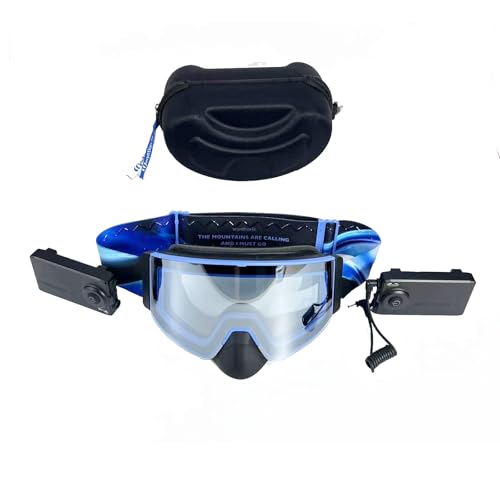
Wynthorix Heated Snow Goggles Blue Lens Silver Coated

Wynthorix Heated Snow Goggles Blue Lens REVO Coated
Battery Heated Snowmobile Goggles: What to Check Before You Buy
Battery heated snowmobile goggles clear fog by warming the lens, a crucial step beyond what dual-pane lenses alone can do in stop-and-go winter riding.
Look first at battery runtime across heat modes. For example, HeatVue HeatWave goggles run up to 24 hours on low heat and keep lenses at 95 to 107°F, enough to stop fog on most trails. Medium and high settings will shorten this runtime but add warmth for colder conditions or faster fog clearing.
Most models use USB-C rechargeable batteries. This standard offers fast charging and easy replacement, making it more convenient than older proprietary packs. Some goggles, like FXR Maverick, also support 12v power supplies for extended riding without battery swaps—handy if you’re on the trail all day.

Heating technology varies by brand. Castle X uses I.T.O. film heating embedded in their dual-pane lenses, which heats evenly and quickly. Wynthorix employs graphene film, notable for lightweight, flexible heating with excellent anti-fog properties. HeatVue uses a surface heating element applied directly to the dual-pane lens, which spreads heat efficiently across both lens surfaces to prevent fog and ice buildup.
A dual-pane lens alone slows fogging by creating an insulating air gap, but that’s often not enough when you stop frequently or sweat under your helmet. Adding an electric heating element maintains a constant warm lens temperature, eliminating fog faster and handling ice buildup that dual-pane alone can’t.
Expect three heat modes on most heated goggles: low, medium, and high. Low is for mild conditions or long rides seeking battery efficiency. Medium offers a balance for typical cold weather and occasional stops. High is reserved for very cold days or when fog or ice buildup happens fast, but it drains battery quickly.
Check how the goggles handle lens changes. A magnetic lens change system speeds swapping tints for different light conditions without fumbling with clips or screws. Side latch systems work well but can be slower and less convenient when you’re wearing gloves or riding fast.
| Feature | Why It Matters |
|---|---|
| Battery runtime by heat mode | Long rides need runtimes of 8+ hours on low to avoid mid-ride recharging |
| USB-C rechargeable battery | Fast, standardized charging and easy battery swaps |
| 12v power supply option | Continuous power on long rides without battery drain |
| Heating technology | ITO film, graphene, or surface heating affect heat distribution and durability |
| Dual-pane heated lens | Prevents fog and ice better than dual-pane alone |
| Three heat modes | Adjust warmth and battery use to riding conditions |
| Magnetic lens change system | Quick tint swaps in cold with gloves on |
Heated Lenses Keep Fog and Ice Off in Real Conditions
Heated lenses clear fog far faster than non-heated dual-pane or anti-fog coatings alone, but they don’t make goggles completely fog-proof. When you stop or slow down, the heating element quickly warms the inner lens, vaporizing condensation within seconds—often under 15 seconds compared to minutes for just dual-pane lenses.
Unlike conventional dual-pane lenses, which rely on trapped air to slow fog buildup, heated lenses actively eliminate fog by raising the lens temperature above the dew point. That means fog forms less often and clears faster even if moisture gets inside. Still, any fog on the outer lens or near the helmet seal depends on ventilation and helmet fit.
Performance varies with temperature and riding speed. In mild cold, heated lenses keep up easily, preventing fog during slow or stop-and-go riding. In extreme cold—below 10°F—the inner lens may briefly fog when idling, but heating cycles quickly clear it. High-speed airflow also helps by pushing moisture away, complementing the lens heat.
Heated lenses also reduce frost buildup on the inside surface by maintaining temperatures above freezing, but they don’t stop ice forming on the external lens surface. Snow, freezing rain, or blowing ice still accumulate outside and need to be brushed off or melted by airflow and venting.
Good venting systems and helmet seals remain essential. They control the air exchange around the goggles, preventing warm, moist breath from entering and condensing. No heating element can compensate for a helmet with a poor brow seal or inadequate vents.
| Lens Type | Fog Clearance Time | Fog Prevention |
|---|---|---|
| Heated Lens | < 15 seconds | Actively eliminates fog on inside |
| Dual-Pane Lens Without Heat | Several minutes | Slows fog but does not clear |
| Anti-Fog Coating Only | Varies, often minutes | Helps resist fog but less effective |
Helmet Fit, OTG Comfort and Lens Tints for Snow
If you wear prescription glasses, OTG (over-the-glasses) heated snowmobile goggles offer the best fit without pressure points or gaps that cause fogging. Models with frameless designs and wide fields of vision, like the HeatVue HeatWave, pair well with most helmets and accommodate glasses comfortably thanks to generous frame-outrigger depth.
The seal between your goggles and helmet depends more on your helmet’s brow shape and foam stack than the goggles’ size alone. Some helmets sit closer to the face, compressing the triple-layer foam and sinus relief zones in goggles for a snug seal. Others leave a small gap that can worsen fogging despite heated lenses.
Lens interchangeability is a must for adapting to changing light and weather. Many goggles support magnetic lens retention systems that let you swap lenses quickly even with gloves on. With over 60 extra lens options on the market, you can choose from clear, yellow, or tinted lenses with variable visible light transmission (VLT) like 42.5% for moderate light, 21.6% for bright conditions, or Revo Ice Blue mirror coatings to reduce glare.
Lens tint directly affects visibility and eye fatigue while riding. Clear lenses maximize vision in low-light or night conditions but offer no glare reduction. Yellow or amber tints enhance contrast in flat light or snowy haze, improving trail detail. Darker tints and mirrored coatings like Revo Ice Blue cut glare on bright, sunny days but reduce overall brightness, which may be risky in shaded or forested trails.
Durability matters on rough rides. Look for impact-resistant polycarbonate lenses with 100% UV400 protection to guard your eyes against harmful rays. REVO or silver coatings add scratch resistance and help maintain the heated lens’s clarity and lifespan.
| Lens Tint | VLT (%) | Best Use |
|---|---|---|
| Clear | ~90 | Low light, night riding |
| Yellow/Amber | ~42.5 | Flat light, haze, overcast |
| Dark tint/Revo Ice Blue | ~21.6 | Bright sun, glare reduction |
Battery Life, Charging and Long-Term Durability
Heated snowmobile goggles typically run between 3 and 24 hours per battery charge depending on the model and heat setting, so knowing the runtime helps you plan your ride without losing visibility.
The Castle X Coil goggles use a 7,000mAh lithium-ion battery that lasts about 7 hours on low heat, 5 on medium, and 4 on high. HeatVue HeatWave goggles offer the longest runtime with up to 24 hours on low, 12 on medium, and 7 on high heat settings. Wynthorix goggles provide 5.5 hours on low heat, 4 on medium, and 3 on high using two USB-C rechargeable batteries.
| Model | Battery Capacity | Runtime Low | Runtime Medium | Runtime High |
|---|---|---|---|---|
| Castle X Coil | 7,000mAh Li-Ion | 7 hours | 5 hours | 4 hours |
| HeatVue HeatWave | Not specified | 24 hours | 12 hours | 7 hours |
| Wynthorix | Dual USB-C | 5.5 hours | 4 hours | 3 hours |
All these goggles charge via USB-C cables, a convenient and fast standard you can plug into a computer, wall adapter, or portable power bank. Most come with vented carry cases to protect lenses during transport and allow moisture to escape, preventing damage over time.
Some models like the FXR Maverick offer an optional 12V power converter so you can plug the goggles directly into your snowmobile’s electrical system. That eliminates battery worries but adds a tether and relies on your sled’s power.
Choosing cordless goggles with rechargeable batteries means freedom of movement and easy swapping of spare batteries on longer rides. Running on 12V power supply is great for longer sessions but limits portability and adds cable management.
The lens material is usually impact-resistant polycarbonate with coatings to resist scratches and glare. Despite this, scratches can happen if you store goggles carelessly or clean them with abrasive materials.
Cleaning heated goggles requires a soft microfiber cloth or the bag they come with. Avoid paper towels or household cleaners, which damage lenses or coatings. Always dry lenses gently after riding to prevent buildup of dirt or moisture.
For long-term durability, store goggles in their protective case away from extreme temperatures and direct sunlight. Impact protection ratings vary, but most models meet ANSI Z87.1 standards or similar, ensuring resistance to impact and shattering.
Maintenance is minimal but essential: charge batteries fully before storage, clean lenses with microfiber materials, and inspect straps and seals regularly for wear. Replace batteries when runtime noticeably shortens, usually after a couple of seasons.
Battery life during use depends heavily on heat setting and ambient temperature. Running high heat all day in extremely cold weather drains batteries faster. Using low or medium settings conserves power and often keeps lenses warm enough to prevent fog and ice.
In practice, say you plan a 6-hour ride. The HeatVue HeatWave model running on medium heat would comfortably last the session (12 hours runtime), while the Wynthorix might require carrying a spare battery or switching to low heat.
Cordless heated goggles with USB-C rechargeable batteries are the most versatile for riders who value freedom, while 12V power options suit those who ride long, continuous sessions and don’t mind the cord.
Keeping your goggles running all season means following simple care steps: proper charging, gentle cleaning, safe storage, and occasional battery replacement. These steps prevent fog buildup, maintain clear vision, and extend the life of your heated snowmobile goggles.
Check Before You Buy: Heated Goggle Fit List
Confirm your helmet’s compatibility with the goggles before buying. The seal between goggle and helmet depends heavily on your helmet’s foam shape and brow profile, which varies by brand and model. Try the goggles on with your exact helmet to check for any gaps or pressure points that could invite fogging.
Match the battery runtime to the length of your rides and your preferred heat setting. If you ride in extreme cold, size for the highest heat mode to keep the lens clear and ice-free. Some models run up to 24 hours on low heat, but high heat may cut that to a few hours, so plan accordingly.
Choose a lens tint and visible light transmission (VLT) suited to your typical light conditions. Darker tints work well on bright, sunny days but reduce visibility in overcast or snowy weather. Verify that the goggles support magnetic lens interchangeability if you want to switch tints quickly on the trail.
Check if you need OTG (over-the-glasses) compatibility for your prescription glasses. Also, confirm the venting system effectively reduces internal moisture without letting cold air in. Lastly, consider whether the package includes a care kit with a protective case, charging cables—usually USB-C—and replacement lenses, as these parts often fail or wear out during the season.