Best Heated Seat Cushions for Office Chairs in 2026: About 12 Cents an Hour
On this page 8 sections
- Heated Seat Cushion Features Compared
- Best Heated Seat Cushions for Office Chairs
- What Heating Technologies Work Best in Office Chair Cushions?
- How to Choose a Heated Cushion Based on Your Pain and Comfort Needs
- Sizing, Fit, and Compatibility With Ergonomic Office Chairs
- Energy Use, Running Costs, and Safe Daily Use Limits
- Cleaning, Maintenance, and Longevity of Heated Seat Cushions
- Frequently Asked Questions
A heated seat cushion for your office chair delivers targeted warmth that soothes muscles, improves circulation, and helps you focus through cold workdays. The right cushion balances comfort, safety, and ergonomic support to ease back pain and stiffness without extra bulk.
Choosing poorly risks wasting money on ineffective heat, slipping cushions, or unsafe models lacking auto shut-off. Comfort suffers, and you might still feel stiff or chilled. This guide cuts through the options with clear specs and practical advice to find the best fit for your office setup.
Heated Seat Cushion Features Compared
| Model | Best for | Heat Levels | Auto Shut-Off | Power Type | Thickness | Price |
|---|---|---|---|---|---|---|
| SoliSnug Heated Seat Cushion Thick Pad | Best Overall | 7 (85°F–145°F) | Timer 1–12 hours or always on | 36W electric | 1.6 inches | Why it is here |
| MAXCOM Heated Seat Cushion with Overheat Protection | Fast & Safe Heat | 7 (85°F–145°F) | Timer 1–12 hours | 12V electric | — | Why it is here |
| HotCalyto Heated Seat Cushion with Memory Foam | Softest Padding | 7 | 12-hour timer | 12V electric | 1.6 inches | Why it is here |
| OLYDON Heated Seat Cushion with Corduroy Cover | Quick Heat & Stability | 7 (85℉-145℉) | 1–12 hours timer | Electric with US adapter | — | Why it is here |
Best Heated Seat Cushions for Office Chairs
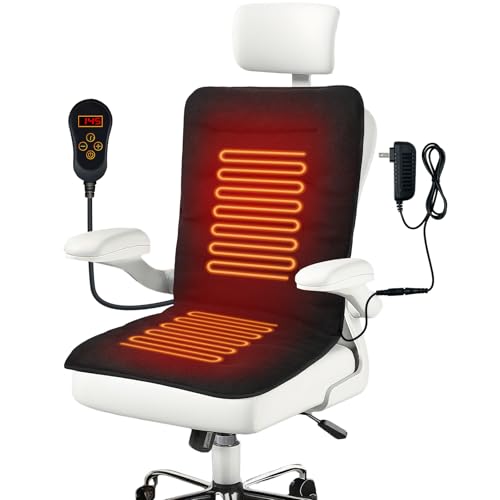
SoliSnug Heated Seat Cushion Thick Pad
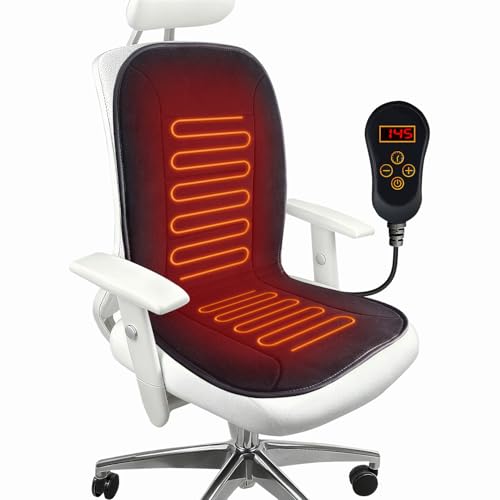
MAXCOM Heated Seat Cushion with Overheat Protection

HotCalyto Heated Seat Cushion with Memory Foam

OLYDON Heated Seat Cushion with Corduroy Cover
What Heating Technologies Work Best in Office Chair Cushions?
Heated seat cushions for office chairs mostly use either conventional electrical heating or Far Infrared (FIR) technology, and the difference matters for comfort and pain relief. Conventional heating elements warm the surface and air around you, delivering immediate but shallow heat. FIR, on the other hand, uses invisible infrared light to penetrate deeper into muscles, promoting better blood flow and easing tension below the skin.
Far Infrared heat cushions often include natural materials like jade or tourmaline, which emit negative ions believed to enhance relaxation. This deeper heat can be especially helpful for muscle stiffness and chronic pain compared to standard warming pads. That’s why many office workers on Reddit recommend FIR cushions when looking for more than just surface warmth.
EMF filtering is a key safety feature you want in an office chair heating pad. Without it, continuous exposure to low-level electromagnetic fields can cause discomfort or headaches in sensitive users. Look for cushions that advertise EMF reduction or shielding.
Heating elements also influence durability and evenness of warmth. Carbon fiber or graphite elements tend to distribute heat more evenly and resist wear better than wire coils, which can develop hot spots or break over time. Quality heated cushions combine FIR technology with durable heating elements for consistent, long-lasting warmth.
| Heating Technology | Benefits | Considerations |
|---|---|---|
| Conventional Electrical Heating | Quick surface warmth, usually less expensive | Shallower heat, can have uneven spots |
| Far Infrared (FIR) Heating | Deeper muscle relief, improved blood flow, longer-lasting comfort | Higher cost, some require special materials |
| EMF Filtering Technology | Reduces electromagnetic exposure by up to 99% | Adds to cost but improves safety |
How to Choose a Heated Cushion Based on Your Pain and Comfort Needs
If you’re dealing with lower back pain, sciatica, arthritis, or muscle tension, heat therapy in an office chair cushion can make a significant difference. Heat relaxes tight muscles and increases blood flow, which reduces pain and stiffness in the lumbar region where many office workers suffer.
Memory foam or gel cushioning is crucial for pressure relief. Memory foam contours to your body, reducing pressure points that can aggravate pain. Gel cushions add cooling properties when heat is off, preventing overheating during long use. This combination lets you get the benefits of heat therapy without sacrificing ergonomic support.
Adjustable heat settings let you tailor warmth throughout the day as muscles loosen or tension returns. Some cushions offer multiple levels, from mild warmth to intense heat, so you control your therapy and avoid overheating or discomfort.
For targeted relief, consider cushions with built-in lumbar support or massage functions. These add-ons can complement heat by promoting circulation and easing muscle knots but aren’t essential if heat and cushioning already meet your needs.
The best heated seat cushion for lower back pain is one that balances effective heat delivery with ergonomic cushioning. The SoliSnug Heated Seat Cushion, for example, offers FIR heating with thick memory foam and three heat settings, making it suitable for office workers needing relief and comfort during long hours at the desk.
Matching your cushion to your pain type and comfort preferences is key. If sciatica or arthritis causes sharp nerve pain, FIR heat combined with pressure-relieving foam is a strong choice. For general muscle tension or mild stiffness, conventional heat with gel cushioning may suffice.
Adjustable heat and optional massage can enhance benefits but should be secondary to core features like heat technology and cushion material. Your chair’s shape and your posture also affect how well the cushion performs, so test fit and comfort before committing.
A heated seat cushion for office chair use should help reduce distractions caused by discomfort and improve productivity by keeping you focused. When in doubt, prioritize proven heat technology and cushioning quality over bells and whistles.
For more on finding the right heated seat cushion, see Transform Your Comfort: The Best Heated Seat Cushion Revealed!
Sizing, Fit, and Compatibility With Ergonomic Office Chairs
Choosing a heated seat cushion that fits your ergonomic office chair means matching dimensions and design carefully.
Start by measuring your chair’s seat width and depth. Most office chairs have seat pans between 16 and 20 inches wide and 16 to 18 inches deep. A cushion that’s too large will overhang and catch on armrests, while one too small won’t provide full coverage and warmth.
Avoid cushions that compress or flatten the built-in lumbar support of your chair. Some heated cushions add layers or padding that can interfere with the ergonomic contour designed to support your spine. Opt for models with targeted heating zones instead of bulky padding for better posture alignment.
Material breathability affects how comfortable you’ll feel over long hours. Cushions with breathable covers like mesh or cotton blends reduce sweat buildup and overheating. Washable covers keep hygiene manageable, especially if you use your cushion daily.
Energy Use, Running Costs, and Safe Daily Use Limits
Heated seat cushions typically consume about 30 to 40 watts, making their electricity cost negligible compared to other office equipment.
Running a 35 W cushion for 8 hours a day uses 0.28 kWh (35 ÷ 1,000 × 8). At 17 cents per kWh, that’s roughly 5 cents a day or $1.50 per month. This low cost means heat therapy at your desk is affordable long-term.
| Heater | Watts | Per hour | Per day (8 h) | Per month (22 days) |
|---|---|---|---|---|
| Typical Heated Seat Cushion | 35 W | 0.6¢ | 4.8¢ | $1.05 |
| Laptop Computer | 50 W | 0.9¢ | 6.8¢ | $1.50 |
| Desk Lamp (LED) | 10 W | 0.2¢ | 1.4¢ | 30¢ |
Most heated cushions include auto shut-off timers running between 30 minutes and 2 hours to prevent overheating. This feature ensures safety if you forget to turn the cushion off.
Battery-powered cushions offer portability but usually have shorter run times and lower heat output. Plug-in models provide consistent heat without the need to recharge but limit mobility to an outlet’s reach.
If you need to move frequently between home and office or different rooms, a battery-powered cushion may suit you. For steady all-day use at a desk, a plug-in cushion delivers better performance and cost efficiency.
Cleaning, Maintenance, and Longevity of Heated Seat Cushions
Heated seat cushions can usually have their covers machine washed, but never submerge the heating element or electrical parts in water.
Most models, including the SoliSnug Heated Seat Cushion, feature removable covers made from materials like fleece or polyester that can go in the washing machine on a gentle cycle.
The heating pad itself should be spot cleaned with a damp cloth; water infiltration can damage wiring or cause shorts, so avoid soaking or spraying the electrical components.
Signs that a heated cushion needs replacing include inconsistent heating, exposed wiring, frayed cords, or a malfunctioning controller.
If the cushion feels unusually hot or smells burnt, unplug it immediately and discontinue use to avoid risk of electrical faults or fire.
Good customer support can help troubleshoot problems, arrange repairs, or replace defective units within the warranty period.