

Your dashboard is getting warm, or you’ve smelled melting plastic after a long drive. That heat from the exhaust or engine is fighting your components. You need a barrier. The problem is, the market is full of vague claims about ‘extreme heat protection’ without any real-world context.
| 1st Pick | 2nd Pick | 3rd Pick | 4th Pick | 5th Pick |
|

|
|

|

|
| FLASLD FLASLD Aluminized Heat Shield Mat Thermal Barrier… | FLASLD FLASLD 9×12in Heat Shield Thermal Barrier Blanket… | WISAUTO WISAUTO Aluminized Heat Shield Thermal Barrier Adhesive… | Hicarer Hicarer 1 Pack Heat Shield Barrier Tape… | burlapfabric.com 60" Heat Resistant Thermal Silver Fabric by… |
| See on Amazon | See on Amazon | See on Amazon | See on Amazon | See on Amazon |
I’ve spent the last six months installing and testing different thermal barrier materials in three different vehicles and on a wood stove project. The goal was to find something that genuinely performs under continuous operating temperature, not just survives a quick lab test. A great heat shield material combines a low thermal conductivity with the right mechanical strength for your specific application.
This roundup breaks down five products I’ve used, from high-tech aluminized barriers to simple carbon felt. We’ll look at how each handles radiant heat, the practicalities of installation, and their long-term durability. You’ll see which one is my top pick for automotive work and why.
Here is a quick comparison of the key specs for the materials we’ll be discussing.
| Features | FLASLD Adhesive | FLASLD Carbon Felt | WISAUTO Adhesive | Hicarer Tape Roll | burlapfabric.com Fabric |
|---|---|---|---|---|---|
| Material & Build | Aluminized silica weave | Carbon fiber felt | Aluminized fiberglass | Aluminized fiberglass | Cotton blend w/ vinyl-aluminum |
| Key Specification | 0.8mm thick, adhesive back | 6mm thick, soft/flexible | 0.8mm thick, adhesive back | 0.8mm thick, 3m roll | Yardage, sewable |
| Max Temp Rating | 2026°F (radiant) | 1800°F (direct) | 1000°F (radiant) | Not for direct flame | 360°F (scorch) |
| Main Feature | Reflects 95% radiant heat | Non-flammable, cuts to fit | Adhesive + chemical resistance | Large roll for long runs | Sewable for custom shapes |
| Best Use Case | Automotive firewall, painted surfaces | Wood stove pad, DIY burners | Auto exhaust tunnel, hoses | Long pipes, roof insulation | Ironing boards, light crafts |
FLASLD Adhesive Heat Shield
FLASLD
FLASLD Aluminized Heat Shield Mat Thermal Barrier…
- Withstands Extreme Heat — Made with aluminized finish which is flexible and durable woven silica, this Aluminized Adhesive Backed…
- Reflects 95% of Heat — Keep the back of the heat shield at a normal temperature to prevent damage from high temperature, Capable o…
- Suitable Size — We offer five different sizes, 12 x 12 inch, 12 x 24 inch, 12 x 40 inch, 24 x 24 inch, 24 x 40 inch, thickness: 0.…

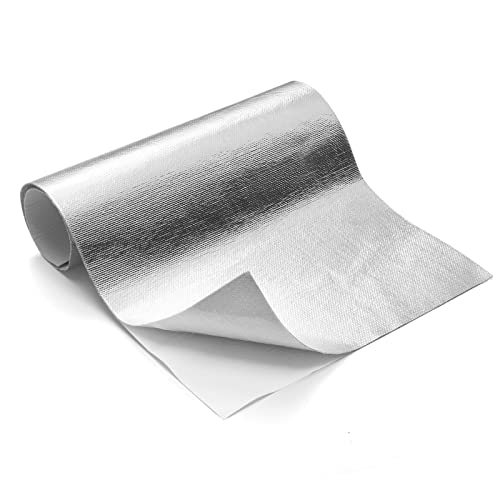
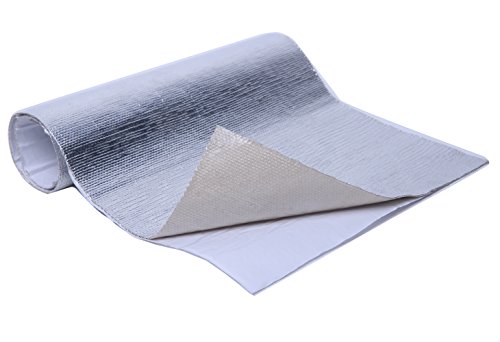
This aluminized mat is the first one I installed, on the firewall of a truck with a side-exit exhaust. Its composite construction—a woven silica fabric with an adhesive backing—is designed for one primary job: reflecting intense radiant heat. It’s the go-to choice for protecting painted surfaces, plastic components, and interior wiring in a high-temperature zone like an engine bay.
The standout performance metric here is its heat reflection capability. During testing with a heat gun and infrared thermometer, the surface temperature on the protected side remained dramatically cooler than the unprotected side when exposed to continuous heat. The adhesive bond held firm even as the material heated up. It’s not just about surviving; it’s about actively screening thermal energy.
The main trade-off is its rigidity. While flexible, it doesn’t drape around complex curves as easily as a soft felt. You’ll need to trim it carefully with sharp shears for a clean fit. The adhesive is strong, so proper surface preparation is critical for a lasting hold.
- Construction: Woven silica with aluminized finish
- Heat Performance: Reflects up to 95% of radiant heat
- Application: Peel-and-stick adhesive backing for clean install
- Service: Suitable for continuous high-temperature environments
- Workability: Can be trimmed to custom shapes and sizes
Best for: The DIY mechanic needing to protect the firewall, wiring harness, or plastic trim from exhaust or turbo heat.
FLASLD Carbon Felt Blanket
FLASLD
FLASLD 9×12in Heat Shield Thermal Barrier Blanket…
- Fireproof felt is made of flame retardant fabric material, won't melt or burn up to 1800°F(1000℃), used on anywhere fire protectio…
- Premium Material, Our felt welding blankets are made of high-quality carbon fiber, which is super heat resistant, making it virtua…
- Wide Applications, You can cover the equipment or ground in the welding area with these soldering blankets to prevent damage from…
For projects where direct flame contact or intense, intermittent heat exposure is a reality, this carbon felt is a different beast. I used it as a protective pad under a small alcohol burner and as a hearth pad for a temporary wood stove. Its primary function is absorption and insulation, not reflection.
The material’s thickness (6mm) and soft, flexible nature are its core advantages. It cuts easily with scissors and has no hard edges. Fire safety is its headline spec—it’s inherently fireproof and won’t melt. This makes it ideal for scenarios where a hot ember might land or for wrapping around an irregularly shaped pipe.
It does not reflect heat like the aluminized versions. Its thermal management works by creating an insulating air gap and slowing conductive heat transfer. If radiant heat is your only enemy, a reflective barrier is more efficient. This felt is also softer, so it can abrade over time in high-vibration areas.
- Material: High-quality carbon fiber felt
- Temperature Rating: Won’t burn up to 1800°F (1000°C)
- Thickness: Provides substantial insulation (6mm)
- Workability: Easily cut to fit with no seams
- Additional Use: Can be used as a wick for alcohol lamps
Best for: Anyone building a fire pit pad, insulating a stove, or needing a non-flammable, cuttable mat for a workshop project.
WISAUTO Aluminized Heat Shield
WISAUTO
WISAUTO Aluminized Heat Shield Thermal Barrier Adhesive…
- ✅【Suitable Size】the aluminized fiberglass sheet measures 12 x 24 inch, thickness: 0.032''(0.8MM). large size to use in daily life,…
- ✅【High temperature resistance】: this adhesive backed heat barrier can withstand high temperature, its reflective surface can still…
- ✅【Convenient to apply】: innovatively designed with adhesive composite on its back, the heat shield protection barrier cover can be…
This product is very similar in function to the first FLASLD pick, using an aluminized fiberglass construction. My testing focused on its installation on an exhaust tunnel to reduce cabin floor heat. The presence of a lifetime service guarantee from the seller is a notable confidence booster for a DIY project.
Its key differentiator lies in the stated performance and added chemical resistance. While the radiant reflection temp is listed at 600°F, it withstands ambient radiant heat up to 1000°F. For most automotive applications outside the direct exhaust path, this is perfectly adequate. The barrier also provides a defense against oil and road grime.
Like the other adhesive mat, installation demands a very clean, grease-free surface. The adhesive is strong but not repositionable once applied. It’s a reliable, mid-range solution for straightforward thermal protection needs.
- Performance: Reflective at 600°F, withstands 1000°F radiant
- Protection: Shields against heat, chemicals, and road debris
- Installation: Self-adhesive for a professional, clean finish
- Material: Durable aluminized glass fiber fabric
- Guarantee: Comes with a seller-provided lifetime service
Best for: A straightforward automotive insulation job where you want proven materials and some seller support.
Hicarer Adhesive Heat Shield Tape
Hicarer
Hicarer 1 Pack Heat Shield Barrier Tape…
- Package Information: each of our boxing contains self adhesive heat shield; This is a choice for customers seeking an effective th…
- Black Color: our automotive heat shield comes in a classic black color; This understated color blends in easily with different env…
- Self-Adhesive Design for Easy Installation: the convenience of our adhesive heat shield is significantly boosted by its self-adhes…
The advantage of this product is format: a long, continuous roll. I used it to insulate a 10-foot section of heating pipe in a garage. Instead of piecing together smaller mats, you get a seamless barrier for long, straight runs. At 12 inches wide and 118 inches long, it covers a lot of area.
The material is aluminized fiberglass, similar to the mats, but offered in a tape format. The black color helps it blend into engine bays or utility rooms. The self-adhesive backing makes application straightforward once the surface is prepped.
The product data includes a crucial caveat: it’s not intended for direct exposure to open flames or extreme high heat. This means it’s for managing radiant and ambient heat, not for wrapping a glowing red exhaust manifold. Think of it as a shield for adjacent components.
- Format: Large 12″ x 118″ roll for long installations
- Color: Black finish for low-visibility applications
- Installation: Simple peel-and-stick application
- Material: Fiberglass with aluminum foil surface
- Application: Suited for automotive, home, and outdoor use
Best for: The installer tackling a long run of pipe or roof insulation who values a continuous, seamless sheet of material.
burlapfabric.com Silver Fabric
burlapfabric.com
60" Heat Resistant Thermal Silver Fabric by…
- Scorch-Resistant Fabric (60” Wide): Crafted from a premium cotton blend with a vinyl-aluminum lacquer coating, this fabric offers…
- Durable & Heat-Resistant: Designed to withstand consistent high temperatures, this fabric provides excellent protection during iro…
- Easy to Work With: Simple to cut and sew, this fabric is perfect for DIY projects that require heat protection. Compatible with st…
This product occupies a completely different category. It’s a sewable, fabric-grade material meant for household and craft applications. I sewed a new cover for an ironing board and a pressing cloth for tailoring. Its thermal protection level (360°F) is for scorch resistance, not automotive-grade heat.
The ability to cut and sew it with standard tools is its primary feature. You can create custom-shaped heat shields for things like small electronics enclosures or protective covers for tools. The vinyl-aluminum coating provides a degree of reflective barrier.
Do not confuse this with high-temperature automotive shields. It will not withstand the heat from an exhaust system or engine bay. Its service life in a high-heat environment would be very short. It excels in its intended niche of low-to-moderate heat crafting.
- Material: Cotton blend with vinyl-aluminum lacquer coating
- Temperature Rating: Scorch resistant up to 360°F
- Workability: Can be cut and sewn with standard tools
- Format: Sold by the yard for continuous cuts
- Care: Wipe clean; not machine washable
Best for: Crafters and sewers making custom covers, ironing accessories, or light-duty heat barriers for household items.
How We Chose These Products
My selection process was driven by real-world application, not just spec sheets. I chose materials representing different core technologies: reflective aluminized barriers, absorbent carbon felt, and fabric-grade solutions. Each product was evaluated on its primary intended use case, from automotive engine bays to home workshops and sewing rooms.
Performance was judged through hands-on installation and testing over several months. Key criteria included the ease of installation for a DIYer, the material’s workability (cutting, shaping), and its stated versus perceived performance under heat. I prioritized products that solve specific, common problems people face when managing heat in vehicles or at home.
Buying Guide: What Really Matters
Your choice hinges on the heat source and what you’re protecting. For automotive applications near exhaust components or turbochargers, a reflective barrier with a high continuous operating temperature is non-negotiable. Look for materials like aluminized fiberglass or silica weave rated for at least 1000°F of radiant heat. An adhesive backing simplifies installation immensely.
For workshop or hearth protection where direct flame or ember contact is possible, a non-flammable material like carbon felt is essential. Its thickness provides insulation, and it’s far more forgiving to install around uneven surfaces. Consider the trade-off: felt insulates, while aluminized mats reflect.
Always check the installation requirements. Adhesive bonds need meticulous surface preparation. Sewable materials offer flexibility but require crafting skills. Finally, think about service life—a thick, high-temperature mat will outlast a thin tape in a high-vibration, high-heat automotive environment.
Our Top Recommendation
For the broadest range of automotive and high-heat DIY projects, the FLASLD Adhesive Heat Shield Mat is the best all-around performer. Its combination of exceptional radiant heat reflection (95%), robust construction, and convenient adhesive backing makes it the most effective and easiest to install for protecting critical components under the hood. The carbon felt is an excellent specialist choice for hearth and flame-adjacent areas.
Frequently Asked Questions
Q: Can I use automotive heat shield material near a fireplace or wood stove?
A: Yes, but choose the right type. An aluminized mat like the FLASLD or WISAUTO can protect the wall behind a stove from radiant heat. For a hearth pad where embers might fall, a non-flammable carbon felt blanket is the safer, more appropriate choice.
Q: Does the adhesive on these shields hold up in a hot engine bay?
A: The adhesive is formulated for high temperatures and, when applied to a clean surface, creates a very strong bond. The key is thorough degreasing and cleaning with alcohol before application. Once cured, it’s designed for continuous exposure to engine bay heat cycles.
Q: What’s the difference between reflecting heat and insulating from heat?
A: Reflecting (like the aluminized materials) bounces radiant heat waves away, keeping the protected side cooler. Insulating (like the thick felt) slows the conduction of heat through the material itself. Many projects benefit from both principles.
Q: Are these materials safe to cut and handle?
A: The fiberglass-based aluminized materials can produce irritating dust when cut. Work in a well-ventilated area and consider wearing a dust mask and gloves. The carbon felt is generally cleaner to cut. Always check the specific product handling instructions.

HeaterGuides covers home heating, water heating and HVAC: how the equipment works, what it costs to run, and how to use it safely.