

Your oil furnace kicks on for the fourth time this morning. It’s 6:45 AM in Halifax, the wind is howling off the harbour, and you just watched another $20 of heating oil disappear overnight. You’ve heard heat pumps can cut that bill in half, but every contractor you call sells a different brand, and every brand claims to be the best. So who do you actually trust?
This guide cuts through the marketing noise. I’ve spent the last decade installing and servicing heat pumps across Nova Scotia, and I know exactly which brands survive our unique marine climate and which ones fail within three years. You’ll walk away knowing which heat pump brands deserve your money in 2026, what questions to ask any installer before they touch your house, and how to calculate your real out-of-pocket cost after efficiencyNS rebates.
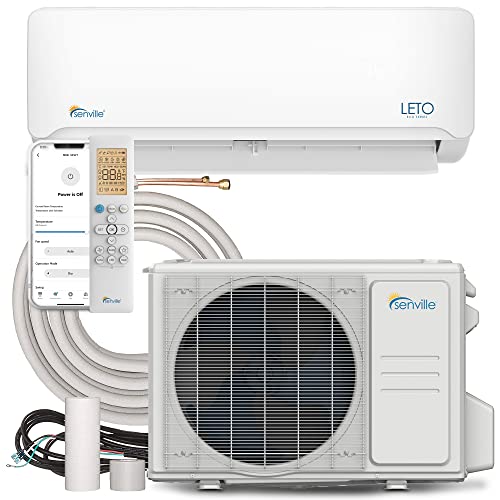
Senville
Senville LETO Mini Split Air Conditioner, Heat…
- Alexa Enabled Mini Split AC/Heating System: Integrate with voice control or app, allowing you to adjust your mini split air condit…
- Versatile 4-in-1 Mini Split: All-season solution with air conditioning, heat pump functional up to 5F/-15C, dehumidifier, fan, and…
- Stylish & Functional Mini Split AC: Suitable for both home and business. Provides performance without compromising aesthetics for…
One quick note before we start: if you’re considering a ductless mini-split setup for a cottage, garage, or smaller home, the Senville LETO 24000 BTU mini split is a solid DIY-friendly option that we’ll reference later when comparing value picks.

Why Halifax Homes Need a Specific Heat Pump Strategy
Halifax isn’t Quebec City. It isn’t Toronto. Our climate has a personality that wrecks heat pumps designed for inland conditions.
We sit on the Atlantic Ocean, which means we get freeze-thaw cycles that would drive a lesser machine insane. One day it’s -12°C with dry snow. Three days later it’s +4°C with freezing rain. That constant swing forces heat pumps into defrost mode repeatedly, and every defrost cycle costs you efficiency and adds stress to the compressor.
Then there’s the salt air. If you live within two kilometres of the harbour, salt spray coats your outdoor coil. Salt plus moisture equals corrosion, and corrosion kills heat exchangers faster than any mechanical failure. I’ve pulled apart five-year-old units from the West End that look like they’ve been underwater for a decade.
Our humidity is the third factor. Halifax summers are muggy, and a heat pump that can’t dehumidify properly leaves your house feeling like a damp basement. You need a unit with a variable-speed compressor that runs longer at lower speeds — that’s what wrings moisture out of the air.
So the generic advice you’ll read on American blogs about “best heat pump brands” doesn’t apply here. You need equipment rated for cold climates, built with corrosion-resistant coils, and sized by someone who understands maritime weather patterns.
The 5 Best Heat Pump Brands for Halifax’s Climate (2026)
I’ve narrowed the field to five brands that consistently perform well in our conditions. These aren’t the only decent options, but they’re the ones I’d put my own money on.
Best Overall: Mitsubishi Electric (Hyper-Heating)
Mitsubishi Electric’s Hyper-Heating H2i series is the benchmark for cold-climate heat pumps. It maintains full heating capacity down to -15°C and keeps producing heat at -25°C. In Halifax, where our winter average hovers around -5°C but we get those bitter cold snaps, that margin matters.
The key is their flash injection technology. It’s not a gimmick — it injects refrigerant vapour into the compressor during low-temperature operation, which boosts capacity and keeps the compressor from working itself to death. I’ve serviced Hyper-Heating units that have run for 12 years without a compressor failure.
Noise is another win. The outdoor unit runs at about 46 dB, which is quieter than a normal conversation. On a tight Halifax lot where your neighbour’s bedroom window is six metres from your condenser, that’s a real advantage.
The downside? Mitsubishi commands a premium. You’ll pay 15-20% more than comparable units from other brands. But when you factor in the 12-year compressor warranty and the reliability record, it’s usually worth it for a primary heating system.
Best for Tight Budgets: Bosch IDS Premium
Bosch’s IDS Premium system uses a two-stage scroll compressor, which is a simpler and cheaper design than Mitsubishi’s inverter tech but still delivers solid efficiency. It achieves 18 SEER2 and 9.5 HSPF2, which beats the federal minimum by a wide margin.
What makes Bosch interesting for Halifax is its compatibility. The IDS Premium can pair with almost any existing indoor coil and furnace, which means if you already have ductwork and a reasonably modern furnace, you can keep them and just swap the outdoor unit. That can cut your installation cost by thousands.
It’s not as good in extreme cold as the Mitsubishi. Below -15°C, the Bosch starts losing capacity noticeably. But for homes that keep the oil furnace as a backup, that’s rarely a problem.
If you want a ductless option on a budget, the Senville LETO 24000 BTU unit I mentioned earlier is worth a look. It’s a 4-in-1 system with heating down to -15°C, and it includes the line set and installation kit in the box. It won’t match Mitsubishi’s build quality, but for a garage, rental suite, or seasonal cottage, it’s hard to beat the value.
Best for Salt Air Resistance: Carrier Infinity
Carrier’s Infinity series with Greenspeed intelligence is the only brand I trust within a stone’s throw of the ocean. Their outdoor units come with a baked-on epoxy coating on the coil and a corrosion-resistant cabinet that actually holds up to salt spray.
The Greenspeed compressor is fully variable, which means it can ramp from 25% to 100% capacity. In Halifax’s shoulder seasons — October and April, when we get those weird 10°C days followed by frost — the unit runs at low speed for hours, pulling humidity out of the house without blasting cold air.
Carrier’s Infinity also has the best defrost logic I’ve seen. It monitors outdoor coil temperature, ambient temperature, and time since last defrost, then decides when to cycle. That prevents the “short-cycling” problem where a unit defrosts every 20 minutes in wet snow, wasting energy each time.
The catch is availability. Carrier dealers in Halifax are fewer than Mitsubishi dealers, and the Infinity line is only sold through their top-tier contractors. You’ll need to do some homework to find one.
Honourable Mention: Daikin and Fujitsu
Daikin’s Aurora series is a strong contender, especially their single-zone wall mounts. Their inverter technology is proven, and their warranty coverage in Canada is solid. The main reason they don’t make my top three is that their local technical support in Halifax has been slow when I’ve needed parts.
Fujitsu’s Halcyon line is excellent in cold climates, with their XLTH series maintaining full capacity at -15°C. Their indoor units are sleek and quiet. But their outdoor cabinets are not as corrosion-resistant as Carrier’s, so I’d avoid them right on the water.
Heat Pump Brands Comparison Table (Efficiency, Noise, Warranty)
| Brand | Model Series | SEER2 Rating | HSPF2 Rating | Outdoor Noise (dB) | Cold Climate Performance | Warranty | Best For |
|---|---|---|---|---|---|---|---|
| Mitsubishi Electric | Hyper-Heating H2i | Up to 24 | Up to 13.5 | 46 | Full capacity to -15°C, operates to -25°C | 12 yrs compressor, 10 yrs parts | Primary whole-home heating |
| Bosch | IDS Premium | 18 | 9.5 | 51 | Good to -15°C, loses capacity below | 10 yrs compressor, 10 yrs parts | Budget replacements with existing ductwork |
| Carrier | Infinity Greenspeed | Up to 20 | Up to 11 | 48 | Excellent to -20°C | 10 yrs compressor, 10 yrs parts | Homes near salt water |
| Daikin | Aurora | Up to 21 | Up to 10.5 | 50 | Good to -15°C | 12 yrs compressor, 10 yrs parts | Single-zone installations |
| Fujitsu | Halcyon XLTH | Up to 22 | Up to 12 | 47 | Full capacity to -15°C | 10 yrs compressor, 10 yrs parts | Cold climate with less salt exposure |
These efficiency numbers come from manufacturer spec sheets and AHRI certifications. Real-world performance depends heavily on installation quality, which brings me to the most important part of this entire article.
The #1 Factor: Choosing a Marine-Savvy Installer in Halifax
You can buy the best heat pump on the market, and a bad installer will still ruin it. I’ve seen it happen dozens of times.
A heat pump is only as good as its refrigerant charge, airflow, and ductwork. Get the charge wrong by even 10%, and you lose 15-20% of your efficiency. Install the outdoor unit flat against a wall with no clearance, and you’ll choke the airflow and shorten the compressor’s life.
Halifax adds one more layer: the installer needs to understand marine corrosion. That means they should be elevating the outdoor unit off the ground on a stand, keeping it away from direct salt spray, and using corrosion-inhibiting treatments on the coil. Many mainland-trained installers skip these steps because they simply don’t know better.
Questions to Ask Your Halifax Contractor
Before you sign anything, ask these questions and listen carefully to the answers:
- How many heat pumps have you installed in the last 12 months? You want someone doing at least 50 per year. A general handyman who does two heat pumps annually is a gamble.
- Do you use a refrigerant scale or just gauge pressures? The correct answer is a scale. Weighing the charge is the only accurate method.
- Will you perform a Manual J load calculation? If they say “we just go by square footage,” walk away. Square footage alone doesn’t account for your windows, insulation, or the fact that your house faces the harbour wind.
- How do you handle the condensate drain in winter? A frozen condensate line will back water into your house. They should mention heat tracing or a proper slope.
- Are you familiar with efficiencyNS rebate requirements? The rebate requires specific equipment and installation documentation. An installer who knows the process will save you hours of paperwork.
- What’s your policy on electrical panel upgrades? If you have a 100-amp panel and they say “it’ll be fine,” get a second opinion. You likely need 200 amps.
One more thing: ask for references from the last three installations they did in your neighbourhood. Then actually call those people. A 10-minute conversation with a past customer tells you more than any website review.
How to Calculate Your Real Cost After Nova Scotia Rebates
Nova Scotia’s efficiencyNS program offers rebates for heat pump installations, but the amounts change periodically. As of my last update, the federal Oil to Heat Pump Affordability (OHPA) program and provincial top-ups can combine for substantial savings.
Here’s how to think about the math:
Start with the installed cost. A typical ductless mini-split installation in Halifax runs between $4,000 and $8,000 depending on the number of indoor heads and the complexity of the install. A central ducted heat pump that ties into your existing furnace runs $10,000 to $18,000.
Subtract the federal OHPA grant if you qualify. That program offers up to $5,000 for low-to-moderate income households switching from oil. The provincial efficiencyNS rebate adds another $1,500 to $3,000 depending on the system’s efficiency rating.
So a $12,000 ducted system could drop to $5,500 or less after both rebates. That’s a much easier number to stomach.
Then factor in annual savings. A typical Halifax home using 1,500 litres of heating oil per year at current prices spends around $2,400 annually. A heat pump with an HSPF2 of 10 or higher will cut that heating bill by roughly 60-70%, saving you $1,400 to $1,700 per year. Your payback period lands between 3 and 5 years depending on your usage.
Check the current rebate amounts on the efficiencyNS website before you commit. They update the program regularly, and the installer you choose should be able to walk you through the paperwork.
The Hidden Cost: Electrical Panel Upgrades and Ductwork
Nobody talks about this on the sales call, but it’s the single most common surprise I encounter.
Many Halifax homes built before 1980 have 100-amp electrical panels. A heat pump needs its own dedicated circuit, and if your panel is already near capacity, you’ll need a 200-amp upgrade. That costs $2,000 to $5,000 depending on your panel’s condition and whether the utility needs to upgrade the service entrance.
Don’t let a contractor dismiss this. I’ve seen installers wire a heat pump into an overloaded panel and cause the main breaker to trip on cold winter nights. That’s a dangerous situation, especially when you’re relying on the heat pump for warmth.
Ductwork is the second hidden cost. If you have an older home with those big, leaky galvanized ducts designed for a furnace, they might not be sized correctly for a heat pump’s lower airflow requirements. Sealing and rebalancing ducts costs $1,000 to $3,000. In some cases, you’re better off going ductless.
Ask your installer to inspect your panel and ductwork before giving you a final quote. If they haven’t mentioned either, they haven’t done a thorough job.
Dual-Fuel Strategy: Pairing Your Heat Pump with an Oil Furnace
Most Halifax homes already have an oil furnace. You don’t need to rip it out to get the benefits of a heat pump. In fact, keeping it as a backup is often the smartest move.
A dual-fuel setup works like this: the heat pump runs as your primary heat source down to a certain outdoor temperature. When the temperature drops below that point — called the “balance point” — the system switches over to the oil furnace. You get the efficiency of the heat pump for 90% of the winter, and the raw power of the furnace for those three or four brutal cold snaps.
What should your balance point be? For most Halifax homes, it’s around -8°C to -10°C. At that temperature, a cold-climate heat pump’s efficiency drops to roughly 1.5 to 2 COP (coefficient of performance), which means it’s producing 1.5 to 2 units of heat for every unit of electricity. Oil at current prices is equivalent to about 1.5 COP. Below that balance point, oil becomes cheaper per unit of heat.
You’ll need a thermostat that can manage this switch automatically. Look for a model that supports dual-fuel operation and lets you set the lockout temperature. I’ve written a guide on thermostats for heat pumps that covers this in detail.
The key is getting the balance point set correctly. Too high, and you burn oil unnecessarily. Too low, and you’re paying premium electricity rates to run a struggling heat pump. A good installer will calculate this based on your home’s heat loss and your utility rates.
Frequently Asked Questions for Halifax Homeowners
How long do heat pumps last in Halifax’s climate?
With proper maintenance and a marine-grade installation, expect 12 to 15 years. The compressor is usually the first major component to fail, but corrosion on the outdoor coil kills units faster. Units installed within 500 metres of the ocean need annual coil cleaning and corrosion checks.
Can a heat pump fully replace my oil furnace in Halifax?
Technically yes, if you buy a cold-climate model rated for -25°C and your home is well-insulated. But I usually recommend keeping the oil furnace as a backup for the coldest nights. It’s cheap insurance, and it ensures you have heat if the power goes out and your backup generator can’t handle the heat pump’s startup surge.
What size heat pump do I need for a 2,000 square foot home?
You need a load calculation, not a guess. A rough estimate is 30,000 to 36,000 BTU for a 2,000 sq ft home in Halifax, but that varies wildly with insulation, window quality, and air leakage. A 24,000 BTU unit like the Senville LETO might handle a well-insulated 1,500 sq ft open-concept space, but it would struggle in an older drafty home of the same size.
Are the efficiencyNS rebates worth the paperwork?
Absolutely. The rebates can cover 20-40% of your installed cost. The paperwork takes about an hour. If you’re replacing an oil system, the federal OHPA grant is even more generous. Just make sure your installer is registered with efficiencyNS and provides the required documentation.
How noisy are heat pumps on a cold Halifax morning?
Quality brands run at 46-51 dB outdoors, which is quieter than a dishwasher. The bigger noise issue is indoor — some budget units have a noticeable “whoosh” at high fan speeds. Mitsubishi’s indoor units are the quietest I’ve tested at around 19 dB on low speed. If you’re installing a unit near a bedroom, prioritize low indoor noise ratings.
For more on cold-weather performance, check out our guide to cold climate air source heat pumps.
Final Verdict: Which Brand Wins for 2026?
If you want the best overall performance and you’re using the heat pump as your primary heat source, buy Mitsubishi Electric Hyper-Heating. It’s the most reliable cold-climate unit I’ve ever serviced, and it will outlast most others by five years or more. The premium price hurts, but the long-term operating costs are lower.
If you live near the water, prioritize Carrier Infinity. The corrosion resistance alone is worth the extra effort of finding a qualified dealer. A Mitsubishi on the harbour will suffer premature coil failure; a Carrier will shrug off the salt.
If budget is your main concern and you have existing ductwork, Bosch IDS Premium gives you 90% of the performance at 70% of the price.
And for a garage, cottage, or small suite, the Senville LETO is a legitimate value pick. It’s not a primary heating solution for a full Halifax winter, but it handles the shoulder seasons and mild days without breaking the bank.
Whatever you choose, the installer matters more than the brand. A mediocre heat pump installed perfectly will outperform a premium unit installed carelessly. Do your homework on the contractor, get three quotes, and insist on a load calculation.
- Mitsubishi Hyper-Heating is the best primary heat source for Halifax winters, despite the higher cost.
- Carrier Infinity is the only brand I’d trust within 2 km of the harbour.
- Bosch IDS Premium is the smart budget pick if you have existing ductwork.
- Get a Manual J load calculation from every contractor — never accept a square-footage guess.
- Budget $2,000-$5,000 extra for a potential electrical panel upgrade.
- Keep your oil furnace as a dual-fuel backup with a balance point around -8°C.
- Check efficiencyNS rebates before signing anything — they can cut your cost by a third.

I am a mechanical engineer and love doing research on different home and outdoor heating options. When I am not working, I love spending time with my family and friends. I also enjoy blogging about my findings and helping others to find the best heating options for their needs.
Related guides

Finding the Best Temperature to Leave the Heat On
Wondering what’s the best temperature to leave heat on? Find out how to stay cozy while saving on…
Top-Rated Heating Repair in Macon: Stay Warm All Winter
It's 6 AM in Macon, the thermostat reads 58 degrees, and the furnace won't kick on. You've got…
The Best Room Heater for Cozy, Efficient Warmth
The best type of room heater is a ceramic heater for its energy efficiency, quick heating, and safety…
