Naturally Warm Your Patio for Evenings With a 48,000 BTU Heater
On this page 9 sections
- Patio Heater Comparison
- Best Patio Heaters That Naturally Warm Your Outdoor Space
- How to Choose a Patio Heater That Warms Naturally
- Sizing Your Heater for Effective Patio Warmth
- Estimating Running Costs of Patio Heaters
- Safety and Certification to Trust Outdoors
- Why Pellet Patio Heaters Are Often Overlooked
- Pre-Buying Checklist for Your Patio Heater
- Frequently Asked Questions
Patio Heater Comparison
| Rank | Model | Best for | Heat Output (BTU or Watts) | Fuel Type | Portability | Price |
|---|---|---|---|---|---|---|
| 1 | Hykolity 48000 BTU Pyramid Propane Patio HeaterMost Powerful Heat | Large patios needing strong, adjustable heat and easy mobility | 48000 BTU | Propane | Two detachable wheels | Check price |
| 2 | Nfccra 1500W Infrared Tower Outdoor Electric HeaterElectric Instant Heat | Medium patios needing instant, clean electric warmth with weather resistance | 1500 W | Electric | Ergonomic handle | Check price |
| 3 | Buyplus 1500W Portable Electric Garage Patio HeaterQuick Garage Heat | Garages or patios up to 200 sq ft needing fast, portable electric warmth | 1500 W | Electric | Portable with handle | Check price |
| 4 | udforsk Moo Moo Nightgown Green Flower XLCozy Lounge Dress | Staying warm while seated or moving lightly on the patio | — | — | Wearable garment | Check price |
| 5 | Generic 2 Pack White Felt Wedding Blanket BasketsBlanket Storage | Organizing and offering blankets for guests on chilly patio evenings | — | — | Fold-flat baskets | Check price |
A warm patio can extend your outdoor season well into chilly nights. Choosing the right heater depends on your space size, fuel preference, and how natural you want the warmth to feel.
This guide compares propane, electric, and pellet patio heaters that offer effective, natural-feeling heat for cozy evenings outdoors.
Best Patio Heaters That Naturally Warm Your Outdoor Space

Hykolity 48000 BTU Pyramid Propane Patio Heater
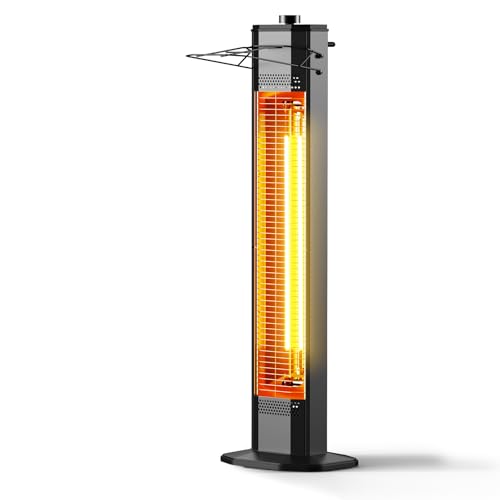
Nfccra 1500W Infrared Tower Outdoor Electric Heater

Buyplus 1500W Portable Electric Garage Patio Heater

udforsk Moo Moo Nightgown Green Flower XL

Generic 2 Pack White Felt Wedding Blanket Baskets
How to Choose a Patio Heater That Warms Naturally

Patio heaters warm naturally by radiating heat that you can feel directly, not by trying to raise the air temperature like an indoor furnace. The simplest measure of their power is heat output, listed in BTUs or watts. One BTU roughly equals the energy needed to raise a pound of water by 1°F; a patio heater rated at 48,000 BTU provides a strong blast of warmth, enough for several people around it.
Fuel type shapes how natural and effective that warmth feels. Propane heaters burn clean, delivering intense, radiant heat that mimics the sun’s warmth on a chilly evening. Electric infrared heaters also radiate heat directly onto bodies and objects, but their output tops out near 5,000 watts (about 17,000 BTU), limiting coverage. Pellet heaters burn wood pellets to create a cozy, flickering warmth, but they need more maintenance and are less portable.
Portability matters depending on your patio setup and use. Propane heaters with wheels move easily to where you need heat or can be stored when not in use. Electric heaters are often wall-mounted or freestanding but require a nearby outlet. Pellet heaters are generally stationary and suited for patios with some cover and storage space.
Safety features are non-negotiable outdoors. Look for a tip-over shutoff switch that cuts fuel or power if the heater falls. Weather resistance, like stainless steel or powder-coated steel, helps your heater last through damp or wintery conditions. Electric models should be rated for outdoor use, with waterproof plugs and controls.
If you want to warm your patio naturally, go for radiant heat that warms people and objects directly. To warm a house naturally, consider combining radiant heating with good insulation and passive solar gain—letting the sun in during the day and trapping warmth at night—but that’s another topic.
Sizing Your Heater for Effective Patio Warmth
Heater size is crucial for effective warmth and depends on your patio’s square footage and exposure to wind. Heat output in BTU roughly translates to coverage area: about 10,000 BTU warms 100 square feet under sheltered conditions. A 48,000 BTU heater can cover roughly 450 square feet, but wind or open layouts reduce that.
Say your patio is 12 by 14 feet, or 168 square feet. Divide that by 10 to get 16,800 BTU needed for sheltered warmth. A 48,000 BTU propane heater easily meets this, giving you headroom for breezes or open sides that let heat escape quickly.
Wind is your biggest foe. Even a light breeze can carry away radiant heat, so patios open to the elements require heaters with higher BTUs or wind barriers like screens or plants. Electric patio heaters top out around 5,000 watts, about 17,000 BTU, making them suitable for small, covered patios or spot heating.
Outdoor gas patio heaters like propane models are popular because they produce strong, adjustable heat and can be moved to where you need it. Wood pellet patio heaters add ambiance and warmth but are best for semi-enclosed spaces due to their flame and maintenance needs.
If you want the top-rated outdoor electric heaters or are curious about other types, check out our full buying guide for patio heaters Naturally warms up my evenings to find the right fit for your space and budget.
Estimating Running Costs of Patio Heaters
Running costs for patio heaters vary widely depending on fuel type, heater size, and usage. Propane heaters are often the first choice for outdoor warmth, so let’s start there.
A 48,000 BTU propane heater like the Hykolity 48000 BTU Pyramid Patio Heater consumes about 1.4 pounds of propane per hour. Since one gallon of propane packs roughly 91,500 BTU, dividing 48,000 BTU by 91,500 BTU per gallon gives about 0.52 gallons burned per hour. At a typical propane price of $3.50 per gallon, that runs about $1.82 an hour.
Electric outdoor heaters use wattage to measure power draw. Take a 1,500 W electric patio heater running for 4 hours: 1,500 W ÷ 1,000 = 1.5 kW; 1.5 kW × 4 hours = 6 kWh. At 17 cents per kWh, that totals about $1.02 for the evening. This makes electric heaters generally cheaper to run per hour for short use but depends on local electricity rates.
Outdoor electric water heaters and tankless electric water heaters also consume electricity measured in kilowatts but usually at a higher rate depending on flow. They aren’t typically used for patio heating, so their running costs aren’t directly comparable here.
Pellet patio heaters add a maintenance factor. Pellets cost around $250 per ton, and a typical pellet heater burns roughly 1.5 to 3 pounds of pellets per hour. That’s about 0.75 to 1.5 cents per minute. Add in periodic ash disposal and occasional motor upkeep, and the real cost rises beyond just pellet price.
For a typical 4-hour evening, propane tends to cost more than electric, while pellet fuel falls somewhere in the middle once you include maintenance. Your choice should consider fuel availability and how often you expect to use the heater.
Safety and Certification to Trust Outdoors
Safety features are non-negotiable for any outdoor heater. The first line of defense is a tip-over shutoff switch that cuts power or fuel flow instantly if the heater falls.
Overheat protection is essential. It prevents your heater from getting too hot, which could damage the unit or start a fire. Quality electric and propane patio heaters include these safety features as standard.
Weatherproof ratings matter for electric models. An IPX5 rating means the heater can handle water jets from any direction, ideal for patios exposed to rain or sprinklers. Without this, moisture can short out internal components.
Look for UL or CSA certification specific to outdoor use. These confirm the heater meets rigorous safety standards for electrical, fuel, and structural integrity in outdoor conditions.
Handling fuels like propane safely requires proper ventilation to prevent carbon monoxide buildup. Pellet heaters also need airflow and regular chimney or vent cleaning to avoid smoke hazards.
The Amazon Basics 46000-BTU Standing Propane Outdoor Patio Heater includes these safety essentials: tip-over shutoff, overheat sensors, and sturdy construction. Its UL certification confirms it’s designed for safe outdoor use, an important check before buying.
Why Pellet Patio Heaters Are Often Overlooked
Wood pellet patio heaters deliver natural radiant heat by burning compressed wood pellets, making them a distinct option from gas or electric heaters.
They burn cleanly and efficiently, producing a cozy warmth that feels like a campfire without the smoke or smell.
Pellet fuel comes from renewable wood waste, so these heaters have a smaller carbon footprint than propane models, which rely on fossil fuels.
On average, pellet heaters run for about 6 to 10 hours per hopper fill, depending on the model and heat output setting.
You’ll likely refill pellets once or twice during an evening, which requires some planning compared to the longer burn times of propane tanks.
Installation involves positioning the heater where you can vent exhaust safely outdoors; most pellet patio heaters need a flue or chimney to direct combustion gases away from the seating area.
That venting requirement means pellet heaters aren’t as plug-and-play as propane patio heaters and may not suit all outdoor setups.
Still, if you want a wood-fired warmth with a greener profile and don’t mind managing pellet refills and venting, pellet patio heaters offer a natural, comforting heat.
Pre-Buying Checklist for Your Patio Heater
Match your heater to the size of your patio and the fuel you can easily get. A 48,000 BTU propane heater suits medium to large patios if you have a steady propane supply nearby. Electric models need a reliable outdoor-rated power source.
Verify that your heater carries essential safety features like a tip-over switch and overheat protection, plus certifications such as UL or ETL for outdoor use. These ensure the unit meets strict safety standards and reduces fire risk.
Plan for protection from rain, snow, and wind. Even weather-resistant heaters benefit from a cover or storage spot during off-seasons to extend their lifespan and maintain performance. Consider where you’ll store the fuel tank if using propane.
Confirm that you have easy access to power outlets or fuel tanks. For propane units, check tank size and clearance requirements. For electric heaters, ensure the cord length and outlet location fit your patio layout without creating a tripping hazard.