Skip to content
HeaterGuides
Electric Heaters

Best Heater Brands Known for Safety & Reliability: 1,500 W Picks

On this page 8 sections
  1. Compare Heater Safety and Controls
  2. Top Heater Picks for Safety and Reliability
  3. How To Choose A Safe Heater Brand
  4. What The Specs Tell You
  5. How Much Heat You Actually Need
  6. Safety And Fuel Rules That Matter
  7. Quiet Heat For Bedrooms And Empty Homes
  8. Frequently Asked Questions
Bottom line
The best heater brands known for safety & reliability start with a 1,500 W electric model that’s ETL, UL, or CSA listed, has tip-over and overheat protection, and uses a real thermostat. For most readers, that points to a Dreo-style room heater for quick, controlled heat in bedrooms, offices, and other small spaces.
Key takeaways
A 1,500 W plug-in heater is the ceiling for a normal 120 V outlet, and it draws about 12.5 A.
Look for ETL, UL, or CSA listing, plus tip-over and overheat protection.
Use a thermostat and timer so the heater cycles instead of running flat out.
For garages, offices, and bedrooms, quiet operation matters more than raw wattage once the room is already warm.
Indoor non-electric heaters need fuel-specific rules; outdoor heaters stay outdoors.

Compare Heater Safety and Controls

RankModelBest forHeat outputSafety featuresControlsPrice
1
DREO Atom One Space HeaterBest Safety Details
Bedrooms and offices where listed safety features matterUp to 1500WETL-listed; tip-over and overheat protection; safety plug; V-0 flame-retardant mDigital thermostat, remote, ECO mode, 12-hour timerCheck price
2Bedrooms and offices where low fan noise is a priority1500WTilt-detection sensor; V-0 flame-retardant materialsThermostat, remote, multiple heating levels and modesCheck price
3Rooms where a timer and automatic shutoff are useful1500WETL-certified; tip-over and overheat protection; 24-hour automatic power-off12-hour timer; ECO mode; remote; 70° oscillationCheck price
4
R.W.FLAME Mini Ceramic HeaterBest With Child Lock
Small rooms where a child lock and remote are useful1500WETL-certified; overheat protection; 45° tip-over shutoff; child lockThermostat; remote; touch controls; 24-hour timerCheck price
5Apartments and living rooms needing supplemental zone heat750W or 1500W—Remote, touch panel, smartphone, Alexa; timerCheck price

Choose the heater first by fuel, room size, and safety features; brand comes after that. A good name on the box won’t help if the heater is too small, too loud, or plugged into the wrong circuit.

For indoor rooms, electric heaters are the easiest path to safe, predictable heat. Fuel-burning heaters can work, but they demand ventilation, carbon monoxide protection, and stricter installation rules.

Top Heater Picks for Safety and Reliability
#1Best Safety Details
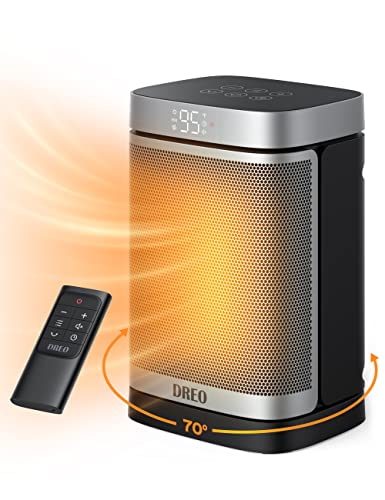
DREO Atom One Space Heater

DREO Atom One Space Heater

Best for Bedrooms and offices where listed safety features matter
Its ETL-listed Shield360° system includes tip-over and overheat protection, and the product also specifies a safety plug and V-0 flame-retardant materials. The 41–95°F thermostat adjusts in 1°F increments, so you can set a target rather than guess at a heat level.
Heat output Up to 1500WSafety ETL-listed; tip-over and overheat protectionThermostat 41–95°F, adjustable in 1°F incrementsNoise As quiet as 37.5 dB
Why it made the cut
ETL-listed with tip-over and overheat protection
70° oscillation
Thermostat adjusts in 1°F increments
Good to know
Fan noise is specified at 37.5 dB, louder than some picks here
No child lock is listed
Skip it if Skip it if you need a heater with a stated child lock or a quieter listed noise level.
#2Quiet Room Pick
DREO Quiet Space Heater

DREO Quiet Space Heater

Best for Bedrooms and offices where low fan noise is a priority
The brushless DC motor and winglet fan design are specified at 34 dB, while the thermostat adjusts from 41–95°F in 1°F increments. Its tilt-detection sensor and V-0 flame-retardant materials add concrete safety details for everyday room heating.
Heat output 1500WThermostat 41–95°F, adjustable in 1°F incrementsNoise 34 dBSafety details Tilt-detection sensor; V-0 flame-retardant materials
Why it made the cut
Specified at 34 dB
Thermostat adjusts in 1°F increments
Tilt-detection sensor and V-0 flame-retardant materials
Good to know
No certification is stated in the supplied product details
No oscillation is listed
Skip it if Skip it if you want a stated ETL listing or wide-angle oscillation.
#3Best Timer Options
DREO Oscillating Space Heater

DREO Oscillating Space Heater

Best for Rooms where a timer and automatic shutoff are useful
This model lists ETL-certified safety, tip-over and overheat protection, plus automatic power-off after 24 hours without interaction. Its 12-hour timer and 70° oscillation suit a room where you want scheduled warmth to move across the space.
Heat output 1500WSafety ETL-certified; tip-over and overheat protectionTimer 12-hour timer; 24-hour automatic power-offNoise 34 dB
Why it made the cut
ETL-certified safety with tip-over and overheat protection
12-hour timer and 24-hour automatic power-off
70° oscillation
Good to know
The thermostat’s temperature range is not stated
Noise is listed at 34 dB, but no specific motor design is given
Skip it if Skip it if you need a clearly specified thermostat temperature range.
#4Best With Child Lock
R.W.FLAME Mini Ceramic Heater

R.W.FLAME Mini Ceramic Heater

Best for Small rooms where a child lock and remote are useful
The product lists ETL certification, overheat protection, 45° tip-over shutoff, and a child lock. Its thermostat is specified at ±1°F precision, and the remote lets you switch among Low, High, Eco, and Fan modes without reaching the heater.
Heat output 1500WCoverage Up to 200 sq.ftSafety ETL-certified; overheat protection; 45° tip-over shutoffNoise 35 dB
Why it made the cut
ETL-certified with overheat and tip-over protection
Child lock
Remote control and 24-hour timer
Good to know
The listed 200 sq.ft coverage is a manufacturer claim, not a sizing guarantee
Noise is specified at 35 dB
Skip it if Skip it if you need wide-area oscillation or quieter listed operation.
#5Best Wall-Mounted Pick
R.W.FLAME 50-Inch Electric Fireplace

R.W.FLAME 50-Inch Electric Fireplace

Best for Apartments and living rooms needing supplemental zone heat
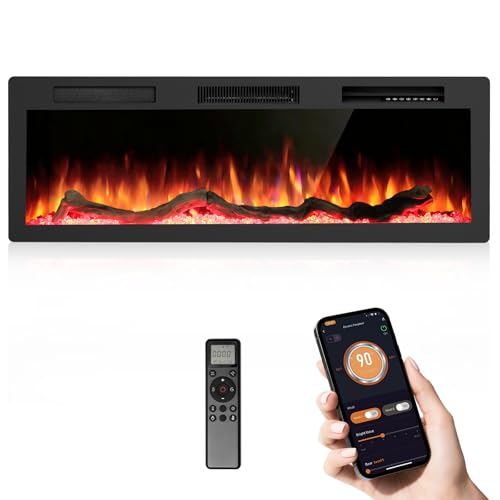
The 50-inch fireplace offers 750W and 1500W heating modes, with a thermostat adjustable from 59–95°F. It can be wall-mounted or recessed and includes remote, touch, smartphone, and voice controls; the supplied details do not list a safety certification or protective shutoffs.
Heat output 750W or 1500WThermostat 59–95°FCoverage Up to 400 square feetDimensions 50 in L × 17.32 in H × 5.71 in W
Why it made the cut
Two heating modes: 750W and 1500W
Wall-mounted or recessed installation
Remote, touch, smartphone, and Alexa controls
Good to know
Safety certification and protective shutoffs are not listed
Requires a suitable wall opening or mounting location
Skip it if Skip it if listed tip-over and overheat protection are a priority.

How To Choose A Safe Heater Brand

best heater brands known for safety & reliability: How To Choose A Safe Heater Brand

The best heater brands known for safety & reliability earn that label through verifiable controls, not a familiar logo. For popular heater brands and heaters from brands for 2026, start with an ETL, UL, or CSA listing, then confirm tip-over shutoff, overheat protection, a real thermostat, and a timer.

Check Before You Buy
ETL, UL, or CSA listing on the heater or its documentation
Tip-over shutoff that cuts power if the unit falls
Overheat protection separate from the thermostat
Adjustable thermostat rather than a simple high/low switch
Timer with a clearly stated maximum run time

Reliability is mostly a parts-and-controls question. A stable thermostat should stop and restart the heater without wide temperature swings; a sturdy plug and cord should fit the outlet firmly; and the housing should stay cool enough to touch in the places the manufacturer says are touchable. A heater that rattles, smells of hot plastic, or cycles erratically deserves a return, not a hopeful second chance.

Skip These Listings
Pass on any heater with no recognized safety listing, no thermostat, no clear automatic shutoff, or vague claims about being safe without naming a certification. Marketing copy can’t replace a test mark or an actual control.

Electric heaters are the cleanest fit for offices and bedrooms because they avoid combustion, fuel storage, carbon monoxide, and flue problems. Plug one directly into a wall outlet, never an extension cord or power strip, and keep at least 3 feet of clearance around it. DREO’s portable room-heater cards are useful comparisons if you want to check how a current model presents its controls and safety features.

In short
Choose the model with the clearest listing and the clearest shutoffs, then compare thermostat control and cord quality. A cheap heater with missing safety information is a poor bargain, even if the brand name is popular.

What The Specs Tell You

The useful specs are simple: plug-in heaters top out at 1,500 W, and thermostat behavior matters more than decorative features. For the best gas heater brands, use a separate comparison because combustion heaters need indoor ratings, required ventilation, and carbon-monoxide protection; this guide’s electric picks avoid those flue concerns. Compare gas heater brands if gas is the direction you’re considering.

SpecWhat to look forWhy it matters
Maximum output1,500 W for a standard plug-in heaterAt 120 V, that is about 12.5 A, so the heater belongs directly in a suitable wall outlet.
ThermostatAdjustable temperature control with a clear setting rangeIt cycles the heating element instead of forcing you to run full power continuously.
OscillationOptional, with a stated sweep or controlIt spreads warm air across a room; it doesn’t create more heat.
TimerA stated run-time limit and easy controlsIt reduces the chance of forgetting the heater, but it isn’t a substitute for supervision.
Safety featuresTip-over shutoff, overheat protection, and ETL, UL, or CSA listingThese are checkable safeguards rather than a vague claim that the heater is safe.
Compare controls and protections before comparing display panels or remote controls.

An oilfilled heater’s safety thermostat controls the element while the oil-filled fins hold heat and release it after the thermostat clicks off. That slower, quiet heat is why some readers prefer an oil heater safety setup, but the unit still needs a flat floor and proper clearance. A radiant heater also needs clearance; its heating method doesn’t cancel the fire risk.

Wall mount heater safety depends on installation, not the word wall in the product title. Mount an electric heater or fireplace exactly as listed, use the specified hardware and clearances, and keep curtains, bedding, and furniture away from the heating area. A recessed or wall-mounted R.W.FLAME fireplace belongs on the wall only when its mounting instructions and surrounding clearances are followed.

Spend On Controls
A better fan, steadier thermostat, and faster safety cutoff are worth more than extra display effects or decorative trim. Those are the features you’ll notice when the room is cold and the heater has to cycle all night.
Myth
An oil-filled heater can’t overheat because the oil spreads the heat.
Fact
The oil stores and transfers heat; it doesn’t replace the thermostat or overheat cutoff. Keep the heater upright, uncovered, and clear of combustibles.

How Much Heat You Actually Need

For electric heaters for garages, a 1,500 W plug-in model is usually supplemental heat, not a way to heat the whole building. That’s also the normal plug-in ceiling: it works best when you aim it at the area where you’re sitting or working.

The cheapest most efficient electric heater to run is generally the one that uses the least electricity while still meeting your needs; resistance heaters turn electricity into heat at roughly the same rate. A thermostat can reduce wasted run time by switching the heater off once the room reaches its set temperature. Check your local electricity rate and use the heater’s wattage to estimate the cost.

HeaterWattsPer hourPer day (8 h)Per month (30 days)
1,500 W space heater1,500 W26¢$2.04$61.20
Calculated at 17¢ per kWh. Assumes 17 cents per kWh and eight hours of operation daily. At full power, 1,500 W for eight hours uses 12 kWh: about $2.04 a day, or $61.20 over 30 days. A thermostat may lower actual use.

A 1,500 W electric forced air heater can move warmth across a space, but the fan doesn’t create extra heat. Garages lose heat through drafts, uninsulated walls, and open doors, so even a good plug-in heater may struggle. Forced air helps most when the space is reasonably sealed; for a leaky garage, a heater sized for the space and its electrical supply may be needed.

For a Walmart electric heater or walmart electric heater search, compare the listing’s safety certification and controls before choosing by store brand. Look for a UL, ETL, or CSA listing, tip-over and overheat protection, and a thermostat. Confirm the model’s wattage and use instructions rather than assuming every heater sold under one retailer’s label has the same features.

Safety And Fuel Rules That Matter

Gas heater safety tips start with one hard rule: use only an indoor-rated fuel-burning heater indoors, follow the ventilation requirements in its manual, and keep a working carbon monoxide alarm in the space. Portable natural gas heaters safety depends on the exact model and its approved use; a fuel type alone doesn’t make a heater safe indoors.

Keep outdoor heaters outside
Patio, torpedo, and construction heaters do not belong in a room, tent, or vehicle cabin. Their exhaust can produce dangerous carbon monoxide, and opening a door or window doesn’t turn an outdoor heater into an indoor-rated one.

For heaters for indoor use non electric, check the label and manual for indoor approval and required clearances before buying. Propane models intended for indoor use need an oxygen depletion sensor. Kerosene heaters use 1-K kerosene only—never gasoline—and need the ventilation their manuals specify.

Vent-free gas heaters can be restricted or prohibited by state or city code, so check local rules before purchasing. A non electric indoor heater that is legal in one area may not be allowed in yours.

Gas heater safety tips and maintenance
Read the manual for fuel type, ventilation, clearances, and maintenance intervals.
Keep a working CO alarm in the occupied area; leave and get fresh air if it alarms.
Follow the manufacturer’s instructions for cleaning and inspection; don’t bypass safety devices.
Check local code before installing or using a vent-free gas heater.

For electric heaters, always unplug the unit before cleaning dust from its air inlets. Check the cord and plug for any signs of damage or discoloration. Never run a heater on an extension cord or power strip, and replace any heater that trips a breaker repeatedly or emits a hot smell instead of resetting breakers.

Quiet Heat For Bedrooms And Empty Homes

For safety heaters for empty homes, use only a model whose manufacturer says it’s designed to run unattended; a timer or app doesn’t make an ordinary space heater safe to leave on. In a bedroom, quiet operation matters because the heater may run for hours, and a low-noise fan and timer are more useful than flashy flame effects.

The best gas heater brands vary by use: check for indoor-use certification, necessary safety features, fuel type, output size, and service support. Avoid using heaters designed solely for outdoor or construction use inside your home. For a detailed comparison, see reliable gas heater brands.

Navien makes water-heating equipment, not portable room heaters, so how Navien heaters compare depends on the water-heater model and your home’s hot-water needs. Compare flow and capacity, installation requirements, warranty terms and local service support; tankless models are covered in our tankless water heater comparison.

Bathtub immersion heater safety is simple: don’t use an improvised immersion heater to warm bathwater at home. Water and electrical heating devices are a dangerous combination unless the equipment is specifically designed and approved for that use.

Match The Controls To The Room

Smart controls, a remote and automatic shutoff can help you preheat a room and then leave the heater alone, but they don’t replace the required clearance or the manufacturer’s instructions. Keep electric heaters 3 feet from combustibles, plug them directly into a wall outlet, and don’t leave one running unattended unless its manual allows it.

Good fit
A quiet fan and timer suit bedrooms where noise and long run times matter.
Remote or smart controls can make preheating more convenient.
Look elsewhere if
Controls don’t make a heater suitable for unattended operation.
A room heater may not match the fuel, space or installation needs of a whole-home system.
DREO Space Heater, Portable Electric Heaters for Indoor Use with Ther…
For a bedroom
DREO Space Heater, Portable Electric Heaters for Indoor Use with Ther…
The DREO portable space heater is the room-heater option to compare for bedroom use; check its listed safety features and manual for approved operating conditions before relying on it overnight.
See current price

A reliable brand is one whose heater has a suitable control system, listed safety features and a design that matches your fuel and space. The name on the case matters less than those checks.

Frequently Asked Questions

What are the most reputable heater brands for home use?
Reputation is a starting point, not a safety rating. Compare the exact model’s safety listing, thermostat, tip-over and overheat protection, warranty terms, and available replacement parts; features can vary within one brand.
Which heater brand is best for energy efficiency?
For electric resistance heaters, brands use electricity at essentially the same rate for the same heat output: a 1,500 W heater running for one hour uses 1.5 kWh. A thermostat can reduce the time it runs, so choose controls that hold your target temperature rather than paying extra for a brand name alone.
Are premium space heaters worth the money?
A higher price can make sense if the specific model adds useful controls, quieter operation, or a better fit for your room. It won’t make electric resistance heat cheaper per unit of heat, and premium features don’t replace a recognized safety listing or the protections you need.
What makes a heater safe for an office or bedroom?
Choose an indoor electric model with a UL, ETL, or CSA listing, tip-over and overheat protection, and a thermostat. Plug it directly into a wall outlet, keep it at least 3 feet from combustibles, and don’t leave it running while you sleep unless the manufacturer says that model is designed for it.
What are the main gas heater safety tips?
Use only a heater rated for indoor use, follow its manual’s ventilation requirements, and keep a working carbon monoxide alarm nearby. For propane, look for an oxygen depletion sensor; never use a patio or construction heater indoors, in a vehicle, or in a tent.
Can I use a non-electric heater indoors?
Only if the heater is specifically rated for indoor use and you follow its fuel, ventilation, and clearance instructions. A garage or patio rating doesn’t make a heater suitable for a bedroom, vehicle, or tent; local rules may also restrict vent-free gas heaters.
How do Navien heaters compare to other brands?
Navien makes tankless water heaters, so compare its models with other tankless units by flow rate, temperature rise, fuel type, venting requirements, and local service availability. For a separate comparison of tankless models and brands, see Top 5 Tankless Water Heaters That Will Transform Your Home Experience.

Joye Editor

HeaterGuides covers home heating, water heating and HVAC: how the equipment works, what it costs to run, and how to use it safely.

More in Electric Heaters