Top Pick Space Heaters for Indoor Use That Heat Up to 200 Sq Ft
On this page 8 sections
- How These Heaters Stack Up
- Top Pick Electric Space Heaters for Indoor Use
- What Defines a Top Pick Space Heater
- How to Size a Space Heater for Your Room
- Understanding Running Costs and Energy Use
- Safety and Certification Standards That Matter
- How To Choose A Top Pick Heater That Actually Works
- Frequently Asked Questions
How These Heaters Stack Up
| Rank | Model | Best for | Heat Output (W) | Room Size (sq ft) | Noise Level (dB) | Price |
|---|---|---|---|---|---|---|
| 1 | DREO Portable Electric Heater with ThermostatTop Pick | Rooms up to 200 sq ft needing fast, quiet heat | 1500 | Up to 200 | 34 | See current price |
| 2 | DREO 25 Inch Electric Space HeaterLarge Rooms | Heating large rooms from 100 to 270 sq ft quietly | — | 100-270 | 25 | See current price |
| 3 | Amazon Basics Ceramic Space HeaterCompact & Portable | Small rooms or offices needing a lightweight heater | 1500 | — | 43 | See current price |
| 4 | GiveBest Portable Indoor Space HeaterQuiet & Safe | Small to medium rooms needing quiet, consistent warmth | 1500 | Up to 200 | — | See current price |
| 5 | Duraflame Electric Log Set Infrared HeaterElectric Fireplace | Existing fireplaces needing supplemental heat and ambiance | — | Up to 1,000 | — | See current price |
Choosing the right space heater can save you money, keep your home comfortable, and avoid safety risks. A heater that’s too weak won’t warm your space effectively, while one that’s oversized wastes energy and can be noisy or unsafe.
This guide names the top pick electric space heaters for indoor use, explains the key specs that set them apart, and shows what to check before you buy or run one this winter.
Top Pick Electric Space Heaters for Indoor Use

DREO Portable Electric Heater with Thermostat

DREO 25 Inch Electric Space Heater

Amazon Basics Ceramic Space Heater

GiveBest Portable Indoor Space Heater
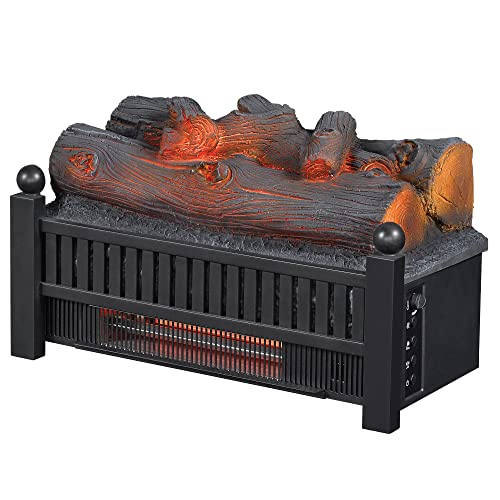
Duraflame Electric Log Set Infrared Heater
What Defines a Top Pick Space Heater

A top pick space heater balances effective heating with safety, efficiency, and user-friendly features. It must deliver the right heat for your space, operate quietly, and keep energy use under control while maintaining safety.
Heating power and coverage are the foundation. A top pick heater delivers enough warmth for the room size it’s rated for—usually around 1,500 watts for spaces up to 200 square feet. Go bigger or smaller, and you risk wasting energy or feeling chilly. For those needing more heat, consider the largest wood stove on market.
Noise level during operation matters more than you might think. A heater that sounds like a small fan is fine for a living room but distracting in a bedroom or office. The best models run whisper-quiet or offer adjustable fan speeds to balance sound and heat.
Safety features are non-negotiable. Tip-over switches shut the heater off if it falls, preventing fires. Overheat protection stops the unit if internal parts get too hot. These features are standard on top picks, along with cool-touch exteriors to protect curious hands.
Energy efficiency and thermostat control keep running costs reasonable. Look for heaters that cycle on and off based on your desired temperature rather than running flat-out. This uses less electricity and avoids overheating your room, all while maintaining comfort.
Build quality and warranty reflect how long a heater will last and how well the manufacturer stands behind it. Metal bodies, solid controls, and thorough testing mean fewer breakdowns. A warranty of at least one year is common among top picks.
| Feature | Why It Matters |
|---|---|
| Heating power and coverage | Delivers the right warmth for your room size without wasting energy |
| Noise level | Keeps your space quiet enough for work, rest, or concentration |
| Safety features | Prevents accidents with automatic shut-offs and cool-touch surfaces |
| Energy efficiency and thermostat | Controls power use to avoid high electric bills and maintain comfort |
| Build quality and warranty | Ensures long-lasting performance and support if something goes wrong |
 Winter Heating Bill CutterSee what every heater in your home really costs, heat the rooms you use, and cut the waste in 30 days.Cost-per-hour tables for every heaterThermostat schedule and draft-proofing planRunning-cost and bill calculator (Excel)
How to Size a Space Heater for Your Room
You need about 10 watts of heating power per square foot of room to keep it comfortably warm. This rule of thumb helps you pick a heater that matches your space without wasting energy or leaving you cold.
Start by calculating your room’s square footage: multiply its length by its width. For example, a 12 by 14-foot room is 168 square feet.
Next, multiply the square footage by 10 watts. That 168-square-foot room needs roughly 1,680 watts of heat. Since most plug-in electric heaters deliver 1,500 watts at max, this is a good size for medium rooms.
| Room Size (sq ft) | Recommended Heater Watts |
|---|---|
| Small (up to 150) | 1,200 – 1,500 W |
| Medium (150 – 250) | 1,500 – 2,500 W |
| Large (250 – 350) | 2,500 – 3,500 W |
Going too small means the heater struggles to reach a comfortable temperature, running continuously and driving up your electricity bill. Too large wastes power and can overheat the room, causing discomfort and higher costs.
A heater with a precise thermostat helps avoid these issues by cycling the heat on and off to maintain your set temperature. Less cycling means less wasted energy and more consistent warmth.
For most rooms up to 200 square feet, the DREO Space Heater Portable Electric Heater at 1,500 watts fits well, balancing heat output and energy use efficiently.
Oversizing a heater can mean it heats the room quickly but then cycles off too often, wasting energy by repeatedly starting and stopping. Undersizing forces it to run non-stop, causing wear and high bills.
Proper sizing paired with a good thermostat keeps your heating cost effective and your room comfortable through the coldest nights.
Understanding Running Costs and Energy Use
Running a space heater costs roughly 17 cents per kilowatt-hour (kWh) in the US, so a typical 1,500-watt heater running for 8 hours uses 12 kWh, which adds up to about $2.04 a day. This math helps you predict monthly expenses before winter starts.
To figure out energy use, divide the heater’s wattage by 1,000 to get kilowatts, then multiply by hours used. For example, a 1,200-watt model running 5 hours daily consumes 6 kWh (1.2 × 5), translating to about $1.02 daily at 17 cents per kWh.
Many heaters feature an eco mode that lowers power output, sometimes cutting consumption by 30% or more. Running your heater on eco mode for the same 8 hours might drop energy use from 12 kWh to around 8.4 kWh, saving nearly 60 cents a day without sacrificing much comfort.
Thermostat accuracy also affects cost. A thermostat off by 5°F can cause the heater to run longer than needed, hiking energy use by 10 to 20%. A precise thermostat keeps your room just right and your bills from climbing unnecessarily.
Quieter fans on space heaters usually mean more efficient motors and better airflow design. Less energy wasted on noise equals more heat per watt. So, a quiet heater can be an indicator of smarter energy use, not just comfort.
| Scenario | Daily kWh Used | Daily Cost @ 17¢/kWh |
|---|---|---|
| 1,500 W heater, 8 hours full power | 12 | about 2.04 |
| 1,500 W heater, 8 hours eco mode (30% less) | 8.4 | about 1.43 |
| 1,200 W heater, 5 hours full power | 6 | about 1.02 |
Safety and Certification Standards That Matter
Electric heaters are safe when they include key safety features and are used correctly. Certification marks from UL, ETL, or CSA confirm a heater meets rigorous safety tests for electrical and fire hazards.
Two critical safety features are the tip-over switch and overheat protection. The tip-over switch cuts power if the heater falls, preventing fires from contact with flammable surfaces. Overheat protection shuts the heater off if internal temperatures exceed safe limits, guarding against component damage and fire risk.
Space heaters must have adequate clearance around them—usually at least 3 feet from walls, furniture, curtains, and other combustibles. Crowding a heater reduces airflow, causing heat buildup and raising fire risk. Never place heaters near water or in damp areas unless specifically rated for those conditions.
Certified heaters have passed tests verifying electrical safety, including proper wiring, insulation, and durability under normal use. Certification also confirms the presence and functionality of built-in safety features like tip-over and overheat sensors.
Safety features work by interrupting power to the heating element or fan when a fault is detected. For example, if the heater tips, a switch opens the circuit immediately. Overheat sensors typically use bimetallic strips or thermal fuses that react to excess heat by breaking the electrical connection.
You can’t rely solely on safety features. Proper placement, regular inspection for damage, and following usage instructions are essential to prevent common accidents like fires or burns. Many accidents happen when heaters are placed too close to combustibles or used with damaged cords or plugs.
How To Choose A Top Pick Heater That Actually Works
Most guides pick one heater and call it done. The gap they leave: they don’t explain why a top pick might be wrong for your room, or what actually changes the answer.
Room insulation shifts the math. A 1,500 W heater keeps a well-insulated 150 sq ft bedroom at 68°F, but that same heater in a poorly insulated sunroom with single-pane windows will struggle past 60°F when it’s 20°F outside. Guides that ignore insulation quality send readers toward underpowered choices.
Noise tolerance matters more than wattage for bedrooms. A ceramic tower with a 50-decibel fan will wake light sleepers, even if it heats faster. Oil-filled radiators run silent after the initial warm-up because there’s no fan—just convection from the hot fins. That trade-off rarely gets a line in competitor reviews.
Thermostat type separates budget models from keepers. A mechanical bimetal thermostat cycles the heater on and off in wide swings—68°F to 74°F and back—wasting energy and creating drafts. A digital thermostat with a temperature probe holds within a degree or two. That precision costs $20 more up front and saves $15 to $30 a season in a room you heat nightly.
Portability and cord length get skipped. A 6-foot cord forces you to place the heater near an outlet, which may be under a window or behind furniture—both poor for even heat distribution. An 8-foot cord gives you the center of the room. Weight matters if you move the heater daily; a 20 lb oil-filled radiator stays put, a 4 lb ceramic tower follows you.
A top pick is the heater that fits the most common case: a moderately insulated room, daily use, reasonable noise limits, and a working thermostat. If your situation differs in two or more of those ways, the runner-up or a category pick will serve you better.