Best Energy-Saving Water Heaters (Electric + Heat Pump Options)
On this page 8 sections
- Compare Energy-Saving Water Heaters
- Top Energy-Saving Water Heaters Ranked by Efficiency and Use Case
- Match Water Heater Size and Type to Your Hot Water Needs
- Calculate Running Costs and Understand Energy Efficiency Ratings
- Check Electrical and Installation Requirements
- Look for Safety Certifications and Protection Features
- Choose Smart Controls for Energy Savings and Convenience
- Questions People Ask
Choosing the right energy-saving water heater can significantly reduce your utility bills and improve home comfort. Electric and heat pump models offer different advantages depending on your household size and installation space.
Picking the wrong type or size can lead to high costs, insufficient hot water, or installation headaches. This guide cuts through the options with clear specs and practical advice to help you decide quickly.
Compare Energy-Saving Water Heaters
| Model | Best for | Capacity/GPM | Power & Voltage | Energy Efficiency | Special Features | Price |
|---|---|---|---|---|---|---|
| Rheem 11kW Multi-Fixture Tankless | Best Whole-House Fit | Up to 2.68 GPM | 11kW; 240V single-phase | Heats only when a hot-water tap is turned on | Digital thermostatic control from 80°F–140°F; multiple-fixture use | Why it is here |
| Rheem 18kW Tankless Electric | Best High-Flow Pick | Up to 4.4 GPM | 18kW; 240V | Self-modulation adjusts power to hot-water demand | External digital control; field-serviceable copper immersion elements | Why it is here |
| Orbek 14kW Tankless Electric | Best Safety Package | Up to 3.38 GPM | 14kW; 240V | Uses up to 60% less electricity than traditional tank heaters | ETL certified; leakage, over-temperature and dry-heating protection | Why it is here |
| Ariston 2.5-Gallon Mini-Tank | Best Point Of Use | 2.5 gallons | 120V | Plug-in design minimizes energy usage | Titanium glass-lined tank; stand-alone or booster installation | Why it is here |
| VEVOR 18-Gallon Electric Water Heater | Best Storage Capacity | 18 gallons / 70L | 1.6kW; — | 20mm foam insulation layer helps retain heat for up to 24 hours | LED heating display; rotary control from 86°F–167°F | Why it is here |
Top Energy-Saving Water Heaters Ranked by Efficiency and Use Case
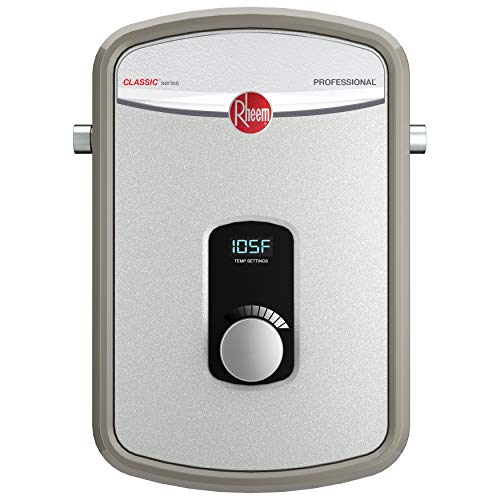
Rheem 11kW Multi-Fixture Tankless
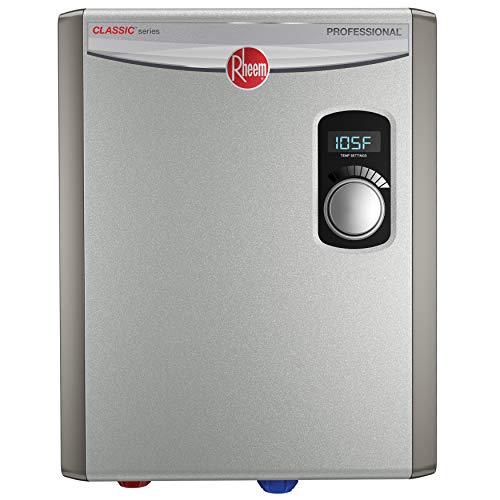
Rheem 18kW Tankless Electric

Orbek 14kW Tankless Electric

Ariston 2.5-Gallon Mini-Tank
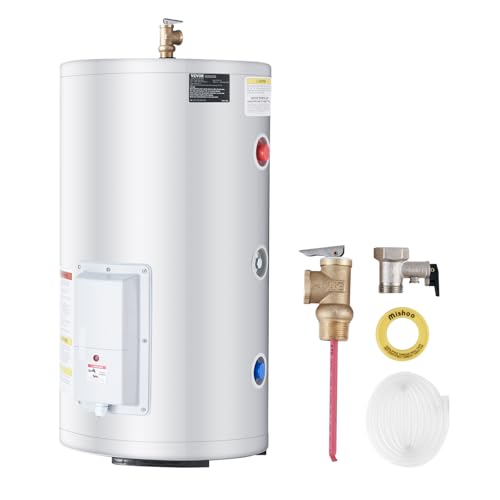
VEVOR 18-Gallon Electric Water Heater
Match Water Heater Size and Type to Your Hot Water Needs

The most energy efficient electric water heaters are heat pump models because they move heat from surrounding air into the tank instead of making all the heat with resistance elements. The Rheem 50-Gallon Hybrid Heat Pump Water Heater suits many households; choose a tankless unit instead when your peak flow and electrical service support it.
Tank capacity tells you how many gallons are stored and ready. Tankless capacity is a flow rate in gallons per minute, or GPM, because the unit heats water as it passes through. A shower using 2 GPM and a sink using 1 GPM need about 3 GPM together, so a tankless heater must cover the fixtures you may run at the same time—not the number of people in the house alone.
| Hot-water need | Practical starting point | What to check |
|---|---|---|
| One sink or remote hand-washing point | 2.5-gallon point-of-use tank | The 2.5 Gallon Capacity, 120-Volt model can suit a single low-demand fixture. |
| Small family | 40- to 50-gallon tank or a tankless unit sized for simultaneous fixtures | Count showers, sinks and appliances that may overlap. |
| Large household | Larger storage tank or a higher-flow tankless system | Use the household’s busiest hour and peak GPM, not the average day. |
A small tank can run out during back-to-back showers, while an oversized tank spends more time keeping unused water hot. Tankless models avoid that stored-water reserve and save energy by heating only during a draw, but their electrical demand can be high. The Rheem 11kW Multi Fixture Tankless Electric Water Heater is aimed at lighter multi-fixture use; larger homes may need a higher-capacity unit or more than one heater.
For a heat pump sizing comparison, see best heat pump hot water heaters for energy savings. Keep the installation space, recovery rate and local electrical requirements in the decision—hot water that arrives efficiently but runs out before the second shower isn’t a win.
 Water Heater Owner's ToolkitFix the common faults yourself, keep it running for years, and know when a repair is money wasted.No-hot-water flowcharts, gas and electricFlush, anode, relief valve and descaling stepsRepair-or-replace calculator (Excel)
Calculate Running Costs and Understand Energy Efficiency Ratings
Electric heaters energy saving claims become useful only after you convert power and runtime into kWh: watts ÷ 1,000 × hours equals kWh, and kWh × your local electricity rate equals cost. A tankless unit may draw more power while running, but it usually runs for fewer hours; a tank keeps reheating water between uses.
For example, an 11 kW on-demand electric water heater running for 20 minutes uses 11 × 0.333, or about 3.67 kWh. At 17 cents per kWh, that draw costs about 62 cents. The actual result depends on incoming-water temperature, flow, set temperature and how long your fixtures run.
| Heater | Watts | Per hour | Per day (0.33 h) | Per month (30 days) |
|---|---|---|---|---|
| 11 kW tankless heater | 11,000 W | $1.87 | 62¢ | $18.68 |
On demand electric water heater energy usage is therefore tied to runtime rather than a storage tank’s standby cycle. Conventional electric tanks can lose heat through the tank jacket and pipes even when nobody opens a tap, so the elements switch on periodically to maintain temperature. Heat pump water heaters use a refrigeration cycle to gather heat from the surrounding air and generally use less electricity than resistance tanks, though recovery can be slower in some conditions.
UEF, or Uniform Energy Factor, compares useful hot water delivered with the energy supplied over a standardized test period; a higher UEF is generally better. Energy Factor, or EF, is an older efficiency rating you may still see in specifications. Compare the same capacity and usage assumptions, because a rating alone doesn’t predict your bill.
Energy consumption in joules for an electric water heater is easy to convert: 1 kWh equals 3.6 million joules. The 3.67 kWh example above uses about 13.2 million joules, or 13.2 megajoules. That conversion describes energy, not cost; your utility charges for kWh.
Check Electrical and Installation Requirements
Check the heater’s voltage, amperage and installation space before buying; a water heater that doesn’t match your panel or plumbing location can turn an energy-saving purchase into an expensive delay. Electric tank models commonly use 120 or 240 volts, while tankless units often need much more current because they heat water only as it flows.
For a quick load check, divide watts by volts: a 4,500-watt, 240-volt tank element draws about 18.8 amps, while an 11,000-watt tankless unit draws about 45.8 amps. The 14kW Tankless Water Heater Electric ORBEK On Demand Heater needs about 58.3 amps at 240 volts, and the Rheem 18kW 240V Tankless Electric Water Heater needs about 75 amps. Those loads usually require dedicated circuits, correctly sized breakers and wiring, and a panel with enough capacity. Have a licensed electrician verify the nameplate and local code before installation.
| Heater example | Approximate load at 240 V | What to check |
|---|---|---|
| 4,500 W tank element | 18.8 A | Dedicated circuit, breaker and wire size |
| 11 kW tankless | 45.8 A | Panel capacity and the manufacturer’s circuit instructions |
| 14 kW tankless | 58.3 A | Dedicated high-current circuit and service capacity |
| 18 kW tankless | 75 A | Panel, service and multiple-circuit requirements |
Energy efficient electric baseboard heaters don’t use a special kind of resistance electricity: resistance heaters convert nearly all the electricity they consume into heat at the point of use. Better thermostatic control and room-by-room zoning can reduce waste, but a heat pump can use less electricity for the same heating job where the equipment and climate suit it.
Three heating elements don’t automatically make an electric hot water heater more energy efficient. Extra elements can recover hot water faster or stage the load, but they can also increase the required circuit capacity; standby losses and the unit’s efficiency rating matter more than the element count.
Plug-in mini-tanks such as the 2.5 Gallon Capacity, 120-Volt unit are simpler only when the outlet and circuit can handle the nameplate load. Plug directly into a grounded wall outlet, never an extension cord or power strip, leave access to the shutoff and connections, and use the manufacturer’s pressure-relief and drain arrangements.
Heat pump water heaters need open space or a properly designed closet so the fan can move room air and the unit can reject cool air. Keep the service panel, air path and condensate drain accessible; the manual’s required room volume and clearances win over a tidy but cramped enclosure.
Look for Safety Certifications and Protection Features
Choose an electric water heater with a genuine UL, ETL or CSA listing for the applicable safety standard, then confirm the mark on the unit or its documentation. Those listings show that a recognized testing organization evaluated the product; a seller’s general claim that a heater is safe isn’t the same thing.
Energy efficient electric water heaters still need the same basic protections as ordinary models: overheat control, a temperature and pressure relief valve, and a correctly installed discharge line. Overheat protection cuts power if the control system allows excessive temperature, while dry-fire prevention helps stop an element from energizing when the tank isn’t full of water.
Leak sensors can warn you about water at the base and, on some models, trigger a shutoff or other response. Treat the sensor as an early warning, not a reason to ignore a dripping fitting; close the water supply and electrical disconnect according to the manual before investigating.
Heat pump water heaters need airflow for safe, efficient operation. Blocking the intake or outlet, sealing the unit into a space smaller than the manual allows, or skipping the condensate drain can reduce performance and create water damage. Leave the filter and service panel reachable.
An electric water heater doesn’t burn fuel, so it doesn’t need a combustion flue; adding improper venting or treating a heat pump’s air duct and condensate line like a gas vent creates the wrong installation. Any gas-fired model follows its own listed venting rules, and fuel-burning equipment needs the required ventilation and a working carbon monoxide alarm.
An energy saving electric radiant underfloor heating thermostat can lower consumption by scheduling heat and using a floor sensor to prevent excessive surface temperature, but the thermostat doesn’t change the heating cable’s basic efficiency. Match the thermostat to the heating system and electrical load, and use a qualified electrician for line-voltage wiring.
Choose Smart Controls for Energy Savings and Convenience
Electric heaters save energy through accurate control and shorter run times, while the most energy efficient electric water heaters add heat-pump operation, scheduling and monitoring. WiFi won’t reduce consumption by itself, but an app can keep the tank from reheating at full temperature while you’re away and let you check an alert before a cold shower makes the diagnosis for you.
Use WiFi Scheduling With A Plan
Set a lower-demand schedule for workdays, vacations or overnight hours, then allow recovery before the household needs hot water. App monitoring is useful for checking operating mode, temperature and fault alerts; it matters most when the water heater sits in a basement or utility room you don’t inspect daily. Confirm that the schedule survives a WiFi outage, since the heater should still operate from its local controls.
Prefer Precise Temperature Controls
A digital display and narrow temperature adjustment make it easier to avoid heating water hotter than you need. That reduces standby and mixing losses, although a higher tank setting can still create a scald hazard at the tap; follow the manufacturer’s setting and use an anti-scald valve where required. A display also gives you a useful clue when the water feels wrong: compare the shown setpoint with the actual hot-water temperature instead of guessing.
Choose The Right Hybrid Mode
Heat-pump models such as the Rheem 50-Gallon Hybrid Heat Pump Water Heater can run in a heat-pump-only mode for efficient, quieter heating, then use resistance elements in a hybrid or high-demand mode when recovery needs to be faster. Heat-pump-only operation is the better default for normal demand; faster modes trade more electricity for quicker recovery. Vacation mode can prevent a mostly empty home from heating a full tank every day.
Know Why Tankless Knobs Matter
An adjustable temperature knob on an on-demand heater lets you set the outlet temperature instead of mixing in as much cold water at the fixture. That can reduce overheating and make a small unit, such as the VEVOR Electric Water Heater, easier to use for one sink or point of use. Tankless controls don’t create extra heating capacity, so a low flow rate or modest temperature setting won’t turn an undersized unit into a whole-home heater.